

A loose wire behind the receiver is the kind of small annoyance that turns into a real headache, especially when it hums on contact or slowly works its way out of a binding post. I keep coming back to good speaker wire connectors because they make the difference between a system that just works and one that nags at you every movie night. Whether you’re wiring a bookshelf pair, repairing a vintage amp, or running cable through a wall, the right connector saves frustration later.
The Shortlist At A Glance

Neutrik NP2X 1/4” Professional Phone Plug

Zbeem White B-Connector Wire Splices (100 Pack)

AIRIC Yellow Male Spade Connector 12-10 AWG (100 Pack)
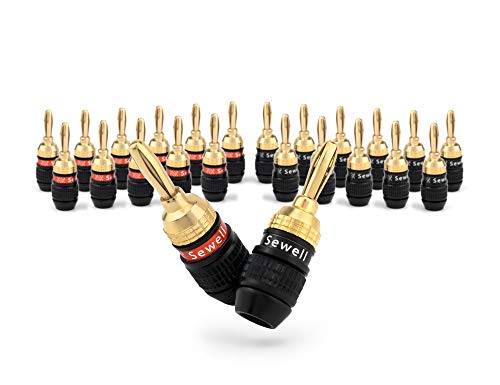
Sewell SW-29863-12 Deadbolt Banana Plugs 12-Pair Set
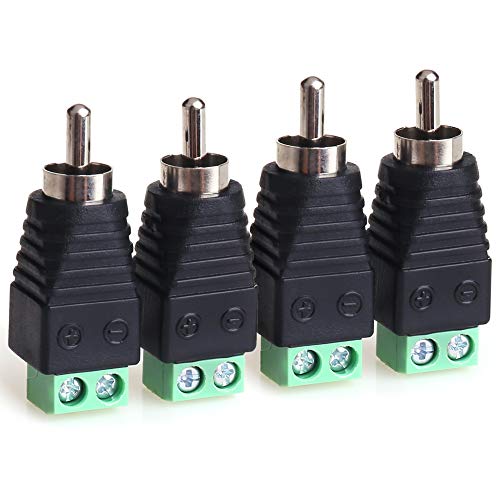
MOBOREST Solderless RCA to Speaker Wire Adapter (4-Pack)

Twidec 100-Piece Nylon Spade Connector Kit 22-10 AWG

Twidec 440-Piece Spade Connector Assortment 2.8/4.8/6.3mm
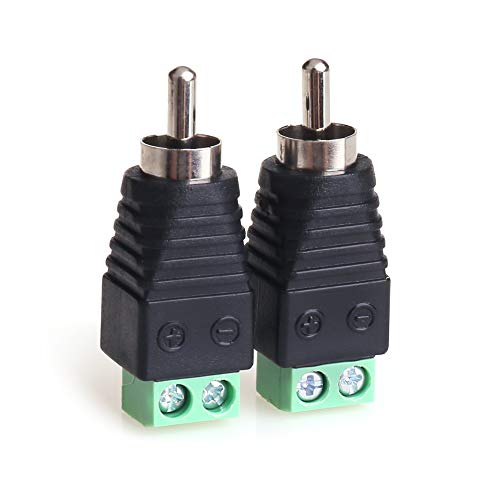
MOBOREST RCA to Speaker Wire Adapter (2-Pack)

MOBOREST Speaker Wire to RCA Adapter (6 Male + 4 Female)
A Closer Look At Each Pick
For a repair where the cable end keeps dying on you, the Neutrik NP2X is the kind of plug stage techs grab without thinking. It is a 1/4-inch TS (tip-sleeve) phone plug, meaning it carries a single unbalanced audio signal on two contacts rather than the three needed for stereo.
That makes it a fit for instrument cables, patch cords, and the odd subwoofer mono run, but not for standard left-and-right speaker pairs. The shell is diecast metal with a chuck-style strain relief, which grips the cable jacket from the inside and prevents the wire from being yanked out at the solder cup. You can expect this plug to outlast a few cable re-terminations.
The Helpful Details
- Diecast metal shell resists cracking if the cable gets stepped on or yanked off stage.
- Chuck-type strain relief clamps the jacket internally, so the solder joint does not take the load.
- Nickel plating on both shell and contacts keeps oxidation in check over years of handling.
- Standard 1/4-inch TS format means it drops into most instrument amps and DI boxes without adapters.
Things To Consider
- It is a TS (mono) plug, not a TRRS (stereo) one, so it will not terminate a stereo speaker run on its own.
- Re-terminating requires a soldering iron, which is a barrier for anyone without basic soldering skills.
Who Should Grab It
Musicians, stage crews, and home studio owners who need a 1/4-inch instrument or patch plug that survives regular gigging.
Swap It Out When
Home theater users wiring passive speakers should reach for the Sewell SW-29863-12 Deadbolt Banana Plugs instead, since those skip soldering and fit standard binding posts.
The Zbeem B-Connector sits in a different corner of the speaker wire world: it is a twist-on low-voltage splice, not a plug that goes into a binding post. You strip two wire ends, push them inside, and twist the cap down. A metal coil inside bites into both conductors and holds them mechanically, which is fine for low-voltage runs like landscape lighting, doorbell circuits, and thermostat wire.
For speaker-level audio, you may find these work in a pinch on a repair, but they were not designed for that load. The white plastic body is small enough to tuck into a junction box, and a 100-count pack covers most weekend projects without forcing a mid-job reorder.
What Earns Its Place
- Tool-light installation: no crimper or soldering iron needed, just strip and twist.
- Small body fits inside standard low-voltage junction boxes and weatherproof housings.
- 100-pack quantity keeps multi-run jobs supplied without frequent reorders.
Honest Caveats
- Not rated for full speaker-level audio current on home theater or hi-fi systems.
- The mechanical twist connection can loosen over years of thermal cycling in outdoor boxes.
The Right Fit
Homeowners running low-voltage landscape lighting, doorbell wire, or thermostat extensions who want a no-tool splice.
Reach For A Different Pick When
Anyone wiring passive bookshelf speakers to a real amplifier should pick up the Twidec 100-Piece Nylon Spade Connector Kit for a more secure mechanical fit.
The AIRIC yellow spade is purpose-built for thicker speaker wire, specifically 12 and 10 AWG (American Wire Gauge, where lower numbers mean thicker conductors). The yellow color is an industry code that signals that gauge range at a glance, which keeps wiring mistakes from happening under the dash.
Inside the translucent nylon shell sits a tin-plated brass receptacle, and the nylon itself acts as insulation so the connector can sit near other terminals without arcing. Owners commonly use these on car audio amp runs, where vibration and heat punish cheaper plastic bodies. The 100-count pack supports a full system build plus leftovers for the next repair.
What Makes Sense
- Color-coded yellow body matches industry 12-10 AWG standards so the gauge is obvious mid-install.
- Translucent nylon shell lets you visually confirm the wire is seated before crimping.
- Tin-plated brass resists corrosion in the humid under-dash environment.
Worth Bearing In Mind
- You need a ratcheting crimper matched to insulated terminals, not a generic flat-nose pliers.
- Male spades only, so this is half a connection: you still need female spades or matching binding posts.
Made For
Car audio installers and DIYers wiring subwoofers or amplifiers who want gauge-coded, vibration-resistant disconnects.
A Better Fit Elsewhere
Home theater builds usually run smaller 16-14 AWG wire, where the Twidec 100-Piece Nylon Spade Connector Kit covers that range better.
The Sewell Deadbolt is the connector I think of when a home theater stack is half-built and bare wire is flopping out of binding posts. A banana plug is a small cylindrical pin that slides into the spring-loaded binding post found on most A/V receivers. This set comes with twelve pairs, which covers a five-channel system plus spares.
The “deadbolt” name comes from the self-crimping teeth inside the plug: you strip the speaker wire, push it in, and the plug locks down without solder or screws. At roughly 1.6 inches, the body sits low enough to keep speakers close to a wall. Gold plating on the contact resists tarnish if the cabinet is in a humid basement.
Everyday Perks
- Self-crimping teeth mean no soldering iron, no screws, and a faster build.
- Low-profile 1.6-inch body keeps speakers flush against a wall.
- Gold-plated contacts hold up to repeated plug/unplug cycles without pitting.
- Twelve-pair pack covers multi-channel systems with extras for the inevitable re-do.
Some Limits To Know
- Requires binding posts that accept banana plugs, which most receivers have but some vintage amps do not.
Whose Shelf It Belongs On
Home theater owners and hi-fi listeners who want clean, repeatable connections on a multi-channel receiver.
Look Elsewhere When
Vintage receivers with spring clip terminals work better with the MOBOREST RCA to Speaker Wire Adapter set, since those attach directly to bare wire.
Sometimes the only output left on a piece of gear is an RCA jack, and that’s where the MOBOREST 4-Pack earns its keep. RCA is a single-pin coaxial connector most often used for line-level audio and subwoofer outputs, so this adapter bridges bare speaker wire to an RCA input without any soldering.
The screw terminals on the back take stripped wire and clamp it down with a small flat-blade screwdriver. That makes the swap fast for someone repairing a vintage receiver or extending a subwoofer line. With four male plugs in the pack, you can handle a small zone of speakers or keep spares on hand for a later change.
The Practical Payoff
- Screw terminals mean a small screwdriver is the only tool required, no soldering involved.
- Male RCA plugs fit subwoofer outputs and most vintage line-level jacks directly.
- Four-pack covers a typical two-zone install with extras.
Trade-Offs To Consider
- The screw terminals sit in plastic housings, which can crack if the screw is over-tightened.
- Polarity markings are subtle, so you need to verify positive and negative before each install.
Best Suited To
Vintage gear restorers and DIY home theater builders who need to bridge bare speaker wire to RCA jacks without firing up a soldering iron.
Consider Something Else When
Anyone wiring modern binding-post speakers should grab the Sewell SW-29863-12 Deadbolt Banana Plugs for a cleaner connection.
The Twidec kit earns its keep by covering a wide gauge range in one box, which matters when a project mixes thick and thin wires. With 22 through 10 AWG coverage, the same pack handles a thin signal-side run and a beefy amplifier feed.
Both male and female halves are included, so the kit works on either side of a connection. The bodies are nylon-insulated tin-plated copper, with a translucent cover that lets you confirm the wire is fully seated before crimping. A hundred pieces keeps a small workshop stocked through several builds.
Benefits That Matter
- 22-10 AWG range covers signal, speaker, and amp power wires in one kit.
- Translucent nylon shell makes a quick visual check possible before crimping.
- Tin-plated copper contacts stay conductive over years of storage.
Points To Keep In Mind
- Color-coding follows only the red nylon convention, so you must double-check gauge by measurement for finer wire.
- A proper ratcheting crimper is required for a gas-tight connection.
The Right Fit
Mixed-project hobbyists who wire both thin signal runs and thicker speaker feeds and want one kit on the bench.
Not Your Match When
Car audio specialists needing matched 2.8/4.8/6.3mm terminals should grab the Twidec 440-Piece Spade Connector Assortment instead.
Where the smaller Twidec kit covers wire gauges, this 440-piece assortment covers terminal widths. The 2.8, 4.8, and 6.3 mm sizes are the metric widths most often found on car audio, security panels, and small appliance harnesses. Having all three in one box ends the “wrong size on the bench” problem mid-job.
Both male and female terminals are included, and the gold-toned tin plating keeps conductivity stable in warm engine bays. Nylon insulating sleeves cover the crimp zone, which matters when terminals sit near each other in a tight fuse block. The piece count is generous enough that an occasional waste crimp is no longer a crisis.
The Upside
- Three terminal widths in one box covers most automotive and appliance harness sizes.
- Matching male and female halves reduce trips back to the parts drawer.
- Nylon sleeves prevent accidental shorts in tight fuse blocks.
Where It Is Less Suited
- The assortment is metric-only, so older American-spec gear may not match.
- 440 pieces take up real shelf space in a small parts drawer.
Perfect Match For
Car audio shops, mobile installers, and hobbyists who repair mixed-width harnesses and want one box that handles most jobs.
Where A Sibling Pick Shines
Home hi-fi builders running standard AWG speaker wire will get more value from the Twidec 100-Piece Nylon Spade Connector Kit since it sorts by gauge.
The 2-pack version of the MOBOREST adapter is the one I’d reach for when polarity mistakes are the worry. Each terminal pair is color-coded green and black, mapping directly to the speaker wire convention where one side is positive and the other negative.
That visual cue eliminates the most common DIY error: reversing a channel and creating a thin, out-of-phase soundstage. The knurled grip on the RCA body makes hand-tightening in a crowded cabinet possible, and the screw terminals still only need a small flat-blade screwdriver. Two adapters cover a single subwoofer or a small pair.
What It Does Well
- Green and black polarity markings reduce wiring errors in low-light installs.
- Knurled RCA grip helps when fingers have to do the tightening inside a cabinet.
- Solderless design needs only a wire stripper and a small screwdriver.
Less-Strong Areas
- Only two adapters per pack, so larger installs need multiple packs.
Who Will Love This
First-time home theater DIYers who want clear polarity cues and a fast install without soldering.
Another Choice May Suit
Whole-room audio projects with multiple zones benefit from the MOBOREST Speaker Wire to RCA Adapter 6 Male + 4 Female bundle, since it covers more runs in one box.
For a larger install where runs stretch across multiple zones, this bundle combines six male and four female RCA-to-speaker-wire adapters. The mixed count matches how whole-room systems actually wire up: more male runs feeding amplifiers, with female ends joining extension lines.
Each adapter uses the same screw-terminal design as the smaller MOBOREST packs, so the install process stays consistent across the project. The knurled grip helps when an adapter sits deep inside a media cabinet, and the screw terminals hold firm under moderate vibration from subwoofers. With ten adapters in one box, an entire media room can be wired in a single session.
Useful Highlights
- Mixed 6 male and 4 female count matches typical multi-zone layouts.
- Ten adapters support a full media room install in one purchase.
- Screw terminals tighten with just a small flat-blade screwdriver.
Potential Sticking Points
- Polarity is not color-coded, so careful labeling is required during install.
- Plastic housings can crack if the screw is over-torqued during a rushed install.
The Right Fit
Whole-home audio installers and DIYers running multiple subwoofers or zones who want one bundle that covers the full job.
Skip It When
Single-subwoofer setups are better served by the MOBOREST 2-Pack with polarity markings, since fewer adapters and clearer cues matter more than quantity.
Picking Speaker Wire Connectors That Actually Fit Your Build
The right connector starts with the gauge of wire you’re using. AWG (American Wire Gauge) measures conductor thickness, and a lower number means a thicker wire. Most home speaker wire sits between 16 and 12 AWG, while car audio and amplifier feeds often run 12 to 10 AWG. Using a connector rated for the wrong gauge is one of the surest ways to get a loose joint, since the crimp zone cannot bite the conductor properly.
Next, match the connector family to the terminal you’re plugging into. Binding posts on a home theater receiver pair best with banana plugs or spades, while a vintage receiver with spring clips takes bare wire or screw-terminal adapters. RCA jacks need a separate RCA-to-wire adapter, and 1/4-inch jacks need a phone plug like the Neutrik NP2X. Trying to force one connector type into a mismatched terminal usually ends with a wobbly joint or a stripped screw.
For DIYers without a soldering iron, solderless options like the Sewell Deadbolt and MOBOREST adapters are the practical path. They do not deliver quite the same gas-tight joint a soldered plug does, but they hold firm for home audio use and install in seconds. If you’ve already got a soldering setup, the Neutrik NP2X is a long-term investment that pays back in durability.
Key Considerations Across These Picks
Pitfalls Shoppers Hit
A common error is buying by color instead of gauge. The yellow AIRIC spade only fits 12-10 AWG, and forcing a thinner wire into a larger crimp barrel leaves a joint that pulls out under vibration. Always check the printed gauge range on the connector bag before installing.
Another slip-up is overlooking the terminal style on the receiving gear. Banana plugs feel convenient, but they only fit spring-loaded binding posts. Spring clip terminals, common on vintage receivers, need bare wire or screw-terminal adapters like the MOBOREST line. A wrong match usually ends with the connector just dangling off the post.
What The Higher Tier Buys
Stepping up to a brand-name connector like the Neutrik NP2X trades a few dollars for a chuck-style strain relief and a diecast metal shell. That upgrade matters most on cables that move, like instrument leads, because the strain relief absorbs the tug instead of transferring it to the solder joint.
In the spade family, nylon-insulated terminals cost slightly more than bare PVC versions, but the insulation prevents accidental shorts when terminals sit close together in a tight fuse block. For car audio and home theater, that extra margin of safety is usually worth the small price difference.
Frequently Asked Questions
What gauge speaker wire do most home audio systems use?
Most bookshelf and floor-standing speakers run on 16 or 14 AWG wire. Longer runs above 50 feet benefit from thicker 12 AWG to reduce signal loss over distance.
Are banana plugs better than bare wire?
Banana plugs give a clean, repeatable connection at binding posts and make swaps easier. Bare wire works fine on spring clip terminals and costs less, though it can fray over time.
Can I mix spade connectors from different brands?
Yes, since spade widths follow industry standards like 2.8, 4.8, and 6.3 mm. Match the width to your terminal and you can combine brands freely on the same install.
Do RCA-to-speaker-wire adapters reduce sound quality?
A properly tightened screw terminal carries the full audio signal without measurable loss. The bottleneck is usually elsewhere, like a thin gauge wire, not the adapter itself.
How do I know if my receiver accepts banana plugs?
Look at the binding posts: a center hole that runs all the way through the post takes a banana plug. A solid post with only a screw-down collar on the outside is spring clip only.
Final Verdict
Start with the connector family that matches your receiver’s terminals, then narrow by wire gauge and project size. For most home theater setups, the Sewell Deadbolt banana plugs are the easiest upgrade. Car audio and amp installs land squarely on the AIRIC yellow spades, and any RCA-bridge job is well-served by the MOBOREST screw-terminal adapters. Pick the one that fits the gear in front of you, and the rest of the install tends to fall into place.
