

Anyone who has rolled into a campground at dusk knows the small panic of mismatched plugs: a 50-amp coach where the pedestal only offers 30, or a household outlet that just won’t reach the shore power inlet. The right adapter turns that hassle into a five-second connection. I’ve gone through ten solid options, comparing amp ratings, connector types, weather resistance, and how each one handles the awkward real-world setups RV owners actually face.
The Picks In Brief

MECMO NEMA L5-30P to TT-30R 30 Amp RV Adapter UL Listed (Twist Lock)

BEBOBLY 20 Amp AC Port Plug with 5-in-1 T-Blade Adapter (Dual 18″)

BEBOBLY 20 Amp AC Port Plug with 5-in-1 T-Blade Adapter (Single 18″)
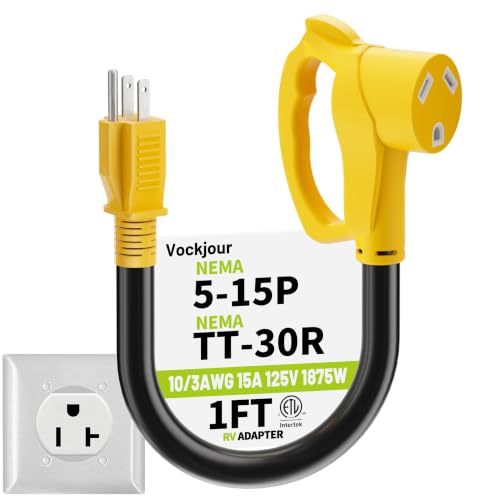
Vockjour 30 Amp to 110 RV Adapter Cord 12 Inch, ETL Listed

20A 125V RV Shore Power Inlet Plug with 5-in-1 T-Blade (Dual 18″)

RV 30 Amp to 110 Adapter with Locking Connector

MECMO 30 Amp to 110 Volt RV Adapter (NEMA 5-15P to TT-30R)
MECMO 50 Amp to 30 Amp and 15 Amp Y Splitter (NEMA 14-50P)

BEBOBLY 15 Amp Inlet, 125V Shore Power with Waterproof Cover

MECMO 50 Amp to 30 Amp RV Adapter (NEMA 14-50P to TT-30R)
The Strengths Of Each Pick
Storm season teaches RV owners fast that campground power isn’t guaranteed, and that’s exactly where this adapter earns its keep. The MECMO NEMA L5-30P to TT-30R takes a 30A twist-lock generator outlet, the kind many portable generators actually output, and converts it to the TT-30R receptacle a 30A travel trailer expects. The twist-lock side grips the generator plug firmly, so vibration from a running engine won’t shake it loose mid-coffee.
It’s small, lightweight, and UL listed, which matters when you’re running a 125V line that powers a coach’s full electrical panel. For most weekend campers who already own a portable generator, it’s the cleanest bridge between backup power and the trailer’s shore cord.
Features That Help
- Twist-lock L5-30P input stays seated even on a vibrating generator pad.
- UL listed construction adds a layer of verified safety on a 125V, 30A circuit.
- Compact body fits in a small exterior storage bay alongside shore cords and hoses.
- Direct 30A-to-30A path means no amp downgrade when feeding a mid-sized coach.
Things To Consider
- It only solves the generator-to-RV direction; you still need a separate adapter for campground pedestals.
- The twist-lock collar can feel stiff in cold weather, so a quick test fit at home is worth it before relying on it in a storm.
Built With In Mind
RVers who already own a 30A portable generator and want a single-piece bridge to the trailer’s shore inlet without rewiring anything.
Skip It When
The MECMO 50 Amp to 30 Amp RV Adapter is a better fit for owners who need to convert campground pedestal power rather than generator output.
Hardwiring a shore power inlet into a van or trailer wall gets intimidating fast, which is why pre-pigtailed units like the BEBOBLY 20A AC Port Plug exist. Two 12AWG 18-inch leads exit the flanged body, so the actual electrical hookup is just routing those wires to a breaker or junction block. For someone building out a camper van or replacing a corroded inlet, that saves an afternoon of soldering and heat-shrinking.
The female side accepts five common plug types, from a basic NEMA 1-15P household cord up through NEMA 6-20P. That flexibility is genuinely useful in a build phase, where the gear being plugged in tends to change. The waterproof cover snaps shut over the inlet when nothing’s connected, keeping road grime out of the terminals.
Well-Handled Touches
- Dual 18-inch leads cut install time significantly versus a blank inlet that requires custom wiring.
- Five-in-one plug compatibility means one inlet handles household, RV, and heavier tool cords.
- Integrated waterproof cover protects contacts during travel and off-season storage.
- 12AWG conductors carry the rated 20A load comfortably without voltage drop on the short pigtail run.
Points To Note
- The 6-15P and 6-20P compatibility only works on devices rated for the wider 110V to 250V input range, which is easy to miss.
- Mounting hole sizing needs to be confirmed before cutting; a sloppy opening won’t seat the flange flush.
Quick Facts
Right Fit For
Custom van builders, skoolies, and trailer owners who want a pre-wired inlet that drops into a 2-inch cutout without bespoke cable work.
Reach For A Different Pick When
The BEBOBLY 15 Amp Inlet is a smarter buy for owners on a 15A shore circuit who don’t need the 20A rating or the 5-in-1 plug flexibility.
Where the dual-pigtail version is built for full coach rewires, this single 18-inch variant suits simpler installs. The BEBOBLY AC Port Plug still gives you the same 5-in-1 female receptacle and waterproof cover, but with just one lead to route. For a boat deck, a small trailer galley, or a portable power station cabinet, that single-wire simplicity is often plenty.
The NEMA compatibility list stays broad, and the 12AWG conductor handles a full 20A draw at 125V. Mounting the flange into a flat panel is a drill-and-screw job, and the integrated cover means the inlet survives a rainstorm even if the cover on the boat isn’t quite shut tight.
Key Advantages
- Single 18″ lead keeps the install tidy in tight engine bays or cabinet backs.
- 5-in-1 plug acceptance covers household extension cords through heavier 20A plugs.
- Waterproof flip cover protects the inlet face during long-term outdoor mounting.
- Flanged body mounts flush against composite, wood, or metal panels.
Trade Offs
- One lead means no built-in redundancy; you wire it once and that’s the run.
- Devices using the higher 6-series NEMA plugs still need 110V to 250V tolerance to behave correctly.
Whose Shelf It Belongs On
Boat owners, teardrop trailer builders, and anyone needing a clean, single-feed 20A inlet on a flat exterior panel.
A Better Fit Elsewhere
The PAULINN 20A Shore Power Inlet Plug is a stronger choice if you want the dual-pigtail option for running two circuits from one inlet.
Short pigtail adapters live in the same pouch as shore cords and sewer hoses, and 12 inches is often the sweet spot. The Vockjour 30A to 110 adapter plugs into a household NEMA 5-15P outlet and gives you a TT-30R receptacle right at the wall. That’s the classic “plug the trailer into the garage” move, perfect for trickle-charging the battery or running the fridge on the way to a trip.
The cord is STW rated for outdoor and indoor use, and the IP65 weatherproof rating means it shrugs off the inevitable puddle on the garage floor. ETL listing adds a layer of independent verification, which matters on a 125V, 1875W circuit that runs unattended for hours.
Where It Delivers
- 12-inch length keeps the adapter from becoming a trip hazard across a garage threshold.
- IP65 rating lets it sit outside on a rainy driveway without complaint.
- ETL listing provides third-party verification for a load that often runs unsupervised.
- STW jacket holds up to scuffs, oil, and repeated cold-temperature flexing.
Honest Caveats
- 15A on the household side caps total draw, so running the air conditioner through this adapter is risky.
- The short cord means the trailer’s shore cord has to reach the outlet, which isn’t always the case on long coaches.
Feature Snapshot
Made For
Trailer owners who keep their rig in a driveway or storage bay and want a tidy way to plug into a nearby household outlet for short, low-draw tasks.
Look Elsewhere When
The MECMO 30 Amp to 110 Volt RV Adapter is a stronger match if you need a dogbone-style block instead of a flexible 12-inch cord.
Hardwiring a shore power inlet shouldn’t take a full weekend, and the PAULINN 20A shore inlet leans into that idea. Two 12AWG 18-inch leads exit the back, giving an installer one lead for the main coach circuit and a second for an accessory or trickle path. The 5-in-1 plug acceptance on the front means the same inlet handles everything from a basic household cord to a NEMA 6-20P tool plug.
The setup is genuinely short: drill a 2-inch hole, seat the flange, secure it with screws, and tie the leads into the existing breaker panel. For most camper conversions, that’s the whole project.
Practical Pluses
- Dual pre-installed leads remove the need for separate wire runs from the inlet.
- Wide NEMA compatibility supports household, RV, and 240V-tolerant tool cords from the same inlet.
- 2-inch cutout size matches common templates, so a replacement job fits without rework.
- Waterproof cover keeps the inlet sealed against splash during travel washes.
Softer Spots
- The 6-15P and 6-20P compatibility requires device-side voltage tolerance, which catches some owners off guard.
- Without an internal breaker, the inlet relies on the downstream panel for overcurrent protection.
At A Glance
Best Suited To
Van lifers and small-trailer renovators replacing a corroded or missing shore power inlet without rewiring the wall.
Consider Something Else When
The BEBOBLY 15 Amp Inlet is a more honest fit for boats and trailers where the shore circuit is actually a 15A service and the 20A rating is overkill.
Standard dogbone adapters can wiggle loose when kids run past the cord or the dog decides the trailer is a playground. The Kooprimit RV 30A to 110 adapter addresses that with a locking collar that threads onto the RV receptacle and stays put until you unscrew it. For households with foot traffic around the cord, that’s the difference between a constant connection and a tripped breaker.
The female end also uses a 90-degree bend, which lets the cord lay flat against the trailer wall instead of jutting straight out. Owners who park close to a wall or run the cord along a skirt appreciate that detail more than it sounds.
Points In Its Favor
- Locking collar keeps the adapter seated through vibration and incidental tugging.
- 90-degree female end hugs the trailer wall rather than sticking out into the walkway.
- ETL listing covers the safety basics on a 125V, 30A household-to-RV transition.
- Grip handles on both ends make plugging and unplugging easier with cold or gloved hands.
Worth Noting
- Locking action adds a few seconds to every connect and disconnect, which can feel tedious on quick overnight stops.
- The locking collar adds bulk, so storing it in a narrow cord bin takes a bit of planning.
Who Should Grab It
Family campers, pet owners, and anyone whose trailer sits where the shore cord might get bumped or tugged during the stay.
Swap It Out When
The Vockjour 30A to 110 Adapter Cord is the simpler choice for owners who want a 12-inch flexible pigtail instead of a locking rigid adapter.
The most common RV power task outside a campground is plugging into a regular wall outlet, and the MECMO 30A to 110 adapter handles that conversion in a single block. NEMA 5-15P on one end, NEMA TT-30R on the other, with no cord to manage and nothing to install. For most driveway storage setups and pre-trip battery top-ups, that’s the simplest path.
The block is rated for 125V at 15A, which lines up with the household circuit ceiling rather than the trailer’s full 30A draw. Owners who treat it as a convenience adapter rather than a primary power path tend to have the best experience with it.
What Helps Most
- Single-block design stores flat in a glove box or shore-cord bag without tangling.
- Direct 15A household plug means no extension cord is needed in most garages.
- TT-30R output matches the standard shore cord on a typical 30A trailer.
- Heavy-duty construction feels solid in hand compared to thin molded adapters.
A Few Limitations
- 15A input caps the total draw, so running the A/C through this adapter is asking for tripped breakers.
- It’s not weather-rated for prolonged outdoor exposure, so leaving it out in rain isn’t ideal.
Best Suited To
Driveway-stored trailers and owners who want a simple way to run the fridge, lights, or battery charger off a household outlet before a trip.
Not Your Match When
The MECMO RV 50 Amp to 30 Amp Y Splitter is a stronger fit for campground pedestal use, where you need to split one 50A feed between two trailers or devices.
Pulling into a 50A pedestal with a 30A trailer used to mean leaving half the available power on the table. The MECMO Y splitter changes that by branching a single 14-50P feed into a TT-30R for the trailer and a 5-15R for household devices, like a string of patio lights or a phone-charging station. The two-foot STW 10/3 cord between ends keeps the splitter flexible enough to route cleanly around the pedestal.
The 10-gauge conductors handle the combined load comfortably, and the build quality feels ready for repeated campground use. For owners who treat their campsite as a base camp rather than just a parking spot, that’s a meaningful upgrade.
What Stands Out
- Y design unlocks the unused leg of a 50A pedestal for a 30A trailer plus a household accessory.
- STW jacket holds up to dragging across gravel pads and concrete.
- 10/3 gauge keeps voltage drop modest on the two-foot run.
- NEMA 14-50P plug fits common campground and generator receptacles.
Potential Drawbacks
- Splitting a 50A feed means neither leg gets the full 50A, so high-draw appliances still need to be managed.
- The 5-15R leg pulls from the same phase as the 30A leg, which limits how the two outputs can be balanced.
Spec Overview
Right Fit For
Campers who frequently land on 50A pedestals with a 30A trailer and want to put the spare leg to work powering accessories.
Another Choice May Suit
The MECMO 50 Amp to 30 Amp RV Adapter is the cleaner pick for owners who only need a single 50A-to-30A conversion without the split-out leg.
Marine docks and shoreline installations chew through ordinary inlets within a couple of seasons. The BEBOBLY 15A inlet leans into that reality with a copper conductor body wrapped in tough black nylon, which resists UV damage and the chemical splash common around fuel docks. For boaters who actually leave the inlet exposed year-round, that material choice is the headline feature.
The wiring side is straightforward, with clear BLACK, GREEN, and SILVER terminal markings so a first-time installer doesn’t second-guess the connections. ETL listing provides a third-party safety check on a 125V, 15A marine circuit.
Where It Excels
- Nylon body shrugs off UV degradation and chemical splash typical at marine docks.
- Color-coded terminals simplify wiring for first-time installers.
- Waterproof cover keeps spray off the contacts during rough weather.
- ETL listing offers third-party safety verification for shore installations.
Practical Considerations
- 15A rating limits the inlet to lighter loads, so onboard cooking or A/C use needs a separate higher-amp inlet.
- Wire gauge selection depends on the run length, which the installer needs to size themselves.
Made For
Boat owners and waterfront property owners mounting a permanent 15A shore connection that has to survive salt air and sun.
Where A Sibling Pick Shines
The BEBOBLY 20 Amp AC Port Plug with dual 18″ leads is a stronger choice for RV-side installs where the higher 20A rating and pre-pigtailed leads matter more than marine-grade materials.
For 30A trailer owners who mostly camp at 50A pedestal sites, this is the adapter that ends up in the storage bay year-round. The MECMO 50A to 30A adapter takes a 4-prong 14-50P receptacle, the kind found on most modern pedestals, and converts it to a TT-30R for the trailer’s shore cord. The conversion is straightforward: plug in, twist on the locking ring if present, and the trailer has power.
It’s not glamorous, but the build quality is honest, and the adapter is compact enough to live in the same bin as the shore cord. Most owners who pick one up end up forgetting it’s there until they need it, which is exactly what a good adapter should do.
Reasons It Performs
- 14-50P plug fits the most common modern campground pedestal configuration.
- Compact block format stores flat without taking up cord-bin real estate.
- TT-30R output matches the standard 30A shore cord on most travel trailers.
- Heavy-duty molded body handles repeated connect and disconnect cycles.
Minor Gripes
- It’s a single-purpose adapter, so 50A trailers and 15A-pedestal sites still need a different adapter on hand.
- Without a locking collar, the connection relies on friction, which can work loose in high-traffic campsites.
Right Fit For
Owners of 30A travel trailers who frequent campgrounds with modern 50A pedestals and want a single, dependable converter.
Skip It When
The RV 30 Amp to 110 Adapter with Locking Connector is a better everyday companion for owners who more often need a household-to-30A conversion with a secure hold.
Choosing Rv Plug Adapters That Actually Fit Your Setup
Match the Amperage, Not Just the Plug Shape
The NEMA configuration is the easy part to match: TT-30P, 14-50P, and 5-15P all look distinct once you’ve handled them once. The harder decision is current. A 30A trailer plugged into a 15A adapter can only draw 15A before the breaker trips, which is fine for lights and battery charging but rough on air conditioners and microwaves. For most full-timing RVers, sizing the adapter to the largest common pedestal they encounter is the practical call, while part-timers can usually get by with a single 30A-to-15A household adapter.
Pick the Right Form Factor
Block-style adapters are tidy and store flat, which matters in a small exterior bay. Cord pigtails give you reach and flexibility, useful when the pedestal sits behind the trailer or the household outlet is on the opposite wall. Flanged inlets are a different category altogether, intended for permanent or semi-permanent installation rather than travel-day connections. Knowing which form factor matches the actual task, plugging in at a campground versus wiring a wall, prevents overbuying on either side.
Weather Resistance Matters More Than It Seems
Outdoor-rated jackets and IP65 covers add a small amount to the cost but pay off across years of driveway storage, rainy nights, and roadside repairs. STW and SJTW cords handle oil, abrasion, and cold better than indoor-only jackets, and a tethered cover on a flanged inlet keeps road grime out of the contacts. For owners who don’t dry-store their trailer indoors, those details add up.
Listing Marks Signal Real Testing
UL, ETL, and similar third-party listings mean an adapter has been independently tested against the relevant safety standards. On a 125V circuit that often runs unattended for hours, that listing is more than a marketing sticker. Most of the adapters in this roundup carry one, and it’s worth treating that as a baseline rather than a feature.
Smart Shopping Moves For Rv Plug Adapters
Pitfalls Shoppers Hit
Confusing the male and female sides of an NEMA configuration is the most common mistake. TT-30R (receptacle) on the trailer end looks nearly identical to TT-30P (plug) on the cord end, and the wrong adapter shows up looking correct until you try to plug it in. Double-checking which side carries the prongs versus the slots prevents the return-trip.
Another common trap is buying an adapter rated for the trailer’s amps rather than the source’s amps. A “30A adapter” between a 15A household outlet and a 30A trailer is still capped at 15A on the source side, regardless of how the marketing reads.
What The Higher Tier Buys
Premium adapters earn their higher cost with heavier-gauge conductors, more robust molded bodies, and locking collars that survive years of connect cycles. For a part-time weekend trailer, a basic block adapter is plenty. For full-timers, heavy-duty RVers, or anyone whose adapter sees daily use, the upgrade is in durability rather than electrical capacity, and it shows up as fewer replacements over the life of the rig.
Frequently Asked Questions
What does NEMA mean on an RV plug?
NEMA stands for the National Electrical Manufacturers Association, which defines the standard configurations for plugs and receptacles used in North America. RV shore power uses a few specific NEMA codes, like TT-30 for 30A trailers and 14-50 for 50A coaches.
Can I run my RV air conditioner off a household adapter?
Most RV air conditioners draw close to or above 15A on startup, which is the ceiling for a standard household circuit. Running one through a 15A adapter usually trips the breaker, so a 30A pedestal or generator is the practical path.
Do I need a different adapter for 50A and 30A trailers?
Yes. 50A coaches use a 4-prong 14-50 configuration, while 30A trailers use the 3-prong TT-30 setup. Adapters exist to bridge between them, but no single block handles both directions.
How long do RV plug adapters typically last?
With normal campground use and proper storage, most adapters last several years. Outdoor exposure, dragging across gravel, and repeated overloading shorten that lifespan considerably.
Is a locking adapter worth the extra cost?
Locking adapters make sense in campsites with foot traffic, kids, or pets, where a standard friction-fit adapter can work loose. For quiet solo sites, the locking feature adds bulk without much benefit.
Closing Thoughts
The right RV plug adapter quietly disappears into the routine, until the day it doesn’t fit. Matching the amperage, the NEMA configuration, and the form factor to the actual setup, whether that’s a campground pedestal, a generator, or a household outlet, is the whole job. Pick the adapter that matches the scenario you encounter most often, and the rest of the list becomes occasional backup rather than daily gear.
