

Living in or traveling through an RV means your battery choice quietly decides how the trip feels. A weak bank forces short inverter runs, dim evenings, and that nagging worry about whether the fridge will hold overnight. A well-matched lithium setup, on the other hand, lets you park where you want, run what you need, and forget about the gauge for days at a time. I’ve spent years helping RVers sort through chemistry options, group sizes, and BMS ratings, and what follows are ten lithium deep cycle batteries that genuinely fit different rigs, budgets, and power habits. Every pick below leans on manufacturer specs, common user reports, and the practical realities of life on the road.
An Overview Of The Picks
GrenerPower 12V 100Ah LiFePO4 Group 24 Battery

Mosasaur 48V 100Ah LiFePO4 Golf Cart Battery

Power Queen 12V 125Ah Bluetooth Group 27 Battery
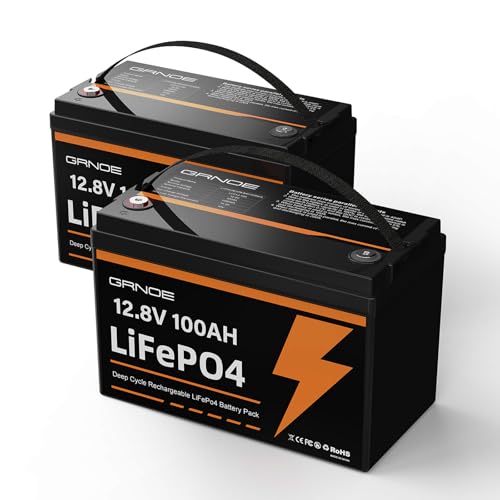
GRNOE 12V 100Ah LiFePO4 Group 31 2-Pack

MARSENERGY 12V 100Ah LiFePO4 Group 24 Battery

Power Queen 12V 100Ah LiFePO4 Group 31 Battery

Power Queen 12V 200Ah PLUS LiFePO4 Battery
Power Queen 12V 100Ah Group 31 4P4S Battery
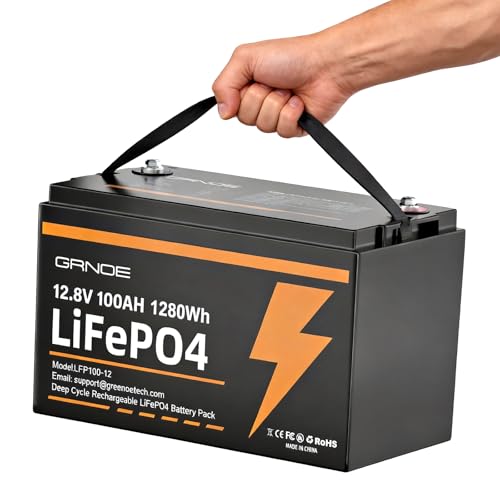
GRNOE 12V 100Ah LiFePO4 Group 31 Battery

GRNOE 12V 300Ah LiFePO4 Battery
The Details Behind The Selections
The Group 24 form factor shows up everywhere in mid-size coaches and camper vans, which is exactly where this GrenerPower unit feels at home. It uses Grade A+ cylindrical LiFePO4 cells (lithium iron phosphate, a safer and longer-lived lithium chemistry than older Li-ion types) and pairs them with a 100A BMS (battery management system, the onboard circuitry that protects against overcharge, overdischarge, short circuits, and overheating).
At a 12.8V 100Ah rating, it stores roughly 1280Wh of usable energy in a Group 24 footprint, which makes it a sensible replacement for a tired lead-acid bank. For weekenders running a fridge, lights, and a small inverter for a couple of evenings, that’s plenty of headroom.
Everyday Perks
- Group 24 size drops into many factory battery trays without rewiring.
- 100A BMS covers common faults, including overcharge and short-circuit events.
- Cylindrical cells tend to dissipate heat evenly, which helps in warm southern climates.
- Light enough to reposition in tight battery compartments, especially compared to lead-acid.
Worth Noting
- No built-in Bluetooth or display, so you’ll rely on a shunt or multimeter for state-of-charge readings.
- Cold-weather charging isn’t highlighted in the listed protections, so winter travelers should verify low-temp behavior before heading north.
Made For
Weekend RVers and van owners running modest loads who want a clean Group 24 swap.
Consider Something Else When
The Power Queen 12V 125Ah Bluetooth Group 27 Battery is a better fit for cold-climate travelers who want app-based monitoring.
Big coaches with residential refrigerators and 3000W inverters can crush a 12V bank, which is where the Mosasaur 48V pack earns its place. It uses a 200A BMS and is rated for 10.24kW of peak output, enough to climb hills under load and run demanding appliances without sag.
The kit includes an 18A lithium charger and an LCD touchscreen, plus a mobile app for monitoring state of charge, voltage, and current. At roughly 77 lbs and measuring around 20.55 x 10.55 x 8.74 inches, it lives in a familiar lead-acid case footprint, making it easier to retrofit into golf-cart-style bays or large RV compartments.
Why It Works Well
- 48V architecture cuts current draw, which means smaller cables and less heat in long runs.
- 10.24kW peak output handles rooftop AC startups and microwave surges more comfortably than 12V setups.
- LCD touchscreen plus app control gives real-time visibility without a separate shunt.
- Includes a dedicated 18A charger, so the box arrives ready to install.
Trade Offs
- 48V requires compatible inverters and solar charge controllers, so legacy 12V rigs need a full electrical refresh.
- 77 lbs is heavy for a single unit, so plan the mounting location before delivery day.
- Golf-cart focus means the BMS protections are written for traction use; verify RV-specific charger compatibility before relying on shore-power hookups.
Right Fit For
Large motorhome owners with 3000W+ inverters who want to ditch voltage sag for good.
Swap It Out When
The Power Queen 12V 200Ah PLUS LiFePO4 Battery is a more practical call for standard 12V coach systems that don’t need 48V conversion.
Cold snaps and lithium batteries have a complicated relationship: charging below freezing can damage cells, so a low-temp cutoff matters for northern travelers. The Power Queen 12V 125Ah Group 27 unit advertises low-temperature protection and pairs it with Bluetooth 5.0 monitoring, letting owners check state of charge, voltage, and alerts from a phone.
At 125Ah and roughly 1600Wh of stored energy, it carries about 25% more capacity than the Group 31 100Ah options later in this list while still fitting a Group 27 tray. That extra headroom shows up when you add an inverter or run a residential fridge on a hot afternoon.
Points In Its Favor
- Low-temp protection cuts charging before cells risk damage, which helps winter boondockers.
- Bluetooth 5.0 means no more guessing remaining runtime; the app surfaces alerts and protection status.
- Group 27 footprint slips into many factory RV trays, and 125Ah gives longer evenings between charges.
Minor Gripes
- Group 27 is slightly larger than 24, so measure the bay before committing.
- Bluetooth requires a phone on hand, which some travelers find unnecessary on short trips.
Quick Facts
Best Suited To
Four-season RVers who winter camp and want phone-based state-of-charge visibility.
Look Elsewhere When
The MARSENERGY 12V 100Ah LiFePO4 Group 24 Battery suits owners chasing a smaller, simpler Group 24 swap without app features.
Most RVers eventually want more capacity than they started with, and this GRNOE 2-pack acknowledges that reality head-on. Each battery is a 12V 100Ah Group 31 unit with a 100A BMS, and the listing confirms expandability to roughly 51.2V (48V nominal) and up to 20.48kWh when stacked four-in-parallel and four-in-series (4P4S, a wiring arrangement that lets you grow voltage and capacity over time).
For someone who plans to start small and grow into a full solar system, that flexibility is worth a lot. The Group 31 footprint is one of the most common RV battery sizes, so the swap-in is clean for many coaches.
Strengths Worth Knowing
- 4P4S expandability supports everything from a single 12V bank up to a 48V off-grid system.
- Group 31 size fits most factory RV trays and marine boxes.
- Two-pack delivery means a usable bank right out of the box for 200Ah at 12V.
Points To Keep In Mind
- Heavy shipments arrive one battery per box, so the two units may land on different days.
- Series stacking requires matched voltage before connecting; mismatched banks can shorten lifespan.
Whose Shelf It Belongs On
Solar-builders who want a battery they can grow with, one or two units at a time.
A Better Fit Elsewhere
The Mosasaur 48V 100Ah Golf Cart Battery is a cleaner choice for those ready to commit to 48V from day one.
First-time lithium upgraders usually want something boring in the best way: a battery that drops in, behaves predictably, and doesn’t require a new charger to play nicely with the existing converter. The MARSENERGY Group 24 aims squarely at that audience with a familiar form factor, a 100A BMS, and the LiFePO4 chemistry most RVers already know.
The listed deep-cycle claim is up to 15,000 cycles, which lines up with what I’d expect from a quality LiFePO4 cell. For someone coming off a 300-500 cycle lead-acid bank, the math on replacement cost starts looking better after the first season.
Key Advantages
- Group 24 size suits the most common factory RV battery trays.
- LiFePO4 chemistry stays cool under heavy discharge.
- Up to 15,000-cycle rating offers a long ownership horizon for full-time travelers.
Honest Caveats
- No Bluetooth or app-based monitoring, so you’ll want to add a shunt for accurate readings.
- Verify your converter is lithium-compatible before installing, or charging can stall short of full.
Who It Suits Best
New lithium buyers who want a no-fuss Group 24 swap and a familiar BCI form factor.
Another Choice May Suit
The Power Queen 12V 125Ah Bluetooth Group 27 Battery suits owners who’d trade a slightly larger footprint for Bluetooth and cold-weather protection.
Group 31 has quietly become the default size for many newer coaches, and Power Queen’s 12V 100Ah fits that bay cleanly. With a 100A BMS, Grade A cells, and 1280Wh of stored energy, this battery is the kind of workhorse that doesn’t demand attention.
The protection suite covers overcharge, over-discharge, short circuits, and overheating, which is the minimum most RVers expect from a modern lithium bank. For standard loads like a fridge, lights, water pump, and a small inverter, this delivers reliable runtime without breaking the budget.
What Makes Sense
- Group 31 fits factory trays in many recent motorhomes and fifth wheels.
- 1280Wh is enough for two to three days of conservative fridge and light use between charges.
- 100A BMS supports moderate inverter draws without tripping.
Softer Spots
- No Bluetooth or low-temp protection listed, so plan on adding monitoring if you want real-time SOC.
- For larger inverter loads, the 100A BMS may feel limiting compared to the 200A options later in this list.
Perfect Match For
Standard RV owners who want a clean Group 31 swap and a long service life without extra frills.
Not Your Match When
The GRNOE 12V 300Ah LiFePO4 Battery makes more sense for owners building a large house bank in a single box.
The “PLUS” in the name refers to the doubled capacity and a beefier 200A BMS, which together push this battery into the heavy-hitter category. At 2560Wh of stored energy and a 200A continuous discharge rating, it can handle inverter-driven microwaves, coffee makers, and even modest rooftop AC startups without the BMS intervening.
The advertised 95% usable capacity and roughly 2% self-discharge mean less time worrying about charge retention between trips. For owners who camp off-grid for a week at a time, that combination shows up in fewer generator hours.
Strong Points
- 2560Wh in a single 12V unit cuts the number of batteries you need to wire.
- 200A BMS handles high-draw appliances that 100A units tend to throttle.
- Low self-discharge helps between seasonal trips or long storage periods.
Factors To Consider
- Heavier than a 100Ah unit, so confirm the floor and mounting hardware can handle the load.
- Charging this size requires a robust converter or solar controller; smaller stock units can take many hours to refill.
Who Should Grab It
Full-time RVers running inverter-heavy loads who want to consolidate capacity into fewer boxes.
Skip It When
The GRNOE 12V 300Ah LiFePO4 Battery is the smarter call for maximum capacity in a single footprint.
Solar builders live and die by stackability, which is why the 4P4S support on this Power Queen 12V 100Ah Group 31 unit matters. The listing confirms up to 15,000 cycles and a 1280Wh baseline, with expandability that mirrors the GRNOE 2-Pack in flexibility, minus the bundled second battery.
Group 31 dimensions mean this battery fits many factory RV and marine trays, so a single starter battery can grow into a four-pack 400Ah bank without changing the form factor. For solar-first rigs, that growth path is the whole point.
Standout Benefits
- 4P4S scalability suits solar installations that will expand panel by panel.
- Up to 15,000 cycles supports a decade of full-time off-grid use.
- Group 31 form factor is the most universally accepted RV battery tray size.
Practical Considerations
- Single unit delivers 100Ah, so larger banks require multiple batteries plus matched wiring.
- Without Bluetooth, owners need a shunt for accurate state-of-charge tracking as the bank grows.
Built With In Mind
Solar-first RVers planning a bank that grows in stages, season by season.
Reach For A Different Pick When
The GRNOE 12V 100Ah Group 31 Battery is a comparable alternative for those prioritizing lighter weight at 22.48 lbs.
Weight matters more in an RV than in a stationary solar bank, and this GRNOE unit is one of the lightest 100Ah lithium batteries in the Group 31 shape at roughly 22.48 lbs. Compared to traditional lead-acid, that’s about a third of the heft, which makes a real difference during install or swap-out.
The listing notes Grade A+ cells, a 100A BMS, and a 36-month warranty with lifetime support. The Group 31 dimensions (around 12.9 x 6.7 x 8.6 inches) fit standard battery boxes, and the 1280Wh baseline is plenty for typical RV loads.
Real-World Strengths
- 22.48 lbs makes repositioning in a tight bay far easier than wrestling with lead-acid.
- Grade A+ cells aim for stable voltage under load and longer cycle life.
- 36-month warranty with lifetime support adds a comfort layer for long-haul owners.
Things To Weigh Up
- A 14.6V charger is required for full charging; a standard 12V charger will underfill the bank.
- Idle batteries should be topped up every two to three months to preserve cell health, which adds a small maintenance step.
At A Glance
Who Will Love This
RVers and trolling motor users who count every pound and want a portable, easy-to-handle battery.
Where Another Pick Suits Better
The Power Queen 12V 100Ah Group 31 4P4S Battery is a better match for builders who plan to scale into a much larger bank over time.
The biggest-capacity option in this roundup stores a generous 3840Wh in a single 12V box, which is roughly double what most RVers carried in two lead-acid batteries a decade ago. At 56 lbs, it’s about a third of the weight of an equivalent lead-acid bank, which matters in a coach with a payload budget.
The 200A BMS supports up to 100A charging and 200A continuous discharge, and the unit supports up to 4P4S expansion for 1200Ah and 51.2V systems. The 5-year warranty is one of the longer coverage windows in this category, and the kit includes M8 terminal bolts plus insulating caps.
Bright Spots
- 3840Wh consolidates what would otherwise be three or four 100Ah batteries into one box.
- 200A BMS handles residential fridge loads plus moderate inverter draws simultaneously.
- 5-year warranty beats the typical 3-year coverage in this category.
Possible Compromises
- Requires a LiFePO4-compatible charger; SLA or general-purpose chargers may damage the cells.
- Optimal charging at 60A means a robust alternator or large solar array to refill efficiently.
Perfect Match For
Large coaches with residential fridges and inverter-driven appliances, where a single big box simplifies the wiring layout.
Not Your Match When
The Power Queen 12V 200Ah PLUS LiFePO4 Battery is a better fit for standard-size bays that can’t accommodate a 300Ah footprint.
Picking The Right Lithium Bank For Your Rig
Battery choice starts with the form factor your bay accepts, because nothing else matters if the physical size doesn’t fit. Group 24, 27, and 31 are the most common RV tray sizes, and matching your existing compartment saves hours of fabrication work. Capacity comes next, and the honest read is that 100Ah is a sensible minimum for a single-battery system, while 200Ah to 300Ah per box becomes attractive once an inverter enters the picture.
The BMS rating controls how much current the battery can deliver continuously. A 100A BMS handles most fridge-and-lights setups with small inverters, while a 200A BMS is the right call for anyone running microwaves, coffee makers, or rooftop AC on startup surges. Climate matters more than most shoppers expect: low-temp charging protection should be non-negotiable for anyone wintering in their rig, since charging a frozen lithium cell can cause permanent damage.
Finally, think about expansion. A battery advertised with 4P4S support is a useful hedge because solar systems tend to grow over years, not months. For most weekend campers, a single 100Ah Group 31 unit like the Power Queen or GRNOE picks above is enough to get started; full-timers with residential fridges will feel the difference moving to 200Ah or 300Ah models with 200A BMS ratings.
Common Shopping Slip Ups
The most common mistake is underestimating inverter loads, which means undersizing the BMS. A 1000W inverter can pull 80-90A at peak, and a 100A BMS leaves no headroom for anything else running simultaneously. Upgrading to a 200A BMS protects against nuisance trips.
A second pitfall is assuming any old converter will charge lithium properly. Lead-acid chargers often stop at around 13.8V, which leaves a lithium battery permanently underfilled at perhaps 80% capacity. Verify that your converter, solar controller, or alternator charger is lithium-compatible before committing.
Where The Extra Money Goes
Premium lithium batteries cost more because of higher-grade cells, larger BMS components, and tighter quality control during assembly. The practical payoff is longer cycle life, more accurate state-of-charge readings through Bluetooth, and low-temperature charging protection that budget units often omit. For full-time RVers, those features compound over years and typically justify the upgrade; for occasional weekend use, a basic Group 31 100Ah unit is usually enough.
Frequently Asked Questions
How long does a 100Ah lithium battery actually last in an RV? A 100Ah lithium battery stores roughly 1280Wh, and a residential fridge drawing about 60W cycling 50% of the time uses roughly 720Wh per day, leaving comfortable margin for lights and phone charging on a typical weekend.
Can I replace my lead-acid batteries with lithium without changing anything else? The batteries themselves drop in, but most lead-acid converters only charge to about 13.8V, which leaves lithium underfilled; a lithium-compatible converter or DC-to-DC charger is the usual upgrade path.
What does BMS rating actually do for me? The BMS rating sets the maximum continuous current the battery can deliver without tripping protection; higher ratings support bigger inverter loads but cost more, so match it to your actual draw rather than overbuying.
Are lithium batteries safe inside an RV? Modern LiFePO4 batteries with quality BMS protection against overcharge, short circuit, and overheating are widely considered safe for RV installations, though proper ventilation and a fuse or breaker near the battery remain sensible practices.
The Takeaway
The right RV deep cycle battery depends less on chasing specs and more on matching form factor, capacity, and BMS headroom to the way you actually use your rig. Weekenders in smaller coaches do well with a single Group 24 or Group 31 100Ah unit; full-timers running inverters benefit from 200Ah to 300Ah models with 200A BMS protection. Pick the battery that fits the bay and the loads, then build from there as your solar system grows.
