

Residential energy storage systems aren’t just for off-grid homesteads anymore. From homeowners wanting blackout resilience to anyone planning a rooftop solar install, batteries paired with panels are quietly reshaping how a house handles electricity. The catch is that the category splits fast between rigid solar modules, lithium battery banks, and the planning books that explain how it all wires together.
That’s exactly what this list covers. I’ve grouped together a mix of beginner-friendly guides, reference texts for serious planners, and the physical solar panels that actually feed stored power into a home system. Whether you’re sizing your first battery or expanding a rooftop array, you’ll find a useful starting point below.
The Choices Worth Comparing

How Everything Works in Your Home: Plain-English Home Systems Guide

SUNGOLDPOWER UL6173 440W N-Type Solar Panel 6-Pack

Resilient Storage Networks: Flexible Scalable Data Infrastructures

Energy Storage Architecture (Elements in Grid Energy Storage)

Grid-Scale Energy Storage Systems and Applications

100% Clean, Renewable Energy and Storage for Everything

JJN UL61730 425W Bifacial N-Type Solar Panel
Heating with Renewable Energy

The Battery-Powered Home: Grid-Tied Lithium Storage
SUNGOLDPOWER UL61730 450W Bifacial Solar Panel 20-Pack
A Closer Look At Each Pick
Before anyone wires a battery into their garage, they need to understand what they’re actually connecting it to. This guide walks through electrical flow from the meter inward, explains the difference between alternating and direct current (AC and DC, the two ways electricity moves through a circuit), and demystifies the breaker panel that tends to scare first-timers. It’s written for homeowners, not electricians, which is rare in this category.
Compared to the heavier engineering references further down this list, this book trades depth for accessibility. You won’t find utility-scale modeling or grid-architecture theory, but you will find plain explanations of why a circuit trips and how solar ties into the existing service panel. For anyone planning their first storage install, that foundation matters.
What Pays Off
- Covers electrical, plumbing, HVAC, and solar in one volume, so a curious homeowner doesn’t need five separate books.
- Walks readers through tracing power from the grid to each outlet, building real mental models of how a house is wired.
- Helps diagnose a tripping breaker before paying for a service call, saving both time and money.
- Written in conversational language rather than industry jargon, which lowers the barrier for first-time DIYers.
Worth Noting
- Some topics are covered at a surface level, so readers designing complex systems will eventually need a deeper reference.
- Codes and standards vary by region, so the book may need to be paired with local guidance before any real installation.
Whose Shelf It Belongs On
New homeowners, curious DIYers, and anyone considering a first battery install who wants a foundation before talking to installers.
Consider Something Else When
If you’re already comfortable with basic electrical concepts and need utility-scale depth, Grid-Scale Energy Storage Systems and Applications is a better fit.
This six-panel bundle sits in a comfortable middle ground for homeowners ready to actually mount hardware. Each panel uses N-type cells, a newer cell chemistry that holds output better in high heat and degrades more slowly than older P-type designs. With sixteen busbars (the thin silver lines you see running across each cell that collect the electricity), shading losses are reduced compared to older twelve- or nine-bar layouts. The IP68 junction box rating means full dust protection and survival under brief water immersion, which matters for rooftop and ground-mount installs alike.
For most small homes, a 2640W array is a sensible starter size that can feed a modest battery bank or supplement grid usage. SUNGOLDPOWER includes both on-grid and off-grid compatibility, plus a CEC listing (a California certification that signals utility-grade safety compliance). Compared to the larger 20-pack further down this list, this is the friendlier entry point for someone not ready to commit to a whole-roof build.
Key Advantages
- N-type cells reduce light-induced degradation, meaning panels keep producing well for more years.
- Six panels hit a usable mid-size output without the cost or complexity of a full rooftop array.
- IP68 rating handles rain, dust, and rooftop conditions without needing a separate enclosure.
- CEC listing supports permitting and interconnection in regions that require certified equipment.
- Works with common 12V, 24V, and 48V battery banks, giving flexibility for different storage setups.
- Sixteen-busbar design reduces the impact of partial shading on total output.
Trade Offs
- Six panels may be undersized for households aiming to offset most of their grid usage.
- Rigid panels require roof-mount or ground-mount hardware, which is a separate purchase.
- Pairing with an MPPT charge controller (a device that optimizes how panels feed a battery) is necessary for 48V battery banks.
Made For
Homeowners, RV owners, and small-property owners who want a manageable first array to feed a battery bank.
A Better Fit Elsewhere
For whole-home coverage with a single purchase, the SUNGOLDPOWER 450W 20-Pack offers far more generation capacity on the same form factor.
This one’s a bit of a curveball on a residential list. It’s written for IT professionals designing data-center storage rather than for homeowners sizing a Tesla Powerwall. That said, the design philosophy of building fault-tolerant, scalable storage systems maps surprisingly well onto residential planning, since home batteries are really small nodes in a wider distributed storage conversation.
If you’re the type who likes to understand the deeper engineering before making a purchase, this book offers context that almost no solar-focused title touches. Greg Schulz walks through redundancy, tiered storage, and how to build systems that survive component failure. That mindset matters when a $15,000 home battery is your backup lifeline during a regional outage.
The Case For It
- Teaches scalable storage principles that apply to both data centers and residential battery arrays.
- Explains redundancy strategies, which help when designing a home backup system around critical loads like medical equipment.
Honest Caveats
- Written for IT professionals, so the language can be dense for readers without a systems background.
- Covers data-center hardware and won’t guide a homeowner through selecting inverters or wiring breakers.
Right Fit For
IT planners and technically curious homeowners who want to understand storage architecture at a systems level.
Skip It When
Homeowners wanting a practical, install-focused guide will get far more mileage from The Battery-Powered Home.
Part of the “Elements in Grid Energy Storage” series, this short read is essentially a focused primer on how storage fits into the broader electrical grid. C. Michael Hoff keeps the scope tight, which is actually the appeal. Readers get a digestible snapshot of storage roles without wading through 600 pages of utility engineering.
For homeowners, the value lies in understanding how a residential battery interacts with grid-level infrastructure. Once you see how frequency regulation, peak shaving, and distributed storage all connect, the logic behind your own install clicks into place. It’s a short companion read rather than a hands-on manual.
Bright Spots
- Concise format makes it approachable for readers without an engineering background.
- Connects residential decisions to grid-level storage strategy in a way that builds useful context.
Points To Note
- Not a how-to guide, so it won’t help with selecting specific equipment or designing a battery bank.
- Limited depth in any single area, since the format prioritizes breadth over detail.
Best Suited To
Engineering students, energy researchers, and homeowners who want a quick read on the policy and engineering backdrop.
Not Your Match When
Anyone wanting a literal step-by-step wiring walkthrough should pick up The Battery-Powered Home instead.
Fu-Bao Wu’s book is squarely aimed at utility engineers, but there’s plenty for the serious residential planner to mine. The text covers battery chemistries, power-conversion systems, and the integration challenges that appear when you try to scale storage up to megawatt territory. Reading it gives a household planner a clearer sense of where the residential category sits in the wider market.
Compared to the introductory guides earlier in this list, this one assumes familiarity with electrical principles. The reward is a much fuller picture of why certain battery chemistries dominate grid storage and how that eventually filters down to consumer products. If you’re sizing a whole-home backup and want to understand why lithium iron phosphate (LiFePO4) keeps showing up in recommendations, this book explains the trade-offs that drove that choice.
Practical Pluses
- Covers battery chemistries in enough depth to support informed decisions on residential tech.
- Explains utility-scale engineering constraints that trickle down to consumer hardware design.
- Provides useful context for homeowners planning large battery installations.
Some Limits To Know
- Technical density may be off-putting for readers without an engineering background.
- Less useful for hands-on installation guidance, since the focus is on system-level thinking.
Who It Suits Best
Utility engineers, advanced DIYers, and homeowners who want to understand residential batteries inside a wider industry context.
Where Another Pick Suits Better
For everyday homeowners, Heating with Renewable Energy offers more approachable applied guidance.
Mark Jacobson’s book reads more like a manifesto than a how-to guide, which is fine if you want the macro picture before zooming into your own rooftop. The author argues that every sector, including transportation, heating, and industry, can run on a fully renewable grid, with storage handling the intermittency problem. It’s a useful read for understanding the policy and systems thinking that shapes residential incentives and equipment standards.
For a homeowner reading this list, the value is more about motivation than methodology. The book lays out why storage matters at scale, which is genuinely useful background when explaining to family members why you’re spending serious money on a home battery. It’s less helpful when you’re standing in a hardware aisle comparing inverters.
Noteworthy Benefits
- Frames residential storage within a much larger energy transition narrative.
- Helpful for homeowners who want to understand policy context before investing in equipment.
Points To Keep In Mind
- Heavy on advocacy, which may not appeal to readers wanting purely technical material.
- Doesn’t include installation walkthroughs or equipment recommendations.
Perfect Match For
Policy-curious readers, climate advocates, and homeowners wanting the systems-level “why” behind residential storage.
Reach For A Different Pick When
For technical installation depth, Grid-Scale Energy Storage Systems and Applications delivers far more engineering substance.
Bifacial panels capture light from both faces, harvesting reflected rays off rooftops, ground mounts, or snow. JJN’s 425W bifacial panel pushes claimed efficiency up to 25%, which is meaningfully higher than standard mono panels that typically land around 20%. For a homeowner with a tight rooftop footprint, squeezing more watts per square foot can mean the difference between a viable array and one that doesn’t quite meet household demand.
The UL61730 listing is the safety certification for PV modules in North America, so interconnection with a battery bank shouldn’t run into permit friction. Compared to the SUNGOLDPOWER 440W panel earlier in this list, the JJN unit trades a small amount of raw wattage for the bifacial gain and a higher efficiency claim. For shaded or oddly angled roofs, the extra rear-side harvest can be a quiet win.
Everyday Wins
- Bifacial design harvests reflected rays, adding real output in bright, reflective environments.
- High claimed efficiency helps on rooftops where space is limited.
- UL certification supports smooth permitting in most U.S. jurisdictions.
A Few Limitations
- Bifacial gain depends heavily on mounting setup, so a flush roof mount may yield less than expected.
- Single-panel pricing per watt may run higher than mono-only competitors.
Who Should Grab It
Homeowners with constrained rooftop space who want maximum generation from a small array.
Where A Sibling Pick Shines
For large installations where raw watt count matters more than efficiency, the SUNGOLDPOWER 20-Pack offers stronger total output.
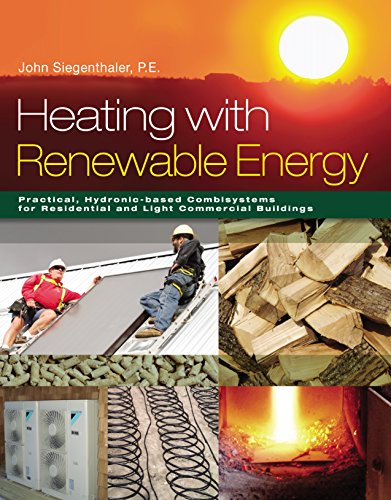
Heating eats more household energy than almost any other load, so any serious residential storage plan has to account for it. John Siegenthaler’s book focuses on hydronic systems (water-based heating using radiators or baseboards) and other renewable heat approaches, which pair naturally with a battery-backed home. If you’re designing a system that needs to cover winter nights, this is one of the few books that bridges the storage and heating worlds cleanly.
It’s written for HVAC professionals but remains accessible to committed DIYers who are willing to look up terms. The practical advice on sizing thermal storage, pairing heat pumps with solar, and managing buffer tanks applies directly to a home battery conversation. For a cold-climate homeowner, it’s the missing piece between solar panels and a comfortable house.
Features That Help
- Explains how renewable heating and battery storage interact, an often overlooked pairing.
- Useful technical detail on hydronic design for cold-climate homes.
- Practical sizing guidance that supports whole-home energy planning.
Practical Considerations
- Some readers may need to look up unfamiliar HVAC terminology.
- More useful for cold-climate households than mild-winter regions.
Who Will Love This
Homeowners in cold climates pairing solar with heat pumps or hydronic systems for full off-grid capability.
Swap It Out When
For a battery-focused install without heating considerations, The Battery-Powered Home is the more direct read.
Greg Smith’s book is the most homeowner-centric title on this list. It zeroes in on grid-tied lithium storage, the configuration most U.S. homeowners actually install, and walks through system design without assuming you have an engineering background. The “foolproof” framing in the title is a bit bold; I’d read it more as “thorough” since no install is truly foolproof. Still, the practical orientation is genuinely useful.
What sets this apart from the broader guides is its focus on the disaster-resiliency angle. Smith makes the case that stored energy means lights stay on during outages, medical equipment keeps running, and stored solar can be used at night instead of selling it back to the grid at wholesale. For homeowners pairing a battery with an existing solar array, that’s the real value proposition, and this book explains it clearly.
The Good Stuff
- Directly addresses the grid-tied lithium setup most U.S. homeowners actually install.
- Frames storage around disaster resiliency, which matches the real motivation for most buyers.
- Covers optimization of existing solar investments, not just new builds.
Details To Watch
- Codes and incentive programs shift, so always cross-check current local rules before installing.
- Some configuration examples assume specific inverter brands, which may not match every reader’s hardware.
Built With In Mind
Solar-equipped homeowners adding battery storage who want a focused, practical guide rather than a general energy read.
Look Elsewhere When
For pure policy and big-picture framing, 100% Clean, Renewable Energy and Storage for Everything covers the wider conversation.
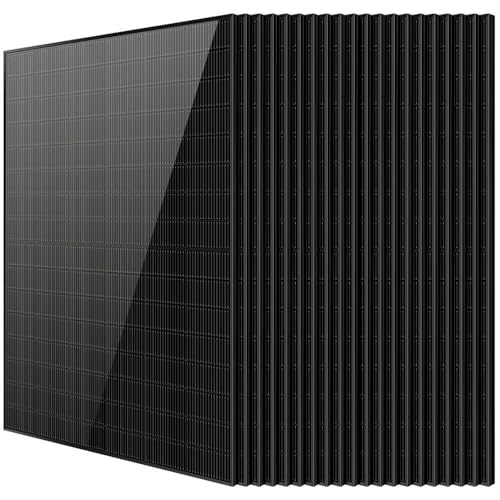
Twenty bifacial panels at 450W each delivers a serious 9kW array, which is enough to offset a meaningful chunk of a typical household’s daytime draw. The bifacial design captures reflected light from the rear face, and the dual-glass construction adds durability against harsh weather. For homeowners with roof or ground-mount space to spare, this bundle is the most ambitious hardware option in the roundup.
Like the smaller SUNGOLDPOWER 6-pack earlier, this carries UL61730 and CEC listings, so it should integrate cleanly with U.S. permitting. Compared to the JJN panel covered above, you’re trading the single-panel upgrade path for raw system scale. The honest read is that 20 panels is a real commitment, so it suits owners who’ve already decided on whole-home generation rather than curious first-timers.
What Makes Sense
- Total output supports meaningful whole-home daytime generation when paired with a battery bank.
- Bifacial design adds rear-side harvest that pays off on bright, reflective mounting surfaces.
- Dual-glass construction holds up well in rough weather conditions.
- CEC and UL certifications help with permitting and utility interconnection.
Where It May Fall Short
- Requires significant roof or ground space plus mounting hardware, which is a separate purchase.
- Larger inverters and a substantial battery bank are needed to use the full output.
- More panels means more installation labor, whether DIY or contracted.
Who Should Grab It
Whole-home solar adopters and off-grid households ready to commit to a substantial generation array.
Not Your Match When
Homeowners just exploring the category will find the SUNGOLDPOWER 6-Pack a far more approachable first step.
What Matters Most Before Choosing Residential Energy Storage Systems
Match The Battery To Your Real Loads
The single biggest mistake is sizing a battery based on what sounds impressive rather than what your home actually draws. A typical U.S. household uses around 30 kWh per day, but that varies wildly with climate, electric heating, and how many people live there. Before choosing a system, audit which loads matter during an outage. Refrigeration, medical equipment, internet, and a few lights usually top the list. Heating, cooling, and electric vehicle charging are harder to cover and may require expanding the system later.
Pair Panels And Batteries Thoughtfully
Solar panels and batteries do different jobs, and the relationship between them defines what your system can actually do. Panels generate power when the sun shines, but most household consumption happens in the evening. A battery bridges that gap, storing daytime production for nighttime use. The key ratio is panel-to-battery capacity: more panels produce more excess to store, while a larger battery holds more of that excess for later. Systems where one side far outpaces the other tend to leave value on the table.
Account For Climate And Site Conditions
Cold-climate homes face winter solar output drops that can slash generation by 50% or more. Hot-climate homes see the opposite, with panels losing efficiency above 25°C (77°F), and battery chemistries have their own temperature sensitivities. Rooftop orientation matters too: south-facing arrays produce the most in the northern hemisphere, but east-west setups can sometimes match household demand curves better. These site details shape which configuration actually pays off.
Plan For Permitting And Inspection Early
Residential storage systems typically need electrical permits, utility interconnection approval, and sometimes fire-safety clearances. UL-listed equipment and CEC certification (where applicable) tend to smooth those conversations. The honest read is that paperwork is rarely the reason installs fail, but it can delay them by weeks when overlooked. Anyone installing without professional help should check local rules before ordering equipment.
Picking Without The Common Slip Ups
Common Shopping Slip Ups
The most common error is buying a battery based on advertised capacity without checking usable capacity. A 10 kWh battery might only deliver 8 kWh before the inverter shuts it down to protect the cells. Reading the depth-of-discharge spec (the percentage of the battery you can actually use) reveals the real number.
What The Higher Tier Buys
Premium residential systems typically justify their cost with longer cycle life, better round-trip efficiency (the percentage of energy you put in that you actually get back out), and smarter inverters that shift between grid and battery seamlessly. For most homeowners, the upgrade makes sense when the system is the primary backup for critical loads, not just a partial hedge against outages.
Frequently Asked Questions
How long do residential batteries last?
Most modern lithium iron phosphate (LiFePO4) residential batteries are rated for 6,000 to 10,000 cycles, which typically translates to 10 to 15 years of daily use. Actual lifespan depends on depth of discharge, operating temperature, and how often the battery cycles.
Can I add storage to existing solar panels?
Yes, in most cases. A battery inverter can be added to an existing solar array, though some configurations require replacing the solar inverter with a hybrid model that handles both panels and batteries. Professional site assessment is usually worthwhile before committing.
What size battery do I need for backup?
Whole-home backup typically requires 20 to 40 kWh of usable capacity, while partial-home backup covering essentials often runs 10 to 15 kWh. The right size depends on which loads you want to keep running during an outage and for how long.
Do batteries work during a grid outage?
Yes, but only if the system includes a transfer switch or a battery inverter with islanding capability (the ability to disconnect from the grid and run independently during an outage). Without that feature, the system shuts down when the grid drops for safety.
Are permits required for residential storage installations?
In most U.S. jurisdictions, yes. Electrical permits, utility interconnection agreements, and sometimes fire-safety reviews are standard. UL-listed equipment typically makes the process smoother.
Closing Thoughts
The right residential storage system depends less on brand loyalty and more on honest answers to a few simple questions: what do you need to keep running, how much generation can your site support, and how much complexity are you willing to take on. Panels and batteries work best as a pair, and the books above help with the planning that turns a parts list into a working system. Take it one decision at a time, and the rest tends to follow.
