

Adding a residential wind turbine to a property sounds empowering until you actually start looking at what’s available. I spend a lot of time talking to homeowners who want to capture a bit of their own power, whether that means a real rooftop unit that moves serious air or a small generator that doubles as a teaching tool. This list pulls together the most useful options I’ve come across, mixing genuine home-ventilation hardware with the kind of small-scale generators that make a great classroom project or backyard experiment.
The Choices Worth Comparing

Lomanco 12-Inch Aluminum Mill Turbine

QINIZX Micro Wind Turbine Generator LED Kit
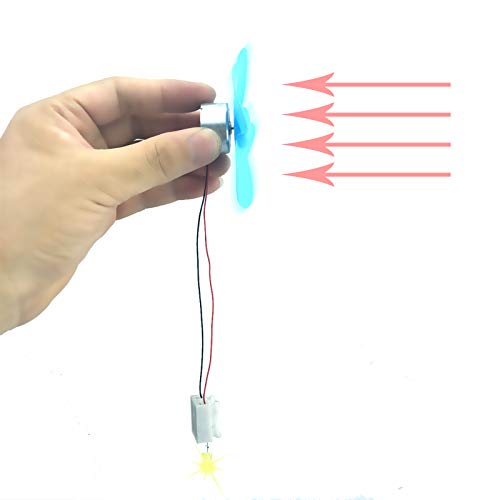
EUDAX DIY Micro Motor Turbine Model
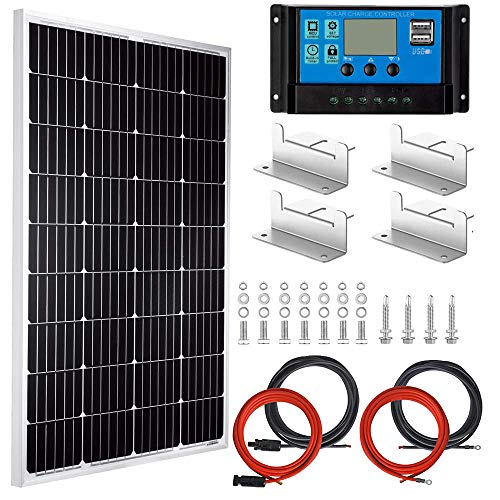
Pikasola 100W Monocrystalline Solar Panel Kit
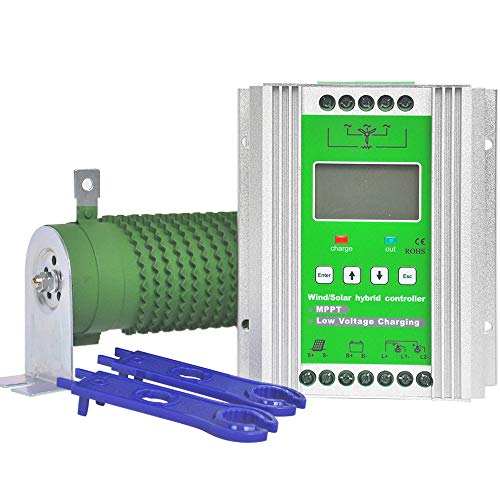
Pikasola 1400W Hybrid Wind Solar Controller
The Details Behind The Selections
This is the entry most homeowners actually want when they search for residential wind turbines, even if the purpose is venting rather than generating electricity. The Lomanco 12-inch aluminum unit is a roof-mounted turbine designed to pull hot, stale air out of an attic, which indirectly reduces cooling load on the whole house. For a single-story ranch with a sun-baked roof, that airflow benefit often matters more than any kilowatt reading.
It is built around 21 curved vanes with rolled edges, which helps deflect rainwater instead of letting it stream straight down the duct. Permanently lubricated upper and lower ball bearings keep the head spinning freely without scheduled greasing. Compared to the smaller generator kits below, this is genuinely hardware for a building, not a desktop experiment.
Well-Handled Touches
- 21 curved vanes move a meaningful volume of attic air even in light breezes
- Riveted at every connection, so vibration stays tight over years of rooftop service
- Permanently lubricated ball bearings remove a routine maintenance step from the homeowner’s calendar
- Rolled vane edges help rain and snow slide past instead of pooling on the bearings
- Aluminum body keeps weight manageable on standard rafters and sheathing
Things To Consider
- This is a ventilator, not an electricity generator, so anyone hoping to power appliances will need a different category entirely
- Roof installation usually means a helper and a safe ladder plan, since working alone on a pitched roof is rarely sensible
- Performance depends on unobstructed wind exposure, which a tree-lined lot can seriously limit
Feature Snapshot
Who It Suits Best
Homeowners in warm climates with a sun-exposed roof who want passive attic ventilation without the upkeep of a powered fan.
Consider Something Else When
Anyone aiming to actually generate electricity should jump to the EUDAX micro turbine model, since it produces a measurable voltage rather than just moving air.
The QINIZX kit leans educational. It pairs a small DC generator with an LED indicator that lights up when the blades spin, which makes the cause-and-effect of wind energy visible the moment a desk fan or hair dryer blows across the rotor. For a parent or teacher, that immediate feedback is the whole point.
Unlike the Lomanco turbine above, this unit does not rely on rooftop ambient wind to do its job. It is designed to be driven by a directed airflow, which means it works reliably on a classroom workbench or a kitchen table on a calm day. The trade-off shows up when anyone tries to use it as a backyard generator, since natural breezes often fall short of what the rotor needs.
What Stands Out
- Built-in LED makes the energy conversion visible, which turns an abstract concept into a hands-on demonstration
- Compact enough for a classroom drawer, so storage between lessons stays simple
- Driven by directed airflow, so it works indoors without waiting for a windy day
- Low voltage output keeps the demonstration safe for younger students to handle
Worth Noting
- Natural outdoor wind rarely produces a strong enough output, so realistic outdoor use is limited
- Not designed to charge phones, batteries, or any real household load
Right Fit For
Parents, middle-school science teachers, and curious beginners who want a quick visual lesson in how wind becomes electricity.
Look Elsewhere When
Anyone planning an actual off-grid power project should skip to the Pikasola hybrid controller, since the QINIZX unit cannot meaningfully charge one.
The EUDAX kit is the classic workhorse of hobby wind turbine builds. It centers on a tiny DC motor that produces 3V at around 1,500 RPM, scaling up to 12V at roughly 6,500 RPM, with a motor body of about 24 millimeters across. That sounds small, and it is, but the whole point is to demonstrate the principle, not to power a shed.
Where it differs from the QINIZX kit is in giving the builder more flexibility. You can hook it to a small LED array, a voltmeter, or even a modest rechargeable cell and watch the numbers change as blade speed changes. For a parent helping a student design a science fair project, that flexibility matters more than peak output.
Useful Touches
- Multiple operating voltages available by adjusting input speed, giving students real measurement variety
- Compact 24mm motor body fits inside most science fair display boards
- 14cm lead wires make breadboard-style hookups straightforward for beginners
- Common choice for STEM teachers, so replacement parts and lesson plans are easy to find
Trade Offs
- RPM must be actively driven, so an unattended outdoor installation will not produce meaningful output
- Small shaft and lightweight housing need careful handling, since dropping the unit can bend the shaft
- Limited real-world power output means it stays firmly in the teaching category
Quick Facts
Best Suited To
Middle-school and high-school students building a science fair model, or hobbyists who want a low-stakes way to learn generator wiring.
Swap It Out When
Someone planning a real rooftop install should pick the Lomanco turbine, since the EUDAX unit is meant for a workbench, not a roof.
I included a solar kit in a wind turbine roundup because most residential wind projects only really pay off when paired with solar. Pikasola’s 100-watt monocrystalline kit ships with a 20A PWM charge controller, MC4 cables, and Z-brackets, so a homeowner can mount it on an RV, a boat, or a small outbuilding without hunting down extras.
The panel itself uses a monocrystalline cell rated at about 24% conversion efficiency, which is solid for the size. In good sun, it should produce around 500Wh per day, enough to top up a 50Ah battery from half full in roughly three hours. Compared to the micro turbine kits earlier in the list, this is the first item that can actually run something useful on a quiet, windless day.
Bright Spots
- Monocrystalline cells at roughly 24% efficiency make the most of a compact panel footprint
- Tempered glass and aluminum frame keep the panel durable through seasons on an RV or boat
- Built-in 20A controller with two USB ports simplifies phone and small device charging
- Expandable up to 240W on 12V systems or 480W on 24V, so the kit can grow with the project
- Z-brackets make flat surface mounting accessible without a custom rack
Honest Caveats
- PWM controller is fine for small systems but loses some efficiency compared to MPPT alternatives at higher voltages
- Output depends heavily on direct sunlight, so shaded mounting locations cut real-world yield
- Not a wind product, so pairing it with a turbine still requires the controller below
Technical Highlights
Made For
RV owners, boaters, and homeowners building a small off-grid cabin who want a foundation that pairs well with a future turbine.
Where A Sibling Pick Shines
The Pikasola hybrid controller is the better match for anyone already committed to pairing solar and wind, since it manages both sources from one box.
This is the brain of a small hybrid system. The Pikasola 1400W controller accepts up to 800W from a wind turbine and up to 600W from solar panels, charging a 12V or 24V battery bank depending on what the system needs. For someone who already owns the panel kit above and wants to add a real turbine, this is the piece that ties the two together.
The wind side uses MPPT technology (Maximum Power Point Tracking, a method of squeezing the most energy out of a turbine at varying wind speeds), which keeps charging efficient even when wind speeds drop. The solar side uses PWM (Pulse Width Modulation, a simpler but reliable switching method), and there is a stepless unloading function with an external dump-load resistor to bleed off excess energy when the batteries are full. Compared to running two separate controllers, this saves panel space and wiring headaches.
Where It Delivers
- Handles wind and solar charging in a single enclosure, which simplifies the install
- MPPT on the wind side keeps charging productive in low wind speeds
- Stepless unloading with an external dump load protects batteries from overcharge
- Two programmable DC loads with four working modes offer useful flexibility for lighting and small appliances
- 12V and 24V systems are detected automatically, so configuration stays simple
Points To Note
- Requires a compatible turbine and panel setup, so it is not a stand-alone product
- Setup and wiring benefit from basic electrical familiarity, which a first-time installer may not yet have
- Dump-load resistor must be sized correctly to handle continuous energy when batteries are topped up
Whose Shelf It Belongs On
DIY homeowners building a hybrid wind and solar system who already have a turbine and panels ready to wire together.
Reach For A Different Pick When
Anyone who only wants one source of energy should grab the Pikasola 100W solar kit, since adding a hybrid controller without a turbine is wasted capability.
Choosing The Right Match For Your Property
Real wind power at home falls into three practical buckets. The first bucket is passive attic ventilation, where a turbine pulls hot air out of a roof cavity without generating any electricity at all. The second bucket is small-scale demonstration, where a desk-sized generator teaches the basic concept of mechanical-to-electrical conversion. The third bucket is hybrid off-grid power, where a real turbine and solar panels feed a battery bank through a smart controller.
Site assessment matters more than most people realize. A residential wind turbine only earns its keep when the average wind speed at the planned mounting height consistently clears roughly 10 miles per hour. Anything below that, and a homeowner will likely see disappointing output compared to the modest investment. Tree lines, nearby buildings, and valley geography can quietly rob a turbine of its rated performance, so an honest look at the site saves a lot of frustration later.
Zoning and homeowner association rules deserve a quick check before any purchase. Many municipalities have height limits, setback requirements, or outright restrictions on visible rooftop turbines. Some neighborhoods restrict free-standing towers entirely. Sorting out these rules early avoids the awkward moment of having to remove a freshly installed unit.
Mounting and safety are worth thinking through. Roof-mounted turbines involve ladder work and flashing the base into the shingles, so most homeowners end up hiring a handyman for the install. Tower-mounted turbines bring their own concerns, including guy wires, foundation work, and a clear fall zone. For most people, starting with a smaller system that the existing roof can support is the smarter move.
Budget expectations need grounding. A serious residential turbine with tower, inverter, and battery storage runs into significant money. The smaller kits in this list are excellent teaching tools and hobby projects, but they will not meaningfully offset a utility bill. Knowing which bucket the project falls into keeps expectations realistic from the start.
Key Considerations Across These Picks
Common Buying Slip Ups
Homeowners often chase the highest advertised wattage without checking the wind resource at their site. A 1400W controller paired with a turbine in a sheltered valley produces almost nothing, while a smaller, well-sited unit runs more consistently. The smarter move is to confirm local wind patterns first, then match hardware to that reality.
What The Higher Tier Buys
Spending up usually means better bearings, more durable blade materials, and an MPPT charge path instead of a basic PWM controller. Those upgrades matter most in mixed weather and across the long term, since cheaper turbines often lose performance as bearings wear or blades develop micro-cracks.
Frequently Asked Questions
What wind speed do I need for a residential wind turbine to work well?
Most residential wind turbines need sustained wind speeds around 10 miles per hour or higher to generate meaningful power. Anything consistently below that and the turbine will mostly spin without producing enough output to charge batteries or offset household use.
Can a small wind turbine really power a home?
A single small residential turbine is unlikely to cover an entire home’s electricity use. Most realistic home systems pair a modest turbine with solar panels and a battery bank, then offset a portion of total consumption rather than replacing the grid entirely.
Are rooftop turbines noisy?
Quality turbines with proper bearings run quietly, mostly producing a low whoosh. Cheaper units or poorly installed units with worn bearings can develop a hum or rattle that neighbors may notice, especially at night when ambient noise drops.
How tall does a mounting pole need to be?
The general rule is to mount at least 30 feet above any nearby obstruction within a 300-foot radius. Lower mounting heights put the turbine into turbulent air, which cuts output and increases wear on the blades and bearings over time.
Do residential wind turbines require much maintenance?
A well-built turbine with sealed bearings needs only an annual visual check for corrosion, loose hardware, and blade condition. Anything with greased bearings will need occasional lubrication, and the charge controller should be inspected for loose wiring and corrosion at the battery terminals.
Bottom Line
The right pick depends entirely on what “residential wind turbine” means in your life. A homeowner chasing cooler attic air will find the Lomanco turbine does exactly that, year after year. A parent or teacher wants the QINIZX or EUDAX kit for the demonstration value. Someone building a real hybrid system should pair the Pikasola solar kit with the matching hybrid controller. Match the hardware to the goal, and the rest of the project falls into place much more cleanly.
