

Rechargeable lithium-ion cells have quietly taken over everything from game controllers to 18V drills, and the category has gotten confusing. Higher capacity numbers, “constant 1.5V” claims, USB-C charging cases, and drop-rated tool packs all promise the same thing on paper. I pulled together nine solid picks that cover everyday household cells, specialty replacements, and pro-grade tool batteries, so the right match for your gear feels obvious by the time you finish reading.
A Quick View Of The Lineup
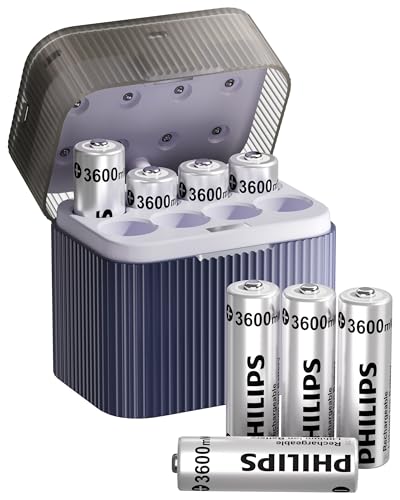
PHILIPS Rechargeable AA Lithium Batteries 8 Pack 3600mWh
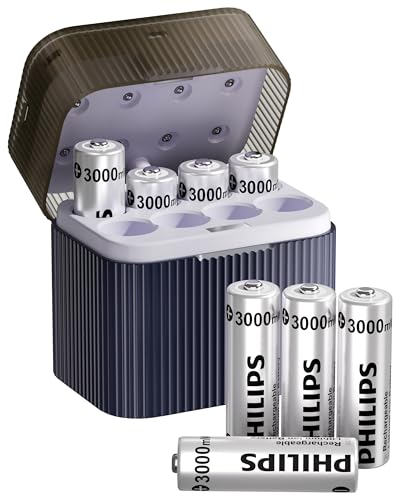
PHILIPS Rechargeable 3000mWh AA Lithium Batteries 8 Pack

Bosch Professional GBA 18V 5.0Ah CoolPack Battery

Estry Replacement Battery for Toniebox 50AA5S

Bosch Professional GBA 12V 2.0Ah Battery Pack

PHILIPS Rechargeable AAA Lithium Battery 8 Pack 1300mWh

PHILIPS Rechargeable AA Lithium Battery 4 Pack 3600mWh

Hixon 9V Rechargeable Batteries 4-Pack with Charger

Philips Rechargeable AA Lithium Batteries 8 Pack with Fast Charger
Meet The Standout Selections
This eight-pack of AA cells targets one specific frustration: gear that dims out halfway through a session. Instead of the gradual sag you get from Ni-MH rechargeables, the Li-ion chemistry holds a steady 1.5V from full to nearly empty, so an Xbox controller keeps the same rumble strength in hour three as in hour one. The 3600mWh rating is generous for the form factor, which matters most when you’re feeding power-hungry devices like photography flashes or gaming pads.
For most households, this is the kind of set-and-forget upgrade that quietly replaces a junk drawer of alkalines. The cells drop into any standard AA slot, and owners commonly report cycles well into the hundreds without noticeable capacity loss. The honest read is that the price-per-cell is higher than basic rechargeables, but the runtime per charge changes how often you actually need to swap them.
Useful Strengths
- Steady 1.5V output prevents the slow fade that wrecks performance in wireless controllers.
- Higher usable capacity than typical Ni-MH AA cells means fewer midweek swaps.
- Standard AA form factor fits remotes, gamepads, flash units, and clocks without adapters.
- Long cycle life means one set can replace dozens of alkaline disposables.
Worth Noting
- Requires a Li-ion-compatible charger, not the old Ni-MH unit in the garage.
- Upfront cost runs higher than basic rechargeables, even before the charger.
Quick Facts
Who It Suits Best
Gamers and households with high-drain wireless devices who want fewer swaps and steady performance.
Skip It When
Anyone running a smoke alarm or low-drain clock may prefer the Philips Rechargeable AAA Lithium Battery 8 Pack for slimmer slots.
Where Pick 1 focuses on raw capacity, this set leans into a different kind of convenience: a 2-in-1 case that doubles as both storage and a Type-C charger. Pop the lid, slot the cells in, plug in a USB-C cable, and the matched smart chip handles the rest. That kind of design suits a household where batteries tend to vanish into couch cushions between uses.
Capacity lands at 3000mWh, which is lower than the Editor’s Choice above but still a real step above basic rechargeables for cameras and gamepads. Owners who already have scattered Ni-MH chargers lying around often appreciate consolidating everything into a single dock. For most family setups, the trade-off is giving up a bit of runtime for a much tidier charging routine.
Useful Touches
- All-in-one case eliminates the “where’s the charger?” scramble.
- Type-C input means the same cable charges phones and batteries.
- Stable 1.5V output keeps controllers responsive over long sessions.
Trade Offs
- Lower per-cell capacity than the 3600mWh Philips set above.
- The charging case is bulkier than a plain wall charger, so storage planning matters.
Made For
Families juggling remotes, game controllers, and small electronics who want one tidy charging spot.
A Better Fit Elsewhere
The PHILIPS Rechargeable AA Lithium Batteries 8 Pack 3600mWh from Pick 1 makes more sense for users who prioritize runtime over a bundled charger.
This is the workhorse tier of the category, and it shows. The Bosch Professional GBA 18V 5.0Ah CoolPack slides into any Bosch Professional 18V tool, current or legacy, so adding capacity to an existing drill, impact driver, or grinder is plug-and-play. The CoolPack housing routes heat away from the cells during heavy cuts, which matters more than raw amp hours when a job runs long.
Capacity at 5.0Ah translates into meaningfully longer sessions between swaps on site or in the garage. Compared to the household AA cells earlier in this list, this is a different league entirely: heavier, more expensive, and built for repeated high-current draws. For tradespeople and serious DIYers, the universal compatibility across the 18V line is the real selling point.
Why It Works Well
- 5.0Ah capacity extends runtime on saws, grinders, and rotary hammers noticeably.
- CoolPack thermal management helps cells last longer under load.
- Fits the entire Bosch Professional 18V lineup, old and new.
Room For Improvement
- Heavier than compact 2.0Ah packs, so it can wear down smaller drills.
- Locked into the Bosch Professional ecosystem, no cross-brand use.
Key Specs
Best Suited To
Tradespeople and serious DIYers already running Bosch Professional 18V tools who need longer runtime between charges.
Look Elsewhere When
Anyone needing lighter overhead work will find the Bosch Professional GBA 12V 2.0Ah Battery Pack easier on the wrist.
This isn’t a general-purpose cell, and that’s the point. The Toniebox audio player runs on a custom Ni-MH pack, and once the original dies the unit effectively bricks. The Estry replacement matches the 50AA5S spec closely, including the 3.6V output and 2000mAh capacity, so a tired Toniebox comes back to life without a soldering iron.
Parents usually find this swap lands somewhere between a repair and a ritual: open the box, swap the pack, re-pair the figures, done. Built-in protection against overcharge and short circuits keeps the unit safe during long story sessions. For most Toniebox households, this is the only realistic way to extend the life of a beloved kids’ device.
Key Advantages
- Direct replacement for the 50AA5S pack, no wiring mods required.
- Built-in protection circuitry shields against overcharge and short circuits.
- Restores playtime on a kids’ toy that would otherwise be headed for the trash.
Honest Caveats
- Only useful for Toniebox owners, not a general household cell.
- Capacity at 2000mAh matches the original, not an upgrade.
Whose Shelf It Belongs On
Parents with a Toniebox whose original battery no longer holds a charge through bedtime stories.
Consider Something Else When
Anyone without a Toniebox should skip this and look at the Philips AA Lithium Batteries 8 Pack for everyday household use.
Compared to the heavier 18V pack earlier in the lineup, this 12V sibling is the kind of battery that disappears in your hand. The 2.0Ah capacity is modest on paper, but for overhead drilling, cabinet work, or trim carpentry, low weight matters more than maximum runtime. Bosch rates the housing to survive a 3-meter drop onto concrete, which is the kind of durability claim you actually believe after a few accidental slips off a scaffold.
The flexible power system means the same pack slides into every Bosch Professional 12V tool, current or new. Users who already own the 12V platform essentially get a spare or upgrade cell with zero compatibility headaches. For most weekend warriors, this is the right capacity-to-weight balance for detail work.
A Few Highlights
- Lightweight design reduces wrist fatigue during overhead drilling and trim work.
- Drop-tested housing holds up to real jobsite accidents.
- Cross-compatible across all Bosch Professional 12V tools.
Small Caveats
- 2.0Ah capacity runs shorter than the 18V 5.0Ah pack on heavy cuts.
- Limited to Bosch Professional 12V tools, nothing outside that family.
The Right Fit
Carpenters, electricians, and DIYers doing precision overhead or detail work on the Bosch Professional 12V platform.
Not Your Match When
Anyone needing maximum runtime on framing or masonry should step up to the Bosch Professional GBA 18V 5.0Ah CoolPack.
AAA cells get less attention than AAs, but the remote-control and small-electronics crowd drains them fast. This Philips pack solves the same problem as the AA versions above, just in a smaller form factor: steady 1.5V output and 1300mWh of usable capacity that outlasts typical Ni-MH AAA cells. Slim TV remotes and flameless candles stay responsive longer between charges.
The included charging station handles all slots independently, so partially used sets can top off without waiting on stragglers. For most homes juggling a half-dozen AAA devices, that flexibility matters more than peak capacity. The honest trade-off is that AAA lithium cells cost more per unit than the AA versions, so households running both form factors should plan the budget accordingly.
Notable Upsides
- Constant 1.5V keeps remotes responsive deep into a charge cycle.
- Higher capacity than standard Ni-MH AAA rechargeables.
- Multi-slot charging station fills cells independently for faster turnaround.
Points To Note
- Per-cell cost runs higher than AA equivalents due to the smaller size.
- Requires the bundled Li-ion charger, not the old Ni-MH dock.
Who Should Grab It
Households with multiple AAA devices like remote controls, flameless candles, and small electronics needing steady voltage.
Swap It Out When
The Philips Rechargeable AA Lithium Batteries 8 Pack 3600mWh from Pick 1 is the better fit for anyone running more AA than AAA devices.
This is the same 3600mWh AA cell as the Editor’s Choice in Pick 1, just sold as a smaller four-pack. For photographers running two camera bodies and a flash, or a household that only needs four AAs at a time, the lower commitment is genuinely useful. Capacity and voltage match the larger pack, so performance is identical.
The 2-in-1 charging and storage case design carries over, which means even a four-cell setup gets the same tidy Type-C charging experience. Owners who want to test the Li-ion AA format before committing to eight cells often start here. The catch is that cost per cell is usually higher in the smaller pack, so heavy users save money going bigger.
Everyday Advantages
- Same high-capacity 3600mWh cells as the larger eight-pack.
- Compact four-cell bundle suits camera kits and game controllers.
- Integrated charging case keeps the small set organized.
Factors To Consider
- Cost per cell tends to run higher than the eight-pack equivalent.
- Limited to four slots, so larger households will outgrow it quickly.
Perfect Match For
Photographers with a flash and two cameras, or anyone testing Li-ion AAs before buying a full household set.
Another Choice May Suit
Large families running eight or more AA devices will save money per cell with the PHILIPS Rechargeable AA Lithium Batteries 8 Pack 3600mWh from Pick 1.
9V batteries power the gear you forget about until it dies. Smoke detectors, wireless microphones, and guitar pedals all run on this awkward form factor, and disposable 9V cells add up fast. The Hixon 4-Pack with charger kit tackles that pain point directly: 850mAh Li-ion cells and a Type-C input mean topping off is as easy as charging a phone.
Smart protection circuitry against overcharge and short circuits keeps alarm installs safe in the long term. Owners commonly report the cells handling hundreds of cycles without noticeable drop in runtime. For most homes with multiple 9V devices, the kit pays for itself by the second year of avoided disposable purchases.
The Good Stuff
- Rechargeable format cuts down on disposable 9V waste from smoke detectors.
- Type-C charging cable makes top-offs simple and universal.
- Built-in safety protection handles long-term alarm installations.
Things To Weigh
- Capacity at 850mAh is modest for stage microphones during long shows.
- 9V cells sit at lower voltage than some specialty pro-audio gear expects.
Built With In Mind
Homeowners with multiple 9V smoke detectors or anyone running wireless microphones for casual use.
Reach For A Different Pick When
Anyone needing 1.5V AA or AAA rechargeables for everyday gadgets should look at the Philips AA or AAA packs earlier in the lineup.
The closing entry is essentially the Editor’s Choice from Pick 1, but bundled with a faster charger than the standard-issue dock. For preppers, e-sports players, and households that chew through AAs faster than they recharge, faster turnaround between sessions is the practical upgrade. The cells themselves are unchanged: 3600mWh, stable 1.5V output, and the long cycle life that defines the line.
Type-C input keeps the charging routine modern, and the matched smart chip manages individual cell health. Compared to the 3000mWh bundle in Pick 2, this kit trades a little convenience-packing for higher capacity and faster fill times. For most heavy users, that combination is the right answer.
The Case For It
- Fast charger cuts downtime between heavy AA sessions.
- Same 3600mWh high-capacity cells as the top standalone AA pick.
- Type-C input matches modern cables already on most desks.
Possible Compromises
- Costs more than buying cells and a basic charger separately.
- Eight slots fill fast if the household runs more than eight AA devices.
Feature Snapshot
Who Will Love This
Heavy AA users, gamers, and preppers who want maximum capacity paired with the shortest recharge turnaround.
Where A Sibling Pick Shines
Anyone prioritizing a smaller bundle will save money with the PHILIPS Rechargeable AA Lithium Battery 4 Pack 3600mWh from Pick 7.
What To Weigh Before Buying Lithium Ion Battery
Capacity Versus Voltage Stability
Capacity, measured in mWh or mAh, tells you how long a cell lasts per charge, while voltage stability tells you how well it performs throughout that charge. Ni-MH cells start at 1.2V and drift down, which is fine for a wall clock but rough on gaming controllers. Li-ion AA cells hold a steady 1.5V from full to empty, which is why they shine in high-drain gear. Users running low-drain devices don’t need to chase this spec, but anyone feeding power-hungry electronics should treat stable voltage as a real upgrade.
Form Factor and Device Fit
Lithium-ion batteries span more shapes than most people realize. AA and AAA cells cover household electronics, 9V packs feed alarms and microphones, and tool packs like the Bosch Professional GBA series handle 12V and 18V platforms. Mismatched form factors simply won’t fit, so confirming the exact size before ordering avoids the hassle of returns. Specialty replacements like the Estry Toniebox pack only fit one device, which is fine when that’s exactly what you need.
Ecosystem Lock-In
Tool batteries carry an extra consideration: cross-brand compatibility is rare. Bosch Professional 18V packs only fit Bosch Professional 18V tools, and the same is true for other major tool brands. Investing in a battery often means investing in that platform, which makes platform choice more strategic than the cells themselves. Household AAs and AAAs avoid this problem entirely since the format is universal.
Charging Routine
A rechargeable cell is only as convenient as its charger. Bundled charging cases with Type-C inputs cut down on cable clutter, while multi-slot stations handle mixed sets independently. Heavy users benefit from faster chargers and larger bundles, while casual households can get by with smaller packs and basic docks. Planning the charging routine before the batteries arrive keeps the upgrade feeling smooth rather than chaotic.
Smart Moves And Cost Tradeoffs
Wrong Turns To Avoid
Shoppers often grab the highest mAh number without checking voltage behavior, then wonder why a wireless controller still feels sluggish. The other common slip is buying a tool battery without confirming the voltage platform, since a 12V pack won’t power an 18V drill no matter the brand. A third pitfall is skipping the charger check, because Li-ion cells need Li-ion chargers, and the old Ni-MH dock in the garage won’t cut it.
When Paying More Pays Off
Higher-tier lithium-ion batteries usually earn their price through longer cycle life, faster charging, and more consistent voltage output. For households that chew through rechargeables, that translates into fewer replacements and better device performance over time. Casual users running a single remote control won’t see enough benefit to justify the upgrade, but anyone juggling multiple high-drain devices will feel the difference within the first week.
Frequently Asked Questions
Are lithium-ion batteries better than Ni-MH rechargeables?
For high-drain devices, yes, because Li-ion cells maintain a stable voltage throughout the discharge cycle rather than gradually sagging like Ni-MH. For low-drain gear like a wall clock, the difference is minimal and Ni-MH may still be perfectly fine.
Can I use any charger with Li-ion AA batteries?
No. Lithium-ion cells require a charger specifically designed for Li-ion chemistry. Using an old Ni-MH charger risks undercharging or damaging the cells, so matching the charger to the chemistry matters.
How long do lithium-ion rechargeables typically last?
Quality Li-ion AA and AAA cells are commonly rated for hundreds to over a thousand charge cycles before noticeable capacity loss. Actual lifespan depends on usage patterns, heat exposure, and how deeply the cells are discharged each cycle.
Is it safe to leave lithium-ion batteries charging overnight?
Most modern Li-ion chargers include smart cutoff circuitry that stops the charge once cells are full. Still, charging in a cool spot and avoiding damaged cables reduces any unnecessary risk over time.
Why are tool batteries so much more expensive than AA cells?
Tool packs carry higher capacity, tougher housings, and built-in thermal management to handle the heavy loads drills and saws demand. They also lock you into a specific tool ecosystem, which is part of why they cost more than household cells.
Wrap Up
The right lithium-ion battery comes down to matching the cell to the device and the user. Gamers and high-drain households will love the Philips AA packs, Bosch 18V owners get real runtime gains from the CoolPack, and Toniebox families can resurrect a beloved toy with the Estry replacement. Browse the picks above, pick the one that fits your gear, and enjoy fewer dead-battery surprises.
