

A power blip in the middle of a render, a file save, or a video call costs real time. I put together this list for anyone who needs backup power that doesn’t add weight, noise, or battery anxiety to a desk or home office. Lithium chemistry has reshaped what a small UPS can do, and the eight models below cover everything from a single router to a full workstation.
Your Options, Compared

APC UPS 850VA/450W Battery Backup & Surge Protector

GOLDENMATE 1500VA/1000W Lithium UPS (Gray)
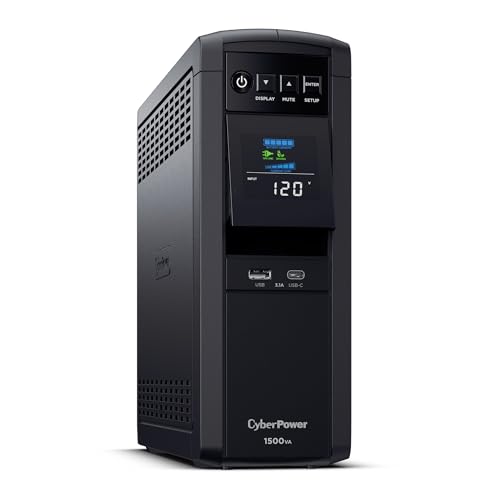
CyberPower CP1500PFCLCD PFC Sinewave UPS

GOLDENMATE 1500VA/1000W Lithium UPS (White)

APC Battery Backup BE650G1 650VA/390W

GOLDENMATE 1000VA/800W Lithium UPS (White)

GOLDENMATE 1000VA/600W Lithium UPS (White)

GOLDENMATE 600VA/360W Lithium UPS
Why These Options Stand Out
The APC BE850G2 is a small block of plastic that quietly takes care of the stuff you forget is plugged in. With seven NEMA 5-15R outlets (five backed by battery, two surge-only) it can swallow a router, a modem, a monitor, and a tower without a fight. For most home offices, the 850VA/450W rating is the sweet spot between runtime and price.
It’s a sealed lead-acid unit, so it weighs more than the lithium models further down this list, but APC has a long track record with this form factor and replacement batteries are easy to source. If your priority is proven reliability over chemistry, this is a sensible anchor pick.
A Few Highlights
- Seven outlets total, giving flexibility for tower, monitor, and networking gear on one strip.
- 850VA/450W rating covers a typical PC and monitor with a few minutes of runtime to save work.
- Compact upright shell that slides behind a desk without dominating floor space.
- Replaceable battery extends the working life of the unit beyond the initial cells.
Things To Consider
- Heavier than the LiFePO4 picks below, which matters if the UPS lives on a wall shelf or thin desk.
- Lead-acid cells typically need a swap every few years, an added cost and a small chore.
Right Fit For
A home office with a single PC, a monitor, and a router who values proven brand support over cutting-edge battery tech.
A Better Fit Elsewhere
Anyone wanting the lightest possible unit and decade-long cell life should look at the GOLDENMATE 1000VA/800W Lithium UPS instead.
Step up to a real workstation and the APC 850VA starts to look thin. The GOLDENMATE 1500VA/1000W answers with a Lithium Iron Phosphate (LiFePO4) battery rated for over 10 years of service and 3000+ charge cycles, which is the kind of spec that matters when the UPS is plugged in 24/7 for a decade.
The metal housing is heavier than the small APC above, but it dissipates heat better during sustained brownouts. For a home office running a power-hungry tower plus a multi-monitor setup, the extra headroom is genuinely useful.
The Good Stuff
- LiFePO4 chemistry rated for 10+ years of use, so the unit pays back its cost over time.
- 1000W real-world output handles gaming PCs and workstation builds without breaking a sweat.
- Maintenance-free: no scheduled battery swaps, which simplifies long-term ownership.
- Sturdy metal case for better thermal management during heavy load events.
Trade Offs
- Bulkier than the 850VA APC, so it needs a real shelf or floor spot rather than a hidden corner.
- Higher initial cost, even though long-term battery savings offset that over the years.
Feature Snapshot
Who Will Love This
Power users running gaming rigs, video editing stations, or home servers who want a set-and-forget backup with serious capacity.
Swap It Out When
Outfits with strict aesthetic requirements for white hardware should reach for the GOLDENMATE 1500VA/1000W Lithium UPS (White) instead.
The CP1500PFCLCD earns its place for one specific reason: pure sine wave output. Many modern desktops use active PFC (Power Factor Correction) power supplies, and a simulated sine wave UPS can confuse them, leading to unexpected shutdowns. The CyberPower’s clean output sidesteps that entire category of headache.
The mini-tower chassis holds a color LCD that surfaces real-time load, battery level, and estimated runtime at a glance. It’s a tower rather than a brick, so plan for floor or shelf space.
Useful Touches
- Pure sine wave output protects active PFC power supplies from choppy simulated waveforms.
- Color LCD panel shows load percentage and runtime estimate without needing software.
- Line interactive topology corrects small voltage sags without draining the battery.
- Higher 1500VA capacity handles workstation loads with room to spare.
Points To Note
- Lead-acid battery inside, so a replacement is part of long-term ownership planning.
- Tower form factor takes up more space than the flat APC units above.
Made For
Anyone running an active PFC desktop, a high-end workstation, or sensitive A/V gear that doesn’t tolerate stepped or simulated waveforms.
Look Elsewhere When
Shoppers wanting lithium chemistry and longer service life should pivot to the GOLDENMATE 1500VA/1000W Lithium UPS (Gray) for a similar capacity in a more modern package.
This white-cased twin to the gray 1500VA model trades the bronze/industrial look for a finish that disappears into a modern studio or all-white battlestation. The 51.2V 5.8Ah LiFePO4 battery pack is the headline number: higher voltage than the gray version, which tends to deliver more stable output under load.
Functionally it’s the same proven LiFePO4 platform, so a 10-year service life and 3000+ cycles carry over. The choice between the gray and white models is purely about visual fit and the slightly different internal battery pack.
What It Does Well
- White chassis suits modern, minimalist desk setups where dark UPS units would stand out.
- Higher 51.2V battery pack provides stable voltage under heavy loads.
- LiFePO4 chemistry cuts total cost of ownership by skipping battery swaps.
- 1000W output supports a workstation plus dual monitors with headroom.
Honest Caveats
- Heavier than a compact UPS, so a sturdy shelf is the right home for it.
- Premium price compared to lead-acid units of similar VA rating.
Key Specs
Whose Shelf It Belongs On
Design-conscious owners of white-themed studios, content creation rigs, or premium workstations who want long-life backup without a visual clash.
Where A Sibling Pick Shines
Shoppers who don’t care about color matching and want a similar LiFePO4 platform at a slightly different capacity should look at the GOLDENMATE 1000VA/800W Lithium UPS (White).
The BE650G1 is the smaller sibling to the BE850G2 above, and for a lot of desks that’s plenty. At 650VA/390W it covers a modest tower or a laptop-plus-monitor setup, leaving headroom for the always-on stuff like a router and a phone base.
Eight NEMA outlets is generous for the size, split evenly between battery-backed and surge-only. It’s a long-standing APC design that owners tend to leave in place for years.
Practical Pluses
- Eight total outlets, more than most compact UPS units at this capacity.
- Lower entry price for shoppers who just need basic backup on a single PC.
- Compact horizontal case tucks under a desk or behind a monitor arm.
Small Caveats
- 390W real-world output can’t safely cover a power-hungry gaming tower plus peripherals.
- Lead-acid cell means eventual battery replacement is part of the ownership cycle.
Best Suited To
Students, remote workers with a single laptop or small desktop, and anyone who just needs the modem and router to stay alive through short outages.
Not Your Match When
Anyone running a beefy tower or a multi-monitor rig should jump to the CyberPower CP1500PFCLCD for the headroom.
For most home offices, 1000VA/800W is the comfortable middle of the road, and this GOLDENMATE delivers that in a LiFePO4 package rated for 5000+ charge cycles. That cycle count is notably higher than the larger 1500VA models, which makes sense if your office sees frequent short blips rather than rare long outages.
The white case keeps it visually quiet, and 800W of real output covers a typical mid-tower plus dual-monitor setup without breaking a sweat.
Well-Handled Touches
- 5000+ cycle LiFePO4 cell, often translating to over a decade of daily use.
- 1000VA/800W rating covers most mid-tower desktops with peripherals.
- No battery swaps to schedule, which simplifies long-term ownership.
Less Ideal Details
- Heavier than the compact APC units, so plan for a sturdy shelf or floor placement.
- Output is lower than the 1500VA siblings, so it can struggle with full workstation builds.
Quick Facts
Perfect Match For
Home office owners who want a quiet, white, modern-looking UPS that they can install and forget about for the next decade.
Reach For A Different Pick When
Buyers needing more output for a workstation plus heavy peripherals should look at the GOLDENMATE 1500VA/1000W Lithium UPS (White) instead.
This is the lower-watt sibling to the 1000VA/800W above, and it makes sense for shoppers who like the LiFePO4 platform but don’t need to push 800 watts through the unit. With 600W of output, it covers a typical mid-range tower, a couple of monitors, and a network switch with room to spare.
It still carries the 5000+ cycle rating, so the long-term ownership story is similar: install it, ignore it, and let the chemistry do the work.
A Few Strong Suits
- LiFePO4 platform with 5000+ cycle life at a competitive price point.
- Lower cost than the higher-watt LiFePO4 models while keeping the same long-life chemistry.
- White finish fits clean, modern desk setups.
Where It May Fall Short
- 600W output can’t safely cover a high-end gaming rig or workstation with multiple GPUs.
- Bulky form factor compared to a flat APC strip, depending on the layout of your desk.
Who Should Grab It
Home office shoppers who want lithium chemistry and a long service life without paying for capacity they won’t actually use.
Where Another Pick Suits Better
Anyone running a more demanding desktop should move up to the GOLDENMATE 1000VA/800W Lithium UPS (White) for the extra wattage.
Not every backup need is a full workstation. The 600VA/360W GOLDENMATE LiFePO4 unit is sized exactly right for the things that actually keep a household running: the modem, the router, a phone base, maybe a small NAS or a Raspberry Pi cluster.
It’s a small box with a 25.6V 3Ah LiFePO4 cell rated for 10+ years and 3000+ cycles, the kind of spec that turns a backup battery into something you install and don’t think about again. For a small-space office, it’s a tidy fit.
Where It Helps
- Compact form factor hides behind a shelf or a media console without drawing attention.
- LiFePO4 chemistry matches the long-life story of the larger GOLDENMATE units.
- 360W covers networking gear and small devices without overpaying for capacity.
A Few Limitations
- Too small to back up a desktop PC plus monitor, so the use case is intentionally narrow.
- Outlet count is more limited than the larger units, which may force prioritization of what gets plugged in.
Built With In Mind
Apartment dwellers, remote workers with a laptop-only setup, and anyone whose main worry is keeping internet alive during a brownout.
Consider Something Else When
Buyers who want a small UPS but with more outlet headroom should look at the APC BE650G1, which offers more receptacles at a similar capacity.
What To Weigh Before Choosing a Lithium Ion UPS
Match Capacity to Real Load
The biggest mistake is buying a UPS sized for a number that looks impressive on the box. A 600VA/360W unit is fine for a router, but a gaming tower plus dual monitors will chew through that in minutes. Estimate the wattage of what you plan to plug in, leave 20 to 30 percent headroom, and pick a unit whose rated wattage clears that bar.
Pure Sine Wave vs Simulated
Active PFC power supplies (common in modern desktops) work best with pure sine wave output. If your PC uses an older or simpler power supply, a simulated sine wave unit can save money. The CyberPower CP1500PFCLCD handles the active PFC crowd cleanly, while many lower-cost models assume a simpler load profile.
Lithium vs Lead-Acid Ownership
LiFePO4 cells cost more up front but typically skip the 3- to 5-year battery swap that lead-acid units need. For a UPS that lives in a hard-to-reach corner, that hands-off lifespan matters. For a unit on an open shelf, the lead-acid APC models still earn their place with a lower entry price.
Form Factor and Placement
Tower UPS units like the CyberPower and the larger GOLDENMATE models need a real spot on a shelf or floor. Flat units like the APC BE850G2 and BE650G1 slide under furniture. The honest read is that people tend to put a UPS wherever there’s room, so measuring the spot before buying avoids the awkward “this is bigger than I thought” moment.
Pitfalls and Premium Upside
Mistakes Worth Dodging
The most common slip is overestimating how long a UPS will keep a desktop running. Even a 1500VA unit gives a power-hungry tower maybe five to ten minutes, not an hour. The job of a small UPS is to bridge a brief outage, save open work, and shut down safely, not to replace a generator.
A second trap is ignoring the active PFC question. Plugging a modern desktop into a simulated sine wave UPS can lead to the supply refusing to switch over to battery, which defeats the entire purpose. Verify the output waveform before buying for sensitive gear.
Where The Extra Money Goes
Higher-tier lithium models pay for three things: longer cycle life, larger battery packs, and pure sine wave output. The 1500VA GOLDENMATE units and the CyberPower CP1500PFCLCD sit at that tier, and the upgrade is worth it for anyone whose work would cost real money to lose in a sudden shutdown. For lighter loads, a budget unit like the BE650G1 still does the job, just with the usual lead-acid compromises.
Frequently Asked Questions
How long will a lithium UPS actually run my gear?
Runtime depends entirely on how much wattage you draw. A modem and router on a 600VA unit can run for over an hour, while a full desktop plus monitor on the same unit might give you under five minutes. The honest read is that small UPS units are bridges, not generators.
Do I really need pure sine wave output?
For older PCs and most networking gear, simulated sine wave is fine. Active PFC power supplies in modern desktops are the case where pure sine wave matters, and skipping it can lead to a power supply that refuses to switch to battery.
How long do LiFePO4 cells really last?
Manufacturer ratings for the picks above range from 3000 to 5000+ charge cycles, which usually translates to 10+ years of typical home use. The trade-off is a higher up-front cost compared to lead-acid.
Can I replace the battery myself?
Lead-acid units like the APC BE850G2 and BE650G1 use standard replaceable cells, and there are plenty of guides for the swap. LiFePO4 units are generally designed as sealed units, so a worn-out cell usually means replacing the whole UPS.
Is a UPS the same as a surge protector?
No. A surge protector only clamps voltage spikes. A UPS also stores energy in a battery and can keep gear running through a brief outage, which is what makes the difference during a real blackout.
Closing Remarks
The right UPS is the one that matches your gear, your space, and how much downtime you can stomach. For most home offices, a mid-size lithium unit in the 1000VA range hits the sweet spot, while the smaller and larger picks on this list cover the edges. Pick the one that fits your setup, install it, and let it quietly do its job for the next decade.
