

A power outage turns ordinary evenings upside down: fridge food thaws, the sump pump stops, Wi-Fi dies mid-meeting, and the HVAC system becomes a very expensive metal box. The right home backup power station keeps the essentials alive until utility crews catch up, and it can double as a camping companion or workshop helper on sunny weekends. I put together this roundup to help you match capacity, chemistry, and form factor to your real outage risk, not just the spec sheet.
A Side-By-Side Look

Enphase IQ PowerPack 1500Wh Solar Generator Kit (400W Panel + IQ Cart)

Enphase IQ PowerPack 1500Wh + 200W Solar Panel Kit

Honda EU2200i Companion 2200W Inverter Generator

EF ECOFLOW Delta 3 Portable Power Station (1024Wh 1800W)
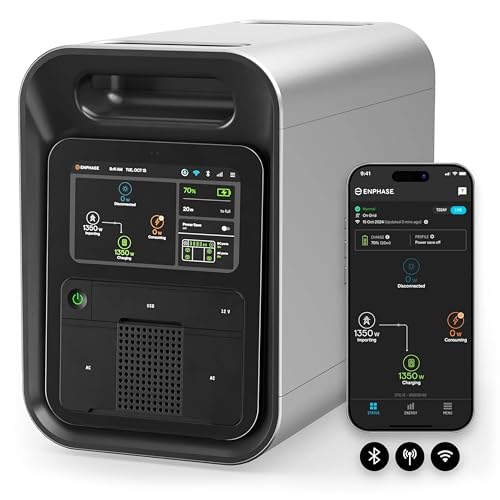
Enphase IQ PowerPack 1500Wh Portable Power Station

BLUETTI AC200L Portable Power Station (2048Wh 2400W)

Generac 18kW Whole Home Generator (Transfer Switch)

Enphase IQ PowerPack 1500Wh + IQ Cart
Generac 22kW Whole Home Generator (Transfer Switch)
Generac 26kW Whole Home Generator (Transfer Switch)
Taking A Closer Look At The Options
The Enphase IQ PowerPack 1500Wh Solar Generator Kit arrives as a turnkey bundle: a 1500Wh LFP (lithium iron phosphate, a safer long-life battery chemistry) portable station, a 400W folding solar panel, and the IQ Cart. The package design matters here because most owners underestimate the awkward shuffle of carrying a battery plus a panel plus a cart into the garage during a real outage. Pre-bundling solves that friction.
Enphase pairs the station with its IQ8 microinverter tech, which means each panel produces grid-quality AC power on its own, improving harvest under partial shade. The whole kit carries UL 9540A certification for thermal runaway safety, an important consideration for indoor use. For households in wildfire or storm corridors where the grid drops every few months, this combo covers both short blackouts and a few days of modest loads.
Well-Handled Touches
- Bundle includes a 400W panel plus a rolling base, so no extra accessory shopping
- LFP battery chemistry rated for thousands of cycles, translating to roughly 10 years of weekly use
- IQ8 microinverter per panel keeps production high even when one panel sits in shade
- UL 9540A certification supports safer indoor placement near living spaces
- Full charge in roughly four hours of strong sun, useful for daily top-ups
Things To Consider
- 400W panel is split into two 200W segments, so handling the array takes some practice
- Panel weight plus station weight plus cart adds up, plan for storage space
- Solar input ceiling may bottleneck charging when skies stay gray for days
Who It Suits Best
Suburban homeowners in outage-prone regions who want a single purchase that pairs battery storage with renewable recharging in one box.
Where Another Pick Suits Better
Shoppers wanting a stationary, hands-off setup with no manual setup at all should consider the Generac 18kW Whole Home Generator for automatic standby operation.
Think of the Enphase IQ PowerPack 1500Wh + 200W Solar Panel Kit as the lighter sibling of the previous bundle. The 1500Wh LFP battery stays identical, but the panel drops to a single 200W array. The trade-off is slower recharge and simpler handling, which suits owners who mostly recharge from a wall outlet and only pull the panel out occasionally.
The station still ships with the IQ8 microinverter setup and UL 9540A safety listing, plus app control via Wi-Fi and Bluetooth. For an apartment dweller or a household relying on occasional overnight outages, this kit covers the basics without overwhelming the closet it lives in.
What Pays Off
- Single 200W panel folds compactly for closet storage
- LFP battery plus UL safety certification allow confident indoor placement
- App-based monitoring tracks input, output, and remaining runtime
- Quieter than any fuel generator, no exhaust or refueling trips
Honest Caveats
- Eight-hour solar recharge assumes strong midday sun, longer on cloudy days
- Lower panel wattage means smaller daily energy harvest in winter
- Same 1500Wh capacity as the 400W kit, but slower to refill
Made For
Quiet, code-conscious owners in apartments or smaller homes who mainly need overnight backup for a fridge, router, and a few lamps.
Not Your Match When
Households facing multi-day outages in cloud-prone regions may prefer the BLUETTI AC200L Portable Power Station, which carries nearly twice the capacity for longer runtimes.
The Honda EU2200i Companion is the workhorse gas inverter of the category. Rated at 2200 watts of clean inverter power, it runs sensitive electronics without the harmonic distortion that plagues cheaper open-frame units. The “Companion” trim adds a built-in 30A outlet for RV hookups and easier parallel pairing with another Honda inverter for double the output.
Operating noise sits between 48 and 57 dB(A), quieter than a hair dryer at full tilt. For a homeowner who already keeps gasoline on hand, the EU2200i delivers unlimited runtime as long as the fuel can keeps coming. Compare that to the Enphase IQ PowerPack above: the Honda trades silent battery operation for unlimited refuel capacity.
The Good Stuff
- 2200W inverter output handles microwaves, fridges, and small AC units
- 30A RV-ready outlet and parallel capability for doubling capacity
- Honda’s fuel efficiency stretches a tank through overnight use
- Proven reliability from a brand that has built portable generators for decades
Points To Note
- Gasoline dependency means fuel storage, stabilizer, and ventilation planning
- Not approved for indoor use, requires outdoor placement with exhaust clearance
- Annual oil changes and spark plug service are widely reported maintenance musts
Right Fit For
RV owners, food truck operators, and homeowners with covered outdoor space who need unlimited runtime during prolonged outages.
Skip It When
Apartment dwellers without outdoor access or a balcony setup should consider the Enphase IQ PowerPack 1500Wh Portable Power Station for fully indoor-safe battery operation.
The EF ECOFLOW Delta 3 Portable Power Station leans hard into speed. With 1500W of AC input plus 500W of solar input, the manufacturer claims a full recharge in roughly 56 minutes and 80% in around 30 minutes. That puts it at the front of the pack for households that want to refill between outage cycles without overnight downtime.
The 1024Wh LFP battery sits smaller than the Enphase or BLUETTI options above, but the expansion path matters: the unit integrates with EcoFlow’s ecosystem up to 5kWh using extra battery packs. For someone starting small with room to grow, the Delta 3 is a modular foundation rather than a one-shot purchase.
Notable Upsides
- Industry-leading wall recharge speed saves hours during repeat outages
- LFP chemistry delivers long cycle life for daily cycling households
- Expansion path to 5kWh using add-on packs covers future-proof growth
- 1800W output handles most kitchen appliances and home office gear
A Few Limitations
- 1024Wh base capacity is lower than competitors at similar prices
- Fast-charge mode generates fan noise during long AC refill sessions
- Solar input ceiling may throttle recharge when sun hours drop in winter
Feature Card
Best Suited To
Tech-forward homeowners with mixed brief outages who value rapid refill and want a modular expansion path rather than a fixed-capacity box.
Look Elsewhere When
Households needing immediate high capacity without buying extra battery packs should consider the BLUETTI AC200L Portable Power Station, which ships with 2048Wh out of the box.
The Enphase IQ PowerPack 1500Wh Portable Power Station drops the solar panel to focus on the battery itself, and that focus pays off in port count. Eleven output ports (four AC 120V, four USB-A, two USB-C, and one DC 12V) cover nearly any plug a household might throw at it during a blackout.
The headline spec for safety buyers is UL 9540A thermal runaway certification plus UL 2743 outdoor use, with operating temps from -4°F to 122°F. The sub-10ms switchover from grid to battery keeps desktop computers and CPAP machines running without a flicker, which is the difference between saving work and rebooting everything.
Useful Highlights
- Eleven ports mean fewer power strips and fewer trade-offs between devices
- Under 75 minutes to full from a wall outlet keeps the unit ready between storms
- 2,500-cycle battery rating translates to nearly seven years of daily use
- Sub-10ms grid-to-backup switchover protects sensitive electronics
Softer Spots
- No panel in the box, solar recharging requires a separate purchase
- 1500Wh ceiling caps whole-home ambitions; consider expansion if needed
Who Should Grab It
Owners in mixed-temperature regions who want a wall-charged unit ready to deploy, with safety certifications that simplify indoor placement.
Another Choice May Suit
Shoppers wanting solar panels included from day one should consider the Enphase IQ PowerPack 1500Wh + 200W Solar Panel Kit, which adds a foldable panel.
The BLUETTI AC200L Portable Power Station is the heavyweight of the portable lineup, packing 2048Wh of LiFePO4 capacity and 2400W of AC output. That extra 200W over its predecessor, the AC200MAX, lets it drive more demanding appliances like microwaves, kettles, and small space heaters simultaneously without tripping.
Expansion is the real story here. The AC200L scales to a maximum of 8192Wh when paired with two B300K, two B210, two B300, or one B230 expansion battery. For households that want a portable unit today and a near-whole-home solution tomorrow, that growth path is more aggressive than anything else on this list.
What Stands Out
- 2048Wh base capacity covers longer outages before refilling
- 2400W output handles high-draw appliances like kettles and microwaves
- Expansion ceiling of 8192Wh rivals small standby systems
- LiFePO4 chemistry supports thousands of cycles for daily users
Trade-Offs To Consider
- Station alone weighs around 60 pounds, so moving it daily takes planning
- Expansion batteries add significant cost when stacking toward 8kWh
- Larger footprint demands closet or garage space rather than under-desk placement
Feature Card
Built With In Mind
Homeowners preparing for multi-day outages who want headroom today and a clear path to whole-home coverage over time.
Reach For A Different Pick When
Owners wanting truly hands-off standby operation without any manual setup should consider the Generac 22kW Whole Home Generator for automatic transfer-switch backup.
The Generac 18kW Whole Home Generator is the first of three permanent standby units, the kind wired into a home’s electrical panel with a transfer switch. The moment utility power drops, the unit starts within seconds and runs on existing natural gas or liquid propane supply, no manual refueling, no wheeling a battery out of the closet.
The 18kW output suits small to mid-sized homes running central air plus the usual kitchen and laundry circuits. Generac bundles cellular capability, which means remote monitoring through a phone app instead of walking outside to check the unit. Compare that to the portable stations above: standby generators trade portability for fully automatic, set-and-forget operation.
The Case For It
- Automatic start within seconds of grid failure, no human action required
- Runs on existing natural gas or propane, no fuel storage rotation
- Cellular monitoring lets you check status from anywhere
- Transfer switch handles seamless circuit handoff
Practical Considerations
- Professional installation by a licensed electrician is widely required
- Permits and inspections add lead time before the unit runs
- Annual service intervals are commonly recommended for reliability
The Right Fit
Suburban homeowners in outage-prone regions who want backup that requires zero attention when the grid fails.
A Better Fit Elsewhere
Renters or households unable to modify their property should consider the Generac 18kW’s portable sibling, the BLUETTI AC200L Portable Power Station, for renter-friendly backup.
The Enphase IQ PowerPack 1500Wh + IQ Cart pairs the same LFP battery and IQ8 microinverter tech with a thoughtfully engineered rolling base. The cart’s telescopic handle extends for transport and locks into place with wheel brakes, which matters when a 70+ pound station sits on a sloped driveway during a winter storm.
For owners who plan to wheel the unit between garage, porch, and patio, the aluminum-and-polycarbonate cart takes the awkward carry out of the equation. It carries the same UL 9540A safety certification and outdoor temperature range as the no-cart variant, keeping the safety story consistent.
The Upside
- Locking wheel brakes keep the unit stationary on uneven ground
- Telescopic handle makes single-person transport realistic
- LFP battery plus UL certification allows safe indoor placement between uses
- Compatible with Enphase app for remote monitoring and diagnostics
Where It Is Less Suited
- Cart adds bulk and storage footprint in smaller homes
- No panel in the bundle, solar charging is a separate purchase
Whose Shelf It Belongs On
Older homeowners, single occupants, or anyone who values mobility and wants the unit ready to roll at a moment’s notice.
Swap It Out When
Shoppers prioritizing a stationary, weather-protected install should consider the Generac 22kW Whole Home Generator for fully automatic backup without rolling anything outside.
The Generac 22kW Whole Home Generator steps up to handle larger homes with central air, electric ranges, and pool equipment running simultaneously. The 22kW output gives a noticeable cushion over the 18kW sibling, which matters when a four-bedroom house tries to run two HVAC zones plus kitchen appliances during peak summer outage hours.
Like the 18kW, this unit starts automatically on natural gas or propane, integrates with the cellular monitoring app, and pairs with a transfer switch for hands-off operation. The honest read is that the jump from 18kW to 22kW makes more sense for households with multiple high-draw appliances than for smaller homes that would never push the lower unit to its limit.
Where It Excels
- 22kW output covers larger HVAC systems plus kitchen and laundry loads
- Automatic startup keeps essential circuits running without manual intervention
- Cellular monitoring simplifies status checks and maintenance alerts
- Natural gas hookup eliminates fuel storage and refueling trips
A Few Limitations
- Installation cost rises with the larger gas line and electrical work
- Annual service intervals are commonly recommended for long-term reliability
- Larger physical footprint demands a clear site pad near the gas meter
Perfect Match For
Mid-to-large suburban homes with multiple HVAC zones or electric cooking appliances that would overwhelm a smaller standby unit.
Consider Something Else When
Renters or homeowners who can’t modify the property should consider the EF ECOFLOW Delta 3 Portable Power Station for renter-friendly, plug-and-play backup.
The Generac 26kW Whole Home Generator sits at the top of the residential standby ladder. Twenty-six kilowatts covers large luxury homes with multiple air conditioners, induction ranges, EV chargers, and pool heaters, all running simultaneously without manual load shedding.
Like the smaller Generac siblings, the 26kW connects to natural gas or propane and starts automatically when the grid fails. The trade-off is installation scale: the gas line, transfer switch, and electrical panel work all expand with output. For homeowners who already know they want the largest unit their gas meter can support, the 26kW future-proofs the install for added loads.
Everyday Perks
- 26kW output covers large homes with multiple simultaneous high-draw loads
- Automatic transfer eliminates manual setup during every outage
- Cellular monitoring tracks status and sends maintenance reminders
- Natural gas operation avoids fuel storage and refueling trips
Potential Drawbacks
- Highest installation cost in this list, due to gas line and panel upgrades
- Gas meter capacity may need verification before installation
- Annual professional service is commonly recommended for reliability
Who Will Love This
Owners of large luxury homes with multiple HVAC zones, EV chargers, and electric cooking who want seamless whole-home coverage during outages.
A Better Fit Elsewhere
Smaller households who would never push 26kW to its limit may find the Generac 18kW Whole Home Generator a more proportional fit for their real load profile.
Choosing The Right Backup Power Setup For Your Home
Start With Your Real Load, Not the Hype
The most common mistake I see is sizing a battery station to a round number like “1500Wh” without actually counting what runs during an outage. Pull together a quick list: fridge (150-200W continuous), internet router (10-20W), a few LED lamps (10W each), phone chargers (10-20W). That totals roughly 250-350W, meaning a 1024Wh station covers roughly three hours of that load, or twelve hours if the fridge cycles off half the day (which most do). For sump pumps, well pumps, or central HVAC, capacity requirements climb into the multiple-kilowatt range, which is where portable batteries stop and standby generators begin. Match the unit to the load rather than the load to the unit, and the decision usually makes itself.
Decide Between Battery Station and Standby Generator
Portable battery stations like the Enphase IQ PowerPack series and the BLUETTI AC200L are silent, indoor-safe, and require zero fuel handling. They shine for short outages, apartment living, and renters who can’t modify the property. Standby generators like the Generac trio trade portability for unlimited runtime on existing natural gas, plus automatic transfer when the power drops. The honest trade-off comes down to install permission and outage duration: batteries for quick hits, standby for sustained grid failures.
Pay Attention to Battery Chemistry and Safety Listings
Modern portable stations use LFP (lithium iron phosphate) cells rather than older NMC (nickel manganese cobalt) chemistries. LFP cells run cooler, last for thousands of cycles, and resist thermal runaway, the chain reaction that turns some battery failures into safety hazards. Listings such as UL 9540A confirm a unit has been independently tested for thermal runaway safety. For a battery that lives near sleeping spaces or inside a closet, those listings matter more than a marginal capacity bump.
Solar Recharging Changes the Math
Adding a foldable solar panel converts a portable station from a finite reservoir into something closer to a renewable well, as long as the sun cooperates. Owners in sunny climates can stretch a 1500Wh battery through multi-day outages by recharging during daylight. In regions with frequent cloud cover or short winter days, solar becomes a topping-off convenience rather than a primary refill path, and a fast AC wall recharge, like the ECOFLOW Delta 3’s sub-one-hour cycle, becomes more important.
Key Considerations Across These Picks
Pitfalls Shoppers Hit
The biggest trap is buying capacity you never use while skipping the runtime math for what you actually run. A 2400W output means nothing if the fridge cycles on for ten minutes per hour, so the real question is total watt-hours, not peak watts. Another common miss is overlooking installation requirements: standby generators need permits, gas line verification, and licensed electricians, while battery stations need only a wall outlet but still demand storage space. Plan for the whole ownership picture, not just the spec sheet.
Where The Extra Money Goes
Higher-tier picks like the BLUETTI AC200L and the Generac 26kW earn their premiums in two places: cell quality and headroom. Better LFP cells mean more cycles before noticeable capacity loss, so a premium unit outlasts a budget unit even when capacity looks similar. Larger capacity or output buys future flexibility: an EV added next year, a workshop tool, or a longer-than-usual outage. Spend up when you can see a specific use case on the horizon, not because a bigger number feels reassuring.
Frequently Asked Questions
How long will a 1500Wh power station run my refrigerator?
Most modern fridges draw 150-200W while the compressor runs and cycle off for half the day, so a 1500Wh station typically covers 8-12 hours of fridge operation plus low-draw devices like routers and lamps.
Can I use a portable power station indoors during an outage?
Yes, as long as the unit uses LFP cells and carries UL 9540A or similar safety certification. Battery stations produce no exhaust, unlike gas generators, which must always run outdoors.
Do I need solar panels for emergency backup?
Solar panels are optional, not required. Wall outlet charging refills most stations in under two hours, while solar adds independence during multi-day outages in sunny climates.
What is a transfer switch and when do I need one?
A transfer switch safely shifts your home’s circuits between utility power and generator power. Standby generators like the Generac series require one for automatic operation, while portable battery stations plug directly into wall outlets or extension cords.
How often should I test or maintain a backup power station?
For battery stations, run a top-up cycle every three to six months to keep cells conditioned. For standby generators, annual professional service is commonly recommended, including oil, filters, and a simulated outage test.
Wrap Up
The right home backup power station depends less on wattage bragging rights and more on what you actually need to keep running when the grid drops. Portable LFP stations cover short outages and renter scenarios, while standby generators handle sustained failures and whole-home loads. Match the unit to your outage risk, your property rules, and your real load, and the choice between the ten picks above becomes much easier.
