

Some power strips quietly do their job for years. Others spark under load, trip every time you stack a heater and a kettle on the same outlet, or simply run out of plugs. I put together this list of high wattage power strips for anyone running a workshop, a serious home office, a recording setup, or a garage full of tools that pull serious current. Every pick below delivers real 12-gauge cord, robust joule ratings, and outlet counts that match how the gear actually gets used.
A Closer Look At The Lineup
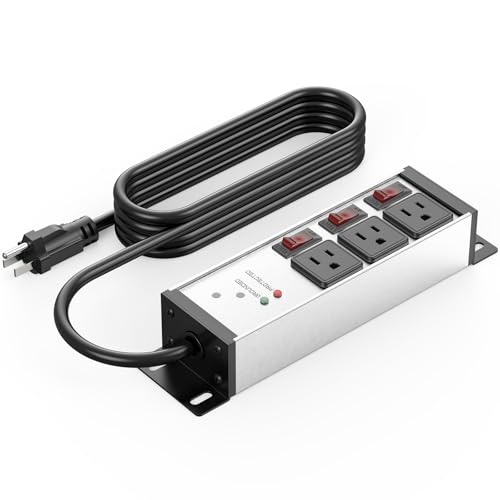
CCCEI 3 Outlets Heavy Duty Surge Protector
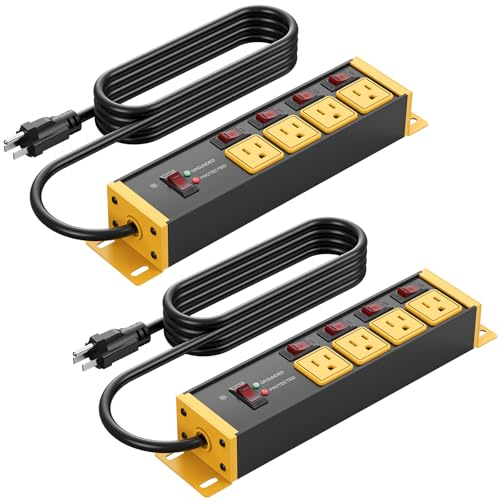
CCCEI 2PCS Heavy Duty Surge Protector 12 Gauge

NANOLAKE 18-Outlet Surge Protector 4800J

JUNNUJ Long Metal 16 Outlet Power Strip 6FT

JUNNUJ Long Metal 16 Outlet Power Strip 4FT
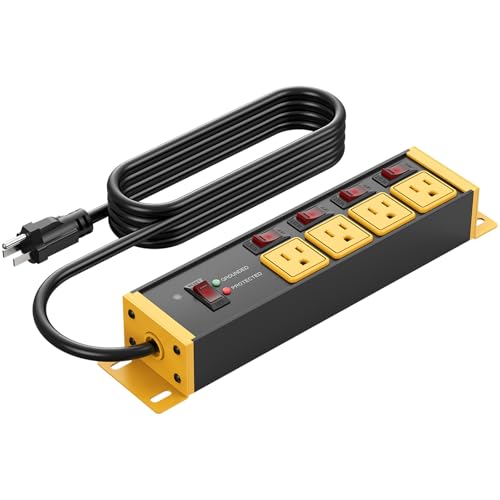
CCCEI 12 Gauge Heavy Duty Surge Protector Yellow

Anker Power Strip 900J 35W Max

Solidock 20-Outlet Surge Protector with USB

JUNNUJ 16-Outlet Garage Power Strip 6FT
JUNNUJ 16-Outlet Power Strip 4FT
CCCEI’s 3-outlet strip earns its place by refusing to cut corners on the parts that matter most. The 12-gauge cord (a heavier wire gauge that handles sustained high current without voltage drop) is a genuine 6 feet, the brushed silver housing feels solid in the hand, and each outlet gets its own switch backed by a 20A breaker. For a tight workbench where space is the constraint, that combination is hard to beat.
You won’t get a wall of USB ports here, and you won’t get joule numbers printed on the box. CCCEI leans into the fundamentals: a NEMA 5-15P plug (the standard three-prong household plug), a 15A/125V/1875W rating, and per-outlet control. For a small cluster of tools or a media cabinet that already has USB elsewhere, that’s usually the smarter tradeoff.
The Practical Payoff
- Real 12-gauge cord reduces voltage sag on long tool runs
- Individual switches let you kill a single device without unplugging
- 20A breaker trips fast under overload, protecting your gear
- Compact silver housing tucks behind a bench or shelf
Things To Consider
- Only three outlets, so cable management matters more than ever
- No mounting holes on the housing, so it stays a desktop strip
Feature Snapshot
Made For
Anyone running a tight workbench or a small media nook who values cord quality and per-outlet switching over extra ports.
Skip It When
Power users with more than three tools should reach for the CCCEI 2PCS Heavy Duty Surge Protector 12 Gauge instead, since the two-pack doubles your outlet count without losing the same cord grade.
Two strips in a single box flips the math for anyone outfitting a shop. CCCEI ships a pair of yellow 4-outlet units with the same 12-gauge cord found on its single-pack, plus individual switches and a 20A breaker per outlet. The bright yellow housing also makes the cord easy to spot on a cluttered floor, which is the kind of detail that matters in a busy garage.
Compared with the compact 3-outlet CCCEI above, this two-pack gives you twice the outlet count and dedicated wall-mounting holes. The trade-off is a shorter 4-foot cord, so you’ll want to plan outlet placement more carefully before drilling.
Standout Benefits
- Two strips cover a shop and a bench from one purchase
- Wall-mountable housing frees up floor space
- 12-gauge cord stays cool under sustained loads
- Hi-vis yellow casing reduces trip-hazard mishaps
Worth Noting
- 4-foot cord limits placement near distant outlets
- No USB ports means phone and tablet charging goes elsewhere
Right Fit For
Shop owners and hobbyists who want a matched pair of strips that mount cleanly to wall studs or workbench backs.
A Better Fit Elsewhere
If you only need a single strip but want every switch independent, the CCCEI 12 Gauge Heavy Duty Surge Protector Yellow gives you the same cord grade in a single housing.
NANOLAKE’s 18-outlet strip is the pick for a desk that has outgrown a basic power bar. You get wide-spaced AC outlets that won’t fight over real estate, plus two USB-A and two USB-C ports, with one USB-C port pushing 20W of PD charging for a phone or tablet. The 10-foot flat plug (a low-profile plug that sits flush against the wall) cord is the longest on this list, which solves the “the wall outlet is across the room” problem in older homes.
The 4800-joule rating (a measure of how much energy the surge protector can absorb before failing) is generous, and grounded and protected LED indicators tell you at a glance whether the strip is actually shielding your gear. Where the smaller CCCEI strips focus on tools, this one focuses on a tech-heavy workstation.
Practical Pluses
- USB-C PD 20W handles fast phone and tablet charging
- 4800-joule rating shields sensitive electronics from spikes
- 10-foot flat plug cord reaches distant outlets
- Mountable design tucks under desks or behind media centers
Honest Caveats
- Plastic housing feels lighter than the metal JUNNUJ units below
- So many ports invite cable clutter without a labeling habit
Who It Suits Best
Remote workers and home-office dwellers running a laptop, monitor, charging bricks, and accessories off one hub.
Look Elsewhere When
Power tools in a garage call for the JUNNUJ Long Metal 16 Outlet Power Strip 6FT, whose metal housing shrugs off heat and impact better.
JUNNUJ’s 16-outlet metal strip is the kind of strip that gets bolted to a garage stud and forgotten. The aluminum housing takes the kind of abuse that would crack a plastic unit, the wide-spaced outlets welcome chunky wall warts, and the 4800-joule surge rating covers everything from a bench grinder to a smart fridge.
The 20A rating (with 5-15P and 6-20R T-slot outlets) means this strip can pull more current than a standard household circuit, though you’ll want to confirm your breaker can keep up. The 6-foot cord hits a sweet spot for most wall placements.
A Few Strong Suits
- Aluminum housing resists dents, heat, and shop grime
- Wide-spaced outlets accommodate large transformer plugs
- 20A circuit handles sustained heavy loads
- Mounting flanges make permanent install straightforward
Points To Note
- No USB ports, so mobile charging requires a separate brick
- Metal body adds weight, so don’t plan to relocate it often
Key Specs
Best Suited To
Garage woodworkers, mechanics, and serious hobbyists who want a permanent mounted strip that survives shop life.
Swap It Out When
Anyone who values portability and USB charging should pick the NANOLAKE 18-Outlet Surge Protector 4800J instead.
This JUNNUJ is the same 16-outlet metal beast as the previous pick, but with a tighter 4-foot cord. For a workbench backed directly into a wall outlet, that shorter cord keeps slack off the floor and avoids the cable tangle that longer strips sometimes create. The 5-15P adapter (a standard 15-amp plug that lets the 20A strip run on any household outlet) means you can drop this strip onto an existing 15A circuit without rewiring.
The 6-20R T-slot outlets accept both standard three-prong plugs and 20A plugs, which is rare in residential strips. If you ever upgrade to a 20A circuit in the shop, this strip is ready to grow with you.
What It Does Well
- T-slot outlets accept 15A and 20A plugs without an adapter
- Compact cord keeps the bench footprint tight
- Same 4800J surge protection as the longer sibling
- Wall-mount flanges ship pre-drilled
Practical Considerations
- 4-foot cord limits distance from wall outlet
- All-metal body can feel cold or industrial in a finished room
Whose Shelf It Belongs On
Workshop benches where the wall outlet sits within arm’s reach and the strip needs to stay close to the wall.
Consider Something Else When
If your outlet is several feet from where you want the strip, the JUNNUJ Long Metal 16 Outlet Power Strip 6FT gives you the same chassis with extra reach.
CCCEI’s single-pack yellow strip is a step up from the silver 3-outlet unit at the top of this list. You get four outlets instead of three, plus 5-20R and 6-20R receptacle types (T-slot outlets that handle both 15A and 20A plugs) ready for heavier gear. The yellow housing is the same high-visibility material as the two-pack, which keeps the cord visible on a busy shop floor.
Each outlet has its own 20A circuit breaker, so a single tripping outlet doesn’t take down the rest of your bench. The 12-gauge 6-foot cord holds up under sustained loads that would thin-out a 14-gauge cord.
What Stands Out
- T-slot outlets future-proof the strip for 20A tools
- Per-outlet breakers isolate faults to one device
- Wall-mountable for clean shop installs
- Hi-vis yellow reduces accidental trip hazards
Trade Offs
- Four outlets may run short for a fully loaded bench
- No surge joule rating printed on spec sheets, so protection is more basic
Who Should Grab It
DIYers and weekend woodworkers running a handful of 15A and 20A tools who want independent outlet control without a metal housing’s price tag.
Reach For A Different Pick When
For larger shops that need 16 outlets, the JUNNUJ Long Metal 16 Outlet Power Strip 6FT offers more capacity in a similar price bracket.
Anker’s 12-in-1 strip lives in a different category from the rest of this list. Where CCCEI and JUNNUJ chase the shop and garage crowd, Anker chases the desk. You get 8 AC outlets, 2 USB-A ports, and 2 USB-C ports in a slim housing, with one USB-C port pushing 35W of fast charging that can refuel a 13-inch laptop in under an hour.
The 900-joule rating is modest, so this isn’t the strip to plug your table saw into. For a home-office or bedside charging hub, it’s a much tidier solution than stacking three wall warts behind a nightstand.
Where It Helps
- USB-C 35W PD charges a laptop without a separate brick
- Slim profile disappears behind monitors or nightstands
- 8 AC outlets cover typical desk gear with room to spare
- Anker’s build quality feels consistent across the line
Less Ideal Details
- 900J surge rating won’t protect power-hungry appliances
- No 12-gauge cord spec means tool use is off the table
Feature Rundown
Perfect Match For
Remote workers, students, and bedside-table chargers who want one tidy hub for devices rather than a wall of bricks.
Where Another Pick Suits Better
Anyone running a workshop should look at the JUNNUJ Long Metal 16 Outlet Power Strip 6FT, which trades USB ports for the 12-gauge cord and metal housing that tools demand.
Solidock’s strip leans hard into capacity. Twenty AC outlets and six USB charging ports (4 USB-A, 2 USB-C) on a single 6-foot cord makes this the closest thing to a home power station on the list. The wide-range 120V to 240V design also opens the door to international use, which is unusual in a consumer strip.
The 2700-joule rating sits between Anker’s 900J and the JUNNUJ units’ 4800J, putting it in the middle for protection. For server closets, recording studios, or entertainment centers with a wall of components, the port count alone is hard to beat.
Reasons It Performs
- 20 AC outlets handle entire rack setups from one strip
- USB-A and USB-C ports cover phone, tablet, and e-reader charging
- Wide voltage range supports 120V and 240V circuits
- 6-foot cord reaches behind most entertainment centers
Soft Spots
- 2700J rating is lower than the JUNNUJ 4800J strips
- USB ports share 18W total, so fast laptop charging is limited
Built With In Mind
Anyone running a recording rig, home theater, or small-office rack where the port count matters more than per-port charging speed.
Not Your Match When
Tool-heavy workshops will get more durability from the JUNNUJ 16-Outlet Garage Power Strip 6FT, whose metal housing and higher joule rating are tuned for that environment.
This JUNNUJ pairs the same thick aluminum body and flame-retardant panels found across the brand’s garage line, then ships it with a 6-foot 5-15P cord and 16 wide-spaced outlets. The 4800-joule surge rating is the highest on this list, paired with a 20A breaker that protects everything from a battery charger to a small compressor.
The wider 12-gauge cord, on top of the metal housing, signals that this strip was built to live in a garage or shop year-round. Owners commonly report that the aluminum housing holds up better than plastic strips to accidental drops and scuffs from rolling toolboxes.
What Makes Sense
- Highest joule rating here, at 4800J
- Flame-retardant panels add safety in heated garages
- Aluminum body shrugs off shop-floor abuse
- 20A switch cuts the entire strip when needed
Where It May Fall Short
- Industrial look may not blend into finished living spaces
- No USB ports means a separate charger for phones and tablets
Technical Highlights
The Right Fit
Garage workshops with long-running tools, battery chargers, or compressors that need both high joule protection and a tough housing.
Another Choice May Suit
If the strip will sit on a desk rather than a garage wall, the NANOLAKE 18-Outlet Surge Protector 4800J trades metal for USB-C PD, which matters more in an office context.
The last entry is the same 16-outlet JUNNUJ strip in a 4-foot cord version. For tight workshops where the wall outlet is right behind the bench, the shorter cord keeps the layout clean. The aluminum housing, 6-20R T-slot outlets, and 4800-joule protection match the rest of the JUNNUJ garage family, so you’re not trading durability for footprint.
Most folks will prefer the 6-foot version for placement flexibility, but the 4-foot option shines in shallow cabinets, RVs, or any spot where excess cord is a nuisance.
Everyday Wins
- Short cord fits shallow cabinets and small benches
- 4800J surge rating covers expensive shop gear
- T-slot outlets accept 20A plugs when circuits allow
- Mounting flanges work in tight spaces where longer strips won’t fit
Where It Is Less Suited
- 4-foot reach means placement must be planned around the outlet
- Same industrial look as the rest of JUNNUJ’s garage line
Who Will Love This
Workshop owners with shallow cabinets, RV garages, or compact shelves where a shorter cord keeps the install tidy.
Look Elsewhere When
Anyone needing more reach should pick the JUNNUJ Long Metal 16 Outlet Power Strip 6FT, which adds two feet of cord without losing outlet count.
Key Specs And Traits Worth Comparing
Cord gauge sets the foundation for any high-draw setup. A 12-gauge cord is the minimum I want to see when tools, heaters, or compressors are involved. Thinner 16-gauge wire (the standard for most residential power strips) introduces voltage drop, which makes motors run hotter and bulbs flicker under load. Joules (the energy absorption rating printed on every surge protector) tell you how much spike the strip can absorb before failing. Anything above 3000J handles serious gear; the 4800J JUNNUJ units are the gold standard here.
Outlet spacing matters more than raw count when wall warts enter the picture. A 16-outlet strip with tightly packed receptacles is less useful than an 8-outlet strip with wide spacing, since one oversized plug can block two or three neighbors. Look for terms like “wide-spaced” or “transformer-friendly” if you plan to plug in cable boxes, laptop bricks, or smart-home hubs.
Switching also deserves attention. Per-outlet switches on the CCCEI units let you kill one device without affecting the others, while the JUNNUJ strips often rely on a single master switch. Independent switching is a quieter luxury that pays off every time you want to reboot a router without walking to the wall.
Common Shopping Slip Ups
Shoppers often reach for the highest outlet count and forget about cord gauge. A 20-outlet strip on a 16-gauge cord will still sag under a loaded workshop, no matter how many ports it offers.
Another slip is ignoring joule ratings in favor of USB ports. Charging ports are great for phones, but they don’t protect a refrigerator or a tool from a power spike. Match the joule rating to the gear you actually plug in.
Where The Extra Money Goes
Premium metal housings cost more because they handle heat and shop-floor abuse that plastic strips can’t. Higher joule ratings use better internal MOVs (metal oxide varistors, the components that absorb surge energy), which is why a 4800J strip often costs meaningfully more than a 900J one.
The upgrade is worth it when you’re protecting gear worth several times the strip’s cost. For a $30 lamp and phone charger, a basic strip is fine. For a $2,000 home theater or a $1,500 bench setup, the premium tier pays for itself the first time the grid hiccups.
Frequently Asked Questions
How many joules do I need in a surge protector? A joule rating above 2000J handles most home electronics comfortably. Workshops and home theaters benefit from 3000J to 4800J, since the gear is more sensitive and more expensive to replace.
Is a 12-gauge power strip really necessary? For any tool or appliance that pulls more than a few amps, yes. A 12-gauge cord maintains voltage over distance and stays cooler under sustained loads, while thinner 16-gauge cords sag and create heat.
What’s the difference between 15A and 20A power strips? A 15A strip runs on a standard household circuit and tops out around 1875W. A 20A strip needs a 20A circuit (or a T-slot adapter on a 15A outlet) and can pull closer to 2500W, which is what heavy shop tools often demand.
Do USB ports on power strips charge as fast as a wall brick? Sometimes, but not always. Look for USB-C PD (Power Delivery) ratings of 18W or higher if you want laptop-class charging. Lower-rated ports are fine for phones overnight.
Can I daisy-chain power strips? No. Plugging a strip into a strip overloads the first strip’s breaker and creates a serious fire risk. Run a single strip per outlet, and add a new outlet at the breaker box if you need more capacity.
Wrap Up
The right high wattage power strip comes down to matching the cord, the joule rating, and the outlet count to the gear you actually run. For a tight desk, the Anker keeps things slim. For a garage bench, the JUNNUJ 16-outlet family delivers the housing and protection tools need. The CCCEI units hit a comfortable middle ground for hybrid home and shop use, and the NANOLAKE bridges the gap between power strip and charging hub. Pick the profile that matches your setup, and the rest tends to fall into place.
