

Every homeowner eventually faces the same mystery: a room goes dark, a GFCI trips for no obvious reason, or a switch refuses to behave. Tracing the right circuit without a tester means flipping breakers one by one in the basement, which wastes an afternoon and tests patience. I’ve put together nine solid picks that help you locate breakers, check outlets, and diagnose wiring faults with a fraction of the guesswork.
A Side-By-Side Look

Fluke T5-1000 Voltage, Continuity and Current Tester with OpenJaw Design
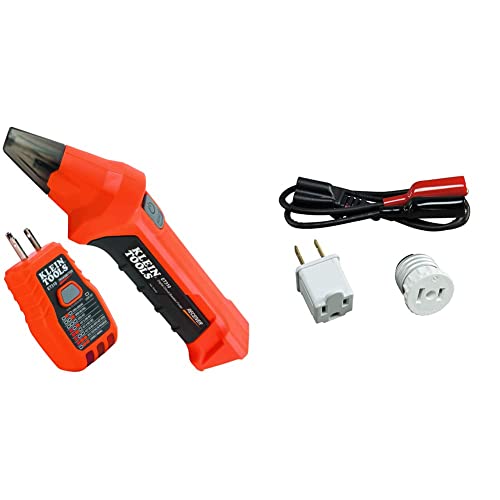
Klein Tools Circuit Breaker Finder and Tester Kit

Klein Tools Circuit Breaker Finder Tool Kit with GFCI Outlet Tester (2-Piece)

Innovative Products of America 8016 Fuse Saver Master Kit Circuit Tester with 5, 10, 15, 20 and 30 Amp Handles

Fluke T6-600 Electrical Tester

LEFOR·Z Multimeter Case Fits Klein Tools ET310 AC Circuit Breaker Finder

KAIWEETS KT301 Circuit Breaker Finder with LCD Display, GFCI Outlet Tester, NCV and Flashlight

KAIWEETS KT302P Circuit Breaker Finder Tool Kit with Dual-Sided LED Indicators and Flashlight

KAIWEETS KT301P Circuit Breaker Finder with LCD Display, GFCI Outlet Tester, NCV, Flashlight and Adapters
A Breakdown Of The Leading Choices
When I think about the kind of tester a working electrician reaches for first thing in the morning, the Fluke T5-1000 comes up more than almost anything else on the truck. The design lets you slide a jaw around a single conductor to read current without breaking the circuit or pulling a probe tip onto a live terminal, which removes a step you might otherwise forget on a busy job.
It auto-detects AC or DC voltage, so you’re not flipping a selector mid-task. Continuity beeps the moment a circuit closes, and the SlimReach probe tips tuck into molded holders on the body when you clip the leads away. Auto-off helps the two AA batteries survive a long week.
Notable Gains
- OpenJaw current reading removes the need to break the circuit on routine checks.
- Auto-selection between voltage modes keeps hands on the probes instead of the dial.
- Detachable SlimReach tips accept standard Fluke accessories for clipping into tight panels.
- Continuity beeper and neat probe storage suit a working bag that gets tossed around.
Worth Noting
- Current measurement is limited to 100A, which is plenty for branch circuits but not industrial feeders.
- It’s a voltage and current tester, not a breaker tracer, so pairing it with a finder like the KT301P makes sense for label-free panels.
Who Should Grab It
Tradespeople and serious DIYers who already own a tracer and want a rock-solid daily voltage and current tester.
Skip It When
You need a single tool that locates breakers and tests outlets, in which case the KAIWEETS KT301P covers both.
The first time I traced an unlabeled panel, I remember wishing I’d started with a Klein ET310 rather than trial-and-error. This kit pairs that finder with a GFCI outlet tester in one tidy package, so you identify the right breaker and then immediately verify the receptacle is wired correctly on the other end.
Unlike the Fluke above, this set focuses on location rather than live measurement. The receiver gives both visual and audible cues when it locks onto the right breaker, which matters when you’re crouched in a basement with a flashlight between your teeth.
Useful Strengths
- Transmitter and receiver system cuts panel-search time to seconds.
- Works on standard 90 to 120V AC residential circuits.
- Outlet tester catches wiring faults at a glance.
Minor Gripes
- No LCD readout, so you only get go or no-go feedback.
- Bare-wire and adapter coverage requires the separate 69411 accessory kit sold alongside.
Made For
Homeowners tackling renovations who want to map an unlabeled panel without spending a weekend flipping switches.
Consider Something Else When
You want a screen showing real-time voltage, in which case the Klein 2-Piece kit or KAIWEETS KT301 adds that layer.
Stepping up from the previous Klein kit, this set bundles the same ET310 finder with an RT250 GFCI outlet tester that adds an LCD readout. That screen shows voltage, wiring configuration, and even GFCI trip time, so you see the numbers behind the go or no-go rather than guessing.
The included 69411 adapter set lets you trace bare conductors and unusual breaker styles that the basic kit can’t reach. It feels like the version Klein built for someone who pulls covers off outlets as part of the routine.
A Favorable Mix
- LCD display shows real-time voltage and wiring fault codes at a glance.
- Auto-hold keeps a reading visible after you remove the tester from hard-to-reach outlets behind furniture.
- Adapter kit extends tracing to bare wires and less common breaker types.
- Same proven ET310 finder as the simpler Klein kit above.
Points To Note
- Limited to 90 to 120V AC, so European or commercial 240V work is outside its scope.
- Carrying case is sold separately, which is a real downside for a kit this size.
Quick Facts
Best Suited To
Electricians and remodelers who need actual numbers, not just indicator lights, when validating new wiring.
Reach For A Different Pick When
You want non-contact voltage detection built into the same tool, in which case the KAIWEETS KT301P combines tracing and NCV in one body.
The 8016 is a different animal from anything else on this list. Instead of tracing a breaker, it temporarily replaces the fuse or breaker in a circuit with a resettable handle so the technician can chase an intermittent short without burning through a pile of fuses. That’s why auto electrics shops and marine repair techs reach for it first.
The kit ships with five breaker handles covering 5, 10, 15, 20, and 30 amp ranges, a BuzzAlert module that sounds when the circuit trips, and a ten-foot cord with dual adapters. Everything packs into a blow-molded case that holds up to van life.
Positive Points
- Resettable breaker handles replace fuses during diagnostic work, so you stop wasting spares.
- BuzzAlert module provides an audible cue when a fault triggers the circuit.
- Five amperage handles cover most automotive and light industrial circuits.
- Blow-molded case survives a long career in a shop or service van.
Honest Caveats
- It’s not a household breaker finder, so it sits unused if your only goal is mapping house circuits.
- Specialty tool, which means a steeper learning curve than a basic outlet tester.
Perfect Match For
Auto electrics and diagnostic technicians chasing intermittent shorts on 12V and low-voltage AC systems.
Look Elsewhere When
You need a panel tracer for a home, in which case the Klein ET310 or KAIWEETS KT301P is the right tool.
The T6-600 takes the Open jaw idea from the T5 and pushes it further with field-sense technology that reads voltage and current through the cable insulation. No test leads needed for the basic reading, which makes a real difference when you’re grabbing readings in a cramped junction box.
Rated to 600V CAT III, it handles service entrance work where lesser testers step aside. The backlit display makes values visible even under a worklight glare.
Where It Helps
- Field-sense tech measures voltage and current without metallic contact on the conductor.
- 600V CAT III rating handles service entrance and commercial panels.
- Open jaw accepts cables up to a generous diameter for most residential feeders.
- Backlit display stays readable in tight, dark enclosures.
Practical Considerations
- Premium pricing puts it beyond a casual homeowner’s reach.
- No breaker-tracing function, so it pairs with a finder for label-free panels.
Feature Snapshot
Whose Shelf It Belongs On
Pros measuring live current on commercial and service entrance jobs where reliability matters more than sticker savings.
A Better Fit Elsewhere
Homeowners wanting a tracer and outlet tester in one body should look at the KAIWEETS KT301P for everyday troubleshooting.
Anyone who owns a Klein ET310 has probably cursed while hunting for adapters in a junk drawer. The LEFOR·Z case solves that problem by giving the finder, the GFCI tester, and a half-dozen accessories their own slots. Two elastic layers with Velcro straps hold each piece against a padded interior.
It accommodates the ET310 plus RT250 GFCI tester and a range of Klein multimeters in the lower bay, so the case grows with the rest of your kit.
Practical Advantages
- Double-layer design separates the finder from multimeters and accessories.
- Six elastic bands with Velcro adjust to hold odd-sized tools without rattling.
- Padded interior prevents scratches during transport to a job site.
- Works with multiple Klein model numbers for owners building out a kit.
Things To Consider
- Storage accessory only, so it adds a step before any actual testing gets done.
- Zippers and elastic bands tend to wear out faster than the tools they protect.
Who It Suits Best
Owners of the Klein ET310 kit who want their finder, accessories, and multimeters in a single grab-and-go case.
Where Another Pick Suits Better
You don’t own Klein gear yet, in which case the KAIWEETS KT301P ships with its own carrying case.
The KT301 packs three jobs into one tool, which is exactly what most homeowners actually need. It locates the breaker, checks the outlet for wiring faults, and tests GFCI devices, all without juggling separate gadgets. The non-contact voltage detection adds a quick safety check before you touch anything.
The LCD display shows real-time voltage from 30–150V, which gives a meaningful number rather than just an indicator light. A built-in flashlight helps when the panel cover is shadowed and your phone flashlight rolled under the workbench.
The Case For It
- Three functions in one tool reduces the gear you carry to a single job.
- LCD shows actual voltage readings, not just pass or fail.
- NCV detection adds a safety check before touching conductors.
- Built-in flashlight for dark panels and crawl spaces.
- Carrying case keeps everything organized between uses.
Points To Note
- Adapter kit for bare wires is sold separately, which is a real downside for older homes.
- Limited to North American 120V AC circuits.
Key Product Details
Built With In Mind
Everyday household troubleshooting where you want one tool that handles the most common panel and outlet problems.
Swap It Out When
You prefer LED indicators over a screen, in which case the KAIWEETS KT302P trades the LCD for visual cues.
Where the KT301 relies on a screen, the KT302P steps back from a screen and relies on bright LEDs that you can read from across a panel. Dual-sided indicators light up on both faces of the receiver, so you don’t have to flip the tool to see the result from different angles.
Operating on the same 90–120V AC range as the rest of this category, it traces breakers and tests outlets in residential and light commercial settings. The included flashlight helps when the panel cover has shadowed the working area.
The Good Stuff
- Dual-sided indicators visible from either side of the receiver.
- Three-function tool covers tracing, outlet testing, and GFCI checks.
- Built-in flashlight for shadowed panels.
- Carrying case included for organized storage.
Some Limits To Know
- LEDs only, so you don’t see precise voltage numbers.
- No NCV detection like the KT301P, which is a real downside for safety-first users.
The Right Fit
Users working in dark panels who prefer a glance at colored lights over reading a screen.
Where A Sibling Pick Shines
You want both NCV and an LCD, in which case the KAIWEETS KT301P delivers both at a similar price.
The full kit version of the KT301 adds the adapter set that the basic version leaves out, which closes the gap I called out earlier. Bare wires, switched circuits, and older fuse panels all fall within reach once you have the adapters clipped on.
Beyond the adapters, you still get the same LCD readout, NCV test, and three-tool combination that make the KT301 a strong pick. The carrying case holds the extra pieces without rattling, so the kit travels as a single unit.
Useful Touches
- Adapter kit included for bare wires and older panels out of the box.
- Three-in-one function reduces gear carried to the panel.
- NCV plus LCD readout covers safety and detailed numbers.
- Built-in flashlight and organized carrying case round out the kit.
Practical Considerations
- Higher cost than the basic KT301, which is worth weighing for light users.
- Adapters add small parts to keep track of during transport.
At A Glance
Right Fit For
Outfit-ready homeowners who want a complete kit on day one, including pieces that the basic KT301 leaves behind.
Not Your Match When
You mostly work on modern residential panels and don’t need the adapter extras, in which case the simpler KT301 saves money.
What To Weigh Before Picking a Circuit Breaker Tester
Match the Tester to the Voltage in Your Panel
Most homes in North America run on 90 to 120V AC split-phase systems, which every tracer and outlet tester on this list handles. If your service entrance is commercial or 240V, look for a CAT III 600V rating like the Fluke T6-600, which handles service entrance work where basic finders step aside.
Decide Between Tracing, Outlet Testing, or Both
A pure breaker finder like the Klein ET310 locates the right circuit in seconds. A three-in-one tool like the KAIWEETS KT301P combines tracing with outlet and GFCI testing, which is what most homeowners actually reach for. Pro jobs benefit from a separate current tester like the Fluke T5-1000 alongside the tracer.
Look at Indicators and Readouts
LED-only tools give fast visual feedback but no actual numbers. An LCD display shows real-time voltage from 30 to 150V on the KAIWEETS kits, so you know the reading rather than guessing. For dimly lit panels, dual-sided LEDs or a backlit screen both solve the visibility problem.
Storage and Kit Cohesion Matter More Than You’d Think
Adapters, probes, and outlet testers disappear into toolboxes fast, which is why a carrying case is a real value on the KAIWEETS kits. The LEFOR·Z case adds organization if you’ve already committed to Klein gear and want everything in one bag.
Key Considerations Across These Picks
Common Shopping Slip Ups
The most common mistake is buying a tracer that works on 90 to 120V only and trying to use it on a 240V appliance circuit. Another is grabbing a finder that lacks adapters for bare wires, which leaves older fuse boxes untestable. Always check the voltage rating and accessory coverage before you commit.
What The Higher Tier Buys
Spending more on a Fluke T6-600 or T5-1000 buys non-contact field sensing, higher CAT ratings, and the kind of build quality that survives daily van life. For pros who measure live current daily, the upgrade pays off in fewer false readings and longer service life. Homeowners doing occasional troubleshooting usually get enough from a KAIWEETS three-in-one kit.
Frequently Asked Questions
What does a circuit breaker tester actually do?
It locates the breaker controlling a specific outlet or fixture by sending a signal from the outlet back to a receiver at the panel. Most modern testers double as outlet testers that check for wiring faults.
Can I use a circuit breaker tester on GFCI outlets?
Yes, most kits that include a GFCI tester (like the KAIWEETS KT301P or Klein RT250) verify that the GFCI trips correctly and measures the trip time.
Do I need a separate multimeter if I own a breaker finder?
For routine breaker tracing, no. For diagnosing voltage drops, current draw, or continuity on appliance circuits, a multimeter is the right tool.
Will a breaker finder work on unlabeled panels?
Yes, that is exactly the use case finders were built for. The receiver narrows down the right breaker by following the transmitter signal through the panel.
Are adapters necessary for older fuse panels?
For most modern residential panels, no. For bare-wire testing or older fuse boxes, adapter kits like the one included with the KAIWEETS KT301P or Klein 69411 are necessary.
Final Verdict
The right tester depends on what you’re actually tracing. Homeowners handling the occasional mystery circuit do well with the KAIWEETS KT301P, which covers tracing, outlets, and GFCIs in one body. Pros measuring live current benefit from the Fluke T5-1000 or T6-600, while specialty work like automotive short-chasing calls for the Innovative Products 8016. Pick the tool that matches the panel in front of you, and the rest falls into place.
