

Every home has a mystery panel: an outlet stops working, you need to kill power to a specific circuit before swapping a fixture, and the breaker box is a labeled mess (or not labeled at all). A circuit breaker finder takes the guesswork out of the job, sending a tone through the hot wire so a handheld receiver can point at the correct breaker in seconds.
I’ve put together seven solid options for 2026, including a dedicated finder with a GFCI (Ground Fault Circuit Interrupter) tester for outlet troubleshooting, a couple of Fluke units that go beyond breaker detection, and a carrying case for anyone who already owns a Klein ET310. Most homeowners, renters tackling small electrical fixes, and newer DIYers will find exactly what they need below.
A Side-By-Side Look

Fluke T5-1000 Voltage, Continuity and Current Tester
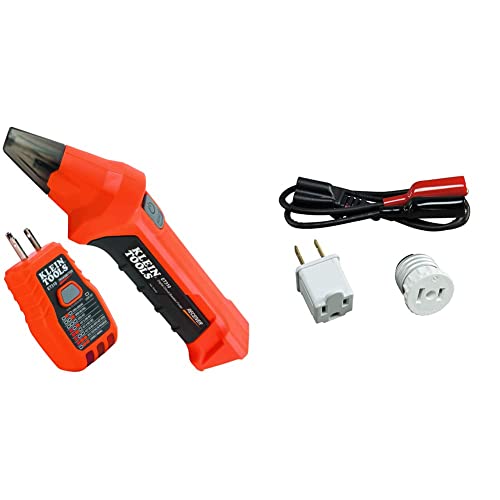
Klein Tools Circuit Breaker Finder and Tester Kit

Klein Tools Circuit Breaker Finder Tool Kit with GFCI Outlet Tester

Fluke T6-600 Electrical Tester

LEFOR·Z Multimeter Case for Klein ET310
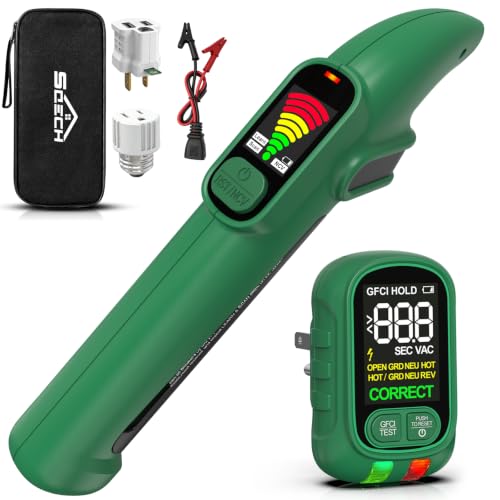
SQECH Circuit Breaker Finder with LCD Screen

SQECH Circuit Breaker Finder Kit for 90-135V
The Picks, Examined More Closely
The Fluke T5-1000 is technically a voltage and continuity tester rather than a purpose-built breaker finder, but it earns a spot on this list because electricians reach for it constantly. The OpenJaw fork lets me measure current up to 100 amps without breaking the circuit, which is genuinely handy during service calls.
Unlike the dedicated finder kits that come later in this roundup, this one requires manual labeling of breakers: you test each one until you find the dead outlet. For pros working on live panels every day, that’s a fair trade for a tool that also handles voltage checks, continuity beeps, and AC/DC switching in a single compact housing.
Where It Delivers
- OpenJaw current measurement reads up to 100A without breaking the circuit, saving time on energized panels.
- Auto-selects between AC and DC voltage, so there’s no rotary dial hunting mid-task.
- Detachable SlimReach probe tips accommodate different national outlet standards.
- Compact body fits in a side pocket or tool pouch alongside other essentials.
- Continuity beeper provides instant confirmation without staring at the display.
Things To Consider
- Not a dedicated breaker finder, so tracing unknown circuits takes longer than with a kit purpose-built for that job.
- Battery-powered with no clear auto-off spec in the listing, so owners commonly report turning it off manually to preserve cells.
Who It Suits Best
Licensed electricians and serious DIYers who already understand panel layouts and want a multi-use tester that handles more than just breaker identification.
Look Elsewhere When
Someone whose main goal is labeling an unlabeled panel should reach for the Klein Tools Circuit Breaker Finder and Tester Kit instead, which automates the hunt.
The Klein Tools Circuit Breaker Finder and Tester Kit is the kind of tool that demystifies an old, scribbled-on breaker panel in an afternoon. The transmitter plugs into the outlet you’re chasing, and the receiver beeps louder the nearer you get to the right breaker.
Compare that to the Fluke T5-1000 above, which assumes you already know which breaker to flip. This kit is purpose-built for labeling chaos, and Klein is a brand electricians have trusted for decades, which gives the average homeowner some peace of mind holding one.
A Few Strong Suits
- Two-piece transmitter and receiver system removes guesswork from unlabeled panels.
- Receiver uses both visual cues and audible signals, so noisy utility spaces don’t slow the search.
- Compact enough to live in a kitchen drawer between projects.
Honest Caveats
- The included outlet tester is basic, so homeowners chasing GFCI trip timing may want more detail.
- For older homes with aluminum wiring or unusual panel configurations, owners commonly report needing patience during scanning.
Right Fit For
First-time DIYers tackling their first panel labeling project and homeowners who want a no-learning-curve tool that just works.
Not Your Match When
Someone needing deeper GFCI diagnostics should look at the Klein Tools Circuit Breaker Finder Tool Kit with GFCI Outlet Tester, which adds an LCD readout and trip-time data.
The Klein Tools Circuit Breaker Finder Tool Kit with GFCI Outlet Tester pairs the ET310 finder from the previous pick with an RT250 GFCI tester, turning a one-job tool into a small diagnostic station. The accessory kit that ships alongside lets the finder trace bare wires and exposed conductors, not just outlets.
Where the basic kit gets the job done for panel labeling, this version answers the question I hear all the time: “is my outlet actually wired correctly?” The LCD on the RT250 shows voltage, wiring faults, and GFCI trip time, which is the kind of detail that matters when a kitchen outlet keeps tripping.
Positive Takeaways
- ET310 finder works on 90-120V AC circuits, covering standard North American residential wiring.
- RT250 GFCI tester shows voltage, wiring faults, and trip time on a clear LCD.
- Auto-hold function on the RT250 freezes the reading, useful for outlets hidden behind furniture.
- Accessory adapters expand tracing to bare wires and exposed conductors beyond standard outlets.
- Two-piece kit covers both breaker identification and outlet verification in one purchase.
Trade Offs
- The kit is larger than a single-purpose tool, so storage requires more drawer space.
- Beginners may not use the GFCI trip-time readout until they encounter a specific problem.
Built With In Mind
Homeowners troubleshooting a kitchen or bathroom GFCI outlet, plus DIYers who want both panel labeling and outlet verification in one bundle.
A Better Fit Elsewhere
Someone with no GFCI outlets in older wiring may find the extra RT250 redundant and should consider the Klein Tools Circuit Breaker Finder and Tester Kit instead.
The Fluke T6-600 sits a step up from the T5-1000 covered earlier, thanks to FieldSense technology that measures AC voltage and current through the jaw without metal-to-metal contact. Sliding the open fork around a single cable reads up to 200A and 600V without breaking the circuit or even removing the wire nut.
For tradespeople moving quickly between service calls, the compact body slips into tight boxes that bulkier units can’t reach. The backlit display helps in dim utility closets and dark basement panels where the basic Fluke T5 above would require a flashlight.
Useful Strengths
- FieldSense reads voltage and current without test lead contact on the conductor.
- Compact body accesses tight electrical boxes that larger testers can’t navigate.
- Backlit display stays readable in dim basements and crowded panels.
- Rated for 600V CAT III environments, suitable for commercial and residential work.
Points To Keep In Mind
- Premium pricing reflects the FieldSense tech, so budget shoppers may find better value in a Klein kit.
- Owners commonly report a learning curve with FieldSense mode versus standard test lead readings.
Best Suited To
Tradespeople and serious hobbyists who want non-contact measurements on live circuits and work in mixed residential and light commercial settings.
Reach For A Different Pick When
A homeowner strictly focused on breaker identification should skip the upgrade cost and pick the Klein Tools Circuit Breaker Finder and Tester Kit, which is purpose-built for that single task.
The LEFOR·Z Multimeter Case isn’t a tester at all: it’s the carrying pouch that should have shipped with the Klein ET310 in the first place. The double-layer layout fits the breaker finder, the RT250 GFCI tester, and a Klein multimeter in one tidy package.
Where the Klein kits above scatter tools across a junk drawer, this case brings everything together with six elastic bands and Velcro closures that hold each piece firm. For homeowners tired of digging through a toolbox for the right lead, the time saved per project adds up fast.
The Helpful Details
- Double-layer design separates the breaker finder and GFCI tester from a multimeter below.
- Six elastic bands in different sizes secure tools of varying shapes without rattling.
- Velcro closures adjust to grip smaller accessories snugly.
- Compatible with the Klein ET310, RT250, 69149P, and several multimeter models.
Where It May Fall Short
- Adds bulk to a kit that’s already portable, so some users prefer a soft pouch for pocket carry.
- Owners of non-Klein tools should verify dimensions before ordering, since the layout assumes Klein shapes.
Whose Shelf It Belongs On
Anyone who already owns a Klein ET310 breaker finder and wants a single organized home for the tool, its leads, and a compatible multimeter.
Skip It When
Shoppers without an existing Klein tester should start with the Klein Tools Circuit Breaker Finder and Tester Kit and worry about a case later.
The SQECH Circuit Breaker Finder with LCD Screen takes the standard transmitter-and-receiver concept and puts a screen on the receiver, so I can read signal strength instead of guessing from a beep. The high-sensitivity sensor claims faster pinpointing on a standard North American panel.
Compare that to the entry-level Klein kit covered earlier, where feedback is purely audible. For homeowners with partial hearing loss or anyone working in a noisy mechanical room, the visual readout removes ambiguity and the LCD cuts down on second-guessing.
Useful Highlights
- LCD screen on the receiver provides a visual signal indicator alongside audible feedback.
- Both transmitter and receiver operate independently for multiple tasks with one set of tools.
- High-sensitivity sensor targets faster breaker pinpointing in standard panels.
- GFCI outlet tester is included, covering two common residential diagnostics in one kit.
Worth Noting
- SQECH is a smaller brand than Klein or Fluke, so long-term durability data is limited.
- The LCD adds weight to the receiver, which may tire hands during long panel scans.
Perfect Match For
Homeowners who want visual confirmation when tracing breakers, and who appreciate an integrated GFCI tester for routine outlet checks.
Where A Sibling Pick Shines
Shoppers prioritizing long-term brand support may favor the Klein Tools Circuit Breaker Finder Tool Kit with GFCI Outlet Tester over the SQECH kit.
The SQECH Circuit Breaker Finder Kit for 90-135V is the streamlined sibling of the LCD-equipped SQECH kit covered just above. It drops the screen in favor of a lower price point while keeping the adapter-based design that broadens compatibility beyond standard outlets.
Where the previous SQECH model leans on visual readouts, this one keeps feedback audible, which keeps the receiver lighter and the kit simpler. The voltage range covers 90-135V, encompassing virtually all residential North American circuits I encounter.
Points In Its Favor
- 90-135V operating range covers standard North American residential circuits.
- Adapter-based design extends use beyond standard outlets.
- Lighter receiver without the LCD screen reduces hand fatigue during long scans.
- Lower price point makes it accessible for first-time tool shoppers.
Some Limits To Know
- No LCD readout means relying solely on audible cues in noisy spaces.
- Adapter set may be less comprehensive than the higher-tier Klein kit covered earlier.
Who Should Grab It
Cost-conscious homeowners who want a competent breaker finder for occasional labeling projects and don’t need a screen for visual feedback.
Consider Something Else When
Shoppers who want visual signal indication should step up to the SQECH Circuit Breaker Finder with LCD Screen for the same brand at a slightly higher tier.
What To Weigh Before Choosing Circuit Breaker Finders
Picking the right tool depends on how often you’ll reach for it and what other diagnostics matter to your home.
Voltage Range And Panel Type
North American residential panels run on 120V or 240V circuits, so any finder rated for 90-120V or 90-135V covers the typical outlet. Homes running well pumps or detached shops on higher-amperage breakers should confirm the unit handles their panel before buying.
Audible Versus Visual Feedback
Audible-only receivers like the basic Klein and SQECH kits work fine in quiet utility rooms. The Fluke T6-600 and the LCD-equipped SQECH add visual readouts that help in noisy HVAC closets or for users who prefer seeing signal strength rise as they approach the right breaker.
GFCI Testing In The Same Kit
Outlet testers catch reversed polarity, open grounds, and missing neutrals, and a built-in GFCI trip timer shows whether the safety device trips within spec. Homeowners troubleshooting kitchen or bath outlets benefit from a kit that combines breaker finding with GFCI diagnostics, like the Klein ET310 plus RT250 bundle.
Brand Support And Long-Term Use
Klein and Fluke have decades of electrician-trusted reputation, plus replacement parts and accessory compatibility. Newer brands like SQECH deliver solid core functionality at lower cost, though long-term parts availability may be thinner if a lead or adapter goes missing.
Smart Buying Notes Across These Picks
Mistakes Worth Dodging
The most common slip is buying a basic voltage tester thinking it will label the panel automatically. A standard multimeter tells you if voltage is present but cannot identify which breaker feeds which outlet. A purpose-built breaker finder transmits a tracing tone along the wire, and only that signal lets the receiver pinpoint the matching breaker in seconds. Shoppers also overlook the operating voltage range: a unit rated for low-voltage control wiring may not work on a 120V residential circuit, so always confirm the spec matches your panel.
Where The Extra Money Goes
Premium pricing on the Fluke T6-600 funds FieldSense non-contact measurement, which reads current and voltage through the insulation without metal-to-metal contact. The Klein ET310 plus RT250 bundle adds GFCI trip-time data and bare-wire adapters, justifying its higher tier for homeowners who want outlet verification in the same kit. For most shoppers, the upgrade pays off when the tool gets used monthly rather than annually: occasional labelers can stay with the budget SQECH kit and still get reliable results.
Frequently Asked Questions
How does a circuit breaker finder actually work?
A transmitter plugs into the outlet you’re tracing and sends a unique signal along the hot wire, then a handheld receiver detects that signal at the panel to identify the matching breaker.
Can a circuit breaker finder replace a multimeter?
No, a finder only identifies which breaker controls a specific outlet or wire, while a multimeter measures voltage, current, and resistance for broader electrical diagnostics.
Do I need a GFCI tester built into the kit?
GFCI outlets in kitchens, baths, and outdoor spaces require periodic testing, so a kit with a built-in GFCI tester saves a separate purchase and streamlines troubleshooting.
Are these tools safe to use on a live panel?
Yes, when used as directed, the receiver never touches a live conductor, and the transmitter only draws power from the outlet being traced, keeping the user away from exposed bus bars.
Will a breaker finder work on old fuse boxes?
Most residential finders are designed for circuit breaker panels, so homeowners with older fuse boxes should verify compatibility or consider hiring an electrician for that specific scenario.
Closing Thoughts
The right circuit breaker finder turns a frustrating panel project into a quick afternoon task. Match the tool to your situation, start with a basic kit if you’re new to electrical work, and consider a GFCI-equipped bundle if your troubleshooting reaches beyond the panel.
