

A solid circuit breaker box keeps wires protected, lets you isolate trouble fast, and adds real safety to anything from a backyard solar shed to a busy job site. I’ve put together eight options that cover small residential setups, off-grid arrays, and construction power needs. Each one handles current and protection differently, so there’s a fit whether you’re wiring a tiny workshop or outfitting an RV pad.
The Picks In Brief

JINDOUZI 2 in 2 Out Solar Combiner Box 20A 500V

JINDOUZI 3 in 3 Out Solar Combiner Box 20A 500V

JINDOUZI 1 in 1 Out Solar Combiner Box 20A 500V

Square D HOM120 Circuit Breakers 1-Pole 20A (Box of 10)

QILIPSU 6 Way DIN Rail Circuit Breaker Box IP65

QILIPSU 9 Way DIN Rail Circuit Breaker Box IP65
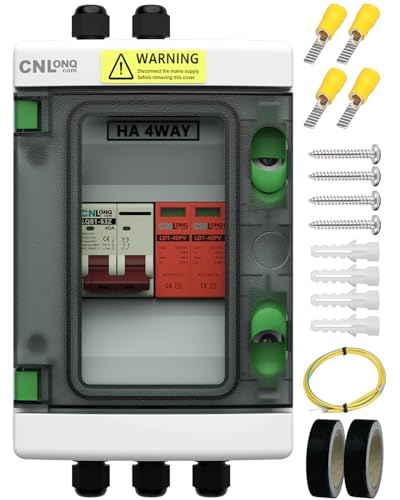
CNLonQcom Solar Disconnect Switch 40A DC 500V

Siemens TL137US Talon Temporary Power Outlet Panel 125A
What Each Pick Brings To The Table
JINDOUZI built this unit for homeowners stepping into mid-size rooftop solar, and the two-string design covers most modest arrays without feeling oversized. The enclosure carries an IP65 rating, which means it shrugs off dust and low-pressure water jets, so mounting it on a south-facing exterior wall near the inverter is realistic. Inside, a 20A DC breaker sits alongside 20A fuses per string and a surge protector, giving a layered defense that matters when lightning activity picks up in summer.
Compared to the larger 3-in-3-out sibling later, this one trades capacity for a tidier footprint, which matters on tight rafter runs. Most DIY-friendly installers will appreciate the clearly labeled input and output terminals, though a multimeter and basic PV knowledge are still expected.
Good Reasons To Consider
- Two-string capacity suits typical home arrays up to around 20kW.
- Built-in surge protection helps during storm season.
- IP65 housing handles outdoor mounting on a wall or post.
- Compact dimensions save space near the inverter.
Things To Consider
- Sealed enclosure can make internal wiring feel tight during installation.
- Not suited for arrays that will expand beyond two strings later.
Feature Snapshot
Who It Suits Best
Homeowners wiring a two-string PV array who want a tidy, weather-sealed combiner.
Consider Something Else When
Look at the JINDOUZI 3 in 3 Out model if your array will scale to three strings.
For arrays aiming toward the 30kW mark, the 3-in-3-out configuration gives breathing room without jumping to commercial gear. The enclosure shares the same IP65 rating as the smaller 2-string sibling, so outdoor placement stays on the table. Inside, three 20A fuse holders feed a 20A DC breaker, and the surge protector helps absorb indirect lightning strikes that occasionally hit roof-mounted arrays.
Where the 2-string model shines for compact homes, this one earns its keep when extra panels are already planned. Installation depth is a touch deeper, so allocating wall space near the inverter avoids cramped bends in conduit runs.
Practical Pluses
- Three-string design supports larger residential arrays.
- Same IP65 weather protection as the smaller sibling.
- Layered protection through fuses, breaker, and surge module.
Trade Offs
- Bigger footprint than the 2-string version.
- Overkill for small cabins or single-panel setups.
Made For
PV installers planning a three-string rooftop array around 30kW.
Look Elsewhere When
Pick the JINDOUZI 1 in 1 Out for a smaller starter system.
The 1-in-1-out configuration is the gentlest entry point for first-time PV owners. A single string up to 20A runs through a 20A fuse and DC breaker, then a surge protector, which mirrors the protection layers in the bigger JINDOUZI units. For a small shed array or a backup power setup, this box is sized right and won’t waste wall space.
Compared to the 2-string sibling earlier, this one pares everything down to a single line. Hobbyists and weekend tinkerers get the same IP65 outdoor rating, though capacity ceilings stay modest at roughly 10kW.
Positive Takeaways
- Compact size fits tight mechanical rooms or sheds.
- IP65 weather sealing protects outdoor mounting.
- Surge protection included for basic lightning defense.
Minor Gripes
- Single string limits expansion later.
- Less suited for homes with larger panel counts.
Quick Facts
Right Fit For
First-time PV owners building a single-string system under 10kW.
Reach For A Different Pick When
Switch to the JINDOUZI 2 in 2 Out Solar Combiner Box for a modest two-string home array.
Square D HOM120 breakers fit any Homeline panel and arrive in a ten-pack that covers full-panel replacements or multi-room remodels. Rated at 20A with a 120/240V range, each single-pole unit suits standard lighting and outlet circuits. The plug-on design speeds up installation, especially in tight load centers where every minute matters.
While the earlier solar picks handle DC arrays, these breakers cover AC distribution in homes and workshops. Stocking a full ten-pack avoids last-minute trips to the hardware store when a breaker fails unexpectedly.
Advantages To Know
- Ten-pack supports large replacement jobs or new builds.
- 20A rating covers standard household branch circuits.
- Plug-on mounting trims installation time in Homeline panels.
- Compatible with any Square D Homeline load center.
Honest Caveats
- Only fits Homeline panels, not older or competitor lines.
- Single-pole units won’t replace 240V double-pole breakers.
Best Suited To
Homeowners and electricians stocking breakers for Homeline panel service or remodels.
Swap It Out When
Pick the Siemens TL137US Talon panel if you need a complete temporary power setup instead.
QILIPSU uses UL94-V0 rated PC/ABS for this enclosure, which is a flame-retardant plastic blend tested to self-extinguish quickly under heat. The IP65 seal keeps moisture and dust out, so it works equally well on an interior wall or a sheltered outdoor post. Six DIN rail slots fit standard miniature breakers, and the upgraded copper bus bars run longer to improve heat dissipation across loaded circuits.
Compared to the 9-way version later, this one suits tighter builds like small cabins or workshop subpanels. Glow-wire testing at 960°C suggests serious thermal headroom for everyday distribution loads.
A Favorable Mix
- UL94-V0 flame-retardant housing adds thermal safety margin.
- Six DIN rail positions fit standard miniature breakers.
- IP65 sealing handles outdoor and damp environments.
- Longer copper bus bars improve conductivity under load.
Small Caveats
- Only six slots may limit growth for larger workshops.
- Breakers and DIN rail devices sold separately.
Core Details
Perfect Match For
Builders wiring a small off-grid cabin or shed subpanel with up to six circuits.
Where Another Pick Suits Better
Step up to the QILIPSU 9 Way DIN Rail Circuit Breaker Box if more circuits are ahead.
The 9-way version of the QILIPSU enclosure adds room for three more DIN rail devices, which suits garage workshops and small outbuildings with multiple branch circuits. The same UL94-V0 PC/ABS shell carries over from the 6-way sibling, so flame resistance stays consistent across the line. Copper bus bars stretch longer to handle the extra load distribution without noticeable warm spots.
Where the smaller box fits tiny cabins, this one handles a real workshop with lights, outlets, and a subpanel feed. IP65 sealing still makes outdoor mounting viable, though sheltered placement extends the gasket life.
Notable Gains
- Nine DIN slots cover larger workshop circuits.
- Same UL94-V0 fire safety as the 6-way model.
- Longer copper bus bars reduce heat buildup.
- IP65 enclosure handles outdoor and damp interiors.
Points To Note
- Larger box requires more wall space.
- Breakers and accessories sold separately.
Whose Shelf It Belongs On
Workshop owners running several branch circuits in a garage or outbuilding.
Skip It When
Choose the QILIPSU 6 Way DIN Rail Circuit Breaker Box for smaller cabin projects.
CNLonQcom packages a 40A DC breaker, a lightning surge arrester, and an IP65-rated breaker box into a single disconnect unit. This combination handles larger string arrays where 20A protection would be undersized. The surge arrester sits between the panels and the inverter, absorbing transient spikes before they reach sensitive electronics.
Compared to the JINDOUZI combiner boxes earlier, this one focuses on a single heavy feed rather than multiple strings. Off-grid homeowners with battery banks and substantial DC loads will appreciate the headroom.
The Upside
- 40A rating supports larger array and battery feeds.
- Lightning surge arrester shields the inverter.
- IP65 enclosure stands up to outdoor mounting.
- 500V DC max suits most residential string inverters.
A Few Limitations
- Single disconnect point may not fit multi-string setups.
- Heavier construction needs secure wall anchoring.
Built With In Mind
Off-grid homeowners running a high-current DC feed to a battery-based inverter.
Not Your Match When
Pick the JINDOUZI 3 in 3 Out Solar Combiner Box if multiple PV strings need combining first.
The Siemens Talon TL137US is built for construction sites and RV parks where a permanent service isn’t available yet. Three receptacles arrive preinstalled at 20A, 30A, and 50A, covering everything from small power tools to larger RV hookups. A 125A main breaker feeds the whole panel, and the unmetered design works well when a utility meter isn’t part of the setup.
While the solar combiner boxes earlier focus on PV arrays, this panel handles plug-in temporary loads. UL listing and outdoor rating mean it can sit on a job site post without extra weatherproofing.
What Works In Its Favor
- Three preinstalled receptacles cover varied tool and RV needs.
- 125A main breaker feeds the entire panel safely.
- Outdoor-rated construction handles job site conditions.
- Unmetered design suits sites without utility billing.
Factors To Consider
- Requires a permitted temporary service installation.
- Heavier than residential load centers, needs solid mounting.
Who Should Grab It
Contractors and RV park owners needing a ready-to-wire temporary power panel.
A Better Fit Elsewhere
Pick the Square D HOM120 breaker pack if you’re stocking replacement residential breakers instead.
Factors To Weigh Before Choosing A Circuit Breaker Box
Match The Enclosure To The Location
Indoor enclosures can use lighter materials since they’re shielded from rain and UV. Outdoor or garage installations benefit from IP65-rated boxes that block dust and water jets. The QILIPSU DIN rail enclosures and the JINDOUZI combiner boxes both carry IP65, which matters when the box sits on an exterior wall.
Solar Systems Need DC-Rated Protection
A photovoltaic (PV) array runs direct current until the inverter converts it, so breakers must be DC-rated rather than standard AC units. Look for boxes listing a maximum DC voltage, such as the 500V rating on the JINDOUZI and CNLonQcom units. AC residential panels need the opposite: standard breakers like the Square D HOM120 that handle 120/240V AC loads.
Right-Size The Capacity To The Array
A small cabin array may only require the 10kW-rated JINDOUZI 1-in-1-out unit, while a full rooftop system often pushes 20 to 30kW. Over-sizing a combiner box adds empty terminals, but under-sizing it creates safety risks. For workshops, count the planned branch circuits and match against DIN rail slot counts on QILIPSU enclosures.
Temporary Sites Demand Specific Features
Construction sites and RV parks need UL-listed outdoor panels with multiple receptacles and a sturdy main breaker. The Siemens Talon TL137US bundles three receptacles and a 125A main for exactly these scenarios. Permanent residential service should never substitute for a temporary-rated panel.
Smart Buying Angles Across These Picks
Where Shoppers Go Wrong
The biggest slip-up is mixing voltage ratings, like installing an AC-only breaker in a DC solar circuit. Another common trap is ignoring IP ratings for outdoor boxes, which leads to corrosion and eventual breaker trips from moisture ingress. Always confirm the enclosure rating matches the mounting location before wiring anything.
Why Top Tier Costs More
Premium enclosures like the QILIPSU line use UL94-V0 flame-retardant plastics and longer copper bus bars that dissipate heat better under sustained load. Lower-cost alternatives may use thinner bus bars that warm up noticeably when circuits run near capacity. Spending up front buys thermal margin, which matters in workshops where tools draw high current for long stretches.
Frequently Asked Questions
What Size Circuit Breaker Box Do I Need?
Calculate by summing the amperage of all planned circuits and choosing a box rated at least 125% of that total. For a typical home workshop with lights, outlets, and a small subpanel, a 6 to 9-slot DIN rail enclosure often fits. Larger PV arrays need combiner boxes matched to string count and current.
Are Solar Combiner Boxes Required By Code?
Most local codes require a disconnect between the PV array and inverter for safety and maintenance. Combiner boxes often serve that role while also providing overcurrent protection. Check with your local authority having jurisdiction before installing.
Can I Use An Indoor Breaker Box Outside?
Only if it carries an outdoor or wet-location rating, since indoor boxes can corrode quickly when exposed to rain. IP65 enclosures like the QILIPSU line and JINDOUZI solar boxes are designed for outdoor mounting. Always match the enclosure rating to the environment.
How Many Circuits Can A DIN Rail Box Hold?
It depends on the slot count. The 6-way QILIPSU fits up to six standard DIN-mounted breakers, while the 9-way version handles nine. Leave at least 20% spare capacity for future circuits.
What’s The Difference Between AC And DC Breakers?
AC breakers interrupt alternating current at the zero-crossing point, which makes them ineffective for DC. DC breakers are built differently to safely break direct current without arcing, which is why PV combiner boxes use DC-rated components like those in the JINDOUZI and CNLonQcom units.
Bottom Line
The right circuit breaker box depends entirely on where it’s going and what it feeds. Solar homeowners get the most from JINDOUZI’s string-specific combiner boxes, while workshop builders lean toward the QILIPSU DIN rail enclosures. Contractors needing plug-in temporary power land on the Siemens Talon, and anyone stocking breakers for a Homeline panel finds the Square D ten-pack practical. Pick the box that matches your array size, environment, and code requirements, and the rest falls into place.
