

Tracing buried wires feels like detective work until the right locator shows up. The category splits into a few families: compact fiber testers for telecom techs, audible tone kits for security and alarm circuits, and full underground utility locators for irrigation lines, dog fences, and metallic pipe runs. I’ve spent time comparing what each one genuinely does well, and where each one runs out of road. The shortlist below leans toward real-world scenarios: the irrigation repair before a drought, the alarm tech chasing an intermittent fault, the utility contractor mapping a yard before a dig.
An Overview Of The Picks

OFCN Mini 4-in-1 Optical Power Meter with VFL

TEMPO 620K-G Security and Alarm Tone and Probe Kit

RIDGID 21893 SeekTech SR-20 Utility Pipeline Locator

RIDGID SR-20 Receiver and ST-305 Transmitter Kit

RIDGID 21898 SeekTech ST-305 Line Transmitter
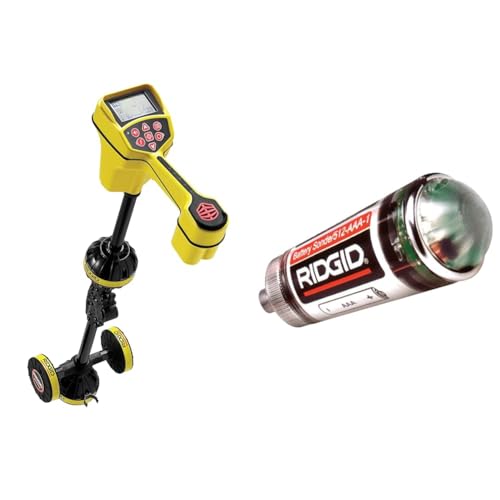
RIDGID SR-20 Receiver and 512 Hz Sonde Kit

TEMPO Communications 521E Sprinkler Valve Locator

TEMPO Communications 501 Tracker II Locator

TEMPO 551 Advanced Underground Utility Locator
What Each Pick Brings To The Table
Where the rest of this list focuses on copper conductors and metallic lines, this OFCN unit plays in the fiber lane. It crams an optical power meter (OPM), a visual fault locator (VFL), a network cable tester, and a fiber optic tester into a pocket-friendly shell powered by two AA batteries. For telecom techs running quick signal checks or hunting a break in a fiber run, that four-function combo means fewer tools on the bench.
The VFL side shoots a visible red laser, which is genuinely handy for spotting a cracked fiber near a connector. The OPM side reads across a broad wavelength range, which lets a single device handle multiple fiber types in the field.
Everyday Perks
- Four tools in one unit, so a tech can leave a heavier kit in the van for routine calls.
- Visible red laser helps trace breaks or bad splices across a fiber run without a separate source.
- Broad wavelength coverage makes it flexible across single-mode and multi-mode networks.
- Runs on two AA batteries, which means no proprietary charger to forget on a job site.
- Connector support for SC, FC, and ST out of the box, with LC via an adapter.
Things To Consider
- Calibration across wavelengths is approximate, so critical measurements still warrant a bench unit.
- The display resolution is fine for spot checks but not granular enough for lab-grade readings.
Key Specs
Who It Suits Best
Fiber optic technicians and telecom installers who want a single pocket tool for quick signal checks and fault tracing.
Where Another Pick Suits Better
The TEMPO 620K-G Tone and Probe Kit is the better match for anyone tracing low-voltage alarm wiring rather than fiber lines.
Alarm panels don’t fail loudly. A door contact drops off the bus intermittently, and the only clue is a fault light on the panel. The TEMPO 620K-G kit is built for exactly this kind of quiet failure: a tone generator on one end, a probe on the other, and a loud audible indicator that turns a two-person job into one.
For security installers, the value is in the workflow. You tone the line, walk the wire with the probe, and listen for the signal to peak where the wire runs. It also covers basic phone and network cable tracing, which makes it a versatile bench tool.
A Favorable Mix
- High-volume probe output supports one-person tracing without needing a partner at the panel.
- Built specifically for the security and alarm trade, so it handles low-voltage cable runs cleanly.
- Useful beyond alarms for tracing telecom and network cables in the same visit.
- US-based quality control adds confidence for pros who rely on the kit daily.
Worth Noting
- Limited to energized or tone-traceable lines, so it cannot find dead circuits without a generator on the far end.
- Probe batteries wear out on long jobs, so keeping spares on the truck is wise.
Right Fit For
Security installers and alarm technicians chasing intermittent faults across low-voltage circuits.
Look Elsewhere When
The TEMPO Communications 521E Sprinkler Valve Locator is the more natural choice for anyone tracing irrigation wiring instead of alarm loops.
The SeekTech SR-20 is the receiver half of RIDGID’s serious underground locating system. It traces frequencies from 10 Hz to 35 kHz, which means it works with most active transmitters on the market, not just RIDGID’s own. The omni-directional antenna array means you don’t have to perfectly orient the receiver to pick up a signal, which speeds up walking a yard.
For utility locators and contractors, the SR-20 is a daily driver. The large LCD shows signal strength, proximity, and distortion cues, which helps sort real targets from adjacent interference. Compared with the TEMPO 501 covered later, this is the professional-tier step up.
Points In Its Favor
- Wide frequency range (10 Hz to 35 kHz) means flexibility across transmitters and target utilities.
- Omni-directional antennas reduce the aim-and-walk learning curve for newer operators.
- Graphic LCD guidance shows signal distortion so you can tell a real line from bleed-over.
- Compact folding mast makes storage easier in a crowded truck.
Trade Offs
- Receiver-only: requires a transmitter to energize passive targets.
- Premium price compared to entry-level locators aimed at homeowners.
Technical Sheet
Built With In Mind
Utility locators and contractors who need a flexible receiver that pairs with multiple transmitters across varied job sites.
Reach For A Different Pick When
The TEMPO Communications 501 Tracker II is the better fit for homeowners handling a one-off buried wire project.
Buying the SR-20 by itself leaves half the puzzle unsolved. The ST-305 transmitter energizes metallic lines so the receiver has something to find. This bundle pairs both, which gives a complete tracing system out of the box.
The ST-305 delivers up to 5 watts and supports four frequency settings, which lets the operator match the signal to the target. For a contractor who already owns the receiver, the standalone transmitter reviewed below makes more sense. This kit is built for someone starting fresh.
What Helps Most
- Single purchase covers both halves of the locating workflow.
- SR-20’s broad frequency range works with the ST-305 and most third-party transmitters.
- Omni-directional antennas on the receiver simplify field alignment.
- Graphic LCD on the receiver aids interpretation in cluttered underground environments.
Room For Improvement
- Higher combined investment than buying the receiver alone.
- Bulkier to transport than a single transmitter unit like the OFCN Mini covered earlier in this list.
Feature Snapshot
Best Suited To
Pro line tracing crews and locators starting from scratch who want a matched RIDGID system.
A Better Fit Elsewhere
The RIDGID SR-20 with 512 Hz Sonde kit is the stronger option for anyone tracking non-metallic sewer or drain lines.
Already own the SR-20 receiver? The ST-305 is the transmitter side that pairs with it. It pushes up to 5 watts of signal into a metallic line, with four selectable frequencies and three connection methods (direct, induction clamp, or external grounding), which lets the operator match the setup to the situation.
Two simultaneous frequencies is genuinely useful on congested sites. One frequency traces your target line, while the second helps distinguish it from neighboring utilities. The tradeoff is that this unit does nothing without a receiver, so it’s a step-up item rather than a starter purchase.
What Stands Out
- Up to 5 watts output provides strong signal penetration for deeper runs.
- Simultaneous dual-frequency transmission helps sort targets from interference.
- Three connection methods add flexibility across metallic, grounded, and clamp scenarios.
- Compact body is easier to position in tight meter boxes or vaults.
Honest Caveats
- Receiver required separately, so the total system cost climbs fast.
- Five watts is overkill for shallow residential dog-fence wires.
Whose Shelf It Belongs On
Operators with an existing RIDGID receiver who need a stronger, more flexible transmitter for varied job sites.
Swap It Out When
The TEMPO Communications 501 Tracker II is a smarter buy for homeowners who need a complete two-piece locator in one box.
A standard transmitter energizes a metallic line, but plastic sewer pipes and non-conductive drains don’t carry a signal. That’s where a sonde comes in: a small battery-powered transmitter pushed through the pipe on a drain snake, broadcasting a 512 Hz signal the SR-20 receiver can follow.
This combo is built for plumbers and sewer diagnostics crews. It’s a more specialized tool than the SR-20 plus ST-305 covered above, and the right answer when the target is plastic or concrete rather than metal.
A Few Strong Suits
- Sonde transmitter tracks non-metallic pipes that conventional tracing cannot follow.
- SR-20 receiver’s omni-directional antenna simplifies following the sonde from above.
- 512 Hz signal is the standard frequency for sewer and drain diagnostics.
- Graphic LCD helps pinpoint the sonde location beneath paving or soil.
Points To Note
- Requires access to push the sonde into the pipe, which is not always possible.
- More specialized than the ST-305 bundle, so it doesn’t trace live electrical lines as cleanly.
Made For
Drain and sewer diagnostics crews who need to follow non-conductive pipes through yards and structures.
Another Choice May Suit
The TEMPO Communications 521E is the cleaner pick for irrigation and sprinkler valve work, where the target is wiring rather than pipe.
Sprinkler systems fail in two common ways: a solenoid won’t open, or the wire breaks somewhere in the yard. The TEMPO 521E handles both. It traces the path of buried irrigation wires, locates valves, and finds breaks with a depth readout that uses a 45-degree angle indicator.
Compared with the broader TEMPO 501 covered next, the 521E is built specifically for irrigation. The depth angle feature is genuinely helpful when deciding whether to dig or reroute a wire.
Well-Handled Touches
- Depth angle indicator helps decide whether to dig or reroute before breaking ground.
- Locates buried wire breaks, which is the most common irrigation failure mode.
- Pinpoints solenoid valves without the trial-and-error digging that wastes a weekend.
- Tracks the path of wires, which is useful when planning new landscaping or edging.
Softer Spots
- Specialized for irrigation, so it doesn’t double as a general utility locator.
- Performance depends on the soil conditions and moisture around the wire.
At A Glance
Perfect Match For
Lawn irrigation repair specialists and homeowners dealing with a dead zone in a sprinkler system.
Not Your Match When
The TEMPO 551 Advanced Locator is the stronger choice for utility-scale work across multiple wire types.
The Tracker II is the workhorse of the residential-grade locator category. It traces buried conductors up to 4,000 feet and 7 feet deep, which covers most home projects: invisible dog fences, irrigation valves, communication cables, and metallic water lines.
It pairs a transmitter and receiver in one bundle, so there’s no shopping for a separate transmitter. The depth rating is more modest than the TEMPO 551 covered later, but for typical yard work it’s more than enough.
Noteworthy Benefits
- Single bundle includes both transmitter and receiver.
- Handles wires up to 7 feet deep, covering most residential scenarios.
- Versatile across electrical lines, communication cables, dog fences, and metallic pipes.
- Established model with a long track record among tradespeople.
Factors To Consider
- 7-foot depth ceiling is limiting for deeper utility feeds or well lines.
- Older interface compared with the LCD-equipped RIDGID receivers reviewed above.
Who Should Grab It
DIYers and homeowners tracing dog fences, irrigation lines, and shallow utility feeds without a pro budget.
Skip It When
The TEMPO 551 is the better answer for utility-scale or deep-tracing work that exceeds 7 feet.
The TEMPO 551 is the deep-reach sibling to the Tracker II. It traces underground lines over a mile and locates wires up to 20 feet down, which puts it firmly in utility-scale territory. The IP54 rating means it shrugs off dust and splashes, so weather and rough sites don’t slow it down.
Dual-frequency transmission pairs with IntelliTrack noise rejection, which helps cut through AC interference on busy sites. Compared with the RIDGID SR-20 covered earlier, this is a more rugged, weather-sealed option for crews working outdoors year-round.
Where It Excels
- 20-foot depth rating handles deeper utility feeds than mid-range locators can reach.
- IP54 rating protects against dust and water spray on rough job sites.
- Dual-frequency transmission with noise rejection helps separate targets from interference.
- Traces over a mile, which is useful for long property runs or rural utilities.
Where It May Fall Short
- Overkill for a typical backyard dog-fence repair.
- Heavier than the residential-grade Tracker II, which matters on long walking jobs.
The Right Fit
Utility crews and serious property owners handling deep or long underground runs across varied weather conditions.
Consider Something Else When
The TEMPO Communications 521E is the friendlier pick for irrigation-specific work in a residential yard.
What Matters Most Before Choosing Cable Locators
The first fork in the road is what kind of line you’re actually tracing. A fiber optic technician needs an entirely different toolset than an irrigation repair tech, and a residential homeowner with a broken dog fence is yet another case. Sorting out the target before shopping saves money and frustration.
Target Line Type
Copper low-voltage alarm circuits, plastic sewer pipes, metallic water lines, and fiber optic runs all behave differently under tracing. Tone-and-probe kits work on energized or toneable copper. Sondes (small in-pipe transmitters) follow non-conductive drains. Visual fault locators and optical power meters serve fiber work. Matching the technology to the line type is the biggest factor in whether a tool does its job.
Depth and Distance
A 7-foot depth rating covers most residential situations, but utility-scale work often needs 15 to 20 feet of reach. Distance matters too: a Tracker II’s 4,000-foot range handles a large yard, while a one-mile rating covers rural properties and long utility feeds. Underestimating range leads to failed traces and repeat tool purchases.
Frequency Flexibility
Locators that accept multiple frequencies pair with more transmitters and handle more utility types. The RIDGID SR-20’s 10 Hz to 35 kHz window is wide enough to work with most active transmitters on the market. Single-frequency units are cheaper but lock you into one workflow.
Durability and Weather
Crew work in the field means rain, dust, and drops. An IP-rated housing (like the IP54 on the TEMPO 551) extends tool life on rough sites. For occasional residential use, indoor-rated gear is usually fine, but storage in a dry space still matters.
Key Considerations Across These Picks
Mistakes Worth Dodging
The most common slip is buying a receiver-only locator and expecting it to trace a passive metallic line. Receivers need a transmitter to energize the target, and some lines (like plastic sewer pipe) need a pushed sonde instead. Matching the full system to the line type prevents the “I bought the tool and it still doesn’t work” moment.
Another trap is underestimating depth. A 7-foot rating sounds generous until the target is a deeper utility feed. Reading the depth spec against the actual project, not the imagined project, makes the difference.
What The Higher Tier Buys
Stepping up to professional-grade locators like the RIDGID SR-20 or TEMPO 551 buys broader frequency range, deeper depth ratings, weather sealing, and LCD-guided signal interpretation. For a contractor running daily locates, those features pay back in fewer callbacks and faster finds. For a one-off residential project, the mid-range Tracker II covers the work at a fraction of the cost.
Frequently Asked Questions
What is a cable locator used for?
A cable locator traces the path of buried or hidden wires and cables so you can find breaks, identify routes, or avoid them during digging. Different designs target different line types, from low-voltage alarm circuits to fiber optic runs.
Can a cable locator find a broken underground wire?
Yes, when the locator is designed for fault finding. The TEMPO 521E and similar irrigation locators specifically locate breaks in buried wires, while general-purpose locators trace the path but may not pinpoint a break without an extra fault-finding mode.
Do I need a transmitter and receiver together?
For active tracing of metallic lines, yes. Receivers detect signals, but the transmitter puts a signal on the line first. Bundled kits like the TEMPO Tracker II include both, while RIDGID sells them separately for crews who already own half the system.
How deep can a cable locator reach?
Depth ratings vary widely. Residential-grade units like the TEMPO Tracker II reach about 7 feet, while professional models like the TEMPO 551 reach up to 20 feet. Matching the depth rating to the actual project prevents failed traces.
Will a cable locator work through concrete or asphalt?
Signal penetration through concrete and asphalt is limited, and results vary with material thickness and rebar content. Tracing works best in soil, and surface markers become more important over paved areas.
The Takeaway
The right cable locator depends on the line you’re tracing, the depth you need, and how often the tool earns its keep. Fiber techs gravitate toward the OFCN four-in-one, alarm installers lean on the TEMPO 620K-G tone kit, and anyone mapping buried utilities finds their match across the RIDGID and TEMPO professional lines. For a one-off residential project, the Tracker II is the friendliest entry point. Pick the tool that matches the actual job in front of you, and the rest of the work falls into place.
