

I put together this roundup for anyone staring down a wiring project and wondering which breaker switch belongs in front of their air conditioner. The right disconnect or DIN-rail breaker keeps a service tech safe during repairs and protects the compressor from electrical faults, so the choice actually matters. Below are nine solid options, from compact DIN-rail units for solar tie-ins to weatherproof outdoor pull-out disconnects built for mini splits.
The Essentials At A Glance
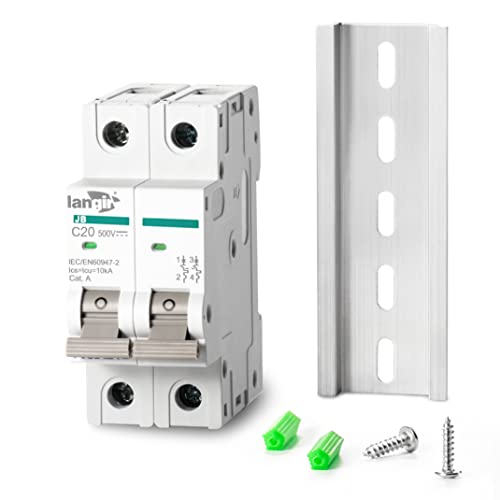
LANGIR 2P DC Solar Disconnect Breaker 20A

CHTAIXI 32A 2-Pole DIN Rail MCB

ASI 1-Pole 20A DIN Rail Breaker 240V

ASI 3-Pole 20A DIN Rail Breaker 480V

Schneider Electric A9F74232 Acti9 MCB 32A

MUJURUR 60A Non-Fused Disconnect Box

MUJURUR 30A Fused Disconnect Box

MUJURUR 60A Pull-Out Disconnect Box

MUJURUR 60A Fused Pull-Out Disconnect Box
A Closer Look At Each Pick
I like this LANGIR breaker because it actually bridges two worlds that usually need separate hardware. The DC side handles solar arrays, battery banks, and inverter feeds, while the AC side covers standard household circuits, so one unit can sit between the PV array and the main panel without jury-rigging a separate AC disconnect nearby.
The 20A rating suits smaller rooftop systems, RV solar cabinets, or a shed subpanel. DIN-rail mounting (the standard 35mm metal strip inside most modern breaker boxes) means installation feels familiar to anyone who has wired a subpanel, and the color-coded handle gives you a fast visual read on state during a fault.
Strengths Worth Knowing
- AC and DC dual coverage removes the need to buy two separate breakers for hybrid solar setups.
- 20A rating at 500V handles typical residential PV strings and battery disconnects without over-spec.
- Color-coded handle provides instant visual feedback on whether the circuit is live.
- Non-polarized DC terminals simplify wiring direction, helpful for first-time solar installers.
Points To Keep In Mind
- 20A may feel tight for larger arrays with multiple high-output panels.
- Outdoor mounting typically requires a separate weatherproof enclosure.
Who Should Grab It
DIY solar builders wiring a small PV system, battery backup, or RV setup that needs both AC and DC protection.
Reach For A Different Pick When
The CHTAIXI 32A unit suits you better if the AC side needs to carry heavier loads than 20 amps.
The CHTAIXI 32A breaker steps things up for circuits that pull more current, like a workshop subpanel or a larger window AC unit. It runs at 120V/240V across two poles, and the thermal-magnetic trip combines two protection styles: thermal for slow overloads and magnetic for sudden short circuits.
Mounting on a 35mm DIN rail keeps the install process identical to other miniature breakers, and the C-curve trip characteristic (a trip curve describes how quickly the breaker reacts at different overload levels; C curves tolerate brief startup surges) tolerates the inrush current compressors draw at startup. For most home shops, that’s enough headroom to avoid nuisance trips.
Standout Benefits
- 32A capacity handles heavier loads than entry-level 20A units.
- C-curve trip tolerates motor startup surges without nuisance tripping.
- Flame-retardant housing adds a layer of safety during overload events.
- Silver-alloy contacts tend to resist wear over many trip cycles.
Worth Noting
- Not polarity-independent on the DC side, unlike the LANGIR above.
- Visual trip indicator is helpful but less feature-rich than dedicated diagnostic breakers.
Right Fit For
Homeowners adding a dedicated 240V circuit to power a window unit, air handler, or workshop subpanel.
Skip It When
You run a three-phase system, in which case the ASI 3-pole breaker covers that ground more cleanly.
Automation Systems Interconnect (ASI) builds this single-pole breaker for branch circuits that need clean, certified protection. The UL1077 recognition (an Underwriters Laboratories supplemental standard for circuit protectors used inside equipment) gives inspectors and installers one less thing to argue about during sign-off.
What stands out to me is the 10,000-amp interrupt capacity, which means the breaker can safely break a fault of that magnitude without rupturing. Shock-proof terminations make wiring safer during installation, and the built-in visual trip indicator helps trace a fault faster when something pops in a crowded panel.
The Practical Payoff
- UL1077 recognition streamlines approval for residential and light commercial jobs.
- 10kA rating handles high-fault-current situations with margin to spare.
- Shock-proof terminations reduce installer risk during wiring.
- Visual trip indicator speeds troubleshooting in dark or crowded cabinets.
Honest Caveats
- Single-pole design means it is not a substitute for a 2-pole disconnect on 240V circuits.
- 20A may be undersized for equipment drawing heavier continuous loads.
Best Suited To
Licensed electricians and serious DIYers who need a recognized-safety component on a 120V branch circuit.
Where Another Pick Suits Better
The ASI 3-pole 20A breaker is the better match for three-phase loads at 480V.
This ASI unit is the sibling to the 1-pole breaker above, but it covers L1, L2, L3, and neutral for three-phase systems up to 480V. Commercial HVAC equipment, industrial controls, and large shop machinery often run on three-phase power, and this breaker is sized for exactly that workload.
The same UL1077 compliance and 10kA interrupt capacity carry over, which keeps the install credible to inspectors. For most homeowners this is overkill, but for a workshop with three-phase feed or a light commercial HVAC service, it earns its place.
What Works In Its Favor
- Three-pole design covers full three-phase systems in a single unit.
- 480V rating handles higher-voltage commercial circuits.
- UL1077 recognition supports permit and inspection workflows.
- 10kA interrupt capacity matches the 1-pole ASI for consistent panel performance.
Trade Offs
- Overkill for residential single-phase systems.
- Larger footprint takes more DIN-rail space than 1-pole or 2-pole breakers.
Made For
Light commercial sites, three-phase workshops, and electricians servicing industrial control panels.
A Better Fit Elsewhere
The ASI 1-pole 20A breaker is a better match when you only need single-phase 120V/240V branch protection.
The Schneider Electric Acti9 line carries a reputation for tight manufacturing tolerances, and this 32A, 2-pole unit reflects that. Schneider makes installation noticeably smoother with clear terminal markings and a positive click during rail mounting, which matters when you are lining up multiple breakers in a busy panel.
The 50/60 Hz compatibility covers both North American and European supply standards, which is useful for anyone sourcing components for mixed equipment. For the homeowner or installer who values consistent trip behavior and a long service life, the Acti9 sits comfortably at the top of this category.
Bright Spots
- Schneider build quality delivers consistent trip curves across production runs.
- 50/60 Hz rating supports a wide range of equipment standards.
- Clear terminal layout reduces wiring errors during installation.
- C-curve tolerance handles AC compressor inrush without nuisance trips.
Small Caveats
- Higher unit price than generic DIN-rail breakers.
- No DC rating listed, so it is strictly an AC solution.
Feature Snapshot
Who Will Love This
Installers and homeowners who want a known-brand breaker with predictable long-term behavior in a quality panel build.
Look Elsewhere When
The LANGIR 2P DC breaker fits better when the system needs DC solar handling in addition to AC.
For wall-mounted mini splits and outdoor AC compressors, a code-compliant disconnect is usually required within sight of the unit. The MUJURUR 60A box serves that role with a NEMA 3R enclosure, the rating that means it is built to keep out rain, sleet, and external ice formation.
The galvanized steel shell resists rust over years of outdoor exposure, and the pull-out handle tucks safely inside the enclosure when the circuit is open, which prevents anyone from walking off with it. At 60A, it covers most residential air handlers and mid-size condensing units without strain.
Positive Takeaways
- NEMA 3R rating handles outdoor wall mounting through weather cycles.
- Galvanized steel enclosure provides long-term corrosion resistance.
- Pull-out handle stores inside the box to prevent loss or tampering.
- 60A capacity covers most mini split and central AC service feeds.
Some Limits To Know
- Non-fused design means upstream breaker provides all overcurrent protection.
- Heavier than plastic alternatives, so mounting hardware needs to be solid.
Built With In Mind
Homeowners installing a code-compliant disconnect for a new mini split or condensing unit outside the house.
Consider Something Else When
The MUJURUR 60A fused version below offers extra short-circuit protection when the run to the panel is long.
This 30A fused disconnect is the smaller sibling in the MUJURUR outdoor line, built for tighter loads like a window unit feed, a small ductless mini split, or a portable AC circuit on a patio. The fuse adds a layer of overcurrent protection that complements whatever breaker sits upstream in the main panel.
Like the larger 60A model, the NEMA 3R steel enclosure tolerates outdoor mounting, and the pull-out handle stays put when stowed. The 30A rating is a deliberate fit for smaller residential HVAC equipment, so sizing is straightforward.
A Few Highlights
- Fused design adds short-circuit protection closer to the load.
- 30A rating aligns with smaller mini splits and window AC units.
- Compact footprint fits tighter exterior wall spaces.
- Galvanized steel resists corrosion in coastal or humid climates.
Possible Compromises
- 30A may be undersized for larger condensing units that pull closer to 40-60A.
- Fuse replacements add a small maintenance step after a fault.
Whose Shelf It Belongs On
Homeowners running a smaller mini split or a detached AC circuit that benefits from fused protection.
Not Your Match When
The MUJURUR 60A non-fused box is the better fit when equipment current draw exceeds 30A.
I think of this 60A pull-out box as the friendliest option in the MUJURUR family for a first-time installer. The pull-handle operation is intuitive: pull it out to cut power, push it in to restore, and stow it inside the enclosure when the circuit is open.
It runs 120/240V at 60A across a 2-pole, 3-wire setup, which fits typical residential mini splits and small commercial HVAC equipment. The NEMA 3R enclosure handles outdoor mounting, and the galvanized steel build is durable enough for long-term exterior service.
Advantages To Know
- Pull-handle operation requires no special training to use safely.
- 60A rating covers most residential and light commercial AC units.
- NEMA 3R enclosure protects against rain and ice buildup.
- Handle storage inside the box reduces the chance of misplacement.
Points To Note
- No internal fuse, so all overcurrent protection depends on the upstream breaker.
- Bulkier than the 30A model, which can crowd tight soffit installations.
The Right Fit
DIYers and homeowners who want a code-compliant outdoor disconnect without a complex fused setup.
Another Choice May Suit
The MUJURUR 60A fused box suits you better when you want added short-circuit protection at the disconnect.
This fused pull-out model rounds out the MUJURUR line by adding overcurrent protection at the disconnect itself. For larger HVAC equipment or installations with high available fault current at the panel, that extra fuse can be the difference between a contained trip and a more serious event.
The 60A rating at 120/240V matches the non-fused sibling, so it handles the same equipment class. The pull-handle mechanism keeps operation simple, and the NEMA 3R steel enclosure tolerates the same outdoor exposure. For most central air or light commercial installs, this is the more conservative pick.
What It Does Well
- Integrated fuse adds protection close to the load.
- 60A capacity matches larger residential and light commercial units.
- Pull-handle design stays intuitive for non-technical users.
- NEMA 3R enclosure handles outdoor exposure year-round.
Worth Bearing In Mind
- Fuse replacement adds a step compared to non-fused disconnects.
- Heavier steel housing requires sturdy wall anchors during installation.
Perfect Match For
Homeowners with central air systems or small commercial sites needing fused protection at the outdoor disconnect.
Swap It Out When
The MUJURUR 30A fused disconnect is the better fit when equipment draws under 30A and box size matters.
Picking The Right Disconnect For Your AC Setup
Choosing a breaker switch or disconnect comes down to matching the device to the circuit it protects and the environment it lives in. A DIN-rail miniature breaker works inside a panel or enclosure where space is tight and the wiring stays organized, while a pull-out disconnect box sits on an exterior wall within sight of the AC unit it serves. The right pick depends on whether you need a sub-component for an indoor panel or a complete outdoor service disconnect.
Voltage rating is the first checkpoint, and matching the breaker’s rating to your supply matters more than picking the highest number available. A 120V/240V AC breaker covers most residential window units, mini splits, and central air compressors. Three-phase equipment running at 480V needs a breaker like the ASI 3-pole unit above. Mismatched voltage ratings lead to nuisance trips at best and dangerous arc faults at worst, so this is where I always double-check the data plate on the AC unit before ordering.
Current rating matters next. The breaker should match or slightly exceed the maximum continuous current draw of the equipment. Undersizing causes constant trips; oversizing removes protection. Look for the FLA (Full Load Amps) value on the AC nameplate and size the breaker at 125 percent of that figure, which is the NEC standard for continuous loads.
For outdoor disconnects, enclosure rating decides whether the box survives its environment. A NEMA 3R enclosure handles rain, sleet, and external ice, which covers most residential exterior walls. Coastal or industrial sites might warrant NEMA 4 or 4X for additional corrosion resistance, but those ratings are uncommon in this category.
Finally, fused versus non-fused comes down to fault current expectations. Fused disconnects add a layer of short-circuit protection right at the equipment, which helps when the run to the main panel is long and available fault current is high. Non-fused boxes rely on the upstream breaker, which is fine for shorter runs with standard residential service.
Practical Notes Across These Picks
Common Shopping Slip Ups
A frequent mistake I see is matching the breaker amperage too loosely to the AC unit. Oversizing “just to be safe” removes the protection the breaker exists to provide, while undersizing turns every compressor startup into a tripping event. Pull the FLA from the equipment data plate and work from there.
Another common slip is buying a DC-rated breaker for AC-only circuits or vice versa. The LANGIR above handles both, but most miniature breakers are AC-only, and assuming otherwise can cause missed trips during DC faults where the arc behaves differently. Read the spec sheet, not just the listing headline.
Where The Extra Money Goes
Higher-tier breakers like the Schneider Acti9 cost more because of tighter trip-curve tolerances, longer mechanical life, and stricter quality control during production. That translates into more predictable behavior over decades in the box, fewer nuisance trips, and easier sign-off during inspections.
For most homeowners running a single mini split, the price difference between a generic DIN-rail breaker and a premium unit is modest enough to justify the upgrade. For shop or light commercial work where the breaker cycles daily, premium construction pays off through longer service intervals and better diagnostic clarity when faults pop up.
Frequently Asked Questions
What size breaker do I need for an air conditioner?
The breaker size depends on the Full Load Amps listed on the AC unit’s data plate. For continuous loads, the breaker should be sized at 125 percent of that figure, so a unit drawing 24A typically pairs with a 30A breaker.
Can I use a DC breaker on an AC circuit?
Most DC breakers handle AC circuits fine, but AC breakers are not always rated for DC. Check the spec sheet for both ratings before assuming, and confirm polarity matters on DC circuits where indicated.
Where should an AC disconnect box be mounted?
Electrical codes typically require the disconnect within sight of the outdoor unit, usually within a few feet of the condenser, and at a height accessible without a ladder. Local codes vary, so checking with the local building department helps.
Do I need a fused or non-fused disconnect?
Fused disconnects add short-circuit protection at the equipment and help on long feeder runs. Non-fused boxes rely on the upstream breaker for protection and suit shorter, simpler residential installs.
Are DIN-rail breakers the same as panel breakers?
DIN-rail miniature breakers share a similar role with panel-mount breakers but use a different mounting style. They are common in subpanels, equipment cabinets, and solar combiners rather than the main residential load center.
Closing Remarks
The right breaker switch keeps the AC running safely and gives a service tech a clear way to cut power before opening the unit. Match voltage and amperage to the equipment data plate, decide between an indoor DIN-rail breaker and an outdoor pull-out disconnect, and pick fused protection when the run or fault current demands it. With those basics locked in, any of the nine options above should serve the install well for years to come.
