

I pulled together ten budget speaker cables that cover the most common setups I hear about from readers, including living-room home theaters, garage workshops, car audio upgrades, and small recording spaces. Some are bare wire on a spool for DIY runs, others arrive terminated and ready to plug into a speaker. The goal here is simple: help you match the cable to the job without overspending on features your system won’t use.
The Picks In Brief

2-Pack Pig Hog PHSC5 8mm Tour Grade Speaker Cable 5ft

Install Link 14 AWG Gauge Speaker Wire 100 Feet CCA
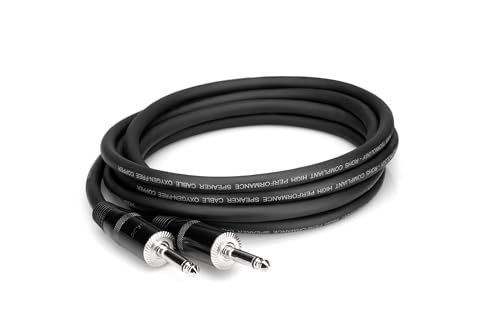
Hosa SKJ-405 Pro Speaker Cable REAN 1/4 Inch TS 5 Feet
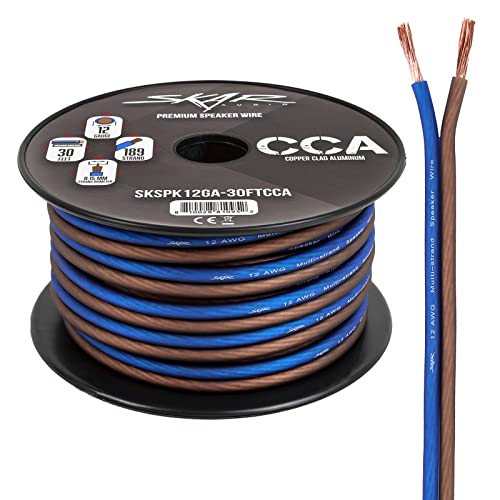
Skar Audio 12 Gauge AWG Audio Speaker Wire 30 Feet

Pig Hog PHSC3 High Performance 14 Gauge 9.2mm Speaker Cable 3 Feet

NVX Professional Grade 100% OFC 16 Gauge EnvyFlex Speaker Wire 100 feet

Install Link 16 AWG Gauge Speaker Wire 100 Feet CCA

Kinter Cable 100ft 16-Gauge Audio Stereo Speaker Wire

Micca 14-Gauge Pure Copper Speaker Cable Pair with Banana Plugs

DS18 SW-16GA-100RB 16-GA Ultra Flex Speaker Wire 100 Ft
Taking A Closer Look At The Options
This Pig Hog pair arrives as two pre-cut 5-foot cables with 1/4-inch terminations, the kind of short run you reach for between a powered speaker top and a sub, or between an amp head and a passive cabinet on a small stage. The 8mm rubber jacket is the headline feature, and it’s noticeably thicker than typical instrument cable jacket, which matters when the cable sits under foot or gets yanked around a van during load-out.
Heat-shrink reinforcement at the connector ends is the other detail that separates tour-grade cable from the bargain bin. In my experience talking with mobile DJs and weekend musicians, that strain relief is what determines whether a cable survives its second year. This pick suits anyone running a portable rig, a rehearsal space, or a backyard PA where the cable lives a rough life.
Well-Handled Touches
- Thick 8mm rubber jacket resists scuffs and crushing under cable ramps
- Heat-shrink strain relief at each end keeps the connector from tearing loose
- 5-foot length suits typical amp-to-cabinet jumps without excess slack to trip over
- Comes as a two-pack, so most small stereo setups get both cables in one buy
Things To Consider
- At 5 feet, the cable is too short for wall-to-wall home theater runs
- Rugged build adds some stiffness, which can fight you in tight rack corners
Quick Facts
Who Should Grab It
Musicians and mobile DJs who plug and unplug weekly and want a cable that shrugs off load-in abuse.
Skip It When
Home theater owners running wire behind drywall should look at the longer Install Link 14 AWG spool instead.
Install Link ships this as a 100-foot spool of stranded copper-clad aluminum, which is a common construction at this price tier: an aluminum core wrapped in copper to keep resistance manageable while keeping cost low. The frosted red and black jacket makes polarity easy to confirm at a glance, which saves frustration when you’re running four conductors to a pair of surrounds and need to keep them straight.
14 AWG is the sweet spot for most residential runs under about 50 feet, especially with bookshelf and floor-standing speakers drawing moderate power. If you’re feeding a low-impedance sub from across the room, the lower resistance of 14 AWG pays off more than it does on a near-field desktop pair. The double-conductor design keeps the polarity stripe and the opposite conductor together, so there’s no guessing which conductor belongs to which side of the run.
Everyday Perks
- 14 AWG thickness handles typical living-room runs with minimal signal loss
- 100-foot length covers most single-room or open-plan home theater setups
- Frosted red and black jacket gives clear polarity identification at the strip end
- Stranded construction stays flexible when routing around door frames or studs
- Copper-clad aluminum keeps the price approachable for whole-room installs
Honest Caveats
- CCA construction has higher resistance per foot than pure copper, so very long runs may want a heavier gauge
- No printed length markers on the jacket, so measuring requires a tape
- Bare wire means you’ll need banana plugs, pins, or binding-post terminations on each end
Made For
DIYers wiring a 5.1 or stereo setup across a single room who want enough slack without buying multiple spools.
A Better Fit Elsewhere
Anyone who wants pre-terminated ends and a pure copper build should consider the Micca 14-Gauge pair instead.
Hosa is a long-standing name in studio and stage cabling, and the SKJ-405 brings REAN connectors, which are a recognized pro-grade brand for 1/4-inch jacks. The 5-foot length targets short patch and amp-to-cabinet runs, which is where most people feel cable choice first because signal integrity over short hops really does depend on connector quality.
Compared to the Pig Hog PHSC5 earlier in this list, this cable is more about clean signal transfer than brute durability, and the connector brand is the differentiator. Hosa positions this as a pro-grade cable, and the construction reflects that: solid plug body, decent strain relief, and a jacket that flexes smoothly without feeling flimsy. For a home studio, a rehearsal room, or a small venue where the cable gets plugged and unplugged a few times a month, this hits a sensible middle ground.
Bright Spots
- REAN 1/4-inch TS connectors are widely trusted in pro audio for solid contact
- 5-foot length works as a desktop monitor patch or short amp jump
- Comes as a two-pack, so most users get both cables in one order
- Flexible jacket handles repeated coiling without kinking at the strain relief
Points To Note
- Not built for heavy tour abuse the way the thicker Pig Hog jacket is
- 5-foot length rules it out for wall-to-wall permanent installs
Feature Snapshot
The Right Fit
Home studio owners and small-venue performers who want trustworthy connectors without paying boutique cable prices.
Reach For A Different Pick When
Touring musicians dragging cables across concrete nightly should look at the Pig Hog PHSC5 for its beefier jacket.
Skar Audio leans into the car audio crowd with this 12 AWG spool, and 12 AWG is genuinely thicker than the 14 and 16 gauge picks elsewhere on this list. Thicker gauge means lower resistance, which matters when you’re pushing serious current to a subwoofer or running wire across the length of an SUV. The 30-foot length fits most car and small-room installs without leaving yards of slack stuffed behind a panel.
The blue and brown color coding keeps polarity obvious once the wire is tucked behind trim, which is a small detail that prevents crossed connections after the install is buttoned up. The matte soft-touch jacket feels easy to handle, and Skar also offers 100-foot versions of the same 12 AWG wire for bigger projects. For home theater, 12 AWG is overkill for short bookshelf runs but reasonable for long floor-standing pairs or sub feeds.
The Helpful Details
- 12 AWG thickness reduces resistance on longer subwoofer or floor-standing runs
- 30-foot spool suits single-car installs or single-room home theater feeds
- Blue and brown jacket colors make polarity identification quick
- Soft-touch matte jacket handles tight bends without cracking
- CCA construction keeps pricing accessible despite the heavier gauge
Worth Bearing In Mind
- 30 feet may fall short for whole-car installs with multi-amp setups
- CCA wire has higher resistance than OFC at the same gauge, which matters on long sub feeds
- Bare wire ends require termination with ring terminals or bare-binding-post connections
Best Suited To
Car audio installers running a sub and amp combo who want heavier gauge without buying a full 100-foot spool.
Where A Sibling Pick Shines
Anyone running 50+ feet in a wall should pick up the NVX OFC wire for its lower-resistance pure copper build.
The Pig Hog PHSC3 is a 3-foot patch cable with a 9.2mm outer jacket, the kind of short, heavy-gauge run you use between studio monitors and an audio interface, or between an amp head sitting on top of a cabinet. 14 gauge on a 3-foot run is genuinely overkill in the resistance department, but the cable choice at this length is more about mechanical durability than electrical performance.
Comparing this to the longer PHSC5 earlier, the difference is purely length and gauge, not build philosophy. Same tour-grade jacket, same heat-shrink strain relief. Where this one wins is the desktop patch use case: a 3-foot cable stays out of the way under a monitor stand and doesn’t add weight pulling on the connector. For tight desktop arrangements or compact pedalboard-style amp racks, the shorter run is often the right answer.
Practical Pluses
- 9.2mm jacket mirrors the rugged feel of the longer Pig Hog tour cables
- 3-foot length is perfect for desktop monitors or top-of-amp patches
- 14 gauge construction is overkill in a good way for short signal paths
- Strain relief design handles repeated coiling at studio desks
A Few Limitations
- 3 feet is too short for any stand-mounted speaker or amp-to-cabinet setup across a stage
- Heavy jacket adds a little weight that can pull on small monitor jacks
Perfect Match For
Desktop recording setups and small amp rigs where the cable lives close to the gear and rarely moves.
Swap It Out When
Anyone running a longer amp-to-cabinet jump should grab the 5-foot Pig Hog PHSC5 from earlier in the list.
NVX makes the only 100% oxygen-free copper wire on this list, and that distinction matters for anyone worried about long-term conductivity. OFC has measurably lower resistance than CCA at the same gauge, and the silver-tinned coating helps prevent oxidation at the copper surface, which is the slow-acting failure mode of bare copper over decades. The “true to gauge” claim also means the wire actually meets 16 AWG spec, which is not always the case with budget spools.
The EnvyFlex jacket is genuinely flexible, more so than typical PVC, which pays off when you’re pulling wire through conduit or fishing it behind a wall. Compared to the Install Link 16 AWG CCA pick later in the article, this is the upgrade path for someone who wants the conductor material to be the real deal. The twisted-pair construction helps with noise rejection, though speaker-level signals are usually robust enough that this is more about good practice than audible difference.
Standout Benefits
- 100% oxygen-free copper conductors deliver lower resistance than CCA alternatives
- Silver-tinned coating resists oxidation for cleaner long-term terminations
- EnvyFlex jacket stays flexible in cold basements and tight conduit bends
- True-to-gauge 16 AWG spec means you get the conductor cross-section you paid for
- Twisted-pair geometry reduces stray noise pickup along the run
Trade-Offs To Consider
- 16 gauge is light for very long runs feeding low-impedance speakers
- Bare wire requires terminations, so factor in plugs or pins for each end
- OFC pricing sits above CCA spools, even at the same gauge
Who Will Love This
Home installers prioritizing conductor quality and long-term reliability over the lowest possible upfront cost.
Look Elsewhere When
Anyone running a quick garage or workshop pair on a tight budget will find the Install Link 14 AWG CCA spool a better value match.
This is the 16-gauge sibling to the Install Link 14 AWG spool reviewed earlier, and it lands in the same value lane: copper-clad aluminum, stranded conductors, frosted red and black jacket for polarity. The 16 AWG is the gauge most often recommended for short-to-medium residential runs of bookshelf and in-wall speakers where the total run stays under roughly 30 feet per side.
If you’re wiring a bedroom pair, a small office setup, or the surrounds in a 5.1 system that sits close to the receiver, 16 AWG is the practical minimum and this spool handles the job without overbuilding. The 250-foot option also exists for larger jobs, which makes it useful for whole-house audio projects where you’re feeding multiple rooms from a single amp. Comparing it to the NVX OFC pick, this is the budget-friendly alternative that still gets the polarity stripe and stranded construction right.
What It Does Well
- 16 AWG is the practical gauge for most short home speaker runs
- 100-foot length covers typical bedroom or office installs with a bit to spare
- Frosted red and black jacket gives clear polarity cues at the strip end
- Stranded copper-clad aluminum stays flexible in cold weather installs
- Polarity identification helps DIYers avoid crossed connections on multi-speaker projects
Possible Compromises
- CCA construction has higher resistance than pure copper, especially on longer runs
- 16 AWG is too light for low-impedance or high-current sub feeds over distance
Built With In Mind
First-time DIYers wiring a simple stereo pair who want an approachable price without skimping on the basics.
Not Your Match When
Anyone feeding a subwoofer across a long room should step up to the Skar Audio 12 AWG wire for lower resistance.
Kinter’s 100-foot 16 AWG wire is a clear-jacket spool with foot markings printed along the length, which is a small but genuinely useful feature. When you’re cutting four or five equal lengths for ceiling speakers, having the measurement printed on the jacket means no tape measure and no math. The clear PVC also makes it easy to spot polarity stripes or conductor orientation at a glance.
The copper-clad aluminum construction keeps pricing accessible, and the soft-touch PVC jacket handles tight bends without creasing. This is a 2-conductor wire designed for amplifier-to-speaker runs in home theater, hi-fi, and basic car audio setups. Where this differs from the Install Link 16 AWG spool is mostly the printed foot markings, and for anyone doing a custom multi-room install, that detail alone is worth considering.
Key Advantages
- Printed foot markings on the jacket eliminate measuring during cuts
- Clear PVC jacket makes polarity stripes easy to see at any termination point
- 100-foot spool covers most multi-room or ceiling speaker projects
- Soft PVC jacket flexes around tight corners without cracking
- Red polarity stripe runs the full length for confident connections
- CCA conductor material keeps the cost approachable for whole-home runs
Things To Weigh Up
- CCA has higher resistance than pure copper on long-distance runs
- 16 AWG is on the light side for subwoofer feeds or outdoor speaker lines
Whose Shelf It Belongs On
DIYers planning custom-length runs for ceiling or patio speakers who want measurement markings built into the jacket.
Consider Something Else When
Pure-copper loyalists should pick the NVX EnvyFlex spool for its OFC conductors and tinned coating.
The Micca pair arrives pre-terminated with banana plugs on both ends, which removes the only step that intimidates first-time owners: stripping wire and twisting strands without fraying. Each cable is 6.6 feet (2 meters), which fits typical bookshelf-to-amp or stand-mounted floor-standing setups where the gear sits within a few feet of the speaker.
Pure copper with 245 fine strands per conductor is the headline spec, and it means lower resistance and better flexibility than CCA wire at the same gauge. Micca also publishes a 13-foot (4 meter) variant for owners who need more reach. Compared to the bare-wire spools earlier in this list, this is the convenience option for people who want to plug and play without buying a separate bag of plugs.
The Practical Payoff
- Pre-installed banana plugs eliminate stripping and termination work
- Pure copper conductors offer lower resistance than CCA alternatives
- 245 fine strands per conductor keep the cable flexible for tight rack routing
- 6.6-foot length suits most desktop and bookshelf speaker placements
- Pair packaging covers a stereo setup without buying two separate cables
Less Ideal Details
- Banana plugs require binding-post terminals, which not all speakers have
- 6.6 feet is too short for floor-standing speakers sitting far from the amp
- Pre-terminated cables can’t be cut shorter for very compact setups
Who It Suits Best
Bookshelf speaker owners and home office listeners who want a clean, no-tools setup with quality conductor material.
Where Another Pick Suits Better
Anyone needing a custom length or non-banana termination should look at the bare Install Link 14 AWG spool instead.
DS18’s 16-gauge ultra-flex cable leans hard into one specific feature: bend radius. The jacket formulation is designed to flex easily without fighting you, which is the make-or-break detail when routing wire through a vehicle dashboard, a marine panel, or any confined space where stiff wire won’t sit flat. If you’ve ever fought CCA wire that wants to spring back into its coil shape inside a door panel, this is the opposite of that experience.
The red and black jacket keeps polarity obvious, and the stranded CCA construction is the typical budget pick at this gauge. Where this differs from the Install Link 16 AWG spool reviewed earlier is mostly the jacket feel, which is genuinely more pliable. For auto, marine, and tight residential retrofits, that flexibility saves install time and reduces the risk of a sharp bend damaging the conductor inside the jacket.
Good Reasons To Consider
- Ultra-flexible jacket handles tight bends in dashboards and marine panels
- Red and black color coding makes polarity identification quick at every termination
- 100-foot length covers most single-vehicle or single-room installs
- Stranded CCA construction balances flexibility with conductivity for typical speaker loads
Where It May Fall Short
- CCA wire has higher resistance than pure copper, which matters on long sub feeds
- 16 gauge is on the light side for high-current amp-to-sub wiring over distance
Right Fit For
Car and marine audio installers routing wire through tight spaces where stiff jackets slow the job down.
Another Choice May Suit
Anyone wiring a permanent home theater run may prefer the heavier 12 AWG Skar Audio wire for lower resistance.
What To Match Up Before Choosing Budget Speaker Cables
The first thing to settle is the run length, because gauge choice flows from that. A 10-foot bookshelf-to-amp jump gets by on 16 AWG with little complaint, while a 50-foot floor-standing run on the other side of the room appreciates the lower resistance of 14 AWG, and anything pushing 80 feet or feeding a subwoofer should look at 12 AWG. Copper-clad aluminum works fine for most home and car setups, and pure copper makes sense when long-term oxidation resistance or maximum conductivity matters to you.
Conductor material is the next fork in the road. CCA is the budget-friendly standard at this tier, and for most residential and car audio runs, the higher resistance per foot is not audible. Pure oxygen-free copper has measurably lower resistance, tinned coatings resist oxidation at the conductor surface, and twisted-pair geometry helps reject stray noise. Whether those details matter depends on how long the run is and how critical you are about long-term reliability.
Connector type is the final piece. Pre-terminated cables with banana plugs skip the tooling step and plug straight into binding posts, which is great for bookshelf setups. Bare wire on a spool is the flexible choice for in-wall, ceiling, or auto installs where you cut to length and terminate with your own hardware. Short patch cables with 1/4-inch TS connectors suit amp-to-cabinet and powered monitor setups. Pick the format that matches your gear before worrying about gauge.
Key Considerations Across These Picks
Common Shopping Slip Ups
The most frequent mistake is buying wire that’s too thin for the actual run length. A 16 AWG cable can power a bedroom pair just fine, but the same gauge stretched across a 60-foot living room run will lose more signal than people expect. Measure the path from amp to speaker, account for any routing up and around door frames, and step up a gauge if the total length surprises you.
Another trap is mixing CCA and OFC wire across the same install. Different conductor materials have different resistance characteristics, and the imbalance can show up as uneven volume between speakers that nominally use the same wire. Pick one conductor type for the whole project and stay consistent.
Where The Extra Money Goes
Spending more typically buys pure copper conductors, tinned coatings, and heavier jackets. Pure copper reduces resistance per foot, the tinning keeps copper from oxidizing over years of contact with air, and a heavier jacket survives rougher routing through walls and conduit. For a quick garage setup, none of that matters much. For an in-wall install you don’t want to redo in a decade, those details earn their keep.
Frequently Asked Questions
What gauge speaker cable do I need for a typical home theater?
For most living-room runs under 30 feet per speaker, 16 AWG is the practical minimum and works well for bookshelf and surround channels. Step up to 14 AWG if your floor-standing speakers sit far from the receiver.
Is copper-clad aluminum wire good enough for speakers?
CCA wire performs well in typical home and car audio runs where the total length stays moderate. Pure copper has lower resistance per foot and resists oxidation better, but CCA is a sensible budget choice for most setups.
Do pre-terminated cables with banana plugs sound better than bare wire?
The connectors don’t change the audio signal meaningfully. Banana plugs mostly offer convenience, easier swaps, and a cleaner look behind a speaker, which is the real reason people pay extra for them.
How long can a speaker cable run be before I lose audio quality?
There is no single cutoff, but resistance starts adding up around 50 feet for 16 AWG wire feeding a low-impedance speaker. For long runs, use heavier gauge or pure copper to keep resistance low.
Can I use indoor speaker wire for car audio?
Yes, as long as the gauge matches the current draw and you route it away from heat sources and moving parts. Marine-rated jackets add extra moisture protection for boats and outdoor installs.
Closing Remarks
The right budget speaker cable comes down to matching gauge, length, conductor material, and connector type to the actual run you’re building. The picks above cover the most common scenarios I hear about, from whole-room home theaters to garage PA rigs and tight car audio retrofits. Start with the run length and the terminals on your gear, and the right cable usually becomes obvious.
