

Working on a small wiring project, a motorcycle harness, or a clean electronics bench setup means you eventually need a specific conductor for the job. I picked these nine options because they cover the most useful gauge ranges, insulation types, and color sets that come up again and again in real installs.
A Snapshot Of The Selections

WotyWire 10 Gauge THHN Stranded Wire (White, 30FT)
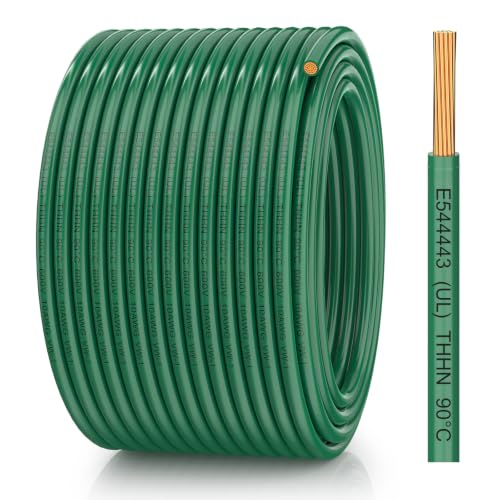
WotyWire 10 Gauge THHN Stranded Wire (Green, 30FT)

WotyWire 10 Gauge THHN Stranded Wire (Black, 30FT)

WotyWire 10 Gauge THHN Stranded Wire (Red, 30FT)

Posi-Products Posi-Tap Connectors 16-18 Gauge (20-Pack)

THE CIMPLE CO 10 AWG Solid Copper THHN/THWN Wire 10 FT

TUOFENG 16 AWG Solid Tinned Copper Wire Kit (6 Colors)

TUOFENG 16 AWG Flexible Silicone Wire (6 Colors, 15ft)

TUOFENG 16 AWG Silicone Wire 66 ft Red/Black Tinned Copper
A Closer Look At Each Pick
I find a white jacket pairs naturally with neutral conductors in branch circuit wiring, and this WotyWire reel covers exactly that role. THHN/THWN-2 (a thermoplastic insulation rated for heat- and moisture-resistant environments) wire is the everyday workhorse inside conduit, and the 10 AWG (American Wire Gauge) gauge here handles 30-amp circuits comfortably for most home shop and subpanel runs.
The stranded oxygen-free copper (OFC, copper refined to reduce internal oxides for cleaner conductivity) build pulls through bends more easily than solid, which matters whenever the conduit has more than one or two sweeps. The PVC insulation plus nylon jacket is the same dual-layer combination seen across this brand’s color lineup, so it slides smoothly and shrugs off scuffs during pulls. For a single-room rewiring or an outbuilding feeder, this white 30-foot length is sized about right for one circuit leg.
Benefits That Matter
- Oxygen-free copper strands for stable conductivity and easier routing through bends
- Dual-layer PVC and nylon jacket that resists scuffs during long conduit pulls
- 10 AWG rating that handles typical 30-amp residential branch circuits
- 30-foot length matches a typical one-circuit run without leftover waste
Things To Consider
- 30 feet is short for whole-panel feeder runs, so larger jobs may need multiple spools
- Stranded copper requires proper terminal crimping rather than simple wrap-and-screw
Who It Suits Best
A homeowner finishing one dedicated circuit, such as a workshop outlet or detached garage subpanel leg, who needs a reliable neutral conductor at a useful length.
Skip It When
You need a much longer single run, in which case the WotyWire THHN Black 30FT offers the same construction with easier sourcing for typical hot-leg identification.
Green THHN is the conductor reserved for equipment grounding in most residential and light commercial work, so I keep it on hand whenever I’m bonding subpanels, j-boxes, or appliance frames. The WotyWire green 10-gauge shares the same stranded copper conductor and dual-layer jacket as the rest of the color lineup reviewed here.
Inside a metal conduit or raceway, the green insulation makes it impossible to confuse with a hot leg during inspection. The slick nylon jacket helps when pulling a long ground alongside other conductors, which is the typical install pattern. For most DIYers, a single 30-foot spool handles one subpanel bond, an outbuilding ground, or a single large-appliance circuit. It also complements the white wire reviewed above when both conductors ship in the same construction.
Useful Touches
- Green insulation that matches NEC (National Electrical Code) conventions for grounding
- Stranded copper simplifies attachment to grounding bars and lugs
- Dual-layer jacket that resists scuffing in shared conduit runs
- 30-foot length that covers a typical subpanel bond without excess slack
Honest Caveats
- Some owners prefer bare copper for direct burial grounds; insulated THHN is better inside conduit
- Only one color here, so multi-circuit jobs still require the rest of the lineup
The Right Fit
Anyone installing a new subpanel or bonding a detached structure who wants a clean, code-friendly conductor with the same build quality as the rest of this brand’s color family.
Where Another Pick Suits Better
For a smaller grounding pigtail on a single appliance, THE CIMPLE CO 10 AWG solid wire may be easier to terminate in tight box geometries.
Black THHN is the standard “hot” leg conductor in 120/240V residential work, and I reach for it whenever a switch loop, outlet run, or breaker feed needs identification inside a crowded box. This WotyWire version pairs that familiar color coding with the same stranded oxygen-free copper used across the lineup.
The 19-strand construction is more flexible than solid wire, which helps when pulling through EMT (electrical metallic tubing) bends or fishing around existing conductors in an older home. Heat-rated PVC insulation and the nylon outer jacket are standard THHN/THWN-2 fare, so the wire handles the same temperature and moisture environments as the white and green spools above. For a typical garage circuit or a 30-amp single-pole breaker feed, this 30-foot length is a sensible match. The build matches the white wire reviewed earlier, which makes mixing them inside the same conduit straightforward.
Practical Advantages
- Black jacket marks the conductor clearly as a hot leg at every box and panel
- 19-strand oxygen-free copper handles tight conduit bends without kinking
- Heat- and moisture-rated insulation covers both indoor and outdoor conduit runs
- Same construction as the white and green spools, simplifying mixed-color pulls
Points To Note
- One 30-foot reel may fall short for runs between distant subpanels and the main panel
- Stranded wire needs ferrules or proper crimp terminals on some breaker types
Best Suited To
DIYers running a new 120V or 240V circuit in conduit who want a clearly marked hot leg with consistent build quality across the color family.
Reach For A Different Pick When
You need a second hot leg for a multi-wire branch circuit, in which case the WotyWire THHN Red 30FT carries the same spec on the opposite phase.
Red THHN shows up wherever a second hot leg or a switched conductor needs identification, and this WotyWire spool fills that role with the same construction as the rest of the color family. For 240V multi-wire branch circuits, I always pair the black wire reviewed above with this red counterpart.
The stranded oxygen-free copper core handles repeated bending around j-boxes without work-hardening (becoming brittle from repeated flexing), which matters when you need to fold conductors neatly into a crowded panel. The PVC and nylon dual jacket matches the temperature and abrasion resistance of the green and white wires above, so the four spools share the same install behavior. A 30-foot length handles a single 240V appliance run or the second leg of a multi-wire branch. It complements the black wire nicely inside shared conduit.
The Value In It
- Red jacket clearly identifies the second hot leg at panel terminations
- Stranded copper resists fatigue in tight box folds
- Heat-resistant PVC and nylon jacket handle standard conduit environments
- 30-foot length matches one typical 240V appliance or subpanel leg
Trade-Offs
- Pairing it with the black spool means buying two reels for a single multi-wire branch
- Not a substitute for the green ground in the same circuit
Whose Shelf It Belongs On
A hobbyist or tradesperson wiring a 240V tool, water heater, or multi-wire branch circuit who already uses the black wire from this same brand.
A Better Fit Elsewhere
For a quick ground-only task, the WotyWire THHN Green 30FT is a smarter single-spool pickup than a dedicated red leg.
Posi-Tap connectors sit in a different category from the spools of wire above, but I include them because most small wiring jobs eventually need a clean tap into an existing circuit. These blue-insulated connectors from Posi-Products thread onto a host wire and pierce it without stripping, then accept a 16-18 AWG piggyback conductor.
The 16-18 AWG range covers most motorcycle, automotive, and trailer-harness wiring, which is exactly the environment these were designed for. The high-temperature nylon body holds up near engine bays better than cheap PVC taps, and the bulk 20-pack means a project rarely runs out mid-install. They work well with both the stranded silicone wires reviewed below and the smaller-gauge THHN above. The design makes them reusable, which is rare in this price range.
Why It Works Well
- Tap-in-place design avoids cutting the host wire, preserving original harness integrity
- Reusable threads let me move taps if a layout changes
- High-temperature nylon body handles engine-bay heat
- Bulk 20-pack covers a full accessory install with spares left over
Points To Keep In Mind
- Limited to 16-18 AWG conductors, so heavier-gauge circuits need a different tap style
- Not a substitute for a proper soldered or crimped joint in high-vibration environments
Perfect Match For
Motorcycle, UTV, or trailer owners adding lighting, GPS units, or heated gear who prefer a no-strip tap over cutting into the factory harness.
Swap It Out When
You are working on a permanent house circuit in conduit, in which case the WotyWire THHN Black 30FT and proper wire nuts are the right pairing instead.
For a short repair, a small jumper, or a single device pigtail, a 10-foot stick of solid 10 AWG THHN/THWN often beats wrestling with a 30-foot reel. THE CIMPLE CO’s solid copper conductor and PVC jacket are the same spec family as the stranded wires reviewed above, just in a more rigid form.
Solid copper pushes through conduit with less resistance from drag and seats cleanly under screw terminals without a ferrule, which is why electricians still prefer it for fixed device terminations. The insulation is rated for the same heat and moisture exposure as the WotyWire lineup, so it slots into indoor conduit, machine wiring, or appliance feeds. Ten feet is short, but that is the point for a single-room fix or a junction-box bridge. The shorter length also keeps waste down when only a stub is needed.
Everyday Advantages
- Solid conductor seats directly under screw terminals without ferrules
- 10 AWG handles the same 30-amp loads as the stranded equivalents
- PVC jacket rated for heat, gas, and moisture exposure
- 10-foot length matches single-room repairs and short jumpers
Less Ideal Details
- Solid copper is stiffer, so tight conduit bends become harder than with stranded
- Only 10 feet is included, so longer runs require additional pieces and splices
Built With In Mind
Anyone replacing a single damaged run in a junction box or terminating a fixed appliance who values rigidity over flexibility for a short pull.
Consider Something Else When
You need a flexible pull through multiple bends, in which case the WotyWire 10 Gauge THHN Stranded Wire (Black, 30FT) handles long sweeps much more cleanly.
The TUOFENG six-color solid-core kit lands squarely in hobbyist territory, where multiple circuit colors matter more than long pull lengths. I keep a kit like this on the bench for breadboarding, control panels, and model railroad wiring where 16 AWG (American Wire Gauge, where lower numbers mean thicker wire) solid holds its bend once shaped.
The tin-plated copper (a thin tin coating over copper that slows corrosion and makes soldering easier) conductors solder cleanly and resist oxidation on the bench better than bare copper. Each color runs 13.2 feet, which gives 79 feet total for a multi-circuit prototype without waste. Compared to the stranded silicone wires reviewed later, this solid kit trades flexibility for shape retention, which is the right call for fixed routing on a backplane or terminal strip. The blue conductor in particular covers negative-rail or signal-common identification in standard electronics color code.
Reasons It Performs
- Six-color kit covers standard electronics and control-panel conventions
- Tin-plated copper resists oxidation and simplifies bench soldering
- Solid core holds formed bends for backplane and model railroad wiring
- 13.2 feet per color provides enough length for several small projects
Small Caveats
- Solid core is not suited for repeated flexing or vibration environments
- 16 AWG is light for any household branch circuit; best kept to low-current signal use
Made For
Electronics hobbyists, model railroaders, and relay-panel builders who need a tidy multi-color solid-core set at the workbench.
Not Your Match When
The project needs repeated flexing or movement, in which case the TUOFENG 16 AWG Flexible Silicone Wire kit handles bending and vibration much better.
Silicone-insulated wire earns its place whenever a project involves tight bends, vibration, or heat, and this TUOFENG 16 AWG kit delivers that in six colors at 15 feet each. I use this style for RC builds, drone harnesses, and any compact electronics project where stiff PVC insulation would be a fight to route.
The 252-strand tinned copper core stays flexible down to small bend radii and survives repeated flexing that would crack a solid conductor. The silicone jacket handles a wider temperature range than standard PVC, which matters near motors, batteries, or 3D printer hot ends. Compared to the solid-core kit reviewed above, this stranded version trades shape memory for movement tolerance. The blue conductor in the kit covers common ground or negative-rail identification, and the full six-color set matches standard signal conventions.
Standout Benefits
- 252-strand tinned copper core handles tight bends without kinking
- Silicone insulation tolerates heat sources that would deform PVC
- Six-color set covers standard positive, negative, and signal conventions
- 15 feet per color supports multi-branch builds without splicing
A Few Limitations
- Silicone jacket is softer than PVC, so it can nick more easily during routing
- Light 16 AWG gauge means it is not suitable for any high-current mains wiring
Who Should Grab It
RC hobbyists, drone builders, and 3D printer tinkerers who need flexible, heat-tolerant wire in multiple colors for compact harnesses.
Where Another Pick Suits Better
For a two-conductor DC power run where only red and black matter, the TUOFENG 16 AWG Silicone Wire 66 ft set simplifies the purchase.
When a project only requires positive and negative conductors, a 33-foot red and 33-foot black pair covers most DC power runs without the clutter of extra colors. This TUOFENG 16 AWG silicone pair is the wire I grab for LiPo (lithium-polymer battery) balance leads, bench power supplies, and small inverter hookups.
The 252-strand tinned copper core matches the six-color silicone kit reviewed above, so the build quality is consistent across the brand. The silicone jacket handles temperatures that would deform PVC, which is helpful near battery packs or heated enclosures. Compared to the stranded THHN wires reviewed earlier, this silicone pair trades abrasion toughness for flexibility and heat tolerance. The red and black color convention simplifies polarity identification at every connection point.
Real-World Strengths
- Red and black pair matches standard DC polarity conventions
- 252-strand copper core stays flexible across repeated routing
- Silicone insulation tolerates heat near batteries and motors
- 33 feet per color supports several mid-sized DC power projects
Some Limits To Know
- Only two colors means signal and control wires need a separate purchase
- Silicone jacket is softer than PVC and benefits from protective sleeving in tight chassis
The Right Fit
DIYers building battery banks, bench supplies, or low-voltage LED runs who want a long flexible pair with clear polarity identification.
Where A Sibling Pick Shines
Projects needing more than two conductors benefit from the TUOFENG six-color silicone kit for cleaner signal separation.
What To Weigh Before Choosing Blue Electrical Wires
Most wire on the market ships without a blue jacket, so the color choice often comes from a wider kit like the TUOFENG sets rather than a dedicated blue reel. Blue-insulated THHN is uncommon in residential branch wiring, where black, red, white, and green are the standard code colors. Where blue wire really earns its place is in low-voltage electronics, where it marks common ground, signal return, or a particular DC negative rail in widely used conventions.
Gauge matters more than color for most jobs. THHN at 10 AWG handles 30-amp branch circuits comfortably, while 16 AWG silicone is built for signal-level current in hobby electronics. Insulation type changes the trade-offs too. PVC with a nylon jacket resists abrasion inside conduit, while silicone handles heat and repeated flexing on a bench or in an RC chassis. Stranded copper flexes around bends, while solid copper seats cleanly under screw terminals.
Length and project scope should drive the final pick. A single 10-foot stick is enough for a short jumper, while a 30-foot THHN spool covers one residential circuit leg. Multi-color kits make sense for prototype benches, while single-purpose pairs simplify DC power runs. For anyone new to wiring, matching the gauge and insulation to the load and environment matters more than picking the most colorful option on the shelf.
Key Considerations Across These Picks
Common Shopping Slip Ups
The most frequent mistake is buying wire by color alone without checking the gauge and insulation rating. A blue 16 AWG silicone wire is excellent for an RC harness, but it is the wrong pick for any household branch circuit, regardless of color. Match the gauge to the breaker or fuse rating on the circuit, and match the insulation to the environment. Indoor conduit calls for THHN/THWN-2, while heat-prone compact electronics call for silicone.
Another trap is mixing solid and stranded conductors at the same termination. Stranded wire needs a ferrule or a proper crimp terminal under most screw terminals, while solid wire seats directly. Mismatched terminations lead to loose connections, which show up later as voltage drop or heat. Keeping one construction type per termination keeps the install predictable.
When Paying More Pays Off
Higher-tier wire tends to pay off in three places. Oxygen-free copper conductors support cleaner conductivity over long runs, which matters in sensitive audio or precision electronics. Dual-layer jackets, like the PVC-plus-nylon combo on the THHN wires above, add abrasion resistance during pulls that justify the small step up in price for any project beyond a quick bench hookup.
Silicone insulation earns its keep near heat sources, batteries, and motors, where PVC would deform over time. For a one-off repair, commodity PVC wire is fine, but for anything that sees repeated flexing or thermal cycling, the upgrade to silicone pays back in longevity. The honest read is that most DIYers do not need premium wire for a single outlet, but anyone running a workshop or repeated project will feel the difference quickly.
Frequently Asked Questions
What does blue wire typically mean in electrical work?
Blue insulation in low-voltage DC electronics usually marks a common ground or a specific negative rail, while in some industrial three-phase wiring it indicates a particular phase conductor. Color always follows the local code or project convention.
Is blue wire safe for household AC circuits?
In North American residential wiring, blue is uncommon. Black, red, white, and green are the standard THHN colors. Blue is occasionally seen in switch legs or travelers, but always defer to local electrical code before using any color on an AC circuit.
Can I use silicone wire for permanent house wiring?
Silicone-insulated wire is not listed for in-wall or conduit AC branch circuits in most North American jurisdictions. It is best reserved for low-voltage electronics, RC, and similar hobby work where its flexibility and heat tolerance matter.
What gauge of wire do I need for a 30-amp circuit?
A 10 AWG copper conductor is the standard rating for a 30-amp residential branch circuit. Smaller gauges overheat at that load, while larger gauges are unnecessary for typical appliance use.
How do Posi-Tap connectors differ from wire nuts?
Wire nuts join two stripped conductors, while Posi-Tap connectors pierce an existing host wire to add a tap without cutting or stripping it. Posi-Taps are common in motorcycle and automotive accessory work, while wire nuts remain standard inside junction boxes.
Closing Remarks
The right blue electrical wire really comes down to the project at hand, the current it carries, and how the conductor needs to move once installed. THHN handles the AC side, silicone covers the flexible low-voltage bench, and Posi-Taps bridge the gap when tapping into an existing harness. Pick the gauge and insulation that match the load, and the rest of the decision usually follows from there.
