

I’ve cycled through enough disposable AA pails to know the appeal of a rechargeable upgrade. The right cell saves money, cuts landfill waste, and quietly powers game controllers, flashlights, trail cameras, and remotes without the constant swap-out. This list rounds up ten solid rechargeable AA options at the 1.2V to 1.5V range, covering classic NiMH for everyday gear and newer lithium-ion chemistry for high-drain devices. Each pick below solves a slightly different problem, so the goal isn’t to crown a single answer. It’s to help match the right battery to the right device.
A Fast Comparison Of The Options

Energizer Power+ AA 2000 mAh NiMH Rechargeable Batteries (4-Pack)

EBL 8-Pack AA 2800 mAh Precharged Ni-MH Rechargeable Batteries
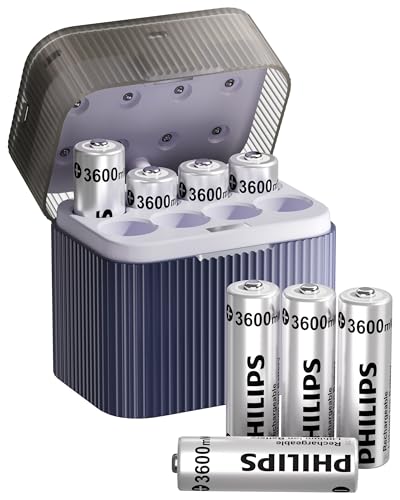
PHILIPS Rechargeable AA Lithium 8-Pack (1.5V, 3600 mWh)

EBL Ready2Charge AA 2800 mAh Ni-MH Batteries (16-Pack)

EBL Everyday AA NiMH 2300 mAh Rechargeable Batteries (16-Pack)

elxjar 1.2V 800 mAh Ni-Cd AA Battery 5-Pack for Exit Signs
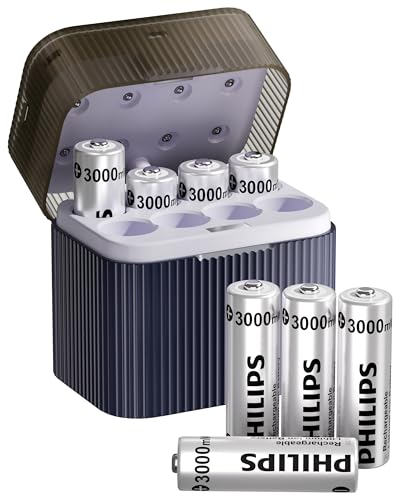
PHILIPS 3000 mWh AA Lithium Rechargeable Batteries (8-Pack)

Batechon Rechargeable AA Lithium 8-Pack with Charger (3700 mWh)

PHILIPS Rechargeable AAA Lithium 8-Pack (1.5V, 1300 mWh)

PHILIPS Rechargeable AA Lithium 4-Pack (1.5V, 3600 mWh)
The Details Behind The Selections
Energizer is the brand that pops into most heads when someone mentions rechargeable AA, and this Power+ 4-pack leans into that familiarity. Each cell runs at 1.2V with a 2000 mAh capacity, which is plenty for mid-drain household gear like remotes, clocks, and baby monitors. NiMH (nickel-metal hydride) chemistry is the classic rechargeable workhorse: lower self-discharge than older generations and reliable across hundreds of cycles.
For shoppers who want a dependable cell without overthinking specs, this pack delivers exactly that. It fits most standard NiMH chargers, so swapping it into an existing setup feels seamless. Compared to the high-capacity EBL options later in this list, these trade raw mAh for brand trust and broad availability.
Advantages To Know
- Trusted brand with broad retail availability
- 1.2V NiMH chemistry compatible with most smart chargers
- Solid mid-range capacity for everyday AA devices
- Recharges hundreds of times, reducing disposable waste
Things To Consider
- 2000 mAh is lower than the 2300 to 2800 mAh cells from EBL, so heavy flashlight users may swap more often
- NiMH self-discharges over months of storage, unlike lithium options that hold charge longer on the shelf
Made For
Casual households running remotes, clocks, and mid-drain gadgets where brand familiarity matters more than maximum capacity.
Consider Something Else When
High-drain game controllers benefit more from the PHILIPS Rechargeable AA Lithium 8-Pack, which holds a steadier 1.5V under load.
EBL has carved out a niche by stuffing high capacity into budget-friendly multi-packs, and this 8-count AA set pushes 2800 mAh per cell. The cells ship pre-charged, which means they work out of the package once topped off, a small but genuinely useful detail for anyone tired of waiting through an initial charge cycle.
The trade-off shows up in chemistry consistency: budget NiMH cells sometimes lose capacity faster under heavy daily cycling. Still, for typical mid-drain toys, wireless mice, and flashlights, this 8-pack holds its own. It is a smart second-string pick behind the more expensive lithium options.
Notable Upsides
- 2800 mAh capacity outpaces most NiMH competitors in this size range
- Comes pre-charged for immediate use
- Eight-cell count covers a typical household’s worth of devices
- Includes storage cases for organized spares
Worth Noting
- NiMH self-discharge means long-term storage drains them faster than lithium cells
- Lower 1.2V output can shorten runtime in demanding 1.5V electronics compared to lithium-ion AA
Key Specs
Right Fit For
Families cycling through toys, game controllers, and flashlights who want maximum capacity at a lower cost per cell.
Look Elsewhere When
Outdoor trail cameras and security devices run much longer on the Batechon Rechargeable AA Lithium 8-Pack, which holds charge across seasons.
PHILIPS leans into newer lithium-ion AA chemistry here, and the difference shows up where it matters most: under heavy load. Each cell delivers a steady 1.5V from full to empty rather than the gradually dropping curve typical of NiMH. That means Xbox controllers, photography flash units, and other demanding electronics stay responsive longer.
At 3600 mWh per cell, capacity outpaces the EBL NiMH packs above, though the chemistry is fundamentally different (milliwatt-hours versus milliamp-hours at different voltages). For shoppers tired of rechargeable AAs that dip too low and trigger low-battery warnings mid-session, this set is a meaningful upgrade.
What Helps Most
- Stable 1.5V output across the discharge cycle
- Higher energy density at 3600 mWh per cell
- Long cycle life reportedly reaching 1200 recharges
- Ideal voltage match for devices designed around alkaline 1.5V AAs
Trade Offs
- Lithium-ion AA cells require compatible chargers, not all NiMH chargers work safely
- Higher per-cell cost than basic NiMH options
Who Should Grab It
Gamers and content creators running high-drain controllers or camera gear where voltage drop causes noticeable performance loss.
Swap It Out When
Lower-drain remotes and clocks do fine on the Energizer Power+ 2000 mAh 4-Pack, and the budget savings add up.
Sixteen cells in one box feels excessive until you actually count the AA-eating devices in a typical home. EBL’s Ready2Charge set doubles down on volume with the same 2800 mAh capacity as the 8-pack above, plus pre-charged convenience. The Ready2Charge branding suggests minimal initial conditioning, meaning these work reasonably well right out of the package.
This is the bulk option for committed rechargeable households. The honest read is that not everyone needs 16 cells, but for households cycling through Xbox controllers, flashlights, and kid toys, having spares ready means no last-minute trips to the store.
Strengths Worth Knowing
- Sixteen 2800 mAh cells cover an entire household’s worth of AA devices
- Pre-charged and ready for immediate use after a top-off
- Compatible with most NiMH chargers already on hand
Minor Gripes
- Bulk pack is overkill for smaller households or first-timers
- NiMH cells self-discharge, so unused spares lose charge over months
Whose Shelf It Belongs On
Heavy users with multiple high-drain devices who rotate through cells regularly and want fewer recharges per month.
Not Your Match When
Travelers and minimalists prefer the smaller PHILIPS Rechargeable AA Lithium 4-Pack, which packs similar voltage stability in a smaller footprint.
The “everyday” in the name is doing some work here: 2300 mAh is a balanced middle-ground capacity, high enough for most household AA devices without pushing into premium territory. Sixteen cells means the per-cell cost drops meaningfully, making this a comfortable starter pack for households just transitioning off disposables.
Compared to the 2800 mAh EBL bulk pack above, this trades about 500 mAh for a slightly friendlier price point. The honest read: capacity differences of 200 to 300 mAh rarely show up in real-world runtime for low-drain devices like remotes and clocks.
Benefits That Matter
- Balanced 2300 mAh capacity for typical household draw
- Sixteen-cell pack lowers per-battery cost noticeably
- Standard NiMH chemistry works with existing chargers
Room For Improvement
- Lower capacity than the 2800 mAh EBL bulk option above
- Not optimized for high-drain devices where lithium-ion holds voltage better
Best Suited To
Beginners building a first rechargeable AA collection for remotes, clocks, and low-drain household electronics.
A Better Fit Elsewhere
Game console owners see longer sessions from the PHILIPS Rechargeable AA Lithium 8-Pack, which holds 1.5V under heavy draw.
This is the odd-one-out pick, and intentionally so. Where every other entry targets consumer electronics, the elxjar 5-pack is built for emergency lighting fixtures like the Lithonia ELB-CS01 and Unitech OSA268 units. Ni-Cd (nickel-cadmium) chemistry handles the float-charging cycles that exit signs demand better than NiMH, which is why building managers and facility techs keep this chemistry around.
Each cell ships with pre-attached wire leads and a 326EC connector, which means installation is closer to swapping a component than loading a battery compartment. For shoppers outside the facility-maintenance world, this is a hard pass, but for the right user it solves a real problem.
Practical Pluses
- Direct replacement fit for common emergency lighting models
- Wire leads with correct polarity pre-attached for safer installation
- Ni-Cd chemistry tolerates continuous float charging
Points To Note
- 800 mAh is low compared to consumer NiMH options, but appropriate for emergency lighting loads
- Not suitable for typical household AA electronics
- Ni-Cd contains cadmium and may face local disposal regulations
Built With In Mind
Facility maintenance teams and building managers replacing aging battery packs in commercial emergency lighting units.
Skip It When
Household shoppers want a general-purpose cell like the Energizer Power+ 2000 mAh 4-Pack, which fits the average remote or toy drawer.
This PHILIPS set sits just below the 3600 mWh version in capacity but adds a useful accessory: an integrated charging and storage case. The 2-in-1 box holds the cells, charges via USB-C, and doubles as a travel case. For anyone who has ever lost rechargeable AAs in a junk drawer, that storage angle alone justifies a closer look.
Capacity-wise, 3000 mWh is still meaningfully higher than NiMH options in this list. The lower mWh count compared to the PHILIPS 3600 set translates to slightly shorter runtime per charge, which may matter for marathon gaming sessions but rarely matters for typical household use.
Good Reasons To Consider
- Integrated charging case keeps cells organized and ready
- USB-C input for modern charging cables
- Steady 1.5V output for high-drain electronics
- Eight cells cover most households’ AA needs
Honest Caveats
- 3000 mWh is lower than the 3600 mWh PHILIPS pack above, so runtime per charge is shorter
- The case adds bulk compared to loose NiMH cells in a basic charger
Quick Facts
Who Will Love This
Travelers and tech-heavy households that want a tidy charging solution without a separate bulky charger taking up outlet space.
Another Choice May Suit
Outdoor security setups run longer on the Batechon Rechargeable AA Lithium 8-Pack, which targets low self-discharge for seasonal camera use.
Batechon built this set with outdoor security in mind, and the specs reflect that. At 3700 mWh per cell, this is the highest-capacity lithium AA on the list, and the manufacturer claims the cells retain around 76% capacity after 2000 cycles. For trail cameras, Blink outdoor cameras, and similar gear that sits unattended for months, low self-discharge matters more than peak output.
The bundled charger is a welcome inclusion for anyone transitioning to lithium-ion AA for the first time. Most NiMH chargers won’t safely top off lithium-ion cells, so the included hardware saves a separate purchase.
Everyday Perks
- Highest per-cell capacity on the list at 3700 mWh
- Bundled charger compatible with the included lithium-ion cells
- Low self-discharge suits seasonal or unattended devices
- Up to 3.2A discharge rate for demanding electronics
Factors To Consider
- Bundled charger is single-purpose, won’t refill older NiMH cells safely
- Specialty outdoor focus may be overkill for indoor-only households
Perfect Match For
Hunters, homeowners with outdoor cameras, and anyone running trail cams or security sensors that sit for months between swaps.
Reach For A Different Pick When
Indoor gaming households get better daily value from the PHILIPS Rechargeable AA Lithium 8-Pack (3600 mWh), which has comparable capacity and broader household fit.
This is technically the AAA sibling to the AA lithium sets above, but it earns a spot because many devices, especially slim remote controls and certain game controllers, take AAA instead of AA. At 1.5V constant output and 1300 mWh per cell, the chemistry advantage over NiMH AAA cells is the same: voltage stays steady under load rather than tapering off.
For shoppers building a complete rechargeable household setup, mixing the PHILIPS AA and AAA lithium sets together gives consistent performance across different device sizes. The 8-pack count matches the AA sets, which keeps inventory balanced.
Real-World Strengths
- Stable 1.5V output fills the gap where NiMH AAA falls short
- Eight-cell count pairs well with the AA sets in this list
- Long cycle life reportedly reaching 1200 recharges
Softer Spots
- AAA capacity is naturally lower than AA, so runtime is shorter per charge
- Requires a compatible lithium-ion AAA charger, not always bundled
Who It Suits Best
Households building a matched rechargeable system across both AA and AAA devices for consistent voltage behavior.
Where Another Pick Suits Better
AA-only households skip this and go straight for the PHILIPS Rechargeable AA Lithium 8-Pack, which targets the more common cell size.
The 4-pack version of the PHILIPS 3600 mWh AA lithium cells is the smallest count option in the lithium lineup, which makes it the natural choice for travel kits, small apartments, or anyone testing the lithium-ion AA waters without committing to a full 8-pack. Same 3600 mWh capacity, same 1.5V steady output, just half the cell count.
For shoppers who only run two or four AA devices at a time, the 4-pack avoids the storage problem of having extra cells lose charge while sitting unused. Compare that to the larger Batechon 8-pack above: more total capacity but more wasted shelf life.
Where It Delivers
- Same high 3600 mWh capacity as the 8-pack sibling
- Compact 4-cell count suits minimalists and travelers
- Steady 1.5V output for high-drain electronics
Worth Bearing In Mind
- Four cells limit rotation across multiple devices
- Lithium-ion AA still commands a higher price than NiMH basics like the Energizer Power+ 2000 mAh
Who Should Grab It
Travelers, minimalists, and first-time lithium-ion AA buyers who want a smaller commitment to test the chemistry.
Where A Sibling Pick Shines
Multi-device households see better value per cell from the PHILIPS Rechargeable AA Lithium 8-Pack, which doubles the count at lower per-cell cost.
Choosing The Right Rechargeable AA Setup For Your Home
Rechargeable AA batteries come in two main flavors: NiMH (nickel-metal hydride) and Li-ion (lithium-ion). NiMH cells run at 1.2V nominal and use mature, broadly compatible chargers. Lithium-ion AA cells run at a steady 1.5V, which matters for devices that flag low voltage early. The honest read: NiMH wins on price and compatibility, lithium-ion wins on voltage stability and energy density.
Capacity numbers mean different things across chemistries. NiMH uses milliamp-hours (mAh) at 1.2V, while lithium-ion AA uses milliwatt-hours (mWh) at 1.5V. A 2800 mAh NiMH cell stores roughly 3.36 Wh, while a 3600 mWh lithium-ion cell stores 3.6 Wh. The numbers aren’t directly comparable, but in practice both chemistries deliver full-day runtime for most AA devices.
Matching Battery To Device
High-drain devices (game controllers, camera flashes, VR headsets) drain cells fast and punish weak voltage curves. Lithium-ion AA cells hold 1.5V longer under load, which translates to more usable runtime. Low-drain devices (remotes, clocks, simple toys) work fine on NiMH and benefit more from higher mAh capacity than steady voltage. For mixed households, a combination approach works best.
Pack Size And Rotation
Bulk 16-packs lower per-cell cost but only pay off if cells actually rotate through use. Households with four or fewer AA devices waste money on bulk packs because idle NiMH cells self-discharge over months. Smaller 4-packs or 8-packs suit travelers and minimalists better, even at slightly higher per-cell cost.
Specialty Vs. General Use
The elxjar Ni-Cd pack in this list targets commercial emergency lighting, a niche where Ni-Cd chemistry handles float-charging better than NiMH. General consumers should skip that pick entirely and focus on the NiMH and lithium-ion options above.
Key Considerations Across These Picks
Common Shopping Slip Ups
The most frequent mistake is mixing charger chemistries. NiMH chargers aren’t designed for lithium-ion AA cells, and using one can undercharge or damage the cells. Confirm your charger matches the chemistry before buying. Another slip-up is assuming all “rechargeable AA” cells work in every device: some specialty electronics specify exact voltage curves, and the 1.2V NiMH vs. 1.5V lithium distinction matters for sensitive gear.
What The Higher Tier Buys
The jump from budget NiMH to premium lithium-ion AA costs more per cell, but the upgrade pays off in voltage stability and energy density. For households running game controllers or camera gear, the premium tier means fewer mid-session battery swaps and steadier device behavior. For remotes and clocks, the basic NiMH tier delivers all the runtime most shoppers actually need.
Frequently Asked Questions
Can I use lithium-ion AA batteries in any device that takes AA?
Most AA devices accept lithium-ion cells physically, but check the device manual for voltage requirements. Devices designed for 1.5V alkaline cells perform best with 1.5V lithium-ion AA rather than 1.2V NiMH.
How long do rechargeable AA batteries typically last?
Cycle life varies by chemistry and usage. NiMH cells typically handle 500 to 1000 recharge cycles before noticeable capacity loss, while lithium-ion AA cells often reach 1200 cycles or more under normal conditions.
Do rechargeable AA batteries lose charge when not in use?
NiMH cells self-discharge over months, losing roughly 10 to 20% of capacity in the first few weeks. Lithium-ion AA cells hold charge much longer on the shelf, making them better for emergency devices and seasonal gear.
Is it safe to mix old and new rechargeable batteries in the same device?
Mixing cells of different ages, capacities, or charge levels is generally discouraged. Mismatched cells can cause one to overwork and degrade faster. Replace batteries in matched sets for best results.
What charger do I need for lithium-ion AA batteries?
Lithium-ion AA cells require chargers designed for their chemistry. Most NiMH chargers don’t safely top off lithium-ion cells, so confirm charger compatibility before use or pick a set like the Batechon that bundles a matching charger.
The Takeaway
Rechargeable AA batteries earn their keep quickly for anyone running high-drain controllers or trail cameras, but the right pick depends on which devices matter most. NiMH options like the Energizer Power+ and EBL 2300 mAh pack cover everyday household needs at a friendly price point, while lithium-ion sets like the PHILIPS 3600 mWh and Batechon 3700 mWh deliver steady 1.5V for demanding electronics. Match the chemistry to your device mix, and the rest of the decision is mostly about pack size and budget.
