

A good 18650 charger quietly solves a specific problem: keeping your flashlights, vape mods, headlamps, and workshop gear topped off without babysitting the process. I put together this roundup because the category has quietly bifurcated into single-slot travel chargers, multi-bay desktop units, and raw TP4056 boards for hobby builds, and the right choice depends entirely on how many cells you cycle per week. Below you’ll find ten solid options spanning pocket-sized USB chargers, four-bay smart units, and one DIY-friendly charging board for makers.
A Snapshot Of The Selections

IMREN Single-Slot 18650 Battery Charger USB-C 2A
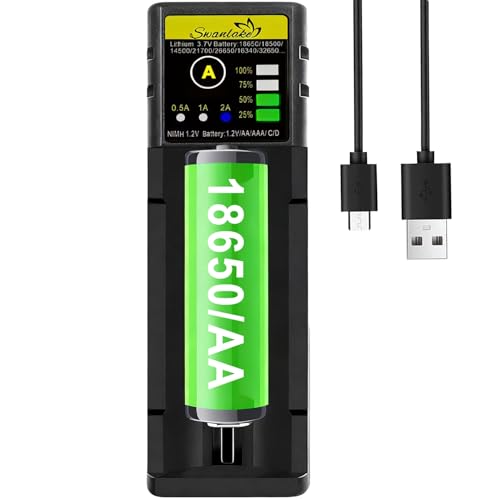
Swanlake 18650 Battery Charger AA AAA Fast Charger

SUNLYTOUR 4-Slot 21700 Battery Charger with PCB

MC-ELIN Smart Universal 18650 Charger (2-Slot, White)

IMREN 2-Bay 26650 USB-C Battery Charger

EdisonBright Fenix ARE-A2 Charger with BBX5 Case

IMREN 4-Bay 18650/21700 USB-C Charger

MiBOXER C4 4-Bay Smart Universal Battery Charger

HiLetgo TP4056 18650 Charging Board 10-Pack

Nitecore UI1 Single-Slot USB Battery Charger
A Closer Look At Each Pick
The IMREN single-slot unit feels purpose-built for anyone rotating between 18650, 21700, and 26650 cells across different devices. A mode button on the housing steps the current through 0.5A, 1A, and 2A, which matters when you want to trickle-charge a sensitive cell or push a high-capacity 21700 back to full faster.
The LCD screen shows real-time charge state, and the slot geometry (around 75mm long) clears the protected-button tops that many flashlights and headlamps require. Compared to the Nitecore UI1 later in this list, this one trades compactness for a stronger 2A ceiling.
Good Reasons To Consider
- Three current settings (0.5A/1A/2A) cover both gentle and quick top-ups.
- USB-C input keeps cable clutter low if you already charge a phone or laptop over USB-C.
- Single-slot design lets you pull and replace cells as they finish.
- Compatible with Ni-MH and Ni-Cd AA/AAA alongside lithium-ion sizes.
Things To Consider
- One slot at a time means longer waits for multi-cell devices like 2×18650 flashlights.
- The wider slot tolerances can rattle very short 18350 cells unless you seat them carefully.
Who Will Love This
Someone running a mixed fleet of 18650 flashlights, headlamps, and 21700 power packs who values adjustable current more than sheer bay count.
Consider Something Else When
The SUNLYTOUR 4-Slot 21700 Charger suits shoppers who want to cycle four cells at once without babysitting each one.
The Swanlake dual-bay charger leans toward the household-chemistry end of the spectrum. It’s billed for 3.7V–4.2V Li-ion sizes (18650, 21700, 26650, and several in between) plus 1.2V Ni-MH/Ni-Cd A through C cells, so you can charge a remote’s AA pair and a vape mod’s cell from the same unit.
A Q1 button cycles between 0.5A, 1A, and 2A, and the LCD breaks charge level into 25%, 50%, 75%, and 100% steps. The auto-shutoff at full charge is the kind of feature most people only appreciate after leaving a cell on a dumb charger overnight.
Where It Delivers
- Broad size coverage removes the need for separate chargers across the household.
- Auto power-off at full charge protects cell longevity in everyday rotation.
- Four-step LCD readout makes at-a-glance status easy from across the desk.
Trade Offs
- Indicator granularity tops out at 25% increments, so a partial state is less precise.
- Only two bays feel limiting for households juggling multiple vape cells daily.
Best Suited To
Families and shared spaces where one charger needs to handle AA remotes and 18650 flashlights without swapping gear.
Look Elsewhere When
The MiBOXER C4 four-bay unit makes more sense for hobbyists running four or more cells through a rotation each week.
This four-slot unit from SUNLYTOUR is shaped around the 21700 and 20700 form factors that have largely displaced 18650s in newer high-drain gear. Slot widths accommodate 20700, 22700, 22650, 26650, and 26700 cells alongside standard 18650s and 16340 (RCR123) sizes.
The integrated PCB protection board is the headline feature: it’s the circuit that watches each cell for overcharge, short, and reverse polarity events. In real-world terms, that means a cell inserted the wrong way or a worn Ni-MH from years ago is less likely to cook the housing.
Points In Its Favor
- Four independent bays let you prep a full set of 21700s in one session.
- PCB protection reduces risk when mixing older Ni-MH cells with newer lithium-ion ones.
- Wide size coverage reduces the need for a second charger for cylindrical oddballs.
Points To Note
- The listing explicitly warns against charging CR123, CR123A, or 1.5V Li-ion cells, so it isn’t universal.
- Older Ni-MH cells past a couple of years of use should be retired rather than recharged, per the manufacturer’s guidance.
Who Should Grab It
Anyone cycling multiple 21700 power packs for work lights, flashlights, or radio gear who wants a single desktop hub.
Reach For A Different Pick When
The IMREN 4-Bay 18650/21700 USB-C Charger suits shoppers wanting more polished per-cell flexibility in a slimmer housing.
The MC-ELIN leans into the universal-charger end of the market. It’s listed for a long roster of Li-ion codes (10440, 14500, 16340/RCR123, 18350, 18500, 20700, 21700, 22650, 26650, 26700) plus Ni-MH/Ni-Cd AAA and AA, which makes it a sensible pick for a household junk drawer that sees every cell size once a month.
USB-C input and built-in short-circuit, overheat, and overvoltage protection with auto-stop at full charge round out the practical side. The manufacturer is explicit about not charging primary cells like alkaline or lithium one-shot cells, which is a useful boundary for first-time shoppers.
Real Benefits
- Wide chemistry and size compatibility in a compact 2-slot housing.
- USB-C input removes the wall-wart bottleneck common in older chargers.
- Auto-stop on full charge is a meaningful battery-life feature for casual owners.
Some Limits To Know
- Two bays limit throughput compared to quad-bay units for high-volume rotation.
- The listing explicitly warns against charging CR123A, CR2, or wet or damaged cells.
Made For
Beginners and casual owners who want one safe, forgiving charger for the random cell sizes that show up in remotes, headlamps, and small toys.
A Better Fit Elsewhere
The Swanlake dual-bay unit suits shoppers who want similar universal coverage with a slightly clearer charge-level display.
The IMREN two-bay 26650 charger is essentially the wider sibling to the IMREN single-slot reviewed earlier. The slot width sits around 25mm, which is the headline spec: it clears 26650 cells side by side, something slimmer chargers routinely fail to do.
You still get the 1A/2A mode toggle and USB-C input, so the everyday experience matches the smaller IMREN unit, with the obvious upgrade being two wider bays. For most flashlights and mods, 26650 compatibility is what separates this from generic 18650 chargers.
Strengths Worth Knowing
- Wider slot geometry handles 26650 cells, which most narrow chargers physically reject.
- Two-bay design cuts charge time when prepping a matched pair for a 2×26650 host.
- USB-C input means a single cable handles phone, laptop, and charger duties.
Practical Considerations
- Wider slots mean short 18350 cells can sit loosely, so seating matters during insertion.
- Two bays only is restrictive if you rotate many cells each week.
Right Fit For
Owners of 26650-powered flashlights, heated gloves, or mods who specifically need that size to seat properly.
Swap It Out When
The IMREN Single-Slot 18650 Charger reviewed earlier is the better choice if 26650s aren’t part of your rotation.
The EdisonBright bundle pairs a Fenix ARE-A2 two-bay smart charger with an EdisonBright BBX5 battery carry case. The charger itself handles 10440, 14500, 16340, 18650, 21700, and 26650 Li-ion cells plus Ni-MH/Ni-Cd AA, AAA, and C, which covers the realistic carry kit of most flashlight enthusiasts.
Short-circuit, over-current, over-voltage, and reverse-polarity protection sit behind an LCD readout. The carry case is the genuine upgrade: a hard organizer stops spare cells from shorting against keys or loose change in a pack.
A Strong Showing
- Bundled BBX5 case solves the “loose cells in a backpack” problem that bare chargers ignore.
- Multi-layer protection (short, over-current, over-voltage, reverse polarity) is robust for travel.
- LCD readout gives at-a-glance status without pulling out a phone.
Honest Caveats
- Two bays feel limiting if you travel with more than two spare cells per trip.
- The bundle pricing reflects the included case, which not every shopper needs.
Perfect Match For
Travelers, campers, and field workers who need a charger plus a safe way to carry spare 18650 and 21700 cells.
Not Your Match When
Home-shop owners prioritizing bay count should look at the SUNLYTOUR 4-Slot 21700 Battery Charger reviewed above.
The four-bay IMREN handles 1.2V Ni-MH A through AAAA alongside an unusually long Li-ion list that runs from 10440 and 14500 through 18650, 20700, 21700, 22650, and 26650. That spread makes it useful for shops that collect odd cells over time.
Per-bay charging is the quiet advantage over paired-slot designs. You can drop a single 18650 into bay three and not worry that an empty bay two will throw off current distribution, which is the kind of detail that matters when you’re topping off a single cell between uses.
Everyday Perks
- Four independent bays avoid the “must charge in pairs” limitation of older chargers.
- Size coverage extends to AAAA, a cell most chargers ignore.
- USB-C input integrates cleanly into modern cable setups.
Worth Noting
- No mention of a per-bay LCD readout beyond standard indicators, so individual cell status requires a closer look.
- Four bays at full draw can tax lower-output USB power sources.
Whose Shelf It Belongs On
Mixed-fleet owners who want to charge any combination of cells in any bay without pairing rules.
Skip It When
The MiBOXER C4 suits shoppers who want a richer LCD readout with chemistry information per bay.
The MiBOXER C4 is the most “feature-rich” entry in this roundup. It handles Li-ion, LiFePO4 (lithium iron phosphate, a lower-voltage Li-ion variant), Ni-MH, and Ni-Cd cells across an extensive size list that includes 18350, 18500, 18700, 20700, 21700, 26650, and RCR123.
The PC fire-retardant housing and automatic error indicators (reverse polarity, short-circuit) make it a forgiving charger for newcomers. The LCD display is where this one earns its keep: you can see what the charger thinks each cell is and where it is in the curve.
A Few Strong Suits
- LiFePO4 support is uncommon at this size and matters for solar storage and RV use.
- LCD with chemistry and error readouts helps diagnose problem cells on the spot.
- Fire-retardant housing is a tangible safety upgrade over generic plastic shells.
Less-Strong Areas
- More chemistry options also means more menu navigation, which casual owners may not use.
- Larger footprint than a 2-bay unit, so it’s a desktop charger, not a travel pick.
Built With In Mind
Hobbyists and preppers cycling LiFePO4 along with 18650 and Ni-MH in the same rotation.
Another Choice May Suit
The IMREN 4-Bay 18650/21700 USB-C Charger is a leaner alternative for shoppers who don’t need LiFePO4 support.
Feature Snapshot
The HiLetgo TP4056 board sits in a different category from every other pick in this roundup. It’s a raw micro-USB charging module, not a consumer charger. Input is 5V (typically from any USB phone charger), the cut-off is 4.2V (the standard Li-ion full-charge voltage), and maximum charge current is 1000mA.
Each board includes onboard protection circuitry, and the 10-pack format suits makers building battery packs, portable speakers, or replacement USB power banks around bare 18650 cells. It’s a component, not a plug-and-play charger, and shoppers should treat it accordingly.
What Makes Sense
- 10-pack pricing makes sense for makers building multiple projects at once.
- Micro-USB input means any phone charger, power bank, or 5V source works as a host.
- Onboard protection reduces wiring complexity for DIY pack builds.
A Few Limitations
- No enclosure, no LCD, no multi-bay convenience; this is a bare PCB, not a consumer product.
- Requires basic soldering and wiring skills to integrate safely.
The Right Fit
Makers and hobbyists building custom 18650 battery packs for speakers, robots, or portable projects.
Where A Sibling Pick Shines
The MC-ELIN Smart Universal Charger is a better match for shoppers who want a finished, enclosed charger with no assembly.
The Nitecore UI1 closes out the roundup as the most pocketable option here. It’s a single-slot USB charger with a maximum output of 800mA on 3.7V cells, which is a touch slower than the 2A ceilings on the IMREN picks but enough for overnight top-ups.
USB input works with solar panels, adapters, and power banks, which is the appeal for campers and emergency kits. Compared to the IMREN single-slot reviewed first, this one is smaller and more travel-oriented, trading current headroom for portability.
The Good Stuff
- Compact housing fits in a pocket, glove box, or backpack organizer pocket.
- USB input works with solar panels and power banks, not just wall outlets.
- Reverse-polarity and overcharge safeguards are standard for the brand.
Practical Considerations
- 800mA ceiling means slower top-ups for high-capacity 4000mAh+ cells.
- One slot only, so multi-cell devices require sequential charging.
Who It Suits Best
Travelers and EDC (everyday-carry) users who want a reliable, ultra-compact charger for one cell at a time.
Where Another Pick Suits Better
The IMREN Single-Slot 18650 Charger reviewed first suits shoppers who want faster 2A charging in a similar single-cell form factor.
Choosing A Charger That Actually Fits Your Cells
The first thing to lock in is the largest cell size you actually own. A charger that physically fits a 26650 isn’t strictly necessary for someone who only uses 18650s, and a charger limited to 18650 will reject the wider 21700 and 26650 form factors that newer flashlights and mods use. Match the slot geometry to your largest cell before anything else.
Next, think about bay count honestly. One slot covers a single flashlight user who tops off a cell overnight. Two bays make sense for households with a primary and a spare. Four bays only pay off for someone cycling multiple cells per week through vape mods, work lights, or radio gear.
USB-C input has quietly become the practical default, since most laptop, phone, and power bank cables already match. Solar panel compatibility is a meaningful feature for camping and emergency use, but only if the underlying USB input accepts a variable 5V source cleanly.
Chemistry support matters if you own Ni-MH AA or AAA cells alongside Li-ion. Most modern smart chargers handle both, but the cheap wall-wart chargers sold with older electronics typically don’t. LiFePO4 (lithium iron phosphate) is a separate consideration relevant to solar storage and RV banks.
Key Considerations Across These Picks
Wrong Turns To Avoid
Charging primary cells like alkaline, lithium one-shot, or CR123A in a smart charger is a common mistake that can damage both cell and charger. Damaged, wet, or visibly dented cells should never go into any charger regardless of brand. Mixing very old Ni-MH cells (past a few years of use) with newer Li-ion in one session also invites problems, since older chemistries behave differently under charge.
Where The Extra Money Goes
Higher-tier models in this category tend to add per-bay LCD readouts, fire-retardant housings, broader chemistry support, and bundled accessories like carry cases. For most everyday users, the upgrade pays off when you genuinely cycle four or more per session or when you need chemistry readouts to diagnose aging cells. For a single-cell nightly top-up, the premium rarely justifies itself over a competent entry-level unit.
Frequently Asked Questions
Can I charge any 18650 in any charger?
Most modern smart chargers handle standard 18650 sizes, but always confirm that protected-button-top cells physically fit the slot. Cheap or narrow chargers may reject longer protected cells even when they accept flat-tops.
Is fast charging at 2A bad for battery life?
Charging at higher current generates more heat, and sustained heat shortens cycle life over years. For casual rotation, occasional 2A top-ups are reasonable, but lower 0.5A or 1A settings are gentler for cells you plan to keep long-term.
Do I need a separate charger for Ni-MH AA?
Most universal chargers in this roundup handle Ni-MH alongside Li-ion, but verify chemistry support before mixing cells. The Swanlake and MiBOXER units both explicitly cover household chemistries.
What’s the difference between 18650 and 21700?
21700 cells are wider and longer than 18650s, offering more capacity in devices designed for them. A charger must physically accept the larger form factor; slot width is the spec that decides compatibility, not just the supported size list.
Can I leave cells in the charger after they finish?
Smart chargers auto-stop at full charge, so leaving cells briefly is fine. For long-term storage, remove them after full charge and store at room temperature rather than leaving them on the charger indefinitely.
Closing Remarks
The honest read is that most shoppers in this category end up with one desktop multi-bay unit and one travel charger, and there’s no shame in that pairing. Match the largest cell you own first, decide whether USB-C matters to your cable setup, and don’t pay for bay count you won’t actually fill.
