

A storm rolls through, the lights flicker, and suddenly the desktop PC has died mid-download. Anyone running sensitive electronics has lived that small disaster. The right battery backup keeps the work, the Wi-Fi, and the security camera rolling through brownouts and full outages alike. I put this shortlist together for home offices, small studios, retail counters, and the kind of person who just wants the router to stay alive during a four-hour blackout. The picks below cover compact desk units, rackmount workhorses, and one niche access-control supply that earns its place for specific installs.
A Fast Comparison Of The Options

1000 VA Eaton 9SX 120V Tower UPS

CyberPower CST135UC 1350VA/810W LCD UPS (Black)

NCLTHS AC-DC 12V 5A UPS for Door Access

Vertiv PSA6-850LVT 850VA/530W Desktop UPS

CyberPower CP500PFCRM1U PFC Sinewave UPS

Eaton 5P 1500 Tower 1440VA UPS

CyberPower EC450G 450VA/260W UPS

CyberPower PR3000LCD 3000VA/2700W Tower UPS
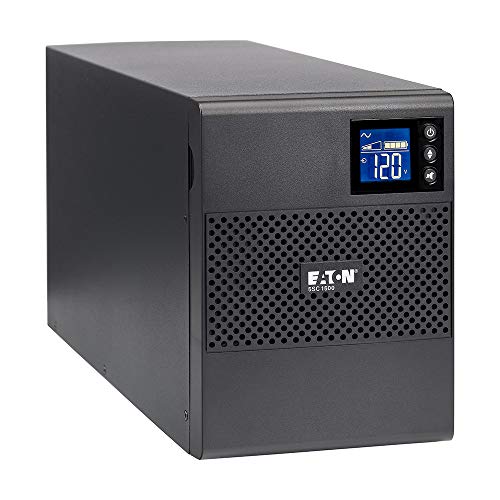
Eaton 5SC1500 1440VA Pure Sinewave UPS
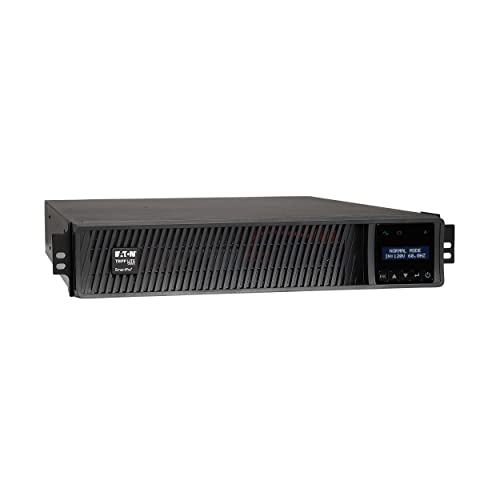
Eaton Tripp Lite SMART2200RM2U SmartPro UPS
The Picks, Examined More Closely
The Eaton 9SX steps into a room with the quiet confidence of a unit built for continuous duty. It uses double-conversion topology, meaning the connected gear always runs on conditioned power, with the battery only being asked to step in when the mains actually fail. That makes it a natural fit for a high-end workstation or a small server rack where any gap in power quality is unacceptable.
At roughly 17 kilograms in a tower chassis, this is the kind of unit you plant next to the desk and forget about until a storm reminds you it’s there. Compared to the CyberPower CST135UC reviewed below, the 9SX trades simulated-sine friendliness for true online protection, which is the right call for sensitive electronics.
A Strong Showing
- Online double-conversion keeps output clean and continuous for sensitive gear.
- 1000 VA capacity suits a full home-office setup with monitor, PC, and NAS.
- Tower footprint slots neatly beside a desk without dominating the room.
- Hardened protection makes brief outages and brownouts essentially invisible.
Trade-Offs Worth Knowing
- Heavier than a typical desktop unit, so plan its spot before unboxing.
- Premium positioning puts it out of reach for casual router-only needs.
Built With In Mind
IT pros and prosumers running servers, NAS units, or audio production rigs in places where even a half-second blip is unacceptable.
Swap It Out When
The CyberPower EC450G is the better fit if your only goal is keeping a modem and router alive during short blackouts on a tighter budget.
Most homes don’t need online-grade conditioning. They need a friendly mini-tower that fits behind the monitor, shows useful info on an LCD, and keeps the Wi-Fi alive when the neighborhood transformer pops. The CST135UC plays that role with a line-interactive design (where the UPS taps a transformer that steps power up or down to keep voltage in range) and AVR (Automatic Voltage Regulation, which smooths minor dips and surges without burning battery).
It throws 1350 VA at the problem, which is plenty for a desktop tower plus a couple of peripherals. The simulated sinewave output is a step down from the pure sinewave Eaton 5SC1500 covered later, but for standard PC power supplies it’s a non-issue in practice.
Strong Points
- LCD status display makes it easy to see load, battery, and incoming voltage at a glance.
- AVR extends battery life by handling small brownouts without dipping into reserve power.
- Compact mini-tower chassis tucks beside a desk or media console.
- 1350 VA comfortably covers a desktop, monitor, and router together.
Worth Noting
- Simulated sinewave is not ideal for certain active-PFC power supplies, though most modern desktops handle it fine.
- Cooling fan tends to ramp under heavier loads, which may matter in a quiet bedroom office.
Whose Shelf It Belongs On
Anyone running a home office with a desktop PC, monitor, and internet gear who wants clear feedback on battery status during an outage.
Reach For A Different Pick When
The Eaton 5SC1500 is a smarter move for active-PFC workstations and small server rooms that genuinely need pure sinewave output.
This NCLTHS unit is not the kind of UPS you park beside a gaming PC. It’s a metal-cabinet regulated power supply with battery backup, built specifically for door access systems, electromagnetic locks, and access controllers that need steady 12V DC even when the building loses power.
It accepts worldwide AC input from 110 to 240V and outputs 12V at 5A, which is the standard most maglocks and keypad controllers expect. NC/NO contact outputs let it trigger different lock types on demand. It’s a niche tool, but for low-voltage installers it’s a tidy one-box solution.
Standout Benefits
- Combined power supply and battery backup in a single metal cabinet simplifies installs.
- Worldwide AC input range supports global deployment without rewiring.
- Configurable NC/NO outputs handle a range of electric lock types.
- Over-current and surge protection guard downstream access hardware.
Points To Keep In Mind
- Battery is not included, so factor in the cost of a separate 12V backup cell.
- Only useful for 12V DC access hardware; not a fit for standard 120V electronics.
Feature Snapshot
Who Will Love This
Access control installers and security integrators who want a single metal-cabinet unit for a door station instead of pairing a generic power brick with a separate UPS.
Consider Something Else When
The Vertiv PSA6-850LVT is the right pick for retail point-of-sale terminals and similar 120V gear that needs clean battery backup.
The Vertiv PSA6 slides into the gap between a basic wall-socket surge protector and a full-blown server UPS. It is a line-interactive desktop unit with AVR, which means it quietly corrects minor voltage dips without dipping into the battery. For point-of-sale registers, network gear, and small security DVRs, that’s exactly the right behavior.
Compared with the CyberPower EC450G, the Vertiv steps up in capacity and brand familiarity in retail and IT environments. The 850 VA rating is enough to ride out typical short outages and give a system time to shut down cleanly.
Notable Gains
- 850 VA capacity suits POS terminals, small switches, and surveillance DVRs comfortably.
- Line-interactive AVR smooths brownouts without engaging reserve power.
- Compact desktop chassis fits under a counter or beside a router rack.
- Vertiv’s enterprise pedigree makes it familiar in retail and IT settings.
Honest Caveats
- Not pure sinewave, so very sensitive active-PFC loads may prefer a different model.
- Battery replacement requires accessing the bottom panel, which is a minor hassle long term.
Perfect Match For
Small business owners running a single POS register, a surveillance NVR, or a network closet who want enterprise-grade backup without a rack chassis.
A Better Fit Elsewhere
The CyberPower PR3000LCD suits a department server room with multiple racks, where the extra VA headroom and outlet count really pay off.
A 1U rackmount UPS is one of those quiet essentials in any AV rack or network closet. The CP500PFCRM1U tucks a full sinewave UPS into a single rack unit, which is critical if the load includes active-PFC power supplies that misbehave on simulated sinewave output.
At 500 VA it is not going to back up a server farm, but for a switch, a small NAS, and the rack-mounted amplifier feeding conference room speakers, it is right in the sweet spot. The PFC sinewave label means the output matches what modern IT and AV gear expects to see.
The Upside
- Pure sinewave output supports active-PFC power supplies cleanly.
- Slim 1U rackmount form factor preserves valuable rack space.
- EMI/RFI filtration reduces electrical noise reaching sensitive AV gear.
- AVR handles minor fluctuations without burning battery cycles.
Trade-Offs To Consider
- 500 VA capacity is modest, so high-wattage loads will drain it quickly.
- Rack ears and rails are typically separate, adding to install time.
Best Suited To
AV integrators and IT pros running small network or AV racks with active-PFC gear that demands pure sinewave output.
Not Your Match When
The Eaton Tripp Lite SMART2200RM2U is a stronger fit for distributed IT and telecom rooms that need much higher VA and longer runtime.
Step up to the Eaton 5P 1500 and the conversation shifts from “keep the Wi-Fi on” to “keep the server up.” At 1440 VA and 1100W with eight output connectors, this tower is sized for a real workstation, a NAS, or a small departmental server. RS-232 and USB connectivity also make it easy to wire into monitoring software.
Unlike the Eaton 5SC1500 covered later, the 5P leans toward more general business loads and gives you more outlet count to work with. For a small office rack on casters or under a desk, that flexibility matters.
The Case For It
- 1440 VA capacity handles a full workstation plus a NAS and monitor.
- Eight output connectors spread the load across multiple devices.
- RS-232 and USB support direct integration with monitoring suites.
- 120V tower design drops into North American office environments without rewiring.
Less-Strong Areas
- Tower footprint is larger than a typical desktop unit, so plan space accordingly.
- Mid-capacity means runtime on full load is measured in minutes, not hours.
Quick Facts
Right Fit For
Small offices running a tower workstation, NAS, and networking gear that all need to ride out outages together with monitoring integration.
Skip It When
The CyberPower EC450G is a more sensible fit for a simple modem-and-router setup where runtime trumps outlet count.
For a dorm room, a small apartment, or a basic home internet setup, big iron UPS units are overkill. The EC450G sits in that comfortable middle ground: it is small, runs cool, and offers eight outlets plus ECO mode that powers down peripherals when the main device sleeps.
The 450 VA capacity is modest, but it is enough to keep a modem, a switch, and a wireless router going through most short outages. Think of it as insurance for the home internet rather than for the whole workstation.
What Helps Most
- Compact chassis fits on a media shelf or under a desk without dominating space.
- ECO mode reduces wasted power to idle peripherals when the host is asleep.
- Eight outlets cover a full home internet cluster plus a couple of extras.
- Standby topology keeps the price approachable for budget-conscious shoppers.
Practical Considerations
- 450 VA capacity is small, so a desktop PC will drain it quickly under load.
- Simulated sinewave is not ideal for active-PFC power supplies, which is worth checking on your gear.
- Battery is sealed and serviceable only by replacement, which is standard for this size.
Made For
Remote workers and students who primarily need to keep internet, phone, and small electronics alive through brownouts and brief outages.
Look Elsewhere When
The CyberPower CST135UC is the right call if you want to back up a full desktop tower and monitor pair, not just the networking gear.
There is a moment when “the office UPS” becomes “the server room UPS,” and that is exactly where the PR3000LCD lives. At 3000 VA and 2700W with ten outlets and an LCD readout, it is built for department servers, telecom racks, and storage appliances that all need clean sinewave protection simultaneously.
Compare that to the Eaton 5P 1500 from earlier in this list. The CyberPower offers more than double the VA, ten outlets instead of eight, and the Smart App software integration for remote monitoring. It is heavy, loud under heavy load, and expensive, but it is the right tool when uptime is non-negotiable.
Key Advantages
- 3000 VA capacity supports multiple servers or rack devices without strain.
- Ten outlets eliminate the need for additional power strips in the rack.
- Sinewave output pairs well with active-PFC server power supplies.
- Smart App monitoring delivers remote status and graceful shutdown control.
Room For Improvement
- Tower footprint is large and the unit is heavy, so placement planning matters.
- Cooling fans run noticeably under sustained load, which can be heard in quiet offices.
Who Should Grab It
IT teams supporting departmental server rooms, telecom closets, or small business networks where several devices need sinewave-grade protection at once.
Consider Something Else When
The Eaton 9SX covered earlier is a smarter buy if you need true online double-conversion rather than line-interactive sinewave protection.
The Eaton 5SC1500 is the UPS for someone who has been burned by a finicky active-PFC power supply that complains about simulated sinewave output. It delivers pure sinewave (a smooth, utility-grade AC waveform rather than a stepped approximation) at 1440 VA and 1080W, with continuous AVR that smooths voltage swings without ever dipping into the battery.
For high-end workstations, NAS units, and entry-level servers in a small business, this is the sweet spot. The LCD keeps operators informed without software setup, and the line-interactive design keeps efficiency high during normal operation.
Strengths Worth Knowing
- Pure sinewave output plays nicely with modern active-PFC power supplies.
- Continuous AVR corrects a wide voltage range without using battery cycles.
- 1440 VA suits small servers, NAS units, and high-end workstations.
- LCD display gives at-a-glance status without needing software.
A Few Limitations
- Capacity tops out around 1080W, which limits how much gear can be plugged in.
- Line-interactive topology still has a brief transfer time, though it is small.
Perfect Match For
Small business owners and prosumers running active-PFC workstations, NAS arrays, or light servers that need clean, conditioned power.
Where A Sibling Pick Shines
The Eaton 5P 1500 offers more outlets and connectivity for setups that need more headroom and software integration than pure sinewave alone.
Rounding out the list is a unit that earns its place in distributed IT and telecom environments. The Tripp Lite SMART2200RM2U delivers 2000 VA at roughly 1950W with online-grade topology, plus per-outlet-group power monitoring that lets operators see exactly what each device is drawing.
It is a 2U rackmount, which means it assumes the user already has a rack to live in. The mix of one L5-20R and six 5-20R outlets gives flexibility for both high-draw single loads and a fleet of smaller devices. The catch is the weight: this is a unit you install once and leave in place.
A Favorable Mix
- Online-grade topology provides continuous conditioned power for critical gear.
- Per-outlet-group monitoring tracks consumption at a granular level.
- 2U rackmount form factor fits standard server racks out of the box.
- Mixed outlet types support a combination of heavy and standard loads.
Things To Weigh Up
- Rackmount design is a poor match if you wanted a tower unit on a shelf.
- Unit is heavy, so plan the rack rails and lifting help before delivery.
Key Attributes
Right Fit For
IT and telecom professionals running distributed network gear, edge compute nodes, or telecom rooms that already have a rack to host the unit.
Skip It When
The CyberPower PR3000LCD is the right move for tower-based server rooms that need higher VA and more outlets without rack rails.
Picking The Right UPS For Your Setup
Choosing a battery backup really comes down to matching capacity, waveform, and topology to the gear you are protecting. Capacity is rated in VA (volt-amperage, the apparent power a UPS can deliver), and a rough rule of thumb is to size the unit so the connected load sits around 60 to 80 percent of the VA rating. That headroom leaves room for startup surges from monitors and laser printers.
Pure sinewave output matters most when the load includes active-PFC power supplies, which are common in modern workstations, servers, and high-end audio gear. Simulated sinewave is fine for typical desktops, modems, and routers, but can trigger odd behavior in more sensitive equipment. Topology tells you how the UPS handles the gap between mains and battery: standby is the most affordable, line-interactive adds AVR for brownout smoothing, and online double-conversion provides continuous conditioning with no transfer time at all.
Runtime matters too, and the honest truth is that even a 1500 VA unit only carries a workstation for a handful of minutes. The realistic job of a UPS is to bridge brief outages and trigger a graceful shutdown in longer ones, not to keep a desktop gaming all night. For longer runtimes, add external battery packs or step up to a much higher VA class. Finally, think about connectivity. RS-232, network cards, and USB links let monitoring software shut systems down automatically, which is the difference between a power blip and a corrupted file at 2 a.m.
Key Considerations Across These Picks
Common Shopping Slip Ups
The single most common mistake is sizing a UPS by outlet count rather than load. People count plugs, plug everything in, and watch the unit overload the moment a monitor and laser printer kick on together. Wattage and VA matter far more than the number of outlets on the back.
Another trap is buying a simulated sinewave unit to back up an active-PFC workstation. It often works, but in some cases the power supply misreads the waveform and refuses to draw current, which defeats the whole purpose of having backup. Match the waveform to the gear.
Where The Extra Money Goes
Higher-tier models tend to spend the premium on three things: topology, waveform purity, and monitoring. Online double-conversion eliminates transfer time entirely, which matters for servers that cannot tolerate even a four-millisecond blip. Pure sinewave output handles the widest range of equipment cleanly. And proper monitoring ports turn a passive box into an active participant in graceful shutdown routines.
The upgrade is worth paying for when the protected gear includes active-PFC workstations, servers, or anything where downtime directly costs money. For a router and modem, the entry tier is plenty.
Frequently Asked Questions
How long will a UPS keep my desktop PC running during an outage?
For most home-office picks in this list, expect roughly five to fifteen minutes of runtime on a typical desktop tower and monitor pair. That is enough to save open files and shut down cleanly, but not enough to keep working through a long blackout.
What is the difference between VA and watts?
VA measures apparent power while watts measure real power drawn, and they differ by a factor called power factor. As a quick rule, real watts are typically around 60 percent of the VA rating, which is why sizing to 60 to 80 percent load is the safe move.
Do I need pure sinewave output?
Pure sinewave is required for active-PFC power supplies, which are common in modern workstations and servers. For simple routers, modems, and older desktops, simulated sinewave is usually fine.
Can I plug a laser printer into a UPS?
Most UPS manuals recommend against laser printers because their heating elements draw large startup surges. Plug printers into a surge-only outlet if the UPS has them, or skip UPS protection entirely for the printer.
How often does the battery need replacing?
Sealed lead-acid UPS batteries typically last three to five years before runtime degrades noticeably. Many UPS units signal when replacement is due, and swapping the battery is usually straightforward on common models.
Wrap Up
The right battery backup is the one that matches the gear you actually need to protect, not the one with the biggest spec sheet. Home internet clusters, retail POS terminals, and prosumers running sensitive workstations all sit in different corners of this category, and the shortlist above covers each of them. Match the topology and waveform to your equipment, leave headroom in the VA rating, and the rest tends to fall into place.
