

Power outages show up uninvited. Storms, grid strain, even a squirrel chewing through a transformer can knock the lights out for hours. I know how unsettling that is: the fridge humming down, the Wi-Fi dying mid-call, a sump pump going quiet during a rainstorm. The right backup battery for your house turns that stress into a shrug.
This guide covers ten solid options across three categories: whole-home fuel-powered generators, large lithium power stations, and plug-in UPS battery backups. I’ve matched each pick to a real household scenario so you can find the right fit without overbuying or underbuying.
An Overview Of The Picks

Westinghouse 14500 Peak Watt Tri-Fuel Home Backup Portable Generator

Westinghouse 13500 Peak Watt Tri-Fuel Home Backup Portable Generator

Westinghouse 12500 Watt Dual Fuel Home Backup Portable Generator

EF ECOFLOW Delta 3 Portable Power Station 1024Wh 1800W

BLUETTI AC200L Portable Power Station 2048Wh 2400W LiFePO4
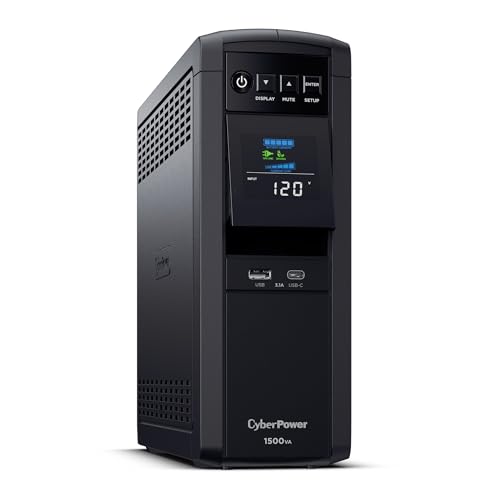
CyberPower CP1500PFCLCD PFC Sinewave UPS Battery Backup

Westinghouse 12000 Peak Watt Tri-Fuel Portable Inverter Generator

GOLDENMATE 1000VA/800W Lithium UPS Battery Backup Gray

GOLDENMATE 1500VA/1000W Lithium UPS Battery Backup White

GOLDENMATE 1000VA/600W Lithium UPS Battery Backup White
The Strengths Of Each Pick
The Westinghouse WGen11500TFc is built for households that take outage prep seriously. Tri-fuel capability means gasoline, propane, or natural gas keeps it running, which matters when one fuel is harder to find than another during a multi-day storm. The 550cc OHV engine (an overhead-valve design that tends to run cooler and last longer than side-valve engines) uses a cast iron sleeve for durability under heavy loads.
Remote electric start lets you fire it up from inside the house, and transfer switch readiness means a licensed electrician can wire it into a subpanel for whole-home coverage. Owners commonly run refrigerators, well pumps, and central HVAC on this class of generator, though wattage demands vary.
Advantages To Know
- Tri-fuel flexibility (gasoline, propane, natural gas) for any outage scenario
- High peak and running wattage for whole-home circuit coverage
- Remote electric start adds real convenience in bad weather
- Transfer switch ready for clean subpanel integration
- Cast iron cylinder sleeve supports long engine life under load
Things To Consider
- Heavy and bulky, so placement and wheel-kit planning matter
- Outdoor-only operation, since it produces carbon monoxide
- Fuel storage and rotation become a routine ownership task
Feature Snapshot
Whose Property It Belongs On
Large rural households on well pumps, central air, or electric ranges that need serious run-time and flexible fuel.
Consider Something Else When
The Westinghouse 13500 Peak Watt Tri-Fuel Home Backup Portable Generator suits homeowners with slightly smaller circuits who want tri-fuel without the extra heft.
Stepping down from the 14500W model, this 13500W version trades a bit of peak output for a slightly smaller footprint. You still get tri-fuel versatility with a 500cc OHV engine wrapped around a cast iron sleeve, which tends to hold up well over years of seasonal use.
For a typical three-bedroom home running a fridge, freezer, gas furnace blower, and a few circuits of lights, this lands in a comfortable spot. Depending on your home’s actual draw, you may find it covers essentials without straining.
The Helpful Details
- Tri-fuel capability gives fuel-source insurance
- Transfer switch ready for clean panel integration
- Remote electric start simplifies cold or wet starts
- Cast iron sleeve supports long-term durability
Trade Offs
- Still heavy enough that you plan placement once and leave it
- Natural gas runtime is typically shorter than gasoline at the same load
- Outdoor use only, so a covered pad or shelter helps
The Right Match
Mid-to-large suburban households on natural gas lines who want tri-fuel flexibility without the highest-tier price.
A Better Fit Elsewhere
The Westinghouse 12500 Watt Dual Fuel Home Backup Portable Generator is a smarter pick for homeowners who don’t have a natural gas hookup and won’t use it.
Drop natural gas from the equation and you get a more focused machine at a friendlier cost. The WGen9500DF runs on gasoline or propane through a 457cc OHV engine with a cast iron sleeve, which tends to outlast aluminum-sleeve engines under similar duty cycles.
For homeowners who keep a propane tank on hand anyway (grill, heater, RV), dual-fuel flexibility without the third option still covers most scenarios. Depending on your fuel preferences, you may actually prefer the simplicity.
Reasons It Performs
- Gasoline and propane flexibility for most outage scenarios
- Transfer switch ready for whole-home circuit coverage
- Remote electric start for no-fuss cold-weather starts
- Cast iron sleeve supports long engine life
Honest Caveats
- No natural gas option means longer runtime depends on propane or fuel storage
- Still a substantial weight to move, even with a wheel kit
- Outdoor operation requires placement planning for exhaust
At A Glance
Best Suited To
Homeowners with propane already on site who want robust dual-fuel backup without paying for natural gas compatibility.
Skip It When
The EF ECOFLOW Delta 3 Portable Power Station 1024Wh 1800W makes more sense for apartment dwellers who can’t store gasoline or propane safely.
The Delta 3 shifts the conversation from gasoline to lithium iron phosphate (LiFePO4) chemistry, which is a safer, longer-lasting battery type commonly used in home storage. At 1024Wh capacity and 1800W output, it sits in a sweet spot for renters, apartment dwellers, and anyone who can’t (or won’t) keep fuel on hand.
What sets it apart is recharge speed: combined AC and solar input gets you back to full in roughly an hour under ideal conditions. Expandability up to about 5kWh with add-on battery packs gives room to grow into longer outages over time.
Real-World Strengths
- Fast AC and solar recharge for quick turnaround between outages
- Expandable capacity with add-on battery packs
- Indoor-safe operation with no fumes or noise complaints
- Quiet enough to live next to without disruption
Worth Noting
- 1800W output won’t run central AC or electric stoves
- Capacity tops out lower than fuel generators without expansion
- Higher upfront cost per watt compared to gas generators
Right Fit For
Apartment residents, condo owners, and renters who need quiet, indoor-safe backup for essentials like routers, modems, and small appliances.
Look Elsewhere When
The BLUETTI AC200L Portable Power Station 2048Wh 2400W LiFePO4 Battery suits households needing twice the capacity and higher output for more demanding gear.
The AC200L doubles down on what the EcoFlow Delta 3 offers, with 2048Wh capacity and 2400W continuous output in a LiFePO4 platform. For off-grid cabins, long-duration blackouts, or households running medical equipment, that extra capacity and higher wattage headroom matter.
Fast charging (around 45 minutes for a meaningful top-up under ideal conditions) keeps it ready between outages. Expansion options with BLUETTI’s larger battery packs can scale capacity significantly when paired together.
The Practical Payoff
- Higher continuous output handles more demanding appliances
- Large base capacity for longer runtime between recharges
- Modular expansion supports growing backup needs
- Indoor-safe operation with no combustion byproducts
Practical Considerations
- Heavier and bulkier than smaller power stations
- Premium pricing reflects the larger LiFePO4 capacity
- Solar recharging depends heavily on panel size and weather
Who Should Grab It
Off-grid cabin owners, remote-work households, and homeowners with medical-device backup needs who want long runtime without fuel.
Swap It Out When
The EF ECOFLOW Delta 3 Portable Power Station 1024Wh 1800W is a lighter, more affordable pick if you only need to keep essentials running for a few hours.
Stepping away from fuel and big lithium packs, this is a different beast: a UPS (uninterruptible power supply) designed for desktop computers, workstations, and networking gear. The “PFC Sinewave” part means it outputs a clean sine wave (the smooth, pure form of AC power) compatible with active PFC power supplies (energy-efficient computer power supplies that need clean input to function properly).
A mini-tower form factor with a color LCD makes it easy to check status at a glance. Line-interactive topology (a design that adjusts for minor voltage fluctuations without switching to battery) handles brownouts and small surges without draining the battery, which extends runtime when you actually need it.
Features That Help
- Pure sine wave output protects sensitive electronics
- Color LCD shows status, load, and battery at a glance
- Surge protection built into every outlet
- Compact mini-tower form fits under most desks
Small Caveats
- Battery runtime is short (minutes, not hours) by design
- Not designed to power household appliances or HVAC
- Internal batteries typically need replacement every few years
Key Specs
Made For
Remote workers, gamers, and NAS owners (those running network-attached storage at home) who need clean shutdowns during brief outages and surge protection around the clock.
Another Choice May Suit
The GOLDENMATE 1500VA/1000W Lithium UPS Battery Backup White offers longer-lasting lithium chemistry if you want a UPS that doesn’t need battery swaps as often.
This Westinghouse combines traditional generator power with inverter technology, which produces cleaner electricity than older generator designs. Less than 3% THD (total harmonic distortion, a measure of electrical “noise” that can damage sensitive electronics) makes it safe for laptops, TVs, and modern appliances without extra conditioning.
Compared to the open-frame Westinghouse models earlier in this list, this one runs quieter. Eco Mode adjusts engine speed to the load, saving fuel and reducing noise when you’re only running a few circuits.
Well-Handled Touches
- Low THD output safe for sensitive electronics
- Tri-fuel capability (gasoline, propane, natural gas)
- Eco Mode adjusts engine speed to load
- Parallel capable for doubling output with a second unit
- Remote start for convenience in poor weather
Points To Keep In Mind
- Higher cost than non-inverter generators of similar wattage
- Outdoor use only despite cleaner output
- Parallel operation requires a second matching unit
Who It Clicks With
Electronics-heavy households running modern TVs, computers, and audio gear who want inverter-clean power without giving up tri-fuel flexibility.
Where Another Pick Suits Better
The Westinghouse 13500 Peak Watt Tri-Fuel Home Backup Portable Generator is a stronger match if you don’t need inverter-clean output and want more raw wattage per dollar.
Most UPS units use lead-acid batteries that need swapping every few years. GOLDENMATE’s lithium-based design aims at longer cycle life (the number of complete charge-and-discharge cycles a battery can handle before capacity drops significantly) and lower maintenance in a compact package sized for home offices and entertainment centers.
With 1000VA/800W capacity and eight outlets, it covers a typical mix of modem, router, monitor, and small electronics. The BMS (battery management system, which monitors and protects the cells from overcharge, overheating, and short circuits) helps keep the lithium cells operating within safe limits.
The Upside
- Lithium chemistry extends service life over lead-acid UPS units
- Eight outlets with both battery and surge-only options
- Built-in BMS for safer lithium cell operation
- Compact form factor for tight entertainment centers
Potential Compromises
- Battery replacement (when eventually needed) is more involved than lead-acid swaps
- Runtime during full outages is still measured in minutes
- Cooling fan noise during heavy load has been noted by some owners
Best For
Apartment dwellers and home-office users running modems, routers, and monitors who want a long-lasting UPS without fuel or noise.
Not Your Match When
The GOLDENMATE 1500VA/1000W Lithium UPS Battery Backup White delivers higher capacity and longer runtime for households with more demanding connected gear.
Stepping up in capacity, this 1500VA/1000W unit uses LiFePO4 cells (a lithium battery chemistry known for thermal stability and thousands of charge cycles) rated for a long cycle life. For an always-on home network, server closet, or workstation that draws power 24/7, that longevity matters: you set it up and don’t think about battery swaps for years.
The white housing blends into office and living-room setups more cleanly than the typical black UPS tower. A BMS and PP45 terminals (polarized connectors that lock battery cables in place for safety) help keep the installation tidy and protected.
Why It Works Well
- LiFePO4 chemistry rated for thousands of cycles
- Higher capacity supports more connected devices
- Battery management system protects cell health
- Lower long-term ownership cost versus lead-acid swaps
Worth Bearing In Mind
- Higher upfront cost than comparable lead-acid UPS units
- Still limited to minutes of runtime during full outages
- Cooling fan engages under heavier loads
Built With In Mind
Always-on home networks, small server racks, and full workstations where long battery cycle life and minimal maintenance are priorities.
Reach For A Different Pick When
The CyberPower CP1500PFCLCD PFC Sinewave UPS Battery Backup is the better match if pure sine wave output for active PFC power supplies is the top requirement.
The smallest GOLDENMATE in this lineup focuses on a single feature that daily computer users care about: automatic safe shutdown. Connect it to a PC or NAS via USB and the unit signals the system to power down cleanly when the battery drains, protecting files and preventing data loss.
At 1000VA/600W, it covers a typical desktop plus monitor and a few accessories. The included USB cable and updated communication port make setup straightforward across Windows, Mac, and NAS platforms without extra software.
Bright Spots
- Auto-shutdown communication protects data during outages
- Plug-and-play USB connection with no extra software needed
- Lithium chemistry reduces battery-swap frequency
- Compact white housing fits office aesthetics
Some Limits To Know
- Lower watt rating limits how many devices can stay on battery
- Runtime is brief by design, intended for shutdowns not full work sessions
- Auto-shutdown setup varies slightly by operating system
Made For
Daily-use desktop workstations and home offices where a clean auto-shutdown during a sudden outage matters more than extended runtime.
A Sibling Pick Shines When
The GOLDENMATE 1500VA/1000W Lithium UPS Battery Backup White is a better fit for users running power-hungry workstations or multiple monitors who need more headroom.
What To Weigh Before Choosing A Home Backup Battery
The right choice depends on what you’re powering, for how long, and where. A whole-home fuel generator handles HVAC and well pumps for days; a lithium power station covers routers and fridges quietly indoors; a UPS buys minutes for safe computer shutdowns. Matching the system to the load matters more than chasing the highest wattage.
Wattage And Runtime Basics
Wattage tells you what a unit can power at one moment, and capacity (measured in watt-hours for batteries, or tank size for generators) tells you how long it can keep going. Running watts matter more than peak watts for everyday use, since motors briefly spike when starting.
Fuel Type And Storage
Gasoline and propane require safe storage and rotation. Natural gas ties you to municipal supply but eliminates refueling. Lithium power stations need only an outlet or solar panels, with no fuel logistics at all. Your home layout, local fire codes, and HOA rules often decide this before you do.
Indoor Versus Outdoor Operation
Fuel generators produce carbon monoxide and must run outside, far from windows and doors. Lithium stations and UPS units run indoors safely with no exhaust. Renters and apartment dwellers usually land in the indoor-safe category by necessity.
Noise And Maintenance
Traditional generators are loud enough to bother neighbors. Inverter generators run quieter. Lithium stations are nearly silent. UPS units make some fan noise under load. Maintenance also varies: oil changes and fuel stabilizer for generators, occasional battery checks for UPS units, almost none for lithium power stations.
Key Considerations Across These Picks
Common Buying Slip Ups
The most frequent mistake is sizing by peak wattage alone. A fridge drawing 800 watts and an HVAC compressor drawing 3,500 starting watts tells you running capacity matters most. Another slip is forgetting transfer switch installation costs if you want whole-home generator coverage, since electrician labor adds up quickly.
Where The Extra Money Goes
Higher-tier fuel generators buy you tri-fuel flexibility, longer runtime, and quieter operation. Higher-tier lithium stations buy you more capacity, faster recharge, and modular expansion. Higher-tier UPS units buy longer cycle life and pure sine wave output. The upgrade only pays off if those features match your outage reality, not just specs on paper.
Frequently Asked Questions
How long can a backup battery power a house?
Runtime depends on battery capacity and household load. A 1024Wh power station runs a fridge for several hours but won’t touch HVAC. Fuel generators with 9.5-gallon tanks can run most of a day on gasoline.
Can I run a central air conditioner on a battery backup?
Central AC typically needs 3,000 to 5,000 starting watts, which exceeds most lithium power stations. Large fuel generators handle it, though runtime drops under heavy load.
Is a UPS the same as a home backup battery?
Not quite. A UPS provides brief backup (minutes) for clean computer shutdowns and surge protection. A home backup battery or generator covers longer outages for household essentials.
Do lithium power stations work in cold weather?
LiFePO4 cells lose some capacity in freezing temperatures, and charging below 32°F is generally not recommended. Cold garages and outdoor sheds may need insulation or a small heater.
Do I need a transfer switch for a portable generator?
For backing up specific circuits, a transfer switch (or interlock kit on your main panel) prevents backfeed that can endanger utility workers. For occasional cord-and-appliance use, heavy-duty extension cords work but limit what you can power.
The Takeaway
Picking a backup battery for house use comes down to matching the system to your outage reality. Large households on wells or central AC lean toward tri-fuel generators. Renters and quiet neighborhoods lean toward lithium power stations. Home offices and network gear pair naturally with UPS units. The right answer is the one that keeps your essentials running when the grid blinks out.
