

Choosing the right 14 gauge wire means matching conductor type, insulation, and intended environment to the job at hand. Underground tracer projects call for solid copper that carries a clean locating signal across long runs, while indoor branch circuits and fixture drops lean toward THHN or MC cable designs. I’ve grouped these nine picks by use case so contractors, utility locators, and DIY renovators can land on the right spool without guesswork.
The Shortlist At A Glance

14 AWG Blue Tracer Wire for Water Line
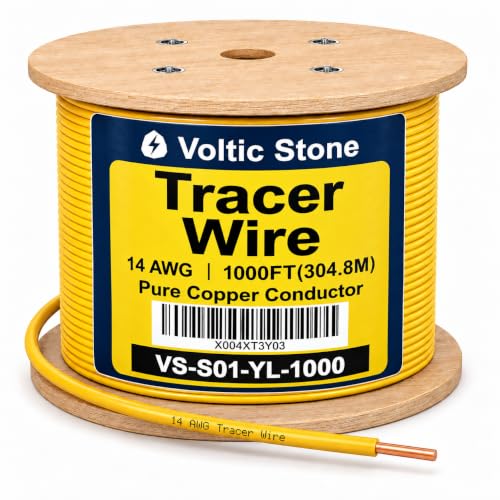
14 AWG Yellow Tracer Wire for Gas Line

14 AWG Green Tracer Wire for Sewer Line

Detectable Underground Tape, Fiber Optic Line

Detectable Underground Tape, Sewer Line

Detectable Underground Tape, Water Line

14/2 Metal Clad MC Cable with Ground

14 AWG 6 Conductor Cable 50FT

THHN Wire 14 Gauge 75 FT Stranded Copper
Meet The Standout Selections
Locating buried water service laterals gets messy when signal strength fades across long runs, and that’s where solid copper construction earns its keep. Voltic Stone’s blue tracer uses a true 14 gauge solid copper conductor measuring roughly 1.63 mm across, which carries a more stable locating tone than copper-clad steel alternatives in my experience looking at similar products.
The blue jacket follows common utility color convention for potable water, so crews sweeping a neighborhood can identify the line at a glance. Insulation is rated to 30V/600V for tracing applications, not as a feeder cable, and the flexibility is friendly when routing through trench bends. Most contractors will find this lands in the sweet spot between signal quality and ease of handling.
Useful Strengths
- Solid copper conductor carries a stronger, more consistent locating signal across long underground runs.
- Blue jacket color matches standard potable water utility identification, helping crews sort lines quickly.
- Flexible insulation lays cleanly through trench bends and around fittings.
- Compatible with standard utility locators and tone generators commonly used in the field.
Things To Consider
- This is a tracer wire, not a power cable, so it should never replace a feeder conductor.
- Solid copper construction can kink if bent too sharply during rough trench pulls.
Who It Suits Best
Utility crews and plumbers running direct burial tracer alongside new water service lines where dependable locate signal matters most.
Look Elsewhere When
The yellow Voltic Stone gas tracer suits projects focused on fuel line locating more than potable water runs.
Gas line locating is unforgiving work, and signal reliability over a hundred-foot residential run is non-negotiable. This yellow Voltic Stone tracer shares the same true 14 gauge solid copper core as the blue water version, giving it comparable conductivity and locate signal performance underground.
The yellow jacket matches standard APWA color codes for gas and fuel lines, which makes inspection and future locates far easier. Insulation is rated for tracing duty rather than power transmission, and the flexibility holds up through the typical twists of a residential gas service tap. Crews that prefer one color-matched spool per utility will appreciate the consistency.
The Upside
- Solid copper conductor delivers stable tone across long residential and light commercial gas service runs.
- Yellow jacket aligns with standard gas utility color coding for fast visual identification.
- Insulation handles trench routing without cracking under normal installation stress.
- Pairs well with most locator and signal generator equipment used in utility work.
Worth Noting
- Not rated for power transmission, so it belongs alongside the pipe, not inside it.
- Solid core means careful handling around tight elbows to avoid work-hardening fatigue.
Made For
Gas utility crews and contractors running direct burial tracer wire alongside buried fuel gas service lines.
Consider Something Else When
The blue Voltic Stone water tracer fits potable water line projects where yellow gas coding isn’t required.
Sewer and drain laterals run through the worst soil conditions a tracer wire will ever see, and signal loss in wet clay is a real headache. The green Voltic Stone tracer brings the same 1.63 mm solid copper core to wastewater locating, which helps push a usable tone through saturated ground where CCS alternatives sometimes fall short.
Green insulation matches common sewer and drain line color conventions, so future maintenance crews won’t second-guess what they’re chasing. The insulation thickness gives decent abrasion resistance when pulling past gravel backfill, and the jacket handles the temperature swings of a shallow bury. For most residential sewer taps, this hits the mark without overbuilding.
Standout Benefits
- Solid copper conductor maintains locate signal strength in damp or saturated soil conditions.
- Green jacket follows typical sewer and drain line color coding for fast utility identification.
- Insulation resists scuffing when dragged through gravel backfill during install.
Honest Caveats
- Not designed to carry current, so it stays in the tracer role only.
- Solid copper means the wire should be unspooled carefully to prevent sharp bends and fatigue over time.
Best Suited To
Sewer and drain contractors who need reliable locate signal through variable soil conditions on residential lateral work.
Swap It Out When
The yellow Voltic Stone gas tracer suits fuel line projects where green sewer coding isn’t appropriate.
Fiber optic conduits don’t carry a useful tracing signal the way metallic pipe does, so crews rely on detectable warning tape laid a few inches above the cable as a backup. Voltic Stone’s orange tape includes an embedded aluminum foil layer that triggers compatible utility locators, giving excavators a heads-up before they reach the cable itself.
The 2-inch by 1000-foot roll covers long continuous runs typical of telecom backbone and last-mile fiber drops without mid-trench splices. The orange surface carries bold black lettering that reads cleanly in low light, and the 5 mil laminated construction resists tearing during backfill. Compared to standard warning tape, the foil layer adds a locate-friendly dimension that crews actually use.
Everyday Perks
- Aluminum foil layer activates compatible locators, adding a real detection layer beyond printed warning text.
- 1000-foot roll minimizes seams across long fiber backbone and service runs.
- High-contrast orange and black print stays legible through dirt and weather.
- 5 mil laminated build tolerates rough backfill and rocky soil without tearing apart.
Trade Offs
- Requires a locator compatible with aluminum foil detection to unlock the full benefit.
- Needs proper burial depth placement to actually catch excavators before they hit the cable.
Whose Shelf It Belongs On
Telecom and utility crews installing or maintaining buried fiber optic cable who want both a visual warning and a locatable layer.
A Better Fit Elsewhere
The blue Voltic Stone water line tape suits potable water main projects where fiber optic coding isn’t relevant.
Sewer pipe strikes during excavation are some of the messiest jobsite accidents, and a detectable warning layer pays for itself the first time it prevents one. This green Voltic Stone tape uses the same aluminum foil construction as the fiber optic roll, tuned for wastewater and drain line identification.
The green background with bold black “CAUTION: BURIED SEWER LINE BELOW” lettering is unmistakable when uncovered mid-dig, and the 1000-foot length covers typical subdivision sewer laterals in a single pass. The 5 mil laminate shrugs off sharp aggregate in the backfill, and crews using foil-capable locators get a real signal response before they ever touch the pipe. It’s a practical add to any sewer trench safety plan.
Everyday Wins
- Aluminum foil layer triggers compatible locators, adding a detection dimension beyond plain printed tape.
- Green color and bold text make the warning unmistakable during partial excavations.
- Long single roll reduces splice points across residential sewer lateral runs.
- 5 mil laminate holds up against rocky backfill and freeze-thaw cycles.
Points To Keep In Mind
- Only locators rated for aluminum foil detection will pick up the embedded layer.
- Placement depth and consistent trench coverage matter, since gaps reduce the protection.
Who Should Grab It
Sewer and drain contractors laying new wastewater laterals who want both visual warning and locatable confirmation.
Reach For A Different Pick When
The orange Voltic Stone fiber optic tape covers telecom conduit jobs where green sewer coding isn’t appropriate.
Water main hits during residential excavation can flood a trench in seconds, and a warning layer above the pipe is cheap insurance. Voltic Stone’s blue detectable tape uses the same aluminum foil approach as the rest of the line, with a blue jacket that matches standard potable water identification.
The 2-inch width lays flat across a typical service trench, and the 1000-foot length handles most residential water service runs without interruption. Bold black lettering stands out against the blue background even when partially buried, and the 5 mil laminated body handles installation stress without splitting. For DIY homeowners tapping a new water line, it’s a sensible add-on.
Everyday Advantages
- Aluminum foil layer lets compatible locators pick up the tape before excavation reaches the pipe.
- Blue color coding follows standard water main identification conventions.
- Single 1000-foot roll reduces seams and potential weak spots along the trench.
- Laminated 5 mil film tolerates rough handling during backfill operations.
Small Caveats
- Only locators with aluminum foil detection capability will respond to the embedded layer.
- Proper burial depth is critical since tape placed too deep may be missed by shallow sweeps.
Right Fit For
Water utility crews and homeowners installing new water service lines who want both warning and locate-friendly marking.
Not Your Match When
The green Voltic Stone sewer tape fits wastewater lateral projects better than potable water main runs.
Exposed runs in garages, basements, and shop spaces need more protection than a bare Romex jacket can offer, and that’s where MC cable earns its place. YDDECW’s 14/2 MC cable pairs a solid 1.63 mm bare copper conductor with an interlocking aluminum armor jacket that shrugs off physical damage.
Rated to 600V with a 90°C insulation rating and built to UL 83, UL 1569, and UL 2556 references, this cable is rated for indoor, outdoor, and embedded applications where standard NM-B isn’t appropriate. The aluminum armor also serves as an equipment grounding path when used with the included bonding conductors. For a 10-foot patch or short feeder run, the length is convenient without waste.
What Works In Its Favor
- Aluminum armor jacket resists physical damage in exposed and embedded installations.
- Solid bare copper conductor supports stable conductivity for branch circuit loads.
- 600V insulation rating with 90°C thermal tolerance handles demanding load conditions.
- 10-foot length fits short repair runs and patch jobs without major leftover.
Areas To Watch
- Aluminum armor requires proper anti-short bushings at every termination to protect conductor insulation.
- Heavier and stiffer than NM-B, which can complicate tight box bends.
Feature Snapshot
Who Will Love This
Electricians and DIYers running exposed branch circuits in garages, basements, and shop spaces needing armored protection.
Skip It When
The Kimbluth THHN wire fits conduit-pulled indoor branch circuits where MC armor isn’t required.
Trailer wiring, multi-circuit control panels, and low-voltage landscape runs all benefit from a single jacketed cable with color-coded conductors. Matugajp’s 14/6 cable bundles six individually insulated conductors under one black jacket, with black, red, yellow, white, green, and blue insulation for clean circuit identification.
The stranded tin-plated copper construction handles the vibration of mobile installations better than solid core, and the VW-1/FT1 flame retardant rating adds safety in enclosed panels. Rated to 300V max with a 20.7A current capacity and operating range from -20°C to 80°C, the cable covers most DC control and trailer wiring scenarios. For most DIY wiring projects, the 50-foot length is generous without being wasteful.
Points In Its Favor
- Six color-coded conductors simplify multi-circuit wiring in trailers and control panels.
- Stranded tin-plated copper tolerates vibration better than solid core in mobile installs.
- VW-1 and FT1 flame retardant jacket adds safety in enclosed electrical spaces.
- Operating range from -20°C to 80°C handles outdoor and unconditioned environments.
Some Limits To Know
- 300V max rating excludes standard 240V household branch circuit use.
- Stranded construction requires proper ferrules or terminal connectors for clean terminations.
Feature Rundown
Perfect Match For
Trailer owners, RV renovators, and control panel builders who need a multi-conductor cable for low-voltage DC circuits.
Where A Sibling Pick Shines
The YDDECW 14/2 MC cable fits exposed branch circuit runs where a single armored pair is more appropriate than a six-conductor bundle.
Building wire pulled through conduit is the bread and butter of residential and light commercial electrical work, and THHN remains the standard for good reason. Kimbluth’s 14 gauge stranded copper THHN wire in green is sized for equipment grounding conductors and dedicated circuit runs where stranded flexibility helps around bends.
THHN insulation handles heat better than standard PVC jacket wire, which means more stable performance in warm panel locations and reduced jacket migration over time. The stranded conductor feeds smoothly through conduit sweeps, and the 75-foot length covers typical subpanel feeds and branch circuit extensions without leftover. It’s a useful single-color addition to round out a wiring inventory.
The Practical Payoff
- Stranded copper feeds easily through conduit bends and tight sweeps.
- THHN insulation handles elevated temperatures in panels and warm locations.
- Green jacket fits standard equipment grounding conductor color conventions.
- 75-foot length suits subpanel feeds and branch circuit extensions.
Potential Compromises
- Stranded construction needs proper ferrules when landing on some terminal blocks.
- Single-color 75-foot spool works best as a complement to a larger wire inventory.
Quick Facts
Built With In Mind
Electricians and serious DIYers pulling grounding conductors and branch circuits through conduit in residential and light commercial work.
Another Choice May Suit
The Matugajp six-conductor cable handles multi-circuit trailer wiring where a single conductor THHN isn’t the right shape.
Factors To Consider When Choosing Awg 14 Wires
Picking the right 14 gauge wire starts with the application, because the same gauge number covers wildly different jobs. Underground tracer wire calls for solid copper with a color-coded jacket, while indoor branch circuits need THHN or MC cable with insulation rated for the conductor count and voltage class.
Conductor material matters more than people expect. Solid copper carries locating signals more reliably than copper-clad steel, and it handles repeated bends without work-hardening fatigue as quickly. Stranded copper feeds easier through conduit, which is why most building wire pulls lean stranded.
Insulation type and rating determine where a wire can legally and safely go. THHN handles wet and dry conduit, MC cable adds mechanical armor for exposed runs, and tracer wire jackets are sized for direct burial rather than conductor insulation. Match the rating to the environment, and check local code for the specific listing required.
Length and packaging round out the practical side. A 10-foot MC patch and a 1000-foot detectable tape roll serve completely different projects, so buying the smallest spool that covers the job keeps waste and cost reasonable.
Key Considerations Across These Picks
Common Shopping Slip Ups
The most frequent mistake I see is grabbing a tracer wire and expecting it to carry current. Tracer wire has insulation rated for locating equipment, not for power transmission, and substituting it for a feeder conductor creates a real hazard. Always match the wire’s rating to the actual job.
Another slip is ignoring color codes. Blue for water, yellow for gas, green for sewer, orange for fiber optic, and so on. Skipping the color convention makes future locates slower and can lead to misidentified utilities during emergency digs.
Where The Extra Money Goes
Paying more for solid copper tracer wire gets you better conductivity and a stronger locate signal across long runs, which matters on commercial jobs with hundreds of feet of pipe. Higher-grade MC cable includes thicker armor and tighter UL listings that inspectors appreciate.
The upgrade is worth it when the run is long, the soil is wet, or the installation will be inspected. For a 30-foot residential water tap in sandy soil, a basic tracer wire handles the job fine.
Frequently Asked Questions
What is 14 AWG wire typically used for?
14 AWG wire covers a wide range of jobs, including branch circuit wiring, equipment grounding, low-voltage control runs, and underground utility tracing. The exact use depends on insulation type, conductor count, and listing.
Can I use 14 AWG wire for a 20-amp circuit?
Standard 14 AWG wire is rated for 15-amp circuits in most residential branch wiring. A 20-amp circuit typically calls for 12 AWG to meet code, so always check local electrical code before sizing a circuit.
Is solid or stranded 14 AWG wire better?
Solid 14 AWG carries signals better and is common in tracer wire and some building wire. Stranded 14 AWG flexes more easily and is preferred for conduit pulls and mobile installations like trailers.
What’s the difference between THHN and MC cable?
THHN is a single-conductor building wire pulled through conduit, while MC cable bundles conductors inside an aluminum armor jacket for exposed or embedded runs. MC cable adds mechanical protection without needing conduit.
How deep should underground tracer wire be buried?
Tracer wire is typically laid a few inches above the utility it marks, with depth matching local code for the pipe itself. Proper depth ensures excavators encounter the warning layer before reaching the actual line.
Bottom Line
Matching the wire to the application is the entire game with 14 gauge products. Tracer wire for utility locating, THHN or MC for branch circuits, and multi-conductor cable for control and trailer work each fill a distinct role. Pick the right category, confirm the listing matches the environment, and the rest of the install tends to fall into place.
