

Most homes and small workshops have more devices than outlets, and that’s exactly why the right power strip changes daily routines. A solid automatic power strip handles surge protection, individual switch control, and smart USB charging in one box. I’ve spent time comparing ten current models that vary in outlet count, joule rating, USB support, and build material. The list below covers workbench-grade metal bars, slim desk-friendly units, and travel-ready adapters for older two-prong outlets. Each pick is matched to a specific use case, so the right choice depends on where the strip will live and what it needs to power.
A Snapshot Of The Selections

Plug’n 12-Outlet Long Power Strip 2100J

okleeic 2-Prong to 3-Prong Adapter Strip

Green Box 6-Outlet Metal Surge Protector

Green Box 10-Outlet Metal Surge Protector
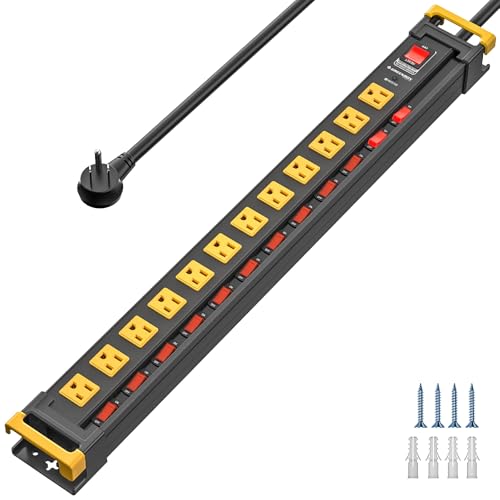
Green Box 12-Outlet Metal Strip with Switches

TESSAN 11-in-1 Surge Protector 900J

Mifaso 2-Pack Power Strip 1080J 12ft

popowell 14-in-1 Desk Charging Station 1080J

HANYCONY 12-in-1 Surge Protector 1080J

UGREEN 20-in-1 GaN Surge Protector 20W
A Breakdown Of The Leading Choices
Twelve outlets spaced along a single bar makes this strip a natural fit for workbenches where bulky adapters usually fight for room. The flat plug slips behind tool cabinets, which keeps the cord close to the wall instead of jutting out. An overload protection switch sits at one end, ready to trip when too many tools cycle on at once.
The 2100-joule rating (a joule measures how much energy the surge protector can absorb before failing) handles typical shop surges from compressors and table saws kicking in. For homeowners running a garage workshop or small repair business, that’s a meaningful cushion without paying for industrial tiers. Garage tinkerers and hobby woodworkers get the most from this format.
Real-World Strengths
- Twelve wide-spaced outlets accept large transformer bricks without blocking neighbors
- Six-foot cord reaches distant wall outlets across a workshop floor
- Overload switch acts as a single kill point for the entire bar
- 2100-joule rating suits moderate shop surges and everyday electronics
Things To Consider
- No individual per-outlet switches mean everything powers on or off together
- No USB ports, so phone and tablet charging needs a separate wall adapter
Who It Suits Best
DIYers and small-shop owners who want a single heavy-duty bar to handle multiple tools and chargers at once.
Consider Something Else When
The popowell 14-in-1 Desk Charging Station suits a home office where USB-C laptop charging matters more than workshop outlet count.
Older houses built before the 1960s often have ungrounded two-prong outlets, and most modern electronics expect three. This adapter strip bridges that gap by converting a polarized two-prong outlet into a usable multi-plug station. The flat plug profile slides behind baseboards where a chunky plug would normally stick out.
The unit works best as a bridge solution in rentals where rewiring isn’t an option. Owners commonly pair it with lamps, alarm clocks, and small electronics that don’t strictly require a ground path. Renters in pre-war apartments tend to rely on this exact setup.
Positive Points
- Five-foot extension gives flexibility when the wall outlet sits in an awkward corner
- Flat plug tucks behind furniture, preserving wall clearance
- Converts older two-prong outlets for three-prong device plugs
Honest Caveats
- Does not add an actual equipment ground, so it’s not a substitute for proper rewiring
- Limited outlet count means high-draw appliances still need a real three-prong circuit
Right Fit For
Renters and owners of older homes who need a temporary workaround for ungrounded two-prong outlets without rewiring.
Look Elsewhere When
The Green Box 12-Outlet Metal Strip with Switches fits a homeowner outfitting a full workshop where grounded three-prong outlets are already standard.
Six individually switched outlets give precise control over benchtop tools, and the metal housing adds a layer of durability that plastic bars can’t match. The recessed switches prevent accidental toggling when reaching behind equipment, which matters on a crowded workbench. Compared to the 12-outlet Plug’n bar, this unit trades raw capacity for finer per-outlet management.
The 3300-joule rating sits well above residential strips, and the EMI filtering (which blocks electromagnetic interference that can affect audio and sensitive electronics) helps protect sensitive chargers and bench meters. Shop owners and serious hobbyists who toggle tools on and off all day tend to value the individual switch layout.
Practical Advantages
- Recessed per-outlet switches reduce accidental power cycling
- Metal housing resists drops and shop wear better than plastic
- EMI filtering benefits sensitive bench electronics and audio gear
Points To Keep In Mind
- Six outlets fill quickly in a multi-tool setup
- Heavier metal body can be harder to mount on drywall without proper anchors
Key Specs
Best Suited To
Workshop users who want to control multiple tools independently from a single heavy-duty bar.
Skip It When
The TESSAN 11-in-1 Surge Protector suits a desk setup where USB phone charging matters more than shop-grade joule rating.
Ten outlets give recording and editing setups room to breathe, and the same 3300-joule rating carries over from the six-outlet sibling. The metal chassis feels substantial on a studio rack shelf, and the EMI filtering quiets hum that bleeds into audio interfaces. Compared to the 6-outlet version, this bar trades individual switches for higher capacity.
Studio owners running monitors, audio interfaces, and outboard gear all at once appreciate the headroom. The shared power switch cuts the whole rig cleanly when wrapping a session.
The Upside
- Ten outlets handle a full audio or editing rig on a single bar
- EMI filtering reduces noise that affects audio interfaces and preamps
- Metal construction suits permanent rack or shelf mounting
- 3300-joule rating shields gear from grid spikes
Less Ideal Details
- Single shared power switch means everything cuts at once
- No USB ports for charging phones or tablets directly
Perfect Match For
Studio owners and editors running a rack of audio or video gear who want clean power delivery from a single metal bar.
Reach For A Different Pick When
The UGREEN 20-in-1 GaN Surge Protector fits a hybrid work desk where laptop USB-C charging happens alongside AC gear.
This is the largest of the Green Box metal bars, pairing twelve outlets with per-outlet switches for the most flexible workshop configuration in the lineup. The metal housing holds up to years of shop dust and tool drops, while the recessed switch design prevents accidental toggling. Compared to the plastic Plug’n 12-outlet, this unit adds individual switch control.
Serious workshop operators running multiple chargers, lights, and bench tools benefit from being able to kill just one device without unplugging. The 3300-joule rating matches the smaller Green Box models, so protection stays consistent across the family.
Everyday Advantages
- Twelve individually switched outlets offer granular control
- Metal chassis handles shop abuse better than plastic
- Recessed switch design prevents bumps from changing state
- EMI filtering benefits sensitive meters and chargers
Small Caveats
- Long bar length needs a wide mounting surface or shelf
- Higher outlet count typically costs more than simpler 6-outlet siblings
Feature Snapshot
Who Should Grab It
Workshop operators running a full bench with many tools who want individual switch control and metal durability.
Swap It Out When
The Mifaso 2-Pack Power Strip suits a homeowner who needs two strips for separate rooms rather than one oversized bar.
Eleven ports in a tidy desktop form factor make this strip a strong choice for dorm rooms and shared workspaces. Eight AC outlets pair with one USB-C and two USB-A ports, covering phones, tablets, and laptops from a single hub. The flat plug keeps the cord hugging the wall behind a desk.
The 900-joule rating suits everyday electronics rather than heavy shop tools. Students and remote workers who charge multiple devices simultaneously benefit most from the integrated USB layout.
The Practical Payoff
- Eleven total ports cut down on separate wall chargers
- USB-C port handles modern phones and small laptops directly
- Compact form fits on a small desk or nightstand
- Flat plug slides behind furniture
Practical Considerations
- 900-joule rating is modest compared to workbench-grade strips
- USB power output drops when many ports draw at once
Built With In Mind
Students and remote workers managing a laptop, phone, tablet, and accessories from one compact charging station.
A Better Fit Elsewhere
The Green Box 10-Outlet Metal Surge Protector fits a studio setup that prioritizes high joule rating over integrated USB ports.
Buying two slim strips at once means covering a living room and bedroom from a single order, and the twelve-foot cord reaches distant outlets without an extension ladder. Six AC outlets plus a pair each of USB-A and USB-C ports sit on a low-profile body that tucks behind furniture. Compared to the single-strip TESSAN unit, this pack doubles the household coverage.
The 1080-joule rating is a middle-ground protection level for everyday electronics. Households outfitting multiple rooms benefit most from the bundled value.
What Pays Off
- Two-pack covers separate rooms without buying twice
- Twelve-foot cord crosses rooms without extra extensions
- Four USB ports total handle phones and tablets across both units
- Slim profile slides under rugs or along baseboards
Where It May Fall Short
- Plastic housing is less rugged than metal workshop bars
- Single shared switch per strip means both strips must be powered together if daisy-changed
The Right Fit
Families or roommates setting up power in multiple rooms at once who want a single order to cover both spaces.
Not Your Match When
The Plug’n 12-Outlet Long Power Strip suits a workshop owner who needs a single oversized bar rather than two smaller distributed units.
Fourteen ports split between eight AC outlets and six USB ports make this strip a clear favorite for gaming setups with a console, controllers, headset, and phone all charging at once. Three USB-C ports handle modern devices, while the flat plug fits behind an entertainment center. Compared to the TESSAN 11-in-1, this unit adds an extra USB-C port and slightly higher joule rating.
The auto-detect charging feature adjusts current per device, which means a phone and a tablet pull appropriate wattage without manual settings. Gamers running a multi-device battlestation benefit most.
Benefits That Matter
- Three USB-C ports cover modern phones, tablets, and handheld gaming PCs
- Auto-detect charging adjusts current per connected device
- Flat plug tucks behind entertainment centers
- 1080-joule rating suits gaming PC and console protection
Details To Watch
- USB power output is shared, so all four ports slow down under heavy load
- Plastic housing is lighter than metal shop-grade bars
Whose Shelf It Belongs On
Gamers and tech-heavy desk users running a console, laptop, phone, and accessories that all need power simultaneously.
Another Choice May Suit
The HANYCONY 12-in-1 Surge Protector fits a household that needs wide outlet spacing more than extra USB-C ports.
Wide 2.2-inch spacing between outlets is the standout feature here, letting bulky wall-wart adapters sit side by side without blocking neighbors. The three-sided layout puts outlets on more than one face, which makes a tight power strip area more usable. Compared to the TESSAN 11-in-1, this strip trades a port for spacing.
The braided cord adds a layer of durability over standard rubber jackets, which matters when the strip gets tugged around frequently. Households with a tangle of phone chargers and small appliances benefit most.
A Few Highlights
- 2.2-inch outlet spacing fits oversized wall warts
- Three-sided design lets plugs approach from multiple angles
- Braided cord resists fraying better than standard rubber jackets
- USB-C ports cover modern phones and tablets
Factors To Consider
- Compact body runs warmer under full load, so airflow around it helps
- USB ports share total output across all four slots
Quick Facts
Who Will Love This
Households with a drawer full of oversized wall-wart adapters who need generous spacing in a compact strip.
Where Another Pick Suits Better
The popowell 14-in-1 Desk Charging Station fits a gaming setup that values extra USB-C ports over wider spacing.
GaN technology (gallium nitride, a semiconductor that runs cooler and smaller than traditional silicon) lets this strip deliver 20W Power Delivery from a USB-C port without the bulky brick that older fast chargers required. Sixteen AC outlets plus four USB ports cover a creator’s full desk in one unit. The 15-degree angled face keeps plugs accessible even when the strip sits flush against a wall.
Hybrid workers running a laptop, monitor, camera charger, phone, and tablet from one hub benefit most from this density. The compact GaN design also runs cooler under sustained loads than older fast-charging strips.
Why It Works Well
- 20W USB-C PD charges phones and small laptops quickly
- GaN tech keeps the charger cool under sustained use
- Sixteen AC outlets handle a full creator desk rig
- Angled outlet face improves access in tight spots
Things To Weigh
- Higher density of ports means a longer physical strip length
- Premium GaN design may sit above simpler plastic bars on cost
Made For
Hybrid workers and creators running a multi-device desk who want fast USB-C charging alongside abundant AC outlets.
Wrong Turns To Avoid
Pick the HANYCONY 12-in-1 Surge Protector if wide outlet spacing matters more than fast USB-C Power Delivery for your setup.
Choosing Automatic Power Strips That Fit Your Setup
The first thing worth measuring is real outlet need, not the number printed on the box. Count devices plus a small buffer for future additions, then match against the strip. A workshop running tools and chargers usually needs ten or twelve outlets, while a basic nightstand setup is comfortable with six.
Next, look at joule rating. A joule measures how much energy a surge protector can absorb before its internal components wear out. For everyday electronics like lamps, routers, and chargers, a 900 to 1080-joule rating covers typical grid fluctuations. Workshop tools, audio gear, and expensive computers benefit from 2100 joules or higher. Metal housings add durability for shop floors but cost extra weight.
Cord length and plug shape matter more than most shoppers expect. A flat plug fits behind furniture where a chunky right-angle plug would stop the drawer from closing. Long cords reach distant outlets but introduce clutter if the strip sits close to the wall. Per-outlet switches help reduce phantom draw from chargers that would otherwise sip power when idle.
USB ports are worth weighing carefully. USB-C Power Delivery fast charges modern phones and small laptops, while plain USB-A handles older cables. Sharing total wattage across all USB ports means everything slows down under heavy load, so count the devices that pull power at once.
Key Considerations Across These Picks
Where Shoppers Go Wrong
The most common slip is choosing by outlet count alone. A 12-outlet bar fails when half the outlets sit too close together for real-world wall warts. Spacing matters as much as raw count, especially for households with oversized adapters.
Another frequent mistake is ignoring joule rating. A cheap strip with 300 joules looks similar to a 2100-joule unit but wears out after a single moderate surge. For expensive electronics, the higher rating pays back in protection.
Where The Extra Money Goes
Higher-tier strips earn their cost through metal housings, per-outlet switches, and GaN charging circuitry. Metal bodies resist drops and shop wear, which extends service life in busy environments. Per-outlet switches reduce phantom draw, which can trim a small amount from electricity bills over a year. GaN fast charging replaces a separate brick, which clears desk space and reduces heat. The upgrade makes sense for permanent setups but adds little for occasional use.
Frequently Asked Questions
What joule rating should I look for?
For basic electronics, 900 to 1080 joules handles typical home surges. For expensive gear or workshop tools, 2100 joules or more adds a meaningful safety margin.
Are metal power strips worth the extra cost?
Metal housings resist drops and shop wear better than plastic. For permanent workshop installs or high-traffic areas, the extra durability tends to pay back over years of use.
Do USB ports on power strips fast charge?
Only models with USB-C Power Delivery or Qualcomm Quick Charge circuitry fast charge. Standard USB-A ports on most strips deliver slower speeds suited to overnight charging.
How many outlets do I actually need?
Count current devices and add two or three for future additions. Twelve outlets suit workshops and entertainment centers, while six handles most basic desk setups.
Can I daisy-chain power strips?
Most manufacturers warn against daisy-chaining because it stacks surge load and fire risk on a single outlet. Running a separate strip from another wall outlet is the safer pattern.
The Takeaway
The right automatic power strip depends on where it lives and what it powers. Workshop owners get the most from metal-housed bars with per-outlet switches, while desk users benefit from integrated USB-C charging. Older homes with two-prong wiring need an adapter-style strip rather than a heavy-duty model. Match the strip to the room, count outlets honestly, and choose a joule rating that protects what’s plugged in.
