

A dedicated two-channel system can sound perfectly tuned on Saturday, then a little thin on Wednesday when the fridge down the hall kicks in. Power-line noise is the silent variable behind a lot of hi-fi frustration, and the right conditioner smooths it out without flattening the dynamics. I put together this roundup for listeners who want the noise floor lowered and their gear properly protected, from compact portable units to rack-sized reference pieces.
The Choices Worth Comparing

Black Lion Audio PG-P Portable Power Conditioner

AudioQuest PowerQuest 303 12 Outlet Power Conditioner

Furman Elite-15 PF i Linear Filtering AC Power Source

Furman AC-215A Compact Power Conditioner

Furman PST-8 Power Station 8-Outlet

Black Lion Audio PG-P Plus Portable Power Conditioner

Eaton Tripp Lite LC1200 Power Conditioner

AC Power Filter 8 Ways Power Conditioner with LED Display
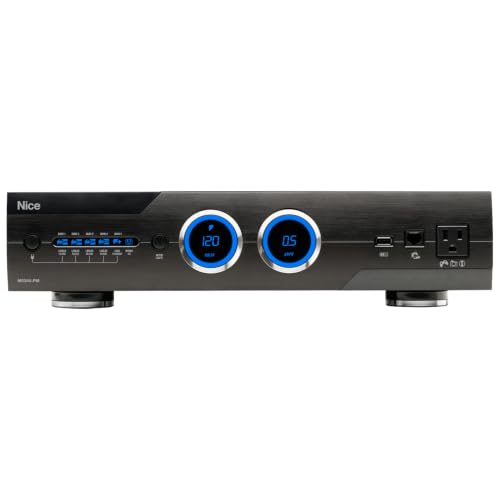
Panamax M5300-PM 11-Outlet Power Conditioner

PMX-3300 Power Conditioner and Surge Sequencer
More Details On Our Top Picks
The PG-P is the road-case friend: six outlets and onboard audio filtering packed into a brick that lives happily in a backpack or a laptop bag. I find it makes sense for solo artists and small project rooms where the wall outlet is a coin-toss between usable and buzzing. Compared to the bigger Furman units further down this list, this one trades headroom for portability.
You plug in a couple of mic preamps, a monitor controller, and a laptop charger, and the noise floor tends to settle down a notch. Owners commonly report the 9-foot cord is a small but welcome detail when the gig’s outlet is across the stage.
Reasons It Performs
- Six filtered outlets handle a typical mobile rig without daisy-chaining power strips
- The 9-foot power cable reaches awkward stage and hotel-room outlets
- Audio-grade filtering aims at the hiss and hash that color quieter mic chains
- Compact chassis fits in a backpack alongside a laptop and interface
Trade Offs To Consider
- Limited outlet count for larger studios or full band setups
- Surge protection is present but not the headline feature
- Owners sometimes note the plastic shell feels lighter than expected for daily tour abuse
Quick Facts
Whose Shelf It Belongs On
Solo musicians, podcasters, and small-studio owners who want cleaner power than a basic strip without parking a rack-mount unit next to the desk.
Swap It Out When
Rack builders running a full Furman chain will find the Furman Elite-15 PF i more at home behind a tower of components.
Where the Black Lion PG-P is a sidekick, the AudioQuest PowerQuest 303 is the central hub for a full-size two-channel or home-theater system. The 12 outlets are split into groups so high-current amplifiers and low-current sources do not share filtering banks. In shared living-room setups, that division matters more than people expect.
The non-sacrificial surge protection handles repeated strikes without burning out MOV (metal-oxide varistor) components inside the unit, which is the kind of detail that makes a long-term install feel less disposable. Add the Extreme-Voltage Shutdown that cuts AC in a fraction of a second when the line spikes past 140V, and you get serious protection in a single chassis.
Where It Helps
- Four high-current outlets for amplifiers and powered subwoofers
- Non-sacrificial surge components survive multiple large strikes without replacement
- Extreme-Voltage Shutdown cuts power in under 0.25 seconds at 140V
- Linear Noise-Dissipation aims at the low-level hash that dulls detail
Points To Note
- Full-rack footprint demands space behind the cabinet
- No display readout for live voltage monitoring
Built With In Mind
Listeners running a complete integrated system with a power amp, source components, and a TV or projector, who want one box to anchor protection and filtering.
Consider Something Else When
Anyone chasing the deepest amplifier current headroom should look at the Furman Elite-15 PF i for its dedicated Power Factor reservoir.
This is the heavyweight. The Elite-15 PF i pairs wide-bandwidth linear filtering with Power Factor Technology, which is essentially a current reservoir that refills between amplifier transients. In rooms where the amp dims the lights on the kick drum, that reservoir keeps bass transients from sagging.
It also isolates digital components from analog ones, which is the kind of separation owners commonly chase in mixed-source racks. Compare that to the simpler PST-8 later in this list, and the difference is the current reserve plus the extra filter isolation banks.
What It Does Well
- Power Factor Technology holds over 45 amps of peak charge surplus for amplifier swings
- Linear Filtering Technology drops the AC noise floor across the audible band
- Extreme Voltage Shutdown protects against sustained over-voltage events
- Zero ground contamination circuitry shields sensitive digital stages
Practical Considerations
- Rack-mount chassis with weight; plan shelf support before installing
- Overkill for systems without a true power-hungry amplifier
Feature Snapshot
Right Fit For
Owners of power-hungry Class A or large monoblock amplifiers who hear dynamics compress on transients and want them back.
A Better Fit Elsewhere
Anyone running a small source-only stack will find the Panamax M5300-PM a friendlier match for the size and budget.
The AC-215A is for the minimalist. Two filtered outlets, a 10A rating, and a wall-mountable chassis that disappears behind a desk or a TV. I see it fitting the role of a dedicated conditioner for a streaming source or a display, where you want the noise floor cleaned without committing to a rack.
What separates it from a cheap surge strip is Furman’s Series Multi-Stage Protection, which clamps at 188V peak even under repeated 6,000V surges. The auto-reset EVS feature reconnects power once the line stabilizes, so a brownout does not leave your gear permanently offline.
Useful Strengths
- Non-sacrificial SMP surge suppression absorbs spikes without wearing out
- Auto-resetting EVS restores power after a voltage event clears
- Compact form factor mounts behind a display or on a small shelf
- LiFT filtration cleans line noise for low-current source gear
Honest Caveats
- Only two outlets; not a system-wide conditioner
- 10A ceiling rules out direct amplifier use
Who Should Grab It
Listeners protecting a single high-value source component or a display in a tight space who want real surge protection without a rack unit.
Look Elsewhere When
Anyone running a stereo amp with multiple sources will need the broader outlet count of the Furman PST-8 or the AudioQuest PowerQuest 303.
The PST-8 is the unit I keep recommending when someone wants a no-drama middle path. Eight outlets, 15A capacity, and a slim 1U chassis that slides under a shelf or into a standard rack. Furman’s SMP plus LiFT filtering stack lives here in their accessible form, which makes this a confidence-inspiring upgrade over a generic power strip.
It is the everyday answer for a mixed home-theater rack where the AVR (audio/video receiver), a turntable phono stage, a streamer, and a powered sub all want clean power. Owners commonly pair it with a separate high-current path for the amplifier.
Well-Handled Touches
- Eight outlets cover a typical AV rack without daisy-chaining
- 15A rating supports an entire mid-power system
- Series Multi-Stage Protection handles repeated surges without degradation
- LiFT filtering cleans AC noise across the audible band
Some Limits To Know
- No dedicated current reservoir for amplifier transients
- Single filter bank across all outlets, unlike the PowerQuest 303
Best Suited To
Mid-size home-theater owners and stereo listeners who want one Furman-grade conditioner for the whole rack at a sensible size.
Reach For A Different Pick When
Listeners with separate high-current amplifier demands will find the Furman Elite-15 PF i more capable for that load.
Think of the PG-P Plus as the PG-P grown up. Same portable DNA, but with extra outlets, USB-A and USB-C power ports, and Black Lion’s onboard filtering paired with high-end Panasonic capacitors. The promise is roughly three times the noise filtering of the smaller PG-P, which is a meaningful jump in a portable box.
For project-studio owners running an audio interface, a couple of outboard preamps, and a laptop, this unit cuts clutter from wall-warts and keeps mobile sessions quiet. The trade-off versus the original PG-P is mostly size and weight.
Positive Points
- Ten independent outlets plus USB-A and USB-C charging ports
- Panasonic filtering capacitors target the higher noise floor of small rooms
- Onboard PG-P filtering designed for mobile recording rigs
- Single chassis replaces a power strip and a USB charger
A Few Limitations
- Heavier than the standard PG-P, so backpack travel gets tiring
- Higher capacity still falls short of a rack-mount reference unit
Who Will Love This
Mobile producers and small-room engineers who want studio-grade filtering plus USB charging in a single travel-friendly chassis.
Not Your Match When
Home-listening setups anchored by a rack benefit more from the Furman Elite-15 PF i’s current reservoir.
The LC1200 is the answer for a different kind of power problem. Where most conditioners focus on noise filtering, this one actively corrects voltage: boosting undervoltages, trimming overvoltages, and pushing severe browns up by a meaningful margin. In older homes with saggy wiring, that is exactly the fix an amplifier needs to behave predictably.
The trade-off is outlet count. Four rear outlets and a 1200W ceiling means this is a focused tool, not a system-wide conditioner. The diagnostic LEDs up front make it easy to read incoming voltage at a glance.
What Makes Sense
- Automatic voltage regulation handles undervoltage and overvoltage swings
- 1200-joule surge suppression guards against transient spikes
- EMI/RFI filtering reduces up to 75 dB of line noise
- Front-panel LEDs report power status and incoming voltage
Room For Improvement
- Only four rear outlets limits the number of protected components
- 7.25-inch tall chassis needs dedicated shelf space
Key Product Details
Perfect Match For
Listeners in older homes or rural areas where wall voltage drifts low at night and equipment misbehaves as a result.
Where Another Pick Suits Better
Anyone whose main concern is filtering a multi-component rack should choose the AudioQuest PowerQuest 303 for its higher outlet count.
This unit’s pitch is visibility. A built-in LED display reports overload status, phase condition, and filtration activity at a glance, which is reassuring for anyone who likes to confirm the gear is actually doing its job. The shell uses fireproof materials, which adds a layer of confidence in a closed cabinet.
Eight outlets and HiFi-targeted filtering cover a typical source stack. The catch is that this brand sits outside the more established names on this list, so spec sheets and long-term field data are thinner than what you’ll find for Furman or AudioQuest.
Strong Points
- LED readout confirms filtration status and overload in real time
- Fireproof shell material adds peace of mind inside a closed cabinet
- Eight outlets fit a typical HiFi source stack
- Visible phase indicator helps diagnose household wiring issues
Soft Spots
- Less established track record than Furman or AudioQuest equivalents
- Display brightness may be intrusive in a darkened listening room
Made For
Listeners who like active feedback on their power conditioning and want to see at a glance that protection is engaged.
Skip It When
Anyone prioritizing long-term brand support and wide dealer feedback should choose the Furman PST-8 instead.
The M5300-PM is built for the AV rack, not the audiophile shelf. Eleven outlets, isolated filter banks, coax and Ethernet protection, plus a 12V trigger for sequenced turn-on. The front-panel voltmeter and ampmeter make it easy to spot brownouts before they reset your projector.
Where this differs from the Furman units is connectivity. Coaxial RF and Ethernet inputs and outputs treat the whole signal chain as something that needs protection, not just the AC. Home-theater owners with cable runs and networked streamers find that coverage useful.
Useful Highlights
- Five isolated filter banks prevent digital noise from polluting analog stages
- Coaxial and Ethernet line protection extend coverage beyond AC
- Front-panel USB charger adds convenience for phones and remotes
- 12V trigger delays outlet activation for safe projector and amp power-up
Where It May Fall Short
- Filter isolation is welcome, but lacks the high-current amplifier reservoir of the Elite-15 PF i
- Rack depth requires dedicated cabinet space
At A Glance
Who It Suits Best
Home-theater enthusiasts running AVRs, projectors, subwoofers, and networked streamers in a single rack with cable and Ethernet runs.
Another Choice May Suit
Pure two-channel listeners without coax or Ethernet will find the AudioQuest PowerQuest 303 a cleaner fit for stereo duties.
The PMX-3300 closes the list by addressing turn-on behavior, which most conditioners ignore. Three sequenced zones power up in order, so your amplifier does not see a giant inrush while the source components are still cold. The pullout light and LED voltmeter are practical extras for an equipment closet.
Ten protected outlets and a 15A rating cover a multi-amp custom install. Owners commonly deploy this in dedicated equipment rooms where the power-down order matters as much as the power-up order.
Features That Help
- Three sequenced zones bring amplifiers online after sources
- LED voltmeter offers live wall-voltage monitoring
- Pullout light helps in dim equipment-closet service work
- Ten protected outlets at 15A cover a complete multi-amp rack
Less Ideal Details
- Sequencing adds complexity that casual stereo setups rarely need
- Specialty install focus means overkill for single-system users
Right Fit For
Custom installers and multi-amp enthusiasts who need safe turn-on sequencing across zones in a dedicated equipment room.
Where A Sibling Pick Shines
Listeners running a single two-channel system should look at the Furman Elite-15 PF i for amplifier-focused protection without the sequencing overhead.
What Matters Most Before Choosing Audiophile Power Conditioners
The first thing to separate is filtering versus regulation. A filter cleans noise riding on the AC line; a regulator actively corrects sag or spike voltage. Most listening rooms only need filtering, but a home with frequent brownouts benefits from the LC1200’s buck-and-boost design.
Next, count your outlets and match the rating to your amplifier’s draw. A 15A unit covers most mid-power systems, while power-hungry monoblocks can chew into a 10A budget faster than expected. Leave headroom for future gear.
Finally, decide whether you need sequencing and signal-line protection. The PMX-3300’s zone sequencing prevents amplifier inrush, and the Panamax M5300-PM protects coax and Ethernet paths. Both are useful in a custom rack, and unnecessary in a small desktop setup.
If the gear lives in a rack, confirm the chassis is 1U (one rack unit, roughly 1.75 inches tall) and shallow enough for your cabinet. Portable picks trade that form factor for travel-ready size, so weigh the use case honestly.
Where The Real Decisions Get Made
Where Shoppers Go Wrong
The most common trap is buying a basic surge strip and expecting it to clean audio noise. Surge protection and noise filtering are different jobs; a pure surge strip leaves the hiss untouched. Another mistake is overrating a conditioner by plugging an amplifier into a 10A unit built for sources.
What Separates Premium From Basic
Higher-tier models add high-current amplifier banks, non-sacrificial surge components, and sequenced power-up. The Furman Elite-15 PF i’s Power Factor reservoir is the kind of feature you only appreciate once you hear dynamics come back. The AudioQuest PowerQuest 303’s non-sacricial protection survives strikes that would silently wear out cheaper MOV components. Both deliver long-term value that budget units struggle to match.
Frequently Asked Questions
Do audiophile power conditioners actually improve sound?
Many listeners notice a lower noise floor and cleaner transients once line noise is filtered, though results depend on the existing power quality and the gear attached.
What’s the difference between a power conditioner and a surge protector?
A surge protector clamps voltage spikes to protect gear, while a conditioner also filters continuous line noise and sometimes regulates voltage.
Is Furman the best brand for audiophile power conditioners?
Furman is among the most established names for studio and home gear, alongside AudioQuest and Panamax, with strong dealer feedback and a long track record.
Can a power conditioner hurt sound quality?
A poorly designed conditioner can choke dynamics or introduce its own noise; matching the right filter bank and current rating to the gear is essential.
How many outlets do I need?
Count every source, amp, and accessory you plan to plug in now plus a couple for future gear, then choose a unit with a margin beyond that number.
The Takeaway
Power conditioning is one of those upgrades that quietly compounds: cleaner background, firmer transients, longer gear life. Pick the unit that matches your system size, your wall power, and your listening priorities, and let the noise floor take care of itself.
