

Anyone who has wrestled with a frayed trailer light wire or chased a parasitic draw in a pickup bed knows the frustration of guessing at electrical parts. I put together this list to help home mechanics, marine tinkerers, and weekend restorers find solid picks without sorting through hundreds of mismatched listings. The seven items below cover the core categories I would want on my own bench: tinned marine wire for harsh environments, blade fuses for circuit protection, a serious circuit tester for live diagnostics, a clamp meter kit for general troubleshooting, and two weatherproof connector kits to round out any wiring repair. Think of it as a starter inventory you can actually build a project around.
A Snapshot Of The Selections

AALVXOH 12/2 Marine Wire 30FT Duplex Cable

AALVXOH 10/2 Marine Wire 30FT Duplex Cable

Eaton Bussmann ATC Blade Fuse 3A 5-Pack
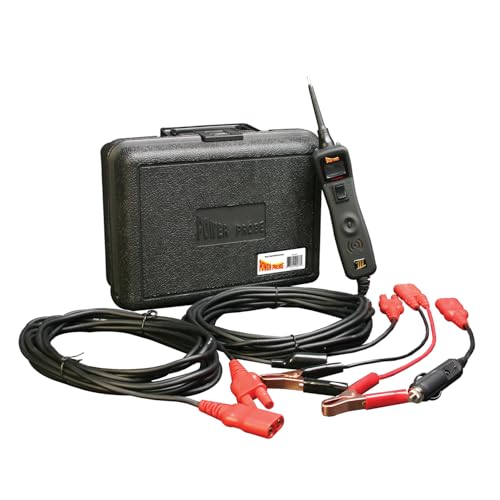
Power Probe 3 Circuit Tester Kit

Klein Tools CL120KIT Clamp Meter Kit

Kikerike 286-Piece 2-Pin Connector Kit

Kikerike 376-Piece Mixed Pin Connector Kit
Meet The Standout Selections
Tinned copper is the real selling point on a 12 AWG duplex run like this. Tinning coats each copper strand with a thin layer that resists the slow oxidation you get in bilge spaces, trailer wheel wells, and outdoor junction boxes. Bare copper wire eventually greens up, especially around salt air or road salt, and conductivity drops with that corrosion. For a boat owner rewiring nav lights or a DIYer running power to a bait well pump, that resistance adds up fast.
The 30-foot length fits most small craft and trailer rewires without leftover spool waste. The duplex layout (two conductors jacketed together) keeps runs tidy behind panels and inside conduit. Compared to the heavier 10 AWG option later in this list, this is the right call for low-to-moderate draw accessories like LED strip lighting, fuse block feeds, and small pump circuits.
What It Does Well
- Tinned copper strands slow corrosion in marine and wet outdoor locations
- 12 AWG handles typical accessory loads without voltage drop over short runs
- Duplex jacket keeps positive and negative runs bundled and easier to route
- Flexible insulation bends around tight hull and chassis corners
Honest Caveats
- 30 feet runs out quickly on larger boats with multiple accessory branches
- Not the right gauge for high-draw gear like inverters or large trolling motors
At A Glance
Whose Bench It Belongs On
Boat owners, RV renovators, and trailer light rewirers who need a corrosion-resistant 12 AWG duplex run.
Skip It When
You need a heavier gauge, in which case the AALVXOH 10/2 Marine Wire 30FT Duplex Cable (item 2) is the better match.
Stepping up to 10 AWG changes what you can confidently power. Trolling motors, larger bilge pumps, and solar charge controller feeds all benefit from the lower resistance of a thicker conductor, especially on longer runs. For anyone running a 12V or 24V trolling motor lead or feeding a small inverter, this is a more honest gauge than the lighter 12 AWG option above.
Same tinned copper construction, same duplex jacket for tidy routing. If you have ever measured voltage at the end of a long wire run and watched it sag under load, the difference between 10 and 12 AWG becomes obvious. I would consider this the practical ceiling for DIY marine and solar use before you start looking at larger battery cable territory.
Useful Touches
- 10 AWG handles higher current loads like trolling motors and inverters
- Stranded tinned copper maintains conductivity in damp conditions
- Duplex jacket simplifies routing through bulkheads and conduit
- Compatible with marine, automotive, RV, and solar applications
Points To Keep In Mind
- Heavier gauge is stiffer and harder to bend in tight chassis spaces
- 30 feet may require spools in series for larger vessel rewires
At A Glance
Right Fit For
Boaters running trolling motors, RV solar installers, and off-grid builders who need a heavier marine-grade duplex run.
Consider Something Else When
You only need a low-draw accessory feed, where the AALVXOH 12/2 Marine Wire 30FT Duplex Cable (item 1) is plenty.
The humble ATC blade fuse is the safety net every other part of your wiring job depends on. Bussmann has been making these longer than most readers have been driving, and the 3-amp rating fills a specific gap in any fuse inventory. A 5-pack means you can keep spares in the glove box, the workbench drawer, and the boat tackle box without thinking about it.
ATC stands for “Automotive Blade Type” and it is the standard blade profile used in most modern cars, light trucks, and vans. If you are adding a switched accessory or repairing an existing circuit, matching the factory fuse type keeps the install clean. The 32V DC rating covers any 12V or 24V system you are likely to encounter at home.
Noteworthy Benefits
- Industry-standard ATC blade profile fits most modern vehicles
- Color-coded housing makes 3A rating easy to identify at a glance
- 5-pack keeps spares on hand for trail-side and garage repairs
Small Caveats
- Non-indicating design means you need a visual check or test light to find a blown fuse
- 3A rating is too small for many primary circuits, so keep other amperages stocked
Made For
Garage mechanics and accessory installers who want a reliable replacement blade fuse for low-amperage lighting or sensor circuits.
Look Elsewhere When
You are chasing live electrical faults, where the Power Probe 3 Circuit Tester Kit (item 4) is the better tool for the job.
The Power Probe 3 is the kind of tool that changes how you approach electrical diagnosis. Instead of clipping a test light to ground and probing one wire at a time, this unit both powers and grounds circuits from the probe tip. The 20-foot power cable reaches from a battery hookup to anywhere inside or under a vehicle. For tracking down why a fuel pump relay clicks but the pump does not run, the active feedback is genuinely useful.
The kit form factor adds a carrying case and accessory leads, which is how most home mechanics will actually use it. It works on 12 to 24V systems, covers cars, trucks, boats, and equipment. The resettable 8-amp breaker is a quiet safety feature that prevents accidental dead shorts from damaging the tool.
Where It Helps
- Supplies both power and ground from the probe tip for active component testing
- 20-foot lead reaches deep into engine bays and chassis runs
- 12-24V operating range covers cars, trucks, marine, and equipment
- Resettable 8A circuit breaker protects the tool during accidental shorts
Trade Offs
- Higher learning curve than a basic test light, so first-timers should read the manual
- Bulkier than a simple multimeter, less convenient for quick voltage checks
Feature Snapshot
Best Suited To
Home mechanics and marine techs who diagnose live circuits and want to power components without jumper wires.
Reach For A Different Pick When
You mostly need to measure current and verify GFCI outlets, in which case the Klein Tools CL120KIT Clamp Meter Kit (item 5) covers more ground.
A clamp meter reads current without breaking the circuit, which is the part that saves you time on parasitic draw tests and compressor amp checks. The CL120 in this kit auto-ranges up to 400 amps AC, has a backlit display for dim garage corners, and bundles the GFCI receptacle tester plus a 10x line splitter. The line splitter matters because it lets a clamp meter read current on a standard two-wire cord without using an adapter.
Klein Tools has a long reputation in the trades, and the included carrying pouch keeps the meter, leads, and tester together in a toolbox drawer. For someone splitting time between an automotive bay and a house panel, this kit covers both worlds. The three AAA batteries are included, which is a small but appreciated touch.
Standout Benefits
- 400A auto-ranging clamp covers household panels and automotive circuits
- Bundle includes GFCI tester and 10x line splitter for outlet diagnostics
- Backlit display helps in dark engine bays and breaker panels
- Carrying pouch and test leads included for grab-and-go use
Potential Drawbacks
- Not designed for live component activation, so it pairs best with a probe tool
- More pieces to keep track of than a basic standalone meter
Quick Facts
Who Will Love This
DIYers and apprentices who want one kit that handles both automotive current checks and household GFCI troubleshooting.
A Better Fit Elsewhere
You primarily diagnose live 12V circuits on a vehicle, where the Power Probe 3 Circuit Tester Kit (item 4) is the more direct tool.
Two-pin waterproof connectors are the workhorse of trailer wiring, accessory leads, and basic sensor repairs. This kit focuses entirely on that one job and stocks enough pieces to handle a small fleet of repairs. The 22-14 AWG range covers most low-voltage automotive and marine circuits, and the included rubber seals are what give the connectors their weather resistance.
Having 25 male and 25 female plugs in one box means you can build replacement pigtails, repair broken trailer light leads, and keep spare assemblies for the next roadside fix. The casing tool that ships with the kit helps seat the terminals cleanly, which is the small detail that separates a solid repair from a loose one.
What Earns Its Place
- 286 pieces cover a high volume of two-pin repairs from one purchase
- 22-14 AWG range fits most automotive and marine accessory wiring
- Waterproof seals protect connections exposed to road splash and weather
- Included casing tool simplifies terminal seating
Less Ideal Details
- Only 2-pin style, so multi-wire harnesses need a different kit
- Storage box organization is basic, expect some sorting time
Who Should Grab It
Trailer owners and accessory installers who repeatedly need 2-pin weatherproof connectors for lights and small motors.
Swap It Out When
You need varied pin counts in one box, in which case the Kikerike 376-Piece Mixed Pin Connector Kit (item 7) is a smarter buy.
The mixed-pin version of the Kikerike kit is the one I would hand to someone restoring a whole vehicle or building out a custom harness. With 1, 2, 3, 4, and 6-pin housings all in the same storage box, you stop ordering multiple kits for one project. The 22-14 AWG range stays consistent with the 2-pin kit above, so terminals are interchangeable across the family.
For a weekend restorer working on multiple sub-harnesses, or a marine tinkerer adding new electronics, the variety pays off. The 376-piece count sounds high, but it spreads across five housing sizes, so each individual pin count is modest. Owners commonly report using the smaller 1-pin and 2-pin pieces first and saving the 6-pin shells for fuel injectors and sensor plugs.
Positive Takeaways
- Mixed 1, 2, 3, 4, and 6-pin housings cover most automotive and marine connectors
- 376-piece count supports multiple projects from a single purchase
- Same 22-14 AWG range as the 2-pin kit for cross-compatibility
- Waterproof seals and casing tool included for clean field repairs
Worth Noting
- Higher per-pin count is lower than the dedicated 2-pin kit above
- Storage box has more compartments to keep sorted, a minor upkeep task
Perfect Match For
Multi-project DIYers and home restorers who want one connector kit that covers nearly every pin count they will encounter.
Another Choice May Suit
You mostly repair trailer lights and need maximum 2-pin stock, in which case the Kikerike 286-Piece 2-Pin Connector Kit (item 6) gives you more of what you actually use.
Choosing the Right Wire, Connectors, and Tools for Your Garage
Match the Wire to the Environment
Start with where the wiring will actually live. Marine and outdoor runs need tinned copper strands to fight corrosion, while under-dash automotive repairs do fine with standard insulation. Gauge matters just as much: 12 AWG covers most accessory loads, while 10 AWG is the right move for trolling motors, larger pumps, and any run where voltage drop would hurt performance. Match the wire to both the environment and the current draw, and most electrical headaches disappear before they start.
Tools Make the Difference Between Guessing and Knowing
A basic test light tells you whether power is present, but a power probe tells you whether a component actually works under load. A clamp meter reads current without breaking the circuit, which is the fastest way to find a parasitic draw or verify a compressor is running within spec. For most home mechanics, a single diagnostic tool that combines live activation, voltage reading, and current measurement will save more time than three cheaper gadgets that each do one job.
Connectors Are the Weak Link in Most Field Repairs
A weatherproof connector with the right rubber seal keeps moisture out of the joint, which is what stops the green corrosion you see on older trailer plugs. The 22-14 AWG range covers most low-voltage automotive work, and stocking mixed pin counts saves you a second trip to the supplier when a 4-pin sensor plug shows up mid-project. Crimp quality matters more than connector brand, so pair any kit with a proper ratcheting crimper for solid results.
Key Considerations Across These Picks
Pitfalls Shoppers Hit
The most common mistake is buying wire by length alone without checking the conductor material. Bare copper wire looks fine in the store and corrodes within a season in any marine or salty environment. Another trap is grabbing the cheapest connector kit and discovering the seals do not actually seat, leaving you with weatherproof housings that leak at the first car wash. Picking a fuse with the wrong amperage or a tester that only reads voltage will also cost you time, so match each tool to the job before adding it to the cart.
What The Higher Tier Buys
Spending more on tinned copper marine wire pays you back in longevity, since a corroded run means pulling new wire through a bulkhead. A diagnostic kit like the Power Probe or Klein clamp meter costs more than a basic test light, but it replaces several cheaper tools and gets you to the right answer in one session. The mixed-pin connector kit costs a little more per piece than a single-pin-count box, but the saved second order makes the upgrade feel small once you start a real project.
Frequently Asked Questions
What gauge wire do I need for a basic trailer light rewire?
12 AWG duplex is usually enough for trailer marker lights, brake light feeds, and standard 4-pin flat harnesses. Step up to 10 AWG if you are running a longer trailer with multiple LED light bars or a charged brake circuit.
Are ATC blade fuses interchangeable across vehicles?
The ATC profile is standard across most modern cars, vans, and light trucks. The amperage must match the circuit, so a 3A fuse should only replace another 3A fuse in the same slot. Never substitute a higher-amperage fuse to stop one from blowing.
Do I need a Power Probe if I already own a multimeter?
A multimeter reads voltage and resistance well, but it cannot power or ground a component on its own. A power probe adds the ability to feed live current into a circuit, which is how you test whether a fuel pump, relay, or solenoid actually works once it is removed from the vehicle.
How do I know which connector pin count to buy?
Look at the plug on the component you are replacing. Count the pins or terminal slots inside the housing, and match that count. A 2-pin plug handles simple on-off accessories, while sensor and injector plugs are usually 3, 4, or 6 pins.
Can tinned copper marine wire be used in regular automotive projects?
Yes, it works anywhere a standard copper wire fits, and it lasts longer in any environment with moisture, salt, or temperature swings. The trade-off is a slightly higher cost per foot, which is worth it on underbody and engine-bay runs but not necessary for interior cabin wiring.
Final Verdict
A solid auto wiring setup comes down to three things: the right wire for the environment, the right tool to diagnose what is happening in the circuit, and the right connector to keep moisture and vibration out of the joints. The seven picks above cover those three pillars at a range of price points and project sizes. Pick the wire that matches your environment, add the diagnostic tool that fits the kind of work you actually do, and keep a connector kit within arm’s reach for the next repair that always seems to show up unplanned.
