

There’s a particular kind of frustration that hits at midnight: shuffling toward the kitchen for water, fumbling for a switch, or stepping onto a dim staircase and praying the cat isn’t parked on the second step. Automatic light sensors quietly solve that whole category of problems. They detect motion, sense dusk, or read the room’s brightness and respond without a single finger lifted, which makes them especially welcome in rentals, kids’ rooms, hallways, and anywhere the wiring feels intimidating.
The nine picks below cover three flavors of automation: plug-in night lights for hallways and bathrooms, under-cabinet bars for kitchens and closets, and wall switches that turn any existing fixture into a hands-free setup. I’ve grouped them so a renter with zero electrical work can find a sensible match alongside a homeowner ready to swap a switch.
The Picks In Brief

Timelyou 10.5inch Wireless Under Cabinet Lighting 3-Pack

Lyridz LED Plug-in Night Light 360° Motion Sensor 2-Pack

GE Plug-in Farmhouse Night Light Dusk to Dawn 2-Pack
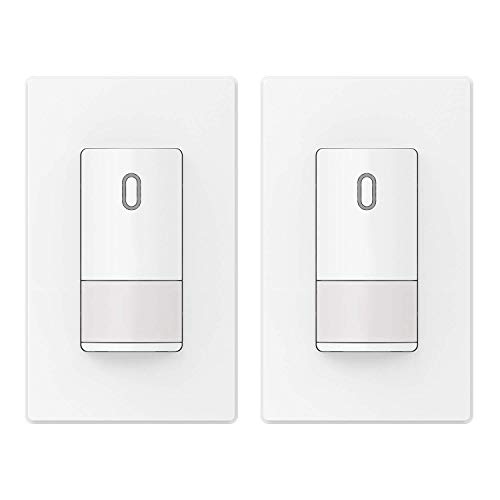
ELEGRP Motion Sensor Light Switch 300W LED No Neutral

ELEGRP Occupancy Motion Sensor Switch 6-Pack Matte White

ELEGRP Occupancy Motion Sensor Switch 10-Pack Matte White
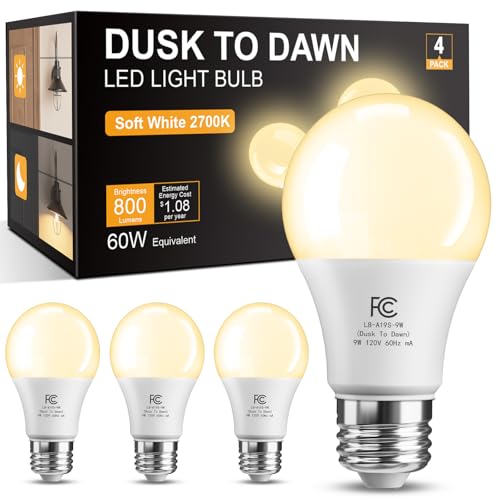
TJOY Dusk to Dawn Light Bulb Outdoor 2700K

Lyridz LED Night Light Motion Sensor 1-150LM 2-Pack

Lyridz Plug-in Rotatable Night Light Motion Sensor 2-Pack
Meet The Standout Selections
Countertop lighting that doesn’t require an electrician is a small miracle for renters, and the Timelyou bars lean into that beautifully. Each 10.5-inch strip mounts under a cabinet, inside a pantry, or above a workbench and runs on a built-in 1800mAh cell, so there’s no cord to route and no outlet sacrificed.
The motion sensor sits on the front face and wakes the strip when someone walks into the kitchen at midnight, then times out shortly after. Three color temperatures and five brightness steps mean you can dial in a soft amber glow for late-night snacks or a crisper tone for chopping vegetables. Compared with the plug-in night lights in this lineup, this set actually brightens a workspace rather than just guiding feet.
Noteworthy Benefits
- USB-C charging keeps things modern and removes the hunt for a micro-USB cable.
- Three color temperatures let one fixture do both task and ambient duty.
- The three-pack spreads evenly across a standard kitchen without leaving gaps.
- Sensor-only mode stretches the cell through weeks of typical evening traffic.
Things To Consider
- The adhesive mount may need a touch-up on textured cabinet undersides.
- High-brightness mode drains the cell noticeably faster than the sensor-only mode.
Key Specs
Who Should Grab It
Anyone renting a kitchen or finishing a pantry, closet, or laundry nook where running a new wire is simply off the table.
Look Elsewhere When
The TJOY Dusk to Dawn bulb is the better answer if the goal is outdoor porch lighting, not a kitchen glow.
A hallway light that only watches one direction always seems to miss the moment, and that’s the gap the Lyridz 360-degree design fills. The sensor sweeps the whole circumference, so stepping out of a bathroom door at any angle triggers the glow. Where the Timelyou bars light a counter, these plug-ins light the path.
The dimming range runs from a soft 1 lumen guide light up to a more generous 150 lumens for a quick task, with both step and stepless adjustment. That’s a lot of flexibility for a tiny plug-in unit, and the dusk-aware sensor keeps it dormant during the day to save energy.
Useful Touches
- Full 360-degree sensing catches approach from any side of the outlet.
- Wide 1-to-150 lumen range covers both a hallway glow and a brighter bathroom trip.
- Two-pack covers opposite ends of a hallway for a single purchase.
Honest Caveats
- Plug-in form means one outlet is occupied whenever the unit is in use.
- The brighter top of the range may feel harsh in a small bedroom, depending on placement.
Built With In Mind
Bathrooms, stair landings, and long hallways where a single-direction sensor would miss half the traffic.
Skip It When
The GE farmhouse night light fits better if the room calls for vintage styling rather than pure utility.
Most night lights aim for invisibility, but this GE pair leans into the opposite instinct. The Edison-style bulb sits inside a metal cage finished in dark gray, which gives a hallway the warm flicker of a vintage fixture without taking up shelf or table space.
A built-in photocell (a small light-sensitive sensor that flips the lamp on when the room darkens) handles the on/off duty, so the lights wake at dusk and retire at dawn without any programming. For someone tired of plastic plug-ins that look like plastic plug-ins, the difference shows up the moment guests walk in.
What Pays Off
- Edison-bulb warmth adds visible character even when the lamp is off.
- Photocell automation needs no buttons or modes to remember.
- The two-pack value covers a hallway or a coordinated pair of rooms.
Points To Note
- The exposed-bulb look can read as decorative clutter in a minimalist room, depending on taste.
- No motion trigger means it stays lit all night rather than only when someone passes.
Feature Snapshot
Whose Shelf It Belongs On
Anyone furnishing a farmhouse, industrial, or rustic-style space who wants the night light to actually look like part of the room.
Swap It Out When
Pick the Lyridz 360 if motion-only activation matters more than the styling.
This is the pick for someone ready to commit to a real installation. The ELEGRP motion switch replaces a standard wall switch, turning any wired fixture into a hands-free setup without requiring a neutral wire, which is the white return wire many older homes simply don’t have in the box.
The PIR sensor (passive infrared, which detects body heat moving across its field) wakes the connected fixture when someone enters the room and times out after no movement is detected. It’s a sensible single-room upgrade and a gentle entry into the world of hardwired automation.
The Practical Payoff
- No-neutral design opens the upgrade to older homes that lack a white return wire.
- Up to 300W LED headroom handles most ceiling fixtures, depending on bulb count.
- Field-of-view adjustments let the sensor aim away from hallways it shouldn’t trigger on.
Points To Keep In Mind
- A grounding wire must be present for the switch to operate, which rules out some older boxes.
- Single-pack means buying multiples for a whole-home conversion.
Right Fit For
One specific room in an older home where automatic lighting will be appreciated most, like a laundry area or a pantry entry.
A Better Fit Elsewhere
Pick the ELEGRP 10-pack if the goal is outfitting several rooms on the same project.
Once the first motion switch goes in and works exactly as hoped, the natural thought is “do the whole house.” The 6-pack answers that thought without forcing the per-switch math. You get six matching matte-white switches, each with the same no-neutral install story as the single-pack, so the project stays consistent room to room.
Each switch handles up to 300W of LED, 300W of CFL, or 600W of incandescent bulbs, which covers the bulk of common ceiling fixtures. The included wall plate keeps the finished look tidy in older boxes where the existing plate may not line up cleanly.
A Strong Showing
- Six matching switches remove the patchwork look of mixed brands across rooms.
- Universal compatibility spans LED, CFL, and incandescent fixtures, depending on what’s already installed.
- Slim profile fits cleanly into crowded electrical boxes.
Small Caveats
- Grounding wire is still required at every box, which older homes may not have everywhere.
Quick Facts
Made For
A homeowner tackling a multi-room hallway, bedroom, and bathroom upgrade in a single weekend.
Reach For A Different Pick When
The single-pack ELEGRP is the smarter buy for a one-room install.
For someone fully committed to a whole-house conversion, the 10-pack skips the math altogether. Ten matching matte-white switches share the same no-neutral install profile, the same PIR sensor behavior, and the same UL listing (a third-party safety certification mark from Underwriters Laboratories), which matters when the work touches every junction box on a floor.
The slim frame fits most electrical boxes without forcing the plate to bow, and the universal load handling covers nearly any bulb type already in the ceiling. It’s overkill for a hallway, but exactly right for a serious project.
Reasons It Performs
- Ten coordinated switches remove decision fatigue across a large project.
- 300W LED, 300W CFL, and 600W incandescent headroom covers most existing fixtures.
- UL listing provides a recognized safety reference point for electrical work.
Where It Is Less Suited
- Bulk pack wastes budget if only one or two rooms are on the agenda.
- Grounding wire is still required at every location, which can stall a project in older boxes.
Best Suited To
An owner who’s mapping a whole-floor retrofit and wants every switch to match.
Consider Something Else When
The 6-pack hits the sweet spot for smaller multi-room runs.
Outdoor fixtures often already exist, and the TJOY bulb makes those fixtures smart without any rewiring. Screw it into a porch socket or a garage lamp and the photocell built into the bulb handles the on/off duty: glow at dusk, retire at dawn, no apps or timers to set.
The 2700K color temperature (a warm, slightly yellow tone close to traditional incandescent light) keeps the porch feeling like a porch rather than a parking-lot searchlight. The sensor reads only natural sunlight, so nearby lamp posts won’t trick it into shutting off early.
Everyday Advantages
- Photocell responds to daylight only, avoiding false triggers from nearby lamps.
- Warm 2700K tone suits a porch or entryway setting.
- Drop-in A19 form fits standard outdoor sockets.
Trade Offs
- No motion override, so it stays lit through quiet hours when a triggered option would be off.
- Outdoor-rated fixtures are still required, since the bulb itself is just electronics.
Perfect Match For
Anyone with an existing porch light who wants hands-free dusk-to-dawn lighting without swapping the fixture.
Not Your Match When
The Timelyou under-cabinet bars are the better pick for indoor kitchen counters.
Stairways punish slow night lights, and that’s where this Lyridz pair earns its keep. The motion sensor wakes only when ambient light drops below 10 lux (a very low light threshold, roughly equivalent to deep twilight), then chooses between a 60-second or 120-second auto-off based on the mode dial.
The dimming range runs from a faint 1 lumen guide glow up to 150 lumens for a fuller stairwell wash. Two units cover a top and bottom outlet, so the run from bedroom to bathroom stays lit end to end.
What Earns Its Place
- Two auto-off intervals let you tune for short versus long stair climbs.
- Wide 1-to-150 lumen dimming covers both a guide light and a stairway wash.
- Two-pack covers opposite ends of a typical hallway run.
Small Caveats
- Requires a free outlet at each end of the stair run.
- Daytime standby mode means no light during bright hours, even if desired.
Feature Card
Who It Suits Best
Multi-level homes where stair safety is the real concern, especially for kids or older family members.
Where Another Pick Suits Better
The Lyridz 360 plugs in better for bathrooms where approach angles vary widely.
Plug-in night lights usually beam straight out the front, which can be too bright when the fixture sits at eye level near a bed. The Lyridz rotatable head solves that by swiveling 300 degrees, so the glow aims at the floor instead of the pillow.
The same 1-to-150 lumen dimming range from the other Lyridz plug-ins carries over here, and the upgraded PIR sensor reads movement up to 16 feet away. In a nursery or shared bedroom, that swivel earns its place the first time someone rolls over at 2 a.m.
Strong Points
- 300-degree swivel head aims glare away from sleeping eyes.
- Upgraded 16-foot detection catches movement earlier in larger rooms.
- Two-pack pairs well with a hallway-plus-bedroom layout.
Soft Spots
- The pivoting joint may loosen with frequent adjustment, depending on handling.
Who Should Grab It
Shared bedrooms, nurseries, and any outlet where a fixed beam would shine at the wrong angle.
Another Choice May Suit When
Pick the non-rotating Lyridz night light if the outlet position already lines up with the desired beam direction.
Picking Automatic Light Sensors That Actually Fit Your Home
The smartest place to start is the room itself, because the answer changes a lot between a hallway, a kitchen counter, and a porch socket. Plug-in night lights shine in spaces where the wiring is fixed and a renter can’t touch it. Under-cabinet bars handle workspaces where the existing light falls short, especially after sunset. Wall switches fit homeowners ready to upgrade the fixture itself and don’t mind a screwdriver. Outdoor bulbs make sense for existing porch or garage lamps, sidestepping any fixture replacement.
Sensor type matters more than people expect. Photocell sensors (which read ambient light) trigger off brightness, so they stay on all night. PIR motion sensors (passive infrared, which detects body heat) trigger off movement, which feels more responsive but can miss a still person. Some picks combine both, so dusk gates the motion trigger and you don’t get a glowing hallway at noon.
Brightness range is the other quiet spec. A 1-lumen guide light works for a stair edge, but a 150-lumen ceiling wash is what you’d want for a quick task. Dimming flexibility tends to separate the useful plug-ins from the merely functional ones.
Key Considerations Across These Picks
Mistakes Worth Dodging
Skipping the wiring check on a wall switch is the most common surprise. Many older homes lack a neutral wire, the white return conductor that most modern switches need to draw a small amount of power for sensing. Picking a no-neutral model upfront saves a return trip to the retailer.
Mounting location trips people up too. Plug-in motion lights work best when the sensor can see the room’s natural traffic pattern, so placing one behind a door or behind a TV usually means missed triggers. For under-cabinet bars, mounting over a glossy counter can bounce the motion trigger off the surface.
Where The Extra Money Goes
Higher-tier picks tend to spend their budget on three things: better sensor range, wider brightness control, and more durable housings. A 150-lumen ceiling wash versus a 1-lumen guide light is a noticeable jump. Coordinated multi-packs cost more per unit than singles but remove the visual patchwork when several rooms share a finish.
Frequently Asked Questions
Do automatic light sensors use a lot of electricity?
No. Plug-in night lights and dusk-to-dawn bulbs draw a fraction of a watt on standby, and motion switches only power the sensor when the room is occupied, which keeps the annual cost minimal for most homes.
Can motion sensors work during the day?
Most PIR motion lights add a photocell gate that keeps them dormant under bright light, so they stay off during the day and only wake when a room darkens. Models without that gate will trigger any time, day or night.
Are these safe to install without an electrician?
Plug-in units and bulbs need no tools. Wall switches do require basic electrical work, and the ELEGRP models specifically require a grounding wire. Anyone unsure about the wiring in their box should consult a licensed electrician.
Will pets trigger the motion sensor?
Larger pets usually do, which can mean lights turning on at odd hours. Some switches offer sensitivity adjustment, but plug-in units typically run at full sensitivity and will react to a dog or cat walking past.
How long do these products typically last?
LED-based night lights and bulbs run for years under normal household use, while wall switches depend on the quality of the internal relay. The ELEGRP line carries a UL safety certification, which is a useful quality reference point for the hardwired options.
Closing Remarks
The right automatic light sensor tends to be the one that matches the room’s wiring reality rather than the one with the most features. Renters get the most mileage from plug-ins, owners ready for a project get the most from wall switches, and porch owners get a one-minute win from a dusk-to-dawn bulb. Start with where the frustration actually happens, then pick the simplest fix that solves it.
