

Anyone who has traced a dead accessory circuit through a tangle of inline fuses knows why a dedicated fuse block earns its space. Tidy power distribution matters for overlanders, weekend boat owners, and anyone adding accessories to a daily driver. The challenge is matching circuit count, amperage headroom, and environmental sealing to the project in front of you. I pulled together nine solid picks across 4-, 6-, 8-, and 12-circuit layouts, each suited to a slightly different setup.
A Snapshot Of The Selections

WUPP 12 Volt Fuse Block 6 Circuit LED Indicator

SOYOND 12 Volt Fuse Block 6 Circuit LED Indicator
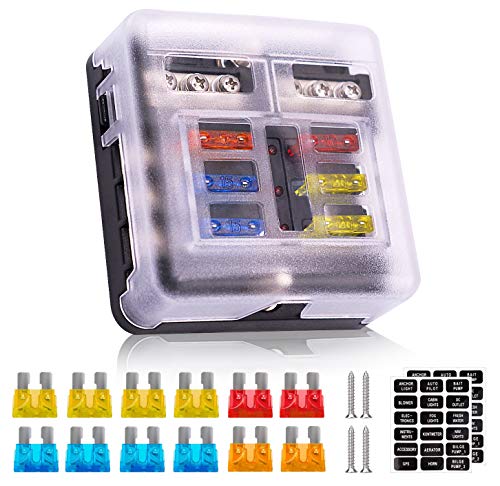
tigwin 12V Fuse Box 6 Way ATO/ATC LED

RED WOLF 6 Way Fuse Block with Standard Fuses

RED WOLF 8-Way Blade Fuse Block Damp-Proof

FASTSTORM 12 Way Fuse Block with 36 Fuses

RED WOLF 4 Way Blade Fuse Block Holder

True Mods 6 Way Blade Fuse Box 2-Pack

femedo 12 Volt Fuse Block 6 Way Waterproof
The Picks, Examined More Closely
The WUPP 12 Volt Fuse Block is the kind of panel I keep recommending when someone wants a single answer for a six-accessory build. It covers 6 circuits, runs on 12V to 24V systems, and pairs a damp-proof snap-on cover with a per-circuit LED warning light. That LED is the small feature that changes ownership: when a fuse pops at a trailhead, you see which slot failed without pulling each one in turn.
The integrated negative bus means you can land your ground returns in one tidy row rather than chasing chassis bolts. For a van build or a center-console boat, that wiring discipline pays off the first time you troubleshoot.
Strong Points
- 6 circuits handle most accessory loads without forcing a second panel.
- LED indicators pinpoint the failed circuit at a glance.
- Damp-proof cover shields terminals from spray and condensation.
- Negative bus keeps grounds organized and serviceable.
- 12V to 24V range suits cars, boats, and RV house banks alike.
Things To Consider
- The cover can feel snug during fuse swaps in cold weather.
- Mounting hardware is basic; stainless screws are worth upgrading for marine use.
Key Specs
Who It Suits Best
DIYers adding multiple accessories to a van, SUV, or small boat who want diagnostic LEDs and a clean ground bus without overspending.
Where Another Pick Suits Better
Anyone wiring a larger RV house bank with double-digit accessory loads should reach for the FASTSTORM 12 Way Fuse Block instead.
The SOYOND 12 Volt Fuse Block targets harsher environments than the average automotive block. Its busbars and fuse clips use nickel-plated copper, which holds up better against the salt air that quietly eats uncoated steel. You also get a 30A per-circuit and 150A panel maximum rating, which gives headroom for higher-draw accessories like pumps and inverters.
Compared with the WUPP panel above, this one trades some hand-hold familiarity for more robust internal hardware. I find that trade reasonable on any install that lives near the coast or sees regular washdowns.
Benefits That Matter
- Nickel-plated copper clips resist corrosion in marine settings.
- 30A per-circuit ceiling handles pumps and higher-draw gear.
- Damp-proof cover limits moisture intrusion at the fuse slot.
- Negative bus simplifies return wiring.
Honest Caveats
- Higher amperage ceiling than typical accessories need.
- Cover design can collect debris in dusty engine bays.
- Documentation is sparse for first-time installers.
Made For
Boat owners and coastal drivers who want better corrosion resistance without stepping up to a hardwired marine breaker panel.
Look Elsewhere When
Tight under-dash installs with limited mounting depth are a better fit for the RED WOLF 4 Way Blade Fuse Block Holder.
The tigwin 12V Fuse Box is built around a fire-resistant PBT housing, which is the spec I look for when a panel sits inches from an exhaust manifold or a hot turbo pipe. PBT stays dimensionally stable where cheaper plastics can soften over time, and it carries good electrical insulation properties. You still get per-circuit LED indicators and a snap-on waterproof cover.
For someone mounting under the hood rather than inside the cabin, that material choice can be the difference between a panel that looks new in five years and one that has yellowed or warped.
A Few Highlights
- Fire-resistant PBT body handles elevated under-hood temperatures.
- Waterproof cover seals against splash and road grime.
- 6-way layout suits typical accessory counts.
- ATO/ATC compatibility uses the most common automotive blade fuses.
Worth Noting
- Lacks a negative busbar in the listed spec, so grounds go elsewhere.
- Housing is rugged but heavier than standard plastic blocks.
Best Suited To
Off-road and overland builds where the fuse panel lives in an engine bay or an exposed underbody location.
Consider Something Else When
If your install needs organized ground returns alongside the hot side, the femedo 12 Volt Fuse Block 6 Way Waterproof ships with a dedicated negative bus.
The RED WOLF 6 Way Fuse Block is a sensible middle-of-the-road panel for someone who wants versatility more than specialist features. It accepts standard blade fuses, runs across 10V to 32V DC inputs, and arrives with fuses already in the box, which removes one extra trip to the parts store. The waterproof cover snaps over the fuse slots.
Where the WUPP and SOYOND panels above lean toward diagnostic LEDs and marine hardware, this RED WOLF panel aims at broad compatibility. Trucks, trailers, SUVs, and boats all sit comfortably in its use case list.
Bright Spots
- Wide vehicle compatibility from cars to yachts.
- Standard circuit fuses ship in the package.
- 10V to 32V input handles older 12V and 24V systems.
- Waterproof cover protects fuses from splash and debris.
Trade Offs
- No LED indicators in the listed spec for fast fault finding.
- Documentation assumes familiarity with automotive wiring.
Key Specs
Whose Shelf It Belongs On
Shade-tree mechanics and trailer owners who want one panel that fits most vehicles without specialized extras.
Swap It Out When
Anyone needing onboard diagnostics should pick the WUPP 12 Volt Fuse Block 6 Circuit LED Indicator for its per-circuit warning lights.
The RED WOLF 8-Way Blade Fuse Block steps up to 8 circuits while keeping the same 10V to 32V input range as its 6-circuit sibling. That extra capacity matters when you are adding rock lights, a compressor, a fridge, and a winch contactor all at once. The damp-proof cover and standard fuse compatibility stay familiar.
Compared with the RED WOLF 6 Way panel above, you pay a small premium for two additional circuits. For most builds that have already grown past six accessories, that headroom is the smarter buy than chaining two smaller panels together.
Real Benefits
- 8 circuits cover most accessory-heavy builds in one box.
- Damp-proof cover handles engine bay and trailer-tongue installs.
- Broad vehicle compatibility list.
- Standard blade fuse format keeps spares easy to source.
Points To Keep In Mind
- Larger footprint than a 6-circuit panel, so mounting space matters.
- No LED indicators specified for visual diagnostics.
Right Fit For
Overlanders and boat owners running lighting, pumps, and electronics from one consolidated panel.
Reach For A Different Pick When
Anyone wiring a full coach with more than eight accessory circuits should step up to the FASTSTORM 12 Way Fuse Block.
The FASTSTORM 12 Way Fuse Block is the panel to reach for when an install has grown legs. Twelve circuits cover most RV house banks, golf cart accessory setups, and trailer looms that have accumulated a decade of additions. The package includes 36 blade fuses, so you can populate every slot from day one and keep spares in the glovebox.
Per-slot LED indicators and a labeled sticker sheet help you map each circuit to its load. Compared with the RED WOLF 8-Way panel above, the FASTSTORM trades a wider footprint for nearly 50% more circuit slots.
Reasons It Performs
- 12 circuits consolidate complex accessory loads.
- 36 fuses included means no second parts run.
- LED indicators speed up fault finding on large panels.
- Water-resistant construction suits marine and outdoor installs.
Minor Gripes
- Larger physical size demands planning for mount location.
- More circuits than many simpler builds actually need.
Feature Snapshot
Who Should Grab It
Golf cart owners, RV renovators, and trailer builders consolidating scattered inline fuses into one serviceable panel.
A Better Fit Elsewhere
If your build only needs a handful of accessory circuits, the RED WOLF 4 Way Blade Fuse Block Holder keeps the install simpler.
The RED WOLF 4 Way Blade Fuse Block Holder is the smallest panel in this roundup, and that compactness is the point. Four circuits cover a tight install: a pair of accessory lights, a small compressor, and a USB charging hub, for example. The 10V to 32V input range matches its larger RED WOLF siblings, so it plays well across 12V and 24V systems.
Where the SOYOND panel above targets harsh coastal conditions, this 4-way block targets tight dashboards, motorcycle setups, and any spot where a 6- or 12-circuit panel simply will not fit.
Useful Highlights
- Smallest footprint in this lineup.
- Standard blade fuse format for easy sourcing.
- Damp-proof cover protects fuses from splash.
- Wide vehicle compatibility from vans to boats.
Room For Improvement
- Only 4 circuits limit growth potential.
- No LED diagnostics in the listed spec.
Perfect Match For
Motorcycle, ATV, and compact car owners who need clean power distribution without bulk.
Skip It When
Anyone planning to add more than four accessories should pick the RED WOLF 8-Way Blade Fuse Block instead.
The True Mods 6 Way Blade Fuse Box ships as a two-pack, which changes the value conversation. Each panel runs on 10V to 30V DC, carries a 100A panel maximum, and includes a clip-on protection cover plus LED indicators per circuit. Builders working on two vehicles at once, or anyone wanting a backup panel in the shop, get obvious value.
The 30V ceiling is worth noting: it handles standard 12V and 24V automotive systems comfortably but stops short of some higher-voltage setups.
Everyday Wins
- Two panels included for parallel projects.
- LED indicators pinpoint the failed circuit at a glance.
- Clip-on cover adds splash and dust protection.
- ATC/ATO fuse compatibility is the most common standard.
Points To Note
- 30V ceiling is slightly tighter than some 32V-rated competitors.
- Two-pack pricing only makes sense for multi-vehicle owners.
Quick Facts
Built With In Mind
Fleet owners, hobbyists with multiple vehicles, or anyone who wants a spare panel on the shelf for future projects.
Where A Sibling Pick Shines
Single-vehicle owners get better value from the WUPP 12 Volt Fuse Block 6 Circuit LED Indicator, which focuses spend on one panel.
The femedo 12 Volt Fuse Block closes this roundup by addressing a wiring detail many panels leave to chance: a dedicated negative busbar with one ground return per circuit. That separation matters in installs where chassis grounding is unreliable, such as fiberglass boat decks or rack-mounted accessory panels. You also get a 100A panel maximum and per-slot LED indicators.
Compared with the WUPP and RED WOLF panels earlier, this one leans into organized grounding. It is a thoughtful choice for anyone chasing clean electrical diagnostics.
Useful Strengths
- Dedicated negative busbar per circuit keeps grounds organized.
- LED indicators help locate a failed fuse quickly.
- 100A panel maximum supports higher-draw accessories.
- Waterproof construction handles marine and outdoor use.
Small Caveats
- More wiring terminations per circuit add install time.
- 6-circuit ceiling may feel tight for large builds.
Spec Overview
Whose Shelf It Belongs On
Boat owners, fiberglass-body builders, and installers who want clean isolated grounds rather than chasing chassis return paths.
Not Your Match When
Anyone wiring a long accessory list in a tight cabin space should pick the FASTSTORM 12 Way Fuse Block for more circuit slots.
Matching The Right Block To Your Electrical Plan
Circuit count is the easy starting line. Count every accessory you plan to add, add two for future growth, and that total usually lands you within one tier of the right panel. A four-circuit block fits a single dedicated accessory add-on, while a six-circuit panel handles most daily-driver upgrades. Eight and twelve circuits belong to overlanders, RV renovators, and boat owners consolidating multiple accessory runs.
Voltage range matters next. Most automotive and marine systems sit at 12V nominal, with 24V common in larger diesel applications. Panels rated 10V to 32V cover both worlds with margin. If you wire near a high-heat source, a fire-resistant PBT housing beats standard plastic over the long run.
Amperage headroom is the spec people undervalue. A 100A panel maximum gives breathing room for inverters, pumps, and compressors that spike on startup. Per‑circuit caps in the 30A range handle nearly any individual accessory without nuisance trips.
Indicators and covers round out the decision. LED warning lights turn a 20-minute fuse hunt into a 20-second glance. A snap-on or clip-on cover keeps spray, dust, and debris off the fuse clips, which is the difference between a panel that works for years and one that corrodes quietly. A negative bus is worth seeking out when chassis grounds feel unreliable or when you want every return on a labeled terminal.
Smart Considerations Before You Order
Where Shoppers Go Wrong
The biggest mistake is under-counting circuits and then chaining mismatched inline fuses onto the leftover slots. A consolidated panel keeps every circuit labeled and serviceable, which matters more the longer you own the vehicle. Another common slip is ignoring voltage range. A 12V-only panel wired into a 24V system can surprise you at the worst moment.
Over-tightening terminal screws is a quieter problem, especially on PBT or polycarbonate housings. The threads strip, the panel still looks fine, and the next owner inherits a mystery ground fault. A torque driver or a gentle hand saves real headaches.
The Upgrade Payoff
Higher-tier panels earn their price through three details that cheaper blocks skip. Nickel-plated copper clips resist corrosion in marine environments. Fire-resistant PBT housings hold shape near heat sources. Integrated negative busbars keep ground returns on labeled terminals rather than scattered chassis bolts. None of these matter on a single light bar, but they pay back quickly on a multi-accessory build that lives outdoors.
Frequently Asked Questions
How many circuits do I actually need in a fuse block?
Add up every accessory you plan to power, then add two for future additions. Most daily-driver builds land at six circuits, while accessory-heavy builds reach eight or twelve.
Are LED fuse indicators worth the small extra cost?
Yes, in my view. The LED turns a dark fuse hunt into a one-second identification, which matters when troubleshooting at night or in weather.
Can a fuse block handle both 12V and 24V systems?
Panels rated for a range like 10V to 32V cover both standard automotive 12V and larger 24V systems. Always confirm the panel’s rated range before wiring.
Where should I mount an automotive fuse block?
Close to the battery, on a stable surface, and away from direct heat sources or moving parts. Engine bays work with fire-resistant housings; cabins and trunks suit standard builds.
Do I have to use the included fuses?
Not at all. Standard ATO or ATC blade fuses are interchangeable across brands, so spares are easy to source from any auto parts store.
Closing Thoughts
A clean fuse block is one of those upgrades you stop noticing after install, and that is the compliment. Pick the circuit count that fits your accessory list, confirm the voltage range matches your system, and choose a housing that suits the install environment. The right panel disappears into the build, and your electrical system just works.
