

Dirty AC isn’t dramatic. It just adds a faint haze to quiet passages, a buzz on black frames, and the occasional crack when the fridge kicks on mid-mix. Studios and home theaters both run into it, and a good power conditioner is the most practical way I know to settle that down. I pulled together nine options that cover the realistic scenarios: rackmount studios, desktop listening rooms, AV racks, and tight-budget setups where any noise reduction helps.
How The Shortlist Stacks Up

AudioQuest PowerQuest 303 Power Conditioner

TODN Power Conditioner for Electronic Equipment
TODN N600 Audio Power Conditioner for Studio

Furman Elite-15 PF i Linear Filtering AC Power Source

TODN Power EMI Filter Cable Silver-Plated OFC

Furman PL-8C Classic 15A Power Conditioner

Radial Power-2 Power Conditioner

Furman M-8Dx Merit Series Power Conditioner
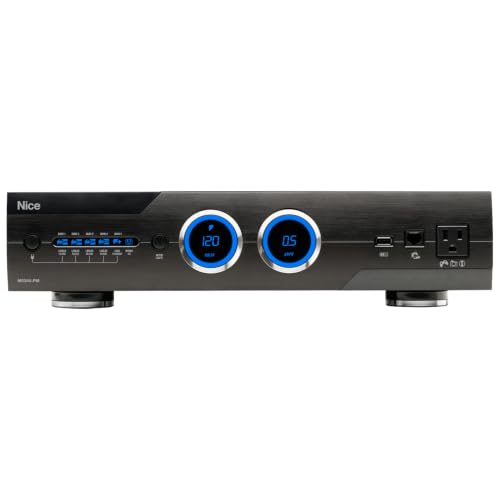
Panamax M5300-PM Home Theater Power Conditioner
The Picks, Examined More Closely
The PowerQuest 303 sits in the sweet spot for a full system: source components, a power amp, a TV or projector, all in one place. Twelve outlets cover a complete living-room rack without daisy-chaining power strips, and the non-sacrificial surge design (a circuit that resets rather than burns out after a big spike) means it keeps working hit after hit.
Linear Noise-Dissipation works across all outlets to lower the noise floor on both analog and digital paths, which matters more than spec sheets admit. Extreme-Voltage Shutdown cuts AC in under 0.25 seconds if the line climbs to 140V, which is the kind of protection you’d hope never to need but appreciate when a neighborhood transformer hiccups.
What Works In Its Favor
- Twelve outlets handle a full rack of source, amp, and display gear without extras.
- Non-sacrificial surge components keep protecting after multiple events, unlike basic MOV strips.
- Extreme-Voltage Shutdown reacts in well under 0.25 seconds to dangerous overvoltage.
- Linear filtering applied across all banks for consistent background silence.
- Wide-bandwidth noise reduction shows up most on quiet classical passages and dark film scenes.
Things To Consider
- It’s a 12-outlet unit meant for a fixed rack, not a tidy two-source desktop.
- Owners with mixed vintage and modern gear occasionally report needing to pair it with a dedicated outlet.
Key Specs
Who It Suits Best
Listeners running a complete rack, source to amp, in a dedicated room who want one central conditioner handling everything.
Where Another Pick Suits Better
For a smaller two-channel desktop, the TODN Power EMI Filter Cable is a less invasive way to clean up a single source.
When the budget is tight but the gear still matters, this TODN unit pulls more weight than its price suggests. It’s the kind of conditioner that makes a small home studio feel a step more settled without forcing a long research project.
For a bedroom producer or a small project room running a couple of synths, an interface, and monitors, this delivers enough protection and filtering to take the edge off a noisy apartment circuit. It’s a sensible middle ground between a basic power strip and a rackmount pro unit.
Where It Excels
- Triple-protection design covers surges, over-current, and voltage anomalies in one box.
- CE-EMC, LVD, and RoHS certification signals compliance with European safety baselines.
- Digital voltage display makes it easy to spot a sagging line at a glance.
- Self-recovering over-current protection resets without a manual fuse swap.
Worth Noting
- Spec coverage in the source listing is thinner than flagship models, so it’s best for less demanding rigs.
- Owners commonly note the casing feels lighter than rackmount alternatives, which is fair for the class.
Made For
A small home studio where basic surge defense and line cleaning beat a plain strip, but full rackmount pricing is too much.
Skip It When
Anyone running a power-hungry amplifier should step up to the Furman Elite-15 PF i for headroom.
The N600 leans into the studio side of the category, where gear stays plugged in for long sessions and a power blip mid-mix is more than an annoyance. It shares TODN’s triple-protection philosophy with its sibling pick but pushes it into a more rack-oriented build.
Compared to the smaller TODN unit, the N600 is the pick when the studio is starting to feel real: a dedicated audio interface, monitor controllers, outboard preamps, maybe a hardware synth or two. The digital voltage readout is genuinely useful for spotting a sagging line before it ruins a take.
Everyday Advantages
- Triple protection aimed squarely at studio electronics rather than office equipment.
- Digital voltage display helps catch brownouts before they trash a recording session.
- Self-recovering over-current resets without a service trip.
- CE-EMC, LVD, and RoHS certification supports the safety claims.
Points To Keep In Mind
- Source specs in this listing are light, so pairing it with a UPS for critical sessions is a sensible move.
- Studio gear with large inrush currents may need the higher-capacity Furman Elite-15 PF i.
Quick Facts
Right Fit For
Project-studio owners who want rack-style conditioning with a clear voltage readout and don’t need flagship headroom.
Look Elsewhere When
A live-sound engineer hauling gear to gigs will get more from the Radial Power-2’s touring-friendly chassis.
The Elite-15 PF i is the unit I’d reach for in a serious reference room. Its Power Factor Technology stores a reserve of current (over 45 amps of peak charge surplus) so that big transient moments in music and film don’t make the amp’s supply sag.
Thirteen outlets cover even ambitious rack layouts, and the wide-bandwidth linear filtering lowers the noise floor across the whole signal chain. It’s overkill for a casual setup, but for someone chasing reference-grade playback, the headroom matters.
What It Does Well
- Power Factor Technology delivers a stored current reserve for amplifier transients.
- Wide-bandwidth linear filtering cleans both audio and video signals.
- Thirteen outlets handle ambitious system layouts without daisy chains.
- E.V.S. protection cuts power during dangerous overvoltage conditions.
Honest Caveats
- Size and weight make it a stationary rack piece rather than a portable option.
- Cost lands well above entry-level conditioners, which is fair for the engineering but worth knowing.
Best Suited To
Reference listeners and home theater owners driving power-hungry amplifiers who want headroom for big transients.
Not Your Match When
Someone building a compact desktop should look at the Panamax M5300-PM for AV-style conditioning in less rack space.
Not every noisy circuit needs a full rack chassis. This short filtered cable sits between a wall outlet and one sensitive source, cleaning EMI and RFI (electromagnetic and radio-frequency interference) right at the entry point.
It’s the pick I’d grab for a DAC, a phono stage, or a network bridge on a desktop, where a rack conditioner would be overkill. The silver-plated OFC conductors (oxygen-free copper, a high-purity conductor material) and dual shielding are aimed at preserving dynamic shifts in orchestral or acoustic material.
Strong Points
- EMI filtering built into the cable itself for targeted clean-up at the source.
- Dual shielding (tinned copper braid plus aluminum foil) reduces both RFI and EMI.
- Thick conductor gauge avoids dynamic compression on transients.
- Carbon-fiber-style shell helps dampen vibration that can color sensitive components.
Room For Improvement
- It cleans one component, not a whole rack, so coverage is limited by design.
- Short 1.15ft length is meant for desktops, not wall-to-rack runs.
Who Should Grab It
Listeners who want cleaner power to a single sensitive component without committing to a rack conditioner.
Reach For A Different Pick When
Anyone running multiple sources and an amp should pick the AudioQuest PowerQuest 303 for whole-system coverage.
The PL-8C is the classic studio rack conditioner for a reason. Nine outlets, two isolated banks, and pullout LED rack lights that actually help in a dimly lit control room. It’s been a rack staple for years, and the design holds up.
SMP, LiFT, and EVS protection cover surge, filtering, and overvoltage in one box, which means digital and analog gear can share the same conditioner without obvious crosstalk. The banks keep noisy digital supplies away from quiet analog stages.
Advantages To Know
- Two isolated outlet banks keep digital and analog gear from contaminating each other.
- Pullout LED rack lights make late-night sessions much easier on the eyes.
- SMP non-sacrificial surge protection handles repeated spikes without burning out.
- EVS shuts down power when voltage climbs past a safe threshold.
Some Limits To Know
- 15A capacity caps the size of the amplifier you can safely pair with it.
- Older rack-standard form factor feels chunky compared to slimmer modern units.
Perfect Match For
Studio owners building a mixed-signal rack who appreciate the pullout lights and bank isolation.
A Better Fit Elsewhere
Anyone running a heavier amplifier should consider the Furman Elite-15 PF i for current headroom.
Radial built the Power-2 for the road. The 1U rack chassis is built like a tank, which matters when gear is loaded into a van every weekend. It uses a US-made Metal Oxide Varistor (MOV, a component that absorbs voltage spikes) for thermal protection and longer lifespan than cheaper imports.
For live sound, the conditioner’s job is to keep a rig running through unpredictable venue power. That’s exactly what the Power-2 is engineered to do, with LED illumination on the front panel that doubles as a quick power-status check during a load-in.
Everyday Perks
- Rugged 1U chassis survives the realities of touring racks.
- US-made MOV handles thermal stress better than cheaper alternatives.
- Front-panel LED illumination doubles as a status indicator in dark rooms.
- Designed specifically for live sound and studio power protection.
Trade Offs
- Rackmount form factor assumes a real rack, not a desktop.
- Fewer outlets than some home-focused units on this list.
Whose Shelf It Belongs On
Touring engineers and live sound techs who need a conditioner that takes the same abuse as the rest of the rack.
Swap It Out When
Home studio owners who don’t move gear often will get more outlets and quieter filtering from the Furman PL-8C.
The M-8Dx is the “I just need clean power and a few outlets” pick from Furman’s line. Wall-wart spacing on the rear panel is the small detail that wins the day for anyone who’s tried to fit two chunky adapters next to each other on a regular strip.
A digital voltmeter on the front keeps the user informed without making them dig through menus, and pullout lights handle the dim-room problem. It’s the kind of practical rack unit a bedroom producer or small studio can rely on without stretching into flagship pricing.
Real Benefits
- Wall-wart spacing handles bulky adapters without blocking adjacent outlets.
- Digital voltmeter shows incoming line voltage at a glance.
- AC noise filtering reduces RFI and EMI for cleaner audio and video.
- Pullout lights make late-night sessions easier on the eyes.
Worth Bearing In Mind
- It uses spike-and-surge protection, not the multi-stage non-sacrificial design of higher Furman lines.
- Nine outlets cover smaller racks but may fall short for full home theater systems.
Feature Snapshot
Built With In Mind
Bedroom producers and home studio owners who want rack-grade conditioning without the flagship price tag.
Where A Sibling Pick Shines
For whole-home-theater conditioning with coax and USB, the Panamax M5300-PM is the more tailored choice.
The M5300-PM is built for the AV rack specifically, and it shows in the connection layout. Eleven AC outlets spread across five isolated filter banks, three coaxial RF connections, two pairs of Ethernet jacks, plus a phone-line connection and a front-panel USB charger.
Over- and under-voltage protection handles both spike and brownout conditions, and a 12-volt trigger input lets the delayed outlets sequence on with the rest of the system. The front-panel voltmeter and ampmeter make it easy to confirm the rack is drawing what it should.
The Good Stuff
- Eleven outlets across five isolated filter banks for complex AV racks.
- Coaxial, Ethernet, and phone-line connections clean the full signal path, not just power.
- Over- and under-voltage protection covers both spike and sag scenarios.
- 12V trigger input sequences delayed outlets with the rest of the system.
- Front-panel USB charger adds convenience without another wall wart.
Less Ideal Details
- Specialized for AV racks, less relevant for a music-only studio.
- More connections than a simple setup may actually need.
Core Details
The Right Fit
Home theater owners assembling a full AV system who want one conditioner covering power, signal, and USB charging.
Consider Something Else When
Music-only listeners will get more relevant filtering from the AudioQuest PowerQuest 303 for a stereo setup.
Choosing The Right Audio Power Conditioner For Your Gear
Match The Capacity To Your Amplifier
Power-hungry amplifiers draw serious current, especially on musical transients. A unit rated for 15A handles typical mid-power amps, while reference systems with big monoblocks benefit from the kind of current reserve the Furman Elite-15 PF i stores with its Power Factor Technology. Under-sizing is the most common cause of a conditioner that clicks off mid-listen.
Look At The Filtering Approach
Linear filtering reduces broadband noise across a wide frequency range, which matters for both audio and video. Some budget units use simpler capacitive filtering, which is fine for digital sources but can rob a touch of life from analog stages. Studios with mixed digital and analog gear often prefer isolated banks, like the Furman PL-8C, so noisy supplies don’t bleed into quiet mic preamps.
Decide Between Whole-Rack And Targeted Conditioning
A full rack conditioner covers every component in one place, which is convenient but may be overkill for a simple desktop. A targeted filter cable, like the TODN Power EMI Filter Cable, cleans one sensitive component right at the wall. Many listeners end up with both: a rack unit for the main system and a filtered cable for a particular source.
Don’t Skip Surge Protection Details
Basic MOV strips (a common, sacrificial surge absorber) burn out after a few big hits and stop protecting silently. Non-sacridental designs, like the ones in the AudioQuest PowerQuest 303 and Furman PL-8C, keep working through multiple events. For a system that costs many times the price of the conditioner, that difference is meaningful.
Key Considerations Across These Picks
Where Shoppers Go Wrong
A common mistake is treating any power strip as a power conditioner. They aren’t the same thing. A conditioner actively filters noise and reacts to voltage anomalies, while a basic strip just passes power through. For sensitive audio gear, the difference shows up as a quieter background and fewer surprises during storms or grid hiccups.
Another slip-up is pairing a small conditioner with a huge amplifier. The unit’s 15A rating is a hard ceiling, and pushing past it invites nuisance tripping at best. Match capacity first, then worry about filtering cleverness.
Where The Extra Money Goes
Higher-tier models add current reserves for amp transients, isolated banks to separate digital and analog stages, and rugged chassis built for touring racks. The Panamax M5300-PM, for example, includes coax and Ethernet protection that cheaper units skip, which matters when the AV rack is the centerpiece.
Spending up pays off most in systems with big amplifiers, sensitive analog sources, or unpredictable venue power. For a simple desktop DAC and powered monitors, the savings on a value-oriented unit are usually the smarter move.
Frequently Asked Questions
Do Audio Power Conditioners Actually Improve Sound?
They reduce line noise that reaches your gear, which often reveals more detail in quiet passages and lowers the noise floor. The effect varies by how dirty your AC is to begin with, but in most homes and apartments it is a real improvement, not a placebo.
Will A Power Conditioner Protect Against Lightning?
Quality units handle the voltage spikes caused by grid events and distant strikes, but a direct lightning hit can overwhelm any consumer conditioner. For storm-prone areas, pairing a conditioner with a whole-house surge protector at the panel is the safer combination.
How Many Outlets Do I Really Need?
Count every component you plan to plug in, then add one or two for future pieces. A full home theater often pushes ten or more, while a simple two-channel desktop setup is fine with four to eight. The M5300-PM and PowerQuest 303 both cover ambitious layouts.
Can I Plug One Power Conditioner Into Another?
Daisy-chaining conditioners usually violates safety listings and can confuse the protection circuits. Run each conditioner directly into a wall outlet, and use a separate strip only for non-audio gear like lamps.
Is Rackmount Necessary For Home Use?
No. Rackmount form factors just make sense for studios with real racks. Home listeners can use a similar unit on a shelf, or skip the rack entirely with a desktop-friendly filter cable for a single source.
Closing Remarks
A power conditioner is one of those quiet upgrades that earns its keep over years, not weeks. Match the capacity to your amp, decide between whole-rack and targeted cleaning, and don’t confuse a basic strip with a real conditioner. The right pick for the room usually ends up being the one that fits the actual gear on the shelf, not the one with the longest feature list.
