

Working with electronics means wrestling with voltages that don’t match what your circuit actually needs. A bench project wants 9V, a router wants 12V, a sensor board wants 3.3V, and the wall adapter only knows how to hand out one number. An adjustable voltage regulator sits between source and load and quietly makes the math work, whether you’re breadboarding at home, retrofitting a cordless tool platform, or building a variable bench supply. I dug through six solid options that cover three common needs: classic linear regulator ICs for DIY circuits, full plug-and-play power stations for tool batteries, and buck/boost converter modules for lab and vehicle use.
An Overview Of The Picks

10PCS LM317T Adjustable Voltage Regulator IC TO-220

Kzreect 300W 2-30V Voltage Regulator for Milwaukee 18V
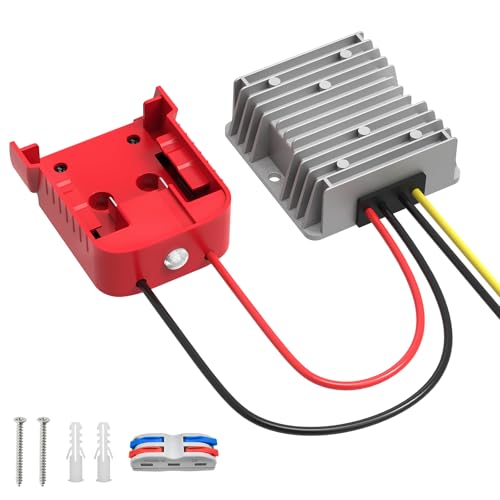
Kzreect 18V to 12V Step-Down for Milwaukee

Kzreect 20V to 12V Step-Down for Dewalt

DROK Buck Boost Converter 6-36V to 0-36V
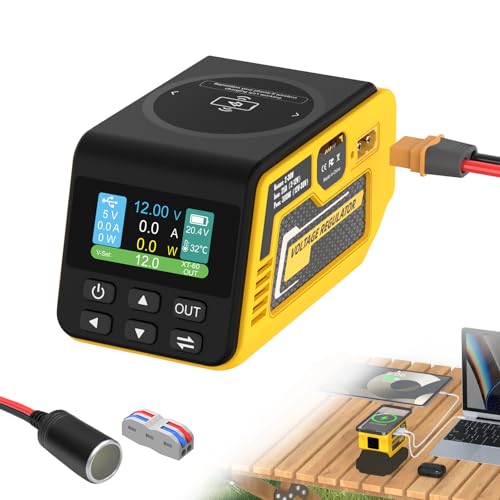
Kzreect 300W Adjustable 2-30V for Dewalt 20V
Meet The Standout Selections
The LM317 has been the go-to adjustable linear regulator on breadboards and perfboards since long before buck converters got cheap. This ten-pack from HUABAN ships the classic TO-220 package (a common three-pin transistor housing that mounts easily to a heatsink), and each chip can be set anywhere from 1.2V to 37V using just two external resistors. For a hobbyist building a variable bench supply, a bench-test fixture, or a one-off gadget, that combination is hard to beat.
Compared with the battery-platform regulators below, this is raw silicon rather than a finished product. You solder it, add passives, mount a heatsink for anything pulling real current, and you’re done. That learning curve is the trade-off: more work up front, but full control over the final design.
Practical Advantages
- Adjustable output from 1.2V to 37V covers nearly every hobby electronics rail from a single chip.
- Up to 1.5A output current handles small motors, LED strips, and analog boards without complaint.
- Ten units per pack means burned prototypes don’t sting the budget.
- Standard TO-220 package drops into existing footprints and accepts common clip-on heatsinks.
- Two-resistor setup keeps the BOM short and the schematic readable for beginners.
Things To Consider
- No built-in display, enclosure, or input conditioning; everything around it is on you.
- Linear regulation means heat rises fast at high current drops, so a proper heatsink is non-negotiable.
- Requires through-hole soldering, which isn’t beginner-friendly if you’ve only worked with modules before.
Who It Suits Best
Electronics students, hobby tinkerers, and anyone who likes designing circuits from the chip up rather than snapping modules together.
Look Elsewhere When
The DROK Buck Boost Converter is a better pick if you’d rather skip soldering entirely and dial in a voltage with onboard buttons and a screen.
Where the LM317 is a component, this Kzreect unit is a finished power station that snaps onto a Milwaukee M18 battery and turns it into a multi-output supply. The headline feature is the XT60 adjustable output (a yellow high-current connector common in RC and DIY power setups) ranging from 2V to 30V at up to 300W, with five preset voltages for quick selection. Add 140W USB-C PD3.1 (Power Delivery 3.1, the latest USB-C fast-charging standard), 18W USB-A, a 15W wireless pad, and a cigarette lighter socket, and you’ve got a portable power hub.
For someone with a stack of M18 batteries sitting on a bench, this collapses a power supply, a laptop charger, and a phone pad into one box. The trade-off is obvious: it only works if you’re in the Milwaukee ecosystem.
Practical Pluses
- 300W continuous output handles demanding DC loads like fans, LED arrays, and small tool motors.
- XT60 port plus five preset voltages (5V, 9V, 12V, 18V, 24V) covers most common electronics rails on the fly.
- 140W USB-C PD3.1 fast-charges modern laptops and tablets from the same battery platform.
- Onboard LCD display gives real-time voltage and current readings without a multimeter.
- Wireless charging pad adds convenience for phones during long sessions.
Worth Noting
- Battery sold separately, so true cost climbs once you factor in a high-output M18 pack.
- Locked to the Milwaukee 18V platform; no support for 20V Max or 12V tool batteries.
- Bulkier than a bare module, so it’s a bench-top or tailgate piece, not a pocket companion.
Built With In Mind
Milwaukee M18 owners who want a portable power station for camping, job sites, or a remote workshop where wall power isn’t available.
Swap It Out When
The Kzreect 300W Adjustable 2-30V Voltage Regulator for Dewalt 20V is the right answer for Dewalt 20V Max owners running the same workload.
The Kzreect 18V to 12V step-down is the no-frills sibling to the 300W unit above. It takes a Milwaukee M18 battery, drops the voltage to a fixed 12V, and hands it out at up to 20A or 240W. A step-down converter (also called a buck converter) simply reduces a higher input voltage to a lower output voltage while converting excess energy into usable current. There’s no LCD, no USB-C, no wireless charging, but the integrated protection chip handles the things that actually matter: over-voltage, over-current, short-circuit, and low-voltage cutoff.
The button switch on top means you can leave a load plugged in without draining the battery the moment you snap the pack on. It’s the kind of tool that disappears into a job box and gets grabbed every weekend.
Well-Handled Touches
- Solid 240W maximum output covers most 12V accessories from work lights to inflators.
- Built-in protection chip guards against the usual failure modes without external fuses.
- Push-button on/off keeps the battery from draining when the load is idle.
- Clean, compact housing fits in a tool bag pocket alongside batteries and chargers.
Points To Keep In Mind
- Output is locked at 12V; no adjustment for devices needing 9V or 5V.
- Milwaukee 18V only; not compatible with the M12 line or other brands.
Right Fit For
M18 owners who need a quick way to run a 12V accessory, like a work light, vacuum, or inflator, off their existing tool batteries.
Consider Something Else When
The Kzreect 300W 2-30V Voltage Regulator for Milwaukee 18V is a smarter pick if you want adjustable output and USB-C charging in the same unit.
This is the Dewalt mirror of the previous step-down converter. Same 20A and 240W ceiling, same button switch, same multi-protection chip, but the input range is widened to 18V or 20V so it tolerates either battery state. For Dewalt 20V Max owners, it answers the same question: how do I run a 12V accessory off the tool batteries I already own?
The dual-input tolerance is a quiet advantage; packs at different charge levels stay within spec, so the converter won’t complain when you swap a fresh battery for a partly used one.
Positive Takeaways
- 20A continuous output handles heavier 12V accessories without voltage sag.
- Accepts both 18V and 20V Dewalt packs for flexible battery rotation.
- Integrated button switch and protection chip simplify safe operation.
- Lightweight enough to live clipped to a battery belt on a job site.
Trade Offs
- Fixed 12V output means no flexibility for 5V, 9V, or 18V devices.
- Dewalt 20V Max only; not a cross-platform adapter.
Made For
Dewalt 20V Max users who already keep a fleet of batteries charged and want to power 12V accessories without buying a separate power supply.
A Better Fit Elsewhere
The DROK Buck Boost Converter is worth a look if you need adjustable output rather than a fixed 12V drop.
The DROK module is a buck-boost converter, which means it can lower or raise the input voltage to reach your target. Unlike the LM317 (which can only reduce voltage), this one steps up or down within a 6V to 36V input and 0.6V to 36V output range, with up to 5A of current. That flexibility turns it into a credible DIY bench supply or LED driver from a single panel.
The digital display reads input or output voltage, current limiting is adjustable, and the settings survive a power cycle. It’s the closest thing here to a finished bench tool that doesn’t lock you into a battery platform.
What Earns Its Place
- Wide input and output range covers everything from a single LED to a 24V motor.
- Adjustable current limiting protects sensitive loads during testing.
- Settings persist after power-off, so you can leave a project and pick it up later without re-dialing.
- Digital display removes guesswork from voltage and current readings.
Points To Note
- Open-frame module has exposed terminals, so an enclosure is a smart add-on for daily use.
- Documentation and labeling can be sparse for first-time users; expect a short learning curve.
Who Should Grab It
Makers and tinkerers who want a flexible voltage source for a workbench without committing to a single battery platform or soldering up an LM317 circuit.
Key Specs
Another Choice May Suit
The 10PCS LM317T Adjustable Voltage Regulator IC is the better pick for circuits that need a regulator soldered directly onto the board rather than an external module.
Closing out the list is the Dewalt counterpart to the Milwaukee power station in spot two. Same 300W adjustable XT60 output, same 2V to 30V range with preset voltages at 5V, 9V, 12V, 18V, and 24V, and the same 140W USB-C PD3.1 plus 18W USB-A and wireless charging suite. The platform swap is the only meaningful difference.
For Dewalt 20V Max households with extra batteries lying around, this turns the garage into a generator-free power setup. The honest read is that the feature set mirrors its sibling so closely that the choice comes down to which battery color you already own.
Everyday Wins
- XT60 output up to 300W and 25A handles demanding DC loads with room to spare.
- Preset voltage buttons let you switch between common rails without manual adjustment.
- USB-C PD3.1 at 140W charges laptops and tablets directly from the tool battery.
- Wireless charging pad adds convenience for daily phone top-ups on the bench.
Soft Spots
- Battery not included, so the total spend rises once you add a high-capacity pack.
- Larger and heavier than a bare converter module, limiting grab-and-go portability.
Whose Shelf It Belongs On
Dewalt 20V Max owners who want a portable power hub for the workshop, campsite, or emergency backup.
Where A Sibling Pick Shines
The Kzreect 20V to 12V Step-Down for Dewalt is a leaner, less expensive alternative when you only need a fixed 12V output.
Picking The Right Adjustable Voltage Regulator For Your Setup
Match The Regulator To The Job
The first question is what you’re actually trying to power. A breadboard project pulling 100mA wants a simple linear regulator like the LM317T or a small buck-boost module like the DROK. A cordless tool battery powering a work light, vacuum, or laptop wants a battery-platform adapter from Kzreect, matched to whichever 18V or 20V system you already own. Mixing platforms is a common error, so check the battery brand and voltage before anything else.
Watch The Current And Power Numbers
Voltage range gets the spotlight, but current limits matter more in practice. A regulator rated for 1.5A is fine for sensor boards and small LEDs, but anything driving motors, heaters, or high-power LEDs will want at least 5A continuous with healthy headroom. Push a regulator to its rated maximum for long stretches and heat becomes the real limit, so derate by 20 to 30 percent for sustained loads.
Decide Between Fixed And Adjustable Output
If your load is always 12V, a fixed step-down like the Kzreect 18V or 20V to 12V converters saves money and removes a setting that could get bumped accidentally. If your projects rotate between 5V, 9V, 12V, and 24V, the DROK module or the 300W Kzreect stations let you dial in the rail you need without swapping hardware.
Think About Protection And Display
A bare IC or open-frame module assumes you know what you’re doing. Built-in protection chips (over-voltage, over-current, short-circuit, low-voltage cutoff) and an LCD readout remove some of that risk. For tool-battery adapters, a button switch is worth more than it sounds: it prevents the battery from discharging the moment you snap the pack on with a load still attached.
Common Slip Ups And Smart Upgrades
Mistakes Worth Dodging
The most common slip is assuming any voltage regulator will accept any input. The DROK module tops out at 36V input, the LM317 caps at 40V, and the battery-platform adapters are tuned to a specific brand. Pushing a 24V supply into a 12V-only adapter is a fast way to let the magic smoke out. Owners also tend to underestimate heat at high current draws; linear regulators like the LM317 drop the excess voltage as heat, and a missing heatsink turns a working circuit into a thermal-shutdown loop within minutes.
What The Higher Tier Buys
Stepping up from a bare module to a finished power station like the 300W Kzreect units trades soldering for convenience. You get a digital display, multiple output ports, USB-C laptop charging, and wireless charging in one box. The upgrade pays off for anyone using their tool batteries as a portable power source beyond the jobsite, like camping, emergency backup, or running a small entertainment setup off-grid. For pure bench electronics, the extra cost usually isn’t justified.
Frequently Asked Questions
What Is The Difference Between A Linear Regulator And A Buck-Boost Converter?
A linear regulator reduces voltage by burning off the excess as heat, which keeps the design simple but inefficient. A buck-boost converter switches the input on and off rapidly to step voltage up or down with far less wasted energy.
Can I Use A Milwaukee 18V Adapter On A Dewalt 20V Battery?
No, the battery interfaces are mechanically and electrically different. The Kzreect Milwaukee adapters only fit M18 packs, while the Dewalt versions are built for the 20V Max slide-style battery.
Do These Regulators Need A Heatsink?
Linear regulators like the LM317T generate meaningful heat at higher current drops, so a clip-on heatsink is strongly recommended. Switching regulators and finished power stations handle thermal management internally.
What Does USB-C PD3.1 Actually Mean For Charging?
PD3.1 is the latest USB Power Delivery standard, supporting up to 240W. The Kzreect stations cap at 140W, which is enough to fast-charge most modern laptops and tablets through a single USB-C cable.
Is An Adjustable Regulator Worth It Over A Fixed-Voltage Wall Adapter?
If your projects rotate between multiple voltage rails, yes. A single adjustable supply replaces a drawer full of wall warts and lets you dial in odd values like 7.5V or 15V that no fixed adapter provides.
Closing Thoughts
The right adjustable voltage regulator depends entirely on what you’re powering and which ecosystem you’re already invested in. Hobby circuit builders will get the most mileage from the LM317T pack or the DROK module, while tool-battery households will find the Kzreect adapters turn spare packs into real power stations. Match the platform, mind the current limits, and the rest falls into place.
