

I spend a lot of time in older homes where the wiring tells a story, and lately the story has been about upgrading protection. Arc-fault and ground-fault technology keeps showing up in newer code cycles, and the right breaker can catch dangerous arcing or stray current before anything burns or shocks. The eight options ahead cover common branch-circuit needs, from kitchens and baths to garages and additions. I’ll walk you through what each one actually does, where it fits, and where it doesn’t.
Your Options, Compared

Square D HOM120PDFC Homeline Dual Function Breaker 20A

Eaton BRN115AF Combo AFCI Breaker 15A Pigtail

Siemens QF215A GFCI Breaker 15A 2-Pole

Siemens Arc Fault Breaker 15A 120V
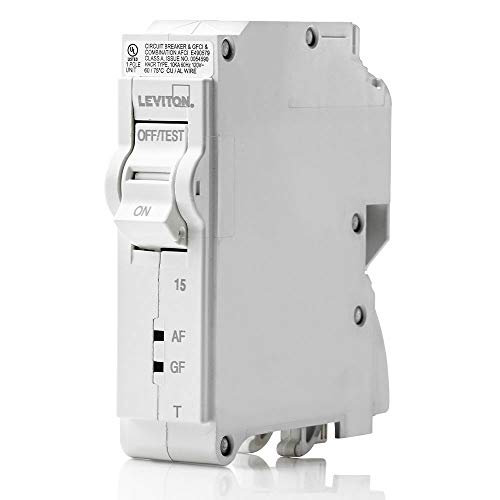
Leviton LB115-DFT Plug-On AFCI/GFCI Breaker

Siemens QA115AFCP Combination AFCI Breaker 15A
Square D QO240GFICP QO GFCI Breaker 40A

Siemens QF120A GFCI Breaker 20A Self-Test
Inside Each Recommended Option
A dual-function breaker handles both arc-fault and ground-fault detection in a single slot, which is the tidy kind of upgrade I like seeing in a busy panel. The Square D HOM120PDFC is built for Homeline load centers, series 4 and newer, and uses a plug-on neutral design that skips the extra pigtail wire you see on older breakers. That freed-up room matters in tight panels where every bit of gutter space gets eaten by wire bends.
For most homeowners tackling a code-driven upgrade on kitchen, laundry, or bath circuits, this is the realistic workhorse. Twenty amps covers a typical branch, and the dual-function label means it satisfies both arc-fault and ground-fault requirements in jurisdictions that ask for both.
Real-World Strengths
- Plug-on neutral design speeds install and reduces wire clutter inside the panel.
- Dual-function (CAFCI plus GFCI) coverage in one breaker simplifies compliance with modern code cycles.
- 120 VAC rating at 10,000 AIR suits the majority of 20A household branch circuits.
- Wide availability across Homeline-compatible panels makes sourcing straightforward.
Things To Consider
- Only fits Homeline series 4 and newer load centers, so older Square D panels need a different breaker.
- Twenty amps may undersize for higher-draw circuits like a 30A dryer feed or shop equipment.
Who It Suits Best
Homeowners with a Homeline panel who want one breaker that satisfies both AFCI and GFCI requirements on a standard 20A branch.
Consider Something Else When
Shoppers running a QO load center should look at Square D’s QO-series GFCI breakers instead, since QO and Homeline breakers are not interchangeable.
The Eaton BRN115AF is a combo AFCI with a 10 kA interrupting rating and a traditional pigtail neutral, which is the kind of breaker you’ll see in many BR-series load centers. That pigtail is the giveaway: this breaker is meant for older panels or installations where the neutral bar accepts a wire rather than a clip-on tab. For a garage subpanel or a basement bedroom circuit, that compatibility matters.
I think of it as the dependable mid-tier option for someone whose panel is already Eaton BR and who needs arc-fault protection on a 15A branch. It doesn’t carry ground-fault protection, so a bath circuit that needs GFCI is not its job.
A Few Highlights
- Combo AFCI detects both parallel and series arcing faults across the branch.
- 10 kA interrupting rating handles the fault current common in residential panels.
- Pigtail neutral keeps it compatible with a long list of older BR load centers.
- 15A rating fits standard lighting and outlet circuits in most rooms.
Worth Noting
- Lacks GFCI protection, so kitchens, baths, and garages usually need a separate solution.
- Pigtail routing takes a bit more gutter space than plug-on designs.
Made For
Anyone with an Eaton BR load center adding arc-fault protection to a 15A bedroom or living-room branch.
Skip It When
You need combined AFCI and GFCI in one slot, in which case the Leviton LB115-DFT or the Square D HOM120PDFC cover both in a single device.
The Siemens QF215A brings GFCI protection to a 2-pole, 240V circuit, which is the kind of niche I rarely see covered well. A standard single-pole GFCI handles 120V branches; for a spa heater, a 240V pump, or a piece of equipment that pulls from both hot legs, you need a 2-pole GFCI like this one. It runs at 15A on each pole with a 10,000 AIC interrupting rating, and the self-test feature checks its own function the way UL 943 calls for.
The honest read is that this is a specialty breaker, not an all-purpose one. Pull it out when the project specifically calls for 240V GFCI, not when a 15A lighting circuit needs protecting.
Benefits That Matter
- 2-pole GFCI coverage fills a gap most breakers leave open for 240V loads.
- 10,000 AIC interrupting capacity handles typical residential fault levels.
- Built-in self-test supports the monthly-check habit without extra effort.
- 15A per pole fits smaller 240V equipment like spa controls and pump circuits.
Trade Offs
- Two-pole design takes two full slots in the panel, which tightens smaller load centers.
- Specialty application means most homeowners only need one, not a bundle.
Right Fit For
A homeowner running a 240V spa, pump, or similar equipment that needs ground-fault protection on a Siemens-compatible panel.
Look Elsewhere When
You’re protecting a standard 120V branch, where a single-pole Siemens QF120A or a dual-function breaker does the job without the extra slot.
The Siemens 15A arc fault breaker covers the basics of arc-fault protection for a standard 120V branch, which makes it the kind of entry-level option I lean on for general living areas. It’s a single-pole design aimed at 15A lighting and outlet circuits, and it fits the Siemens panel families that accept this footprint. For a homeowner adding AFCI protection to bedrooms or dens, this is the everyday play.
Compared to the Siemens QA115AFCP reviewed later, this model is the simpler arc-fault option without the combination designation, which means it’s intended for installations where series-arc detection isn’t required by local code.
The Helpful Details
- Single-pole 15A rating fits standard bedroom and living-room branch wiring.
- 120V rating covers the most common residential circuit type in the home.
- Siemens compatibility line makes sourcing replacements straightforward for matching panels.
- Straightforward arc-fault protection without extra features that drive up cost.
Honest Caveats
- Lacks combination-arc detection, so it’s not a fit where local code now requires series-arc coverage.
- No GFCI built in, so bathrooms and kitchens will need separate ground-fault protection.
Best Suited To
Budget-conscious homeowners with a Siemens panel who need basic arc-fault protection on standard 120V, 15A branches in older jurisdictions.
Not Your Match When
Current code in your area calls for combination AFCI, in which case the Siemens QA115AFCP is the right upgrade.
Leviton built its LB115-DFT with a patented reset lockout, which is the kind of safety feature that tends to matter more than people expect. If the breaker trips because of a real arc or ground fault and the protection circuit is compromised, the reset simply won’t engage until the fault is cleared. That’s not a marketing line so much as a quiet safety layer you’d want after a near-miss.
The thermal-magnetic trip mechanism handles standard overloads, and the plug-on design works inside Leviton load centers. It’s a dual-function breaker in the same sense as the Square D HOM120PDFC, which means it covers both AFCI and GFCI in one slot.
A Few Strong Suits
- Reset lockout prevents re-energizing a circuit that still has a fault, a real safety plus.
- Plug-on design tidies the install and keeps the panel gutter cleaner.
- Thermal-magnetic trip covers everyday overloads along with the arc/ground-fault logic.
- 15A, 120 VAC rating fits the most common residential branch size.
Minor Gripes
- Limited to Leviton load centers, so this is not a fit if your panel is from another brand.
- Lockout feature can confuse first-timers who think a breaker is broken when it refuses to reset.
Perfect Match For
Someone building or upgrading a Leviton load center who wants dual-function protection with an extra safety layer built into the reset.
A Better Fit Elsewhere
Owners of Homeline panels will find the Square D HOM120PDFC a closer mechanical and feature match for their setup.
Combination AFCI is the deeper-cut arc-fault category, and the Siemens QA115AFCP is a textbook example. Where a standard AFCI watches for line-to-neutral and line-to-ground arcs, a combination AFCI also picks up the lower-energy series arcs that happen within a single conductor. That distinction is the difference between breakers that meet older code cycles and breakers that satisfy newer code language.
The “combination” label here does not mean AFCI plus GFCI. If ground-fault protection is also required, you’ll pair this with a GFCI device downstream, or step up to a true dual-function breaker. For whole-home arc-fault coverage in newer jurisdictions, this is the right tool.
Strong Points
- Combination AFCI logic catches series arcs that simpler breakers can miss.
- Plug-on installation keeps panel wiring neat and service calls quicker.
- 15A single-pole rating suits the most common 120V branch circuits.
- Wide compatibility across the Siemens load-center family simplifies matching.
Points To Keep In Mind
- Combination only refers to arc-fault coverage, not AFCI plus GFCI.
- Sensitive electronics on the same branch can sometimes cause nuisance trips.
Who Should Grab It
Homeowners in jurisdictions that require combination AFCI on bedroom, living, or similar 15A branches and who already run a compatible Siemens panel.
Reach For A Different Pick When
You need both arc-fault and ground-fault in a single device, in which case the Leviton LB115-DFT or the Square D HOM120PDFC serve that combined role.
Forty amps is the kind of rating that signals a serious 240V load, and the Square D QO240GFICP is built for exactly that. It’s a Qwik-Gard 2-pole GFCI for QO load centers and CSED devices, with a 120/240 VAC rating and the Visi-Trip indicator that Square D is known for. Hot tubs, large baseboard heaters, and subpanel feeds are the typical applications.
The honest read is that this is a heavy-hitter breaker, not a stocking item. Pull it out when a 240V appliance specifically needs ground-fault protection, since a regular breaker won’t satisfy code in many of those cases.
Useful Strengths
- 40A, 2-pole GFCI capacity handles higher-draw 240V appliances that need ground-fault protection.
- Visi-Trip indicator makes identifying a tripped breaker faster during troubleshooting.
- Plug-on design fits QO load centers and compatible CSED units.
- 120/240 VAC rating covers the full 2-pole residential voltage range.
Room For Improvement
- Larger 2-pole body uses more panel space than a single-pole breaker.
- Limited to QO-compatible panels, so Homeline owners need a different option.
Built With In Mind
A homeowner or electrician running a hot tub, large heater, or similar 240V load that requires GFCI protection in a QO load center.
Where A Sibling Pick Shines
For lower-amperage 240V jobs, the Siemens QF215A gives a similar 2-pole GFCI role in a smaller 15A form factor.
The Siemens QF120A is the kind of breaker I keep coming back to for the most common GFCI job in a home: a 20A kitchen, bath, or laundry branch. Single pole, 120V, 10,000 AIC interrupting capacity, and a self-test feature that meets UL 943. The self-test is the small but meaningful upgrade, since it checks its own ground-fault logic and locks out if something’s wrong, which catches the slow-fail scenario that a manual monthly test might miss.
If you’re not chasing arc-fault protection and just need reliable ground-fault on a standard 20A circuit in a Siemens panel, this is the practical choice. It’s the counterweight to the dual-function breakers earlier in the list, and it pairs well with a separate AFCI breaker when code calls for both.
What Makes Sense
- 20A single-pole rating fits the most common kitchen and bath branch circuits.
- 10,000 AIC interrupting capacity handles typical residential fault levels.
- UL 943 self-test monitors internal ground-fault function without monthly button pushes.
- Plug-on form factor installs cleanly into compatible Siemens panels.
Some Limits To Know
- Ground-fault only, so a separate AFCI breaker is needed if arc-fault protection is also required.
- Compatibility is specific to Siemens panel families that accept this breaker body.
The Right Fit
Homeowners with a Siemens panel who want ground-fault protection on a standard 20A kitchen, bath, or laundry branch without overcomplicating the install.
Swap It Out When
You need both arc-fault and ground-fault in one slot, in which case the Square D HOM120PDFC handles both protections on a Homeline panel.
Picking The Right Match For Your Panel
Matching Breaker Brand To Load Center
The single most important filter is brand compatibility. Square D Homeline breakers fit Homeline panels. Square D QO breakers fit QO panels. Eaton BR breakers fit BR load centers, and Leviton breakers fit Leviton panels. Forcing a breaker into the wrong panel is a safety risk and a code violation, so check the label inside your panel door before you order. If the breaker brand is matched, the install is far smoother.
AFCI, GFCI, Or Both
Arc-fault circuit interrupters catch dangerous arcing in the wiring, the kind of arcing that comes from a damaged conductor or a loose connection. Ground-fault circuit interrupters detect current leaking along an unintended path, like through water or a person. Kitchens, baths, garages, and outdoor circuits typically need GFCI. Bedrooms and living areas increasingly call for AFCI. Some jurisdictions want both on the same circuit, which is where a dual-function breaker comes in.
Amperage, Poles, And Interrupting Rating
Match the breaker amperage to the wire and the load: 15A on 14-gauge wire, 20A on 12-gauge, 30A on 10-gauge, and 40A or 50A on larger appliances. Single-pole breakers cover 120V circuits, while 2-pole breakers handle 240V appliances like dryers, ranges, and spa equipment. The interrupting rating, expressed in kA or AIC, tells you how much fault current the breaker can safely clear. Most residential panels want at least 10,000 AIC.
Practical Ownership Notes
Breakers rarely need maintenance beyond an occasional test using the built-in button on GFCI and AFCI models. Many newer models self-test, but the monthly push-button habit remains a good practice. If a breaker trips and won’t reset, the underlying fault usually still exists, so resist the urge to keep flipping it. Label every new circuit clearly inside the panel door so the next service call goes smoothly.
Key Considerations Across These Picks
Common Shopping Slip Ups
The most frequent mistake I see is buying the wrong breaker family for the panel, since Homeline, QO, BR, and Leviton breakers are not interchangeable even when they look similar. Another is grabbing a standard AFCI when local code now requires combination AFCI. People shopping for kitchen or bath protection sometimes forget that a GFCI function is what they actually need, and a plain AFCI won’t satisfy that requirement.
Why Top Tier Costs More
Premium dual-function breakers carry extra circuitry for both arc-fault and ground-fault detection in a single device, which adds components, calibration, and testing. Higher amperage and 2-pole designs also cost more because of the heavier internal construction. The added price usually translates to broader code compliance and the convenience of a single breaker doing the work of two, which can matter on a tight panel schedule.
Frequently Asked Questions
What is the difference between AFCI and GFCI?
AFCI breakers watch for dangerous arcing in the wiring, while GFCI breakers watch for current leaking along an unintended path. They protect against different hazards, and many modern codes require both on certain circuits.
Can I install these breakers myself?
Homeowners in some jurisdictions can replace breakers themselves, but many areas require a licensed electrician for panel work. Even when DIY is allowed, the main breaker should be off and the work verified before re-energizing.
Why does my AFCI breaker keep tripping?
Nuisance trips on AFCI breakers usually trace to a shared neutral, a loose connection, or a damaged appliance on the circuit. Reset once after disconnecting loads to isolate the cause, and call an electrician if the trip returns immediately.
Do all panels accept dual-function breakers?
No. Dual-function breakers fit specific panel families, such as Homeline series 4 and newer for Square D, or compatible Leviton load centers. Always confirm your panel brand and model before ordering.
How often should I test a GFCI breaker?
Monthly testing is the common recommendation, though many newer breakers include a self-test feature that runs continuously. The built-in test button is still a useful manual check even on self-test models.
Wrap Up
The right breaker depends on your panel brand, the circuit you need to protect, and the code cycle your jurisdiction follows. Match the family first, pick AFCI, GFCI, or dual-function based on the room and local rules, and confirm amperage and pole count before ordering. With those basics in place, any of the eight options above can carry its weight in a safer, more modern home.
