

A bench power supply quietly anchors a lot of hobby and bench setups, from ham radios and CB rigs to CCTV cameras and 3D printers. Run a few 12V devices at once and you’ll feel the limits of cheap wall warts fast. I put together this list of 10 Ac Dc Converters spanning compact linear bench supplies and beefier switching PSUs so the right match is easier to spot.
A Closer Look At The Lineup

Pyramid PS15K.5 Compact Bench Power Supply 10 Amp

Pyramid PS9KX Compact Bench Power Supply 5 Amp
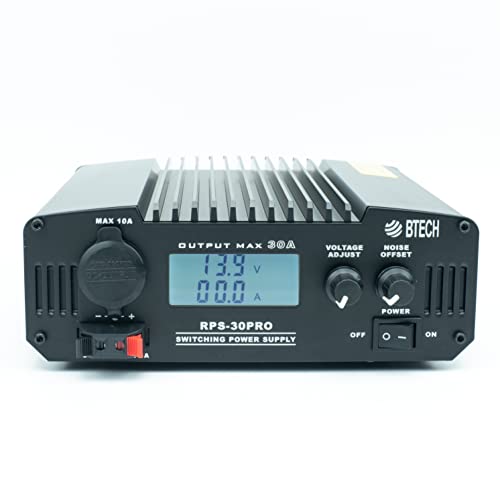
BTECH RPS-30PRO 30 Amp Bench Power Supply

DmgicPro 13.8V 30A Switching Bench Power Supply

Pyramid PS14KX.5 Compact Bench Power Supply 12 Amp

BOSYTRO 12V 100A 1200W Switching Power Supply

BOSYTRO 12V 125A 1500W Switching Power Supply

BOSYTRO 12V DC Power Supply 480W 40A

BOSYTRO 12V DC Power Supply 600W SMPS 50A

BOSYTRO 12V Switching Power Supply 1000W 83A
More On The Choices That Made The List
The Pyramid PS15K.5 sits in a comfortable middle ground for hobby radio benches. The unit takes 115V AC from a wall outlet and turns it into a regulated 13.8V DC output, the same voltage a car battery delivers, which is exactly what most mobile radios expect to see on transmit.
The compact chassis fits neatly on a shelf next to a transceiver, and the built-in 10A cigarette socket means I can grab a fused 12V cord without rewiring anything. Owners commonly use this on a workbench to bench-test CB radios, scanners, and ham gear before installing it in a vehicle.
The Practical Payoff
- Linear regulated design keeps ripple low, which matters for clean radio audio on receive.
- 250W input rating covers most 100W HF mobile radios plus a small accessory load.
- Screw-type terminal outputs accept ring or fork lugs for a stable, vibration-free hookup.
- Cigarette lighter socket doubles as a fast power port for travel-friendly gear.
Things To Consider
- No built-in cooling fan, so it should sit in an open spot during long key-down sessions.
- Linear topology tends to run warm and heavy at full load compared with switching supplies.
Quick Facts
Who Will Love This
Anyone setting up a permanent home shack for CB, scanner, or ham radio work.
Where Another Pick Suits Better
The Pyramid PS9KX is the friendlier step for a first-time hobbyist who only needs 5A and a smaller footprint.
The Pyramid PS9KX keeps things modest, which is sometimes exactly what a bench needs. Output is fixed at 13.8V DC with up to 5A on tap, and the 70W input rating means it plugs into a normal outlet without tripping a breaker.
Compared to its bigger PS15K.5 sibling, this unit sheds about half the current capacity in exchange for a lighter, friendlier chassis. Hobbyists commonly use it as a learning supply, the kind of thing that sits on a desk while tinkering with low-power HTs, scanners, and small DC projects.
Well-Handled Touches
- Compact housing fits on a small bench or a crowded worktable.
- Screw terminals accept bare wire, fork, or ring lugs without soldering.
- 5A capacity is plenty for handheld radios, scanners, and small 12V fans.
- Linear regulation produces a quiet, predictable waveform for sensitive receivers.
Trade Offs
- 5A is the ceiling, so powering a 100W mobile radio on transmit is a stretch.
- Lacks a built-in fan, so airflow during heavy loads should be considered.
Feature Card
Made For
Newer hobbyists building a first workbench for low-power radio or electronics experiments.
Look Elsewhere When
Step up to the Pyramid PS14KX.5 when a built-in cooling fan and 12A headroom matter more than size.
The BTECH RPS-30PRO does one thing the older Pyramid supplies don’t: it lets the user dial the voltage between 9V and 15V. That’s useful when a bench is hosting a mix of GMRS handhelds, LMR commercial radios, and accessories that don’t all want exactly 13.8V.
At 30A, this regulated supply has more current headroom than most home shacks will ever pull, and the noise offset adjustment trims ripple for cleaner signal work. It’s a natural fit for someone running two radios on one desk, or for the ham who likes to push a base station amplifier for a test.
What Works In Its Favor
- 9V to 15V adjustable range covers most two-way radios, scanners, and DC benches.
- 30A continuous current handles multi-radio setups without breaking a sweat.
- Noise offset knob lets users tune down interference on sensitive receivers.
- Cigarette, screw, and snap-in terminals cover nearly every radio hookup style.
Points To Keep In Mind
- Higher current capacity makes the unit heavier, so plan bench space.
- Front-panel controls add a small learning curve for first-time hobbyists.
The Right Fit
Active amateur operators running several radios and a base amp on a single bench.
Consider Something Else When
Pick the DmgicPro 13.8V 30A bench supply when a built-in digital display matters more than adjustable voltage.
The DmgicPro 13.8V 30A leans hard into the readability side of bench work. A digital display sits on the front panel, so voltage and current are visible at a glance, which matters when a project is drawing varying loads.
The switching topology keeps the chassis lighter than the older Pyramid linear units, and the noise offset adjustment helps trim ripple on the 13.8V rail. It’s the kind of supply that pairs nicely with a CB or ham setup where the operator wants a real readout instead of guessing from a meter.
What It Does Well
- Front digital display gives quick, at-a-glance voltage confirmation.
- 30A peak and 20A continuous handles most mid-power radio benches.
- Cigarette socket on the front saves fumbling for adapters on small loads.
- Switching design runs cooler and lighter than older linear units.
Potential Drawbacks
- Switching supplies can introduce high-frequency noise that sensitive receivers may pick up.
- 20A continuous ceiling means very long key-down sessions at peak draw should be watched.
Best Suited To
Radio operators who want a quick visual readout while monitoring load behavior.
Reach For A Different Pick When
The Pyramid PS15K.5 fits better when low ripple on receive matters more than a digital front display.
The Pyramid PS14KX.5 is the workhorse of the older Pyramid lineup. It delivers 13.8V at up to 12A from a 115V AC outlet, which is enough current to feed a 100W mobile radio and a small accessory chain at the same time.
The big difference from the PS15K.5 is a built-in cooling fan. That fan turns thermal headroom into real runtime, so longer transmit sessions and heavier loads are less of a worry. The compact chassis still tucks into a corner of a workbench.
The Upside
- Internal cooling fan supports longer sessions at higher current draws.
- 12A continuous covers a typical 100W mobile radio plus accessories.
- Screw terminals and overload protection reduce wiring mistakes.
- Linear regulation delivers low-noise output for clean receiver performance.
Room For Improvement
- Fan noise is audible in a quiet room, so placement matters.
- Linear topology adds weight compared with switching alternatives.
Right Fit For
Operators running extended bench tests or stacked accessory loads on a single supply.
Skip It When
The BTECH RPS-30PRO is the better match when adjustable voltage and quieter operation lead the list.
The BOSYTRO 12V 100A jumps categories from radio bench into large LED and CCTV installs. Rated at 1200W, this switching supply can run long runs of LED strip lighting or a bank of security cameras from a single box.
The aluminium housing with multiple ventilation holes is built around heat dissipation, which matters when the unit lives inside a wiring closet. Compared with the smaller Pyramid bench supplies above, the BOSYTRO trades portability for raw wattage.
Everyday Wins
- 1200W capacity feeds big LED tape or several CCTV cameras from one unit.
- Switching topology keeps the chassis lighter than a comparable linear supply.
- Aluminium shell with vents helps dissipate heat in enclosed cabinets.
- Auto-reset fuse protection helps recover from brief overloads.
A Few Limitations
- Switching supplies can introduce audible buzz into nearby AM radios.
- Peak power differs from continuous load, so headroom should be planned in.
Spec Overview
Perfect Match For
Installers building long LED strip runs or multi-camera CCTV systems.
A Better Fit Elsewhere
The BOSYTRO 12V 125A is the stronger pick for a 3D printer or other high-draw DC device.
When a 3D printer needs more current than its stock power brick can supply, the BOSYTRO 12V 125A steps in. With a 1500W ceiling, this switching supply can feed a heated bed, hot end, and stepper motors without sagging the rail.
It’s also comfortable running CCTV farms or LED tape, but the wattage rating makes it especially relevant to the maker scene. Owners often mount it inside an enclosure where the aluminium shell and vent holes keep temperatures in check.
Reasons It Performs
- 1500W output covers power-hungry printers and high-density LED installs.
- Switching design keeps size and weight manageable for the wattage.
- 110V and 220V input compatibility suits both home and shop wiring.
- Aluminium housing with vents helps the unit run cooler under load.
Where It Is Less Suited
- Cooling fans on high-wattage units tend to be audible in a quiet room.
- Bulk size rules out portable bench use for small radio projects.
Whose Shelf It Belongs On
Makers and small-shop owners running larger 3D printers and DC-driven tooling.
Another Choice May Suit
The BOSYTRO 600W 50A unit is the friendlier option when smaller 12V loads are the main job.
The upgraded BOSYTRO 480W is a mid-size switching supply with a few quality-of-life touches. It keeps three output channels but changes how the AC input is wired, so the bench hookup goes faster than the older version it replaced.
A new safety switch on the front is a small but meaningful upgrade, since it lets the user cut power without unplugging the cord. At 40A continuous, it’s the kind of supply a small workshop leans on for motors, pumps, and LED runs that don’t justify a 100A box.
Where It Excels
- Safety switch on the front makes power cycling fast and obvious.
- Three output channels allow multiple loads without extra splitters.
- 40A output handles mid-size motors, pumps, and LED arrays.
- Improved input wiring trims bench setup time compared to older revisions.
Points To Watch
- Switching noise may show up on nearby AM receivers, so physical separation helps.
- Cooling fan cycles on under heavy load, so plan placement for airflow.
Perfect Match For
Small workshops running pumps, motors, and LED lighting from one bench supply.
Swap It Out When
The BOSYTRO 600W 50A model fits better when more continuous current is the priority.
The BOSYTRO 600W SMPS (switched-mode power supply, a compact and efficient type of AC-to-DC converter) brings a useful twist: nickel-plated copper terminals that accept clamps directly. Instead of fumbling with ring lugs and screws, the leads just clamp on.
The 50A continuous output and 110V to 240V input range make this supply comfortable in a workshop and on the road. RV owners often pair it with 12V fridges, lighting, and small inverter-fed loads, while lab users appreciate the wide input tolerance for generator power.
Strong Points
- Clamp-style terminals speed up temporary wiring on RVs and field setups.
- 50A continuous handles most 12V appliances and lab instruments.
- 110V to 240V input compatibility is friendly for generator and shore power.
- Nickel-plated terminals resist corrosion over years of mobile use.
Honest Caveats
- Clamp terminals should be checked periodically for tightness in vibration-prone installs.
- Switching supply noise may affect nearby sensitive radio receivers.
Key Product Details
Best Suited To
RVers, mobile workshop users, and lab owners who want quick clamp-style wiring.
Where A Sibling Pick Shines
The BOSYTRO 1000W 83A unit is the smarter choice when a project regularly pushes past 50A.
Topping the list, the BOSYTRO 1000W 83A is the heaviest hitter in the group. With output current up to 83A and 1000W of total capacity, this switching supply drives large LED walls, multi-camera CCTV farms, or a 3D printer cluster from a single box.
The clamp-style nickel-plated terminals carry over from the smaller BOSYTRO units, so wiring is quick and corrosion-resistant. The 110V to 240V input window also keeps the supply flexible for generator-powered field use or standard wall outlets.
Positive Points
- 1000W ceiling covers the largest 12V DC projects on this list.
- 83A peak output drives multi-device loads without splitting power.
- Wide 110V to 240V input range suits global and generator scenarios.
- Nickel-plated clamp terminals resist corrosion and speed wiring.
Where It May Fall Short
- Form factor and weight make it a stationary supply, not a portable one.
- Switching noise may be noticeable near AM broadcast band receivers.
Who Should Grab It
Shop owners and installers who need a single high-capacity supply for demanding DC loads.
Not Your Match When
The Pyramid PS15K.5 is the better call for a quiet radio bench with modest current needs.
How To Pick The Right Bench Supply For Your Projects
Start with the load, not the supply. Total up the worst-case current draw of the devices that will share the rail, then add a safety margin of roughly 20 to 30 percent so the supply doesn’t run flat-out all day.
Next, weigh linear versus switching designs. Linear units are heavier and run warmer, but they tend to produce cleaner output with less electrical noise, which matters for radio receivers. Switching supplies are lighter and more efficient, though they can introduce high-frequency noise that sensitive audio gear picks up.
Consider connectivity too. Screw terminals, cigarette sockets, and snap-in posts each suit a different kind of project, and the right mix saves rewiring headaches later. Lastly, look at physical size, cooling, and input voltage range. A unit with a built-in fan and 110V to 240V input handles long sessions and varied shop wiring more comfortably than a sealed brick.
What To Watch Before Clicking Order
Hidden Buying Traps
The wattage and amperage ratings on a listing can describe peak behavior rather than continuous output, which is the number that matters for steady loads. A 30A peak supply delivering only 20A continuously can feel under-sized during long transmit or print sessions.
Another common slip is mixing radio gear with switching supplies that introduce RF noise. Owners commonly find that a nearby AM broadcast or HF receiver picks up the converter’s switching hash, so physical separation, filtering, or a linear supply can solve the problem.
Why Top Tier Costs More
The jump from a basic bench supply to a higher-tier unit usually buys three things. More continuous current means longer sessions without thermal throttling, adjustable voltage widens the range of devices a bench can host, and a real front-panel display or noise offset adjustment lets the user see and tune what the supply is doing under load.
For most home benches, a mid-tier regulated supply hits the right balance. The upgrade to a heavy-duty 1000W unit pays off when a shop is running multiple 12V devices at once, or when 3D printer and CCTV work demands steady current all day.
Key Considerations Across These Picks
Pitfalls Shoppers Hit
Buying on peak amperage rather than continuous rating is the most common trap. A 30A peak unit can still sag at 20A during long draws, which leads to rebooting radios or failed print jobs.
The Upgrade Payoff
Spending up for a higher-wattage supply generally buys thermal headroom, more output channels, and friendlier wiring, which shows up the most in shops that run multiple devices around the clock.
Frequently Asked Questions
What’s the difference between linear and switching Ac Dc Converters? Linear supplies regulate output by dissipating excess voltage as heat, producing cleaner power at the cost of size and efficiency. Switching supplies chop the input at high frequency, which makes them lighter and cooler, though sometimes at the cost of added electrical noise.
How much current do I really need on the bench? Add up the worst-case draw of every device on the rail, then add a 20 to 30 percent buffer for safety. Radio benches usually land in the 10A to 30A range, while LED and CCTV installs often need 50A or more.
Can I use a switching supply to power a ham radio? Yes, but high-frequency noise from the converter can show up on the receiver. Physical separation, a noise offset adjustment, or a small filter on the DC line usually clears it up.
Why do some supplies list 110V and 220V inputs? A dual-voltage input lets the unit run on household wiring in North America or Europe, and on generator or shore power in mobile setups. It’s a useful feature for anyone who travels or works outside the home shop.
Is a built-in fan a real benefit? For long transmit sessions, heated beds, or LED arrays drawing near full load, a fan keeps internal temperatures in check and extends component life. For lighter duty, a fanless supply is quieter and often compact enough for a small workbench.
Wrap Up
A good Ac Dc Converter turns wall power into the clean 12V rail radios, LEDs, printers, and cameras all rely on, and the right wattage depends on what lives on your bench. Start with your load, decide between linear and switching, and pick a supply with the connectors you actually use. Any of the ten options above will do the job well within its design envelope.
