

I pulled this list together because bench work and hobby projects share a common problem: the wall outlet delivers AC, and almost every device on the bench wants clean, steady DC at a specific voltage. A solid switching supply bridges that gap, and the wrong one creates ripple noise, overheating, or voltage drift that ruins sensitive electronics. Whether you’re running a ham rig, powering LED strips, or prototyping a 3D printer, the right AC to DC switching supply turns a messy workbench into a reliable setup.
The Leading Options At A Glance

DmgicPro 13.8V 30A DC Power Supply with Noise Offset

NORJIN 13.8V 30A DC Power Supply with Cigarette Socket
Mean Well LRS-350-24 AC/DC Switching Power Supply 350.4W

VAYALT DC 12V 50A 600W Switching Power Supply

VAYALT DC 12V 100A 1200W Switching Power Supply

DROK Adjustable Voltage Regulator Buck Boost Converter 6-36V to 0-36V

DROK IP68 Waterproof DC to DC Buck Converter 8-35V to 3-24V

DROK 24V Power Supply AC 110V/220V to DC 0-24V 20A

VAYALT 24V 25A 600W DC Switching Power Supply
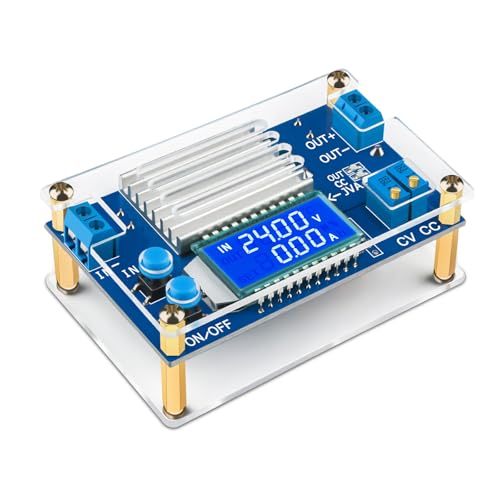
DROK DC Buck Converter 5.3V-32V to 1.2V-32V 12A Adjustable
More Details On Our Top Picks
The DmgicPro 13.8V 30A sits squarely in the ham radio corner of the bench, which is exactly where most fixed-voltage DC supplies feel at home. It pulls in AC from the wall and hands back a steady 13.8V, the same voltage most CB, VHF, UHF, and HAM transceivers expect to see, so there’s no fiddling with trim pots before every QSO.
A 10A cigarette lighter socket on the front panel adds a small but useful convenience for powering 12V accessories from the same source. For shack operators running a single radio plus a few accessories, this kind of bench supply keeps cabling simple and lets the radio see clean, regulated power during long transmissions.
Features That Help
- Fixed 13.8V output matches common radio gear, removing guesswork at the bench
- Noise Offset control helps reduce pulse noise that interferes with reception
- Front-mounted cigarette socket powers 12V accessories without extra adapters
- Continuous 20A output (30A peak) covers most single-radio setups plus peripherals
- Analog regulation style gives the predictable feel many operators prefer
Things To Consider
- Fixed voltage means no flexibility for projects needing 5V, 9V, or 24V rails
- Analog metering can be harder to read precisely than a digital display
- Ventilation around the unit matters because heat builds up during long transmit cycles
Made For
Licensed ham operators and CB radio hobbyists running a primary transceiver at home or in a small shack.
Look Elsewhere When
You’re powering 12V LED strips or 3D printers; the VAYALT DC 12V 50A 600W Switching Power Supply handles those loads with much more headroom.
The NORJIN 13.8V 30A shares much of its DNA with the DmgicPro unit, but it leans a bit more toward the mixed-use hobby bench. It still delivers that familiar 13.8V that scanners, CB rigs, and amateur transceivers expect, while the built-in 12V cigarette-style socket opens the door to portable accessories like inflators or GPS units.
For someone running a small workshop or a communications corner in the garage, the front-panel Noise Offset knob is the practical touch. Owners commonly use it to dial down electrical noise that creeps into nearby receivers, which is a real problem in older houses with marginal wiring.
The Value In It
- Peak 30A rating covers short bursts during heavy transmit cycles
- Noise Offset control reduces pulse noise on sensitive receivers
- Built-in cigarette socket powers portable 12V gear from the same unit
- Compatible with a wide range of 13.8V devices, from radios to scanners
Worth Noting
- Still a single-voltage design, so other projects need a separate supply
- Front layout can crowd up once cables and accessories are connected
- Cooling airflow becomes important when running near peak current
Who It Suits Best
Hobbyists who split their bench time between radio work and testing 12V automotive accessories.
Where Another Pick Suits Better
You mainly work on 24V systems; the VAYALT 24V 25A 600W DC Switching Power Supply serves 24V loads more directly.
The LRS-350-24 from Mean Well is a different animal from the radio-focused units above. It’s a fully enclosed, single-output 24V industrial supply rated for 350.4W at 14.6A, the kind of brick that usually lives inside a 3D printer, a CNC enclosure, or a piece of automation gear.
What sets it apart is the operating range, from about -30°C up to 70°C, which means it tolerates workshop conditions, garage cabinets, and equipment closets without complaint. For builders who care about long-term reliability over flashy displays, this enclosed form factor is the standard.
What Works In Its Favor
- Single 24V rail at 14.6A matches most 3D printer and CNC controller boards
- Wide temperature tolerance handles workshop and semi-outdoor installs
- Enclosed chassis protects internals from dust and accidental contact
- Industry-trusted Mean Well lineage with predictable regulation behavior
Trade Offs
- No meters or displays; you wire it in and trust the rating
- Single fixed output means no on-the-fly voltage changes
- Requires safe mounting because screw terminals carry full AC input
Best Suited To
Makers building enclosed 3D printers or CNC machines who want a clean, reliable 24V feed tucked inside the frame.
A Better Fit Elsewhere
You need to vary voltage during prototyping; the DROK Adjustable Voltage Regulator Buck Boost Converter gives that flexibility at lower power.
Quick Facts
The VAYALT DC 12V 50A 600W sits in the sweet spot for CCTV systems, long LED strip runs, and small fabrication projects. The 12V output is adjustable within about a 10% window around the nominal voltage, which is enough to compensate for long cable runs where voltage tends to sag.
It accepts both 110V and 220V AC input, so it travels well between regions or workshop setups with different mains standards. Compared with the fixed-voltage radio supplies above, this one trades precision for raw capacity at a sensible level.
A Few Strong Suits
- 600W peak handles multi-camera CCTV or dense LED installations
- Adjustable output trims for voltage drop across long wire runs
- Universal AC input works with common 110V and 220V mains supplies
- Switching design keeps the unit compact relative to its current rating
Points To Note
- Higher current units need adequate ventilation around the chassis
- No front display, so you’ll want a multimeter during initial setup
- Cable gauge matters more at 50A, and undersized wire runs hot
Right Fit For
Installers and hobbyists building 12V CCTV systems or medium-scale LED lighting projects.
Skip It When
You need higher wattage for full workshops; the VAYALT DC 12V 100A 1200W Switching Power Supply steps up without a redesign.
The 100A 1200W sibling steps everything up, doubling the current of the 50A version in the same general form factor. This is the supply I think about when someone is building a long LED wall, a multi-camera security array, or a 3D printer farm where several machines draw from one central feed.
Like the smaller VAYALT, it accepts 110V or 220V input and offers the same 12V output adjustable within about a 10% range. The honest read is that at this power level, the wiring and fusing outside the unit matter as much as the unit itself.
Practical Pluses
- 1200W ceiling supports multi-device 12V loads from a single source
- Universal AC input suits different mains standards in mixed setups
- Adjustable output compensates for drop on extended cable runs
- Same switching footprint keeps the unit reasonable on a shelf or rack
Worth Bearing In Mind
- Heat output increases significantly near peak load
- Heavy gauge output wiring and proper fusing become mandatory
- Without a display, external metering is the only way to confirm output
Whose Shelf It Belongs On
Workshop owners and small-business installers running multiple 12V devices from one central power source.
Another Choice May Suit
You’re working with variable-voltage prototyping; the DROK 24V Power Supply AC 110V/220V to DC 0-24V offers a wider adjustment range.
Quick Technical Notes
The DROK Adjustable Voltage Regulator is where the list shifts from fixed-output supplies to flexible DC-to-DC conversion. It accepts 6.0V to 36V DC input and produces 0.6V to 36V output at up to 5A, which in plain terms means it can step voltage up or down depending on what the project demands.
For anyone building a compact bench supply or driving custom LED arrays, this module turns an old laptop brick into a variable lab source. Compare that to the heavy fixed units above, and the trade-off becomes clear: far less current, far more flexibility.
A Favorable Mix
- Buck and boost in one module covers step-up and step-down needs
- Wide output range suits microcontroller, sensor, and LED projects
- Compact panel form factor fits in a small project enclosure
- Digital display helps confirm exact voltage during setup
Honest Caveats
- 5A ceiling means it can’t drive larger motors or heavy LED arrays
- Requires a separate DC input source since it’s not a wall-powered unit
- Heat management matters when running near the top of the range
Who Will Love This
Electronics hobbyists who want a pocket-sized variable supply for prototyping without dragging out a full bench unit.
Not Your Match When
You’re powering a 3D printer directly from the wall; the Mean Well LRS-350-24 is the proper enclosed supply for that.
This DROK buck converter is purpose-built for places where plain modules wouldn’t survive. Housed in an IP68-rated aluminum case, it handles moisture, dust, and vibration that would kill a typical board converter in a few months. It’s a step-down unit, taking 8V to 35V input and producing 3V to 24V output at up to 5A.
For automotive installs, marine electronics, or outdoor camera systems, that sealed enclosure is the main draw. Owners commonly mount these behind dashboards, in engine bays, or inside weatherproof junction boxes where a bit of splash protection goes a long way.
Useful Touches
- IP68 sealed aluminum housing resists water and dust intrusion
- Adjustable output covers common 5V, 12V, and 24V device rails
- 5A current handles mid-size car audio or camera loads
- Compact module simplifies tidy installs behind panels
Points To Keep In Mind
- Step-down only; cannot boost voltage above the input level
- Still needs a DC source upstream, like a battery or larger supply
- Heat dissipation is limited inside the sealed enclosure at sustained high load
Perfect Match For
Vehicle and marine installers who need a weatherproof voltage dropper for accessories like radios, fans, or cameras.
Reach For A Different Pick When
You’re prototyping indoors at variable voltages; the DROK Adjustable Voltage Regulator Buck Boost Converter offers more flexibility without sealing.
Feature Snapshot
The DROK 24V Power Supply is essentially a wall-powered buck converter with a 0V to 24V adjustable output, capable of delivering up to 20A and 480W depending on the load. It plugs directly into AC mains, which removes the need to find an upstream DC source like the smaller DROK modules require.
The front-panel LED screen shows the live output voltage, and a small cooling fan kicks in when temperatures climb. For a computer lab, repair bench, or anywhere you need to dial in a specific voltage quickly, that readout is more useful than a hidden trim pot.
Useful Strengths
- Direct AC input removes the need for a separate DC source
- Adjustable 0V to 24V output covers 5V, 9V, 12V, and 24V devices
- LED screen provides at-a-glance voltage confirmation
- Built-in cooling fan manages heat during longer sessions
Some Limits To Know
- Current is load-dependent and isn’t regulated, so it varies with demand
- Fan noise can be noticeable in a quiet room
- Potentiometer adjustment is recessed and requires a small tool
Built With In Mind
Repair techs and lab users who want a single adjustable supply that covers the common voltage rails from one wall-powered box.
Consider Something Else When
You want a fixed, ultra-reliable rail for a permanent install; the Mean Well LRS-350-24 is better suited for that role.
Product Snapshot
The VAYALT 24V 25A 600W rounds out the industrial side of the list. It’s a fixed-rail 24V unit with the same 12V-style adjustability window, accepting 110V or 220V AC input and pushing out up to 25A at peak.
This is the supply I think of for 3D printer hot ends, LED strip runs on 24V, or CCTV systems that run on the higher voltage. Compare it to the Mean Well LRS-350-24 above, and the difference is mostly branding, certification history, and price tier rather than core capability.
Where It Delivers
- 25A output supports multi-extruder 3D printers and dense LED arrays
- Adjustable 24V rail trims for cable drop in longer installs
- Universal AC input handles most mains configurations
- Compact metal chassis fits standard equipment enclosures
Potential Compromises
- No built-in display, so an external multimeter helps during setup
- Heat dissipation requires breathing room around the chassis
- Single fixed voltage limits its use outside 24V systems
Who Should Grab It
Makers running 24V-only equipment like certain 3D printers, LED tape lighting, or industrial automation modules.
Swap It Out When
You want the Mean Well reliability pedigree; the Mean Well LRS-350-24 AC/DC Switching Power Supply targets the same role.
The DROK DC Buck Converter closes out the list as a versatile DC-to-DC step-down module built around mobility. It takes a 5.3V to 32V DC source and produces an adjustable 1.2V to 32V output at up to 12A, with continuous ratings around 8A and 120W.
The acrylic case, heat sink, and LCD readout make it friendly in RV solar setups, golf cart electrical systems, and similar mobile platforms where you want to monitor the rail at a glance. Owners commonly pair it with battery banks to drop voltage for sensitive 12V or 5V electronics.
Useful Highlights
- Wide input range covers most battery and solar panel voltages
- LCD readout confirms output voltage without extra meters
- 12A peak capacity supports larger mobile loads
- Acrylic case protects the board during transport and installs
Where It May Fall Short
- Step-down only; cannot raise voltage above the source level
- Requires external DC source like a battery or solar array
- Heat management matters when running close to peak current for long periods
The Right Fit
RV, marine, and golf cart owners who need to step battery voltage down for accessories and want a clear display.
Where A Sibling Pick Shines
You’re working in wet or outdoor conditions; the DROK IP68 Waterproof DC to DC Buck Converter handles splash and dust better.
Feature Rundown
What To Weigh Before Picking An AC To DC Switching Power Supply
Voltage and current are the obvious numbers, but the more honest decisions sit just past them. A switching supply converts mains AC into regulated DC using high-frequency switching rather than a heavy transformer, which keeps weight and heat down compared to older linear designs. That efficiency matters in tight enclosures, but it also means the supply’s cooling design deserves attention.
Continuous versus peak ratings tell a different story. A unit rated 30A peak and 20A continuous, like the DmgicPro 13.8V 30A DC Power Supply with Noise Offset, can handle short bursts during a radio transmit but isn’t built for sustained 30A draw. Run any supply at its peak rating for long periods, and lifespan shortens fast. Match the continuous rating to what your load actually pulls over time, not what it might pull for a second.
Form factor matters more than people expect. Enclosed industrial supplies like the Mean Well LRS-350-24 AC/DC Switching Power Supply mount cleanly inside 3D printer frames and equipment cabinets, with screw terminals that stay put. Open-frame or panel modules like the DROK Adjustable Voltage Regulator need their own enclosure if they’ll live anywhere with dust or accidental contact.
Fixed versus variable output defines how flexible the supply feels in daily use. Fixed 12V or 24V units stay simple and predictable for permanent installations. Variable supplies like the DROK 24V Power Supply AC 110V/220V to DC 0-24V trade some precision for the ability to dial in 5V, 9V, 12V, or anything in between when you’re troubleshooting unknown devices.
Environment sealing changes the whole conversation for vehicle, marine, or outdoor installs. An IP68-rated module like the DROK IP68 Waterproof DC to DC Buck Converter survives moisture and dust that would kill a board converter in weeks. Indoor-only supplies don’t need that protection, and paying for it on a bench unit is wasted money.
Key Considerations Across These Picks
Where Shoppers Go Wrong
A common trap is matching peak wattage to the load instead of continuous rating. Supplies rated for 600W or 1200W peak can usually only sustain a fraction of that indefinitely, so the load profile matters. Another misstep is ignoring input voltage range; supplies built for 220V-only mains will trip immediately on a 110V residential circuit in North America, while 110V units can be under-volted on heavier European circuits.
When Paying More Pays Off
Higher-tier models earn their keep through tighter regulation, better cooling, and more conservative component ratings. The Mean Well LRS-350-24 AC/DC Switching Power Supply carries a reputation for predictable long-term behavior in industrial settings, which is why it shows up in so many 3D printer builds. Spending more on a supply usually means buying thermal headroom and cleaner output, both of which extend the life of the equipment downstream.
Frequently Asked Questions
What Is An AC To DC Switching Power Supply?
An AC to DC switching power supply takes alternating current from a wall outlet and converts it to direct current at a specific voltage. It does this using high-frequency switching transistors rather than a heavy iron-core transformer, which keeps it lighter, cooler, and more efficient than older linear designs.
Can One Switching Supply Power Multiple Devices?
Most supplies can feed multiple devices as long as the combined current draw stays below the unit’s continuous rating. Many users wire several 12V LED strips or CCTV cameras to one supply, then add fuses or distribution blocks for safety.
What Is The Difference Between Peak And Continuous Current?
Peak current is the maximum the supply can deliver for a short burst, while continuous current is what it can sustain indefinitely without overheating. Always size your load to the continuous rating for long-running equipment.
Do I Need A Variable Or Fixed Voltage Supply?
Fixed-voltage units work best for permanent installations like 3D printers or CCTV systems where the rail never changes. Variable supplies make more sense for repair benches, hobby work, or situations where the required voltage isn’t known in advance.
Are Waterproof Switching Supplies Necessary Indoors?
An IP68-rated supply is overkill for a clean indoor bench, but worth every cent for vehicle, marine, or outdoor installs. Moisture and dust kill standard modules quickly, so the sealed enclosure pays back fast in those environments.
Wrap Up
The right AC to DC switching supply comes down to honest math: voltage needed, continuous current drawn, and where the unit will live. Ham operators get the most from fixed 13.8V radio supplies, makers building 3D printers lean on enclosed industrial units like the Mean Well LRS-350-24, and mobile or vehicle projects benefit from sealed buck converters. Pick the supply that matches the load profile and the environment, and the bench becomes a more reliable place to work.
