

RV power needs change fast, from weekend camping with a small fridge to long stays where lights, fans, and charging add up. You need a setup that matches your roof space, battery bank, and how often you move the rig.
This roundup focuses on seven solar systems that cover very different use cases, from compact battery maintenance to full off-grid packages. You’ll see where each kit makes sense, where it asks for compromise, and which kind of setup fits your travel style.
Quick Look At The Shortlist

Renogy 400W 12V Premium Solar Kit
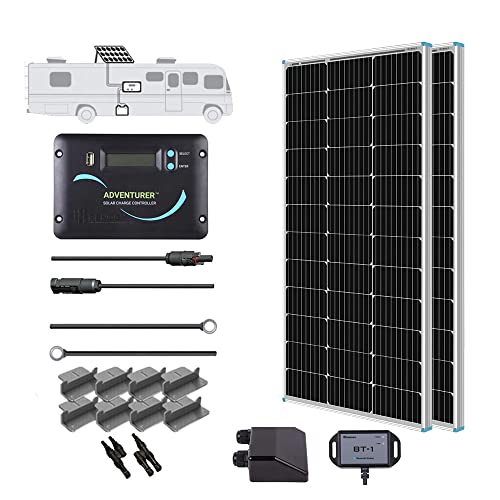
Renogy 200W 12V N-Type RV Solar Panel Kit with Adventurer 30A Controller

30W12V Solar Battery Charger Battery Maintainer + MPPT Controller

ECO-WORTHY 400 Watt 12 Volt Premium Solar Panel Kit

ECO-WORTHY 1200W 24V 5.52KWH Lithium Battery Solar System Off Grid

ECO-Worthy 7.168KWH 800W Solar Panel Kit for RV Off Grid Complete System

Renogy 400W 12V RV Solar Panel Kit
More Details On Our Top Picks
The 400-watt layout gives you room for real RV electrical use, not just light charging duty. The MPPT controller, meaning maximum power point tracking, helps the system pull useful output as sun conditions change, which matters on travel days with partial shade or uneven roof angles.
Compared with the smaller Renogy 200W kit, this setup suits longer stays and heavier daily loads. The trade-off is simple: more panels, more roof space, and more planning around mounting, wiring, and cable routing.
Strong Points
- Four 100W panels spread output across a practical roof footprint.
- The 40A MPPT controller fits higher-demand 12V systems better than basic charge hardware.
- The Bluetooth module helps you check system status from inside the rig, which is useful in bad weather or tight parking spots.
- The included brackets, fuse, adaptor kit, and tray cables reduce parts hunting during install.
Things To Consider
- Four panels take more installation time than a compact starter kit.
- Roof layout matters, especially on rigs with vents, AC units, or skylights.
- Cleaning and wire management need a little more attention because there are more components up top.
Core Details
Who It Suits Best
You get the most from this kit if your RV stays parked for long stretches and your daily power use goes beyond light device charging.
A Better Fit Elsewhere
Renogy 200W 12V N-Type RV Solar Panel Kit with Adventurer 30A Controller suits smaller rigs and lighter electrical needs more cleanly.
This 200W kit takes a more restrained approach than the Renogy 400W setup above, and that makes sense for smaller roof footprints. The Adventurer 30A controller is an LCD PWM unit, meaning pulse-width modulation, a simpler charging method that works well for modest systems.
For weekend trips, backup charging, or a trailer that only carries light loads, the scale is easier to live with. The trade-off shows up when you start asking it to support bigger battery banks or heavier appliance use, because the output ceiling is lower.
What We Like
- Two-panel size keeps the layout easier to place around roof hardware.
- The included mounting brackets simplify the install path for RV, trailer, or boat use.
- The LCD controller gives you clear on-device feedback without extra gadgets.
- Smaller size suits owners who want solar support without a large rooftop footprint.
Points To Note
- Lower output means it fits lighter electrical loads best.
- A PWM controller is straightforward, though less adaptable than the MPPT units used on the 400W picks.
- Longer stays with larger battery storage can outgrow this kit quickly.
Feature Snapshot
Who Will Love This
You should look here if your RV is compact, your electrical demand is modest, and you want a cleaner install than a loose parts mix.
Look Elsewhere When
Renogy 400W 12V Premium Solar Kit makes more sense for travelers who need stronger charging capacity and a more expansion-ready layout.
This SOLPERK kit sits in a different lane from the rooftop systems above, because its job is battery maintenance rather than broad RV power generation. The 30W panel and MPPT controller make sense for a parked car, boat, motorcycle, or RV that needs steady upkeep instead of high daily output.
That narrow focus is the point, and it makes the kit easy to understand. The trade-off is obvious: you are not getting a travel-day power plant, just a small charging setup that suits standby use and storage periods.
Highlights
- Small panel size is easy to place on compact storage areas or vehicle surfaces.
- The waterproof design suits exposed mounting better than an indoor-only charger.
- The adjustable mounting bracket adds placement flexibility for different vehicle angles.
- MPPT control helps it make better use of limited sunlight than a very basic trickle setup.
Softer Spots
- It is a maintainer, not a high-output RV power solution.
- Roofing or mounting still needs care so the panel stays positioned correctly over time.
- Best results come from realistic expectations, especially on vehicles with larger battery demands.
At A Glance
Built With In Mind
You get the most value from this kit if your vehicle spends long stretches idle and you want battery upkeep without a bulky solar array.
Where A Sibling Pick Shines
Renogy 200W 12V N-Type RV Solar Panel Kit with Adventurer 30A Controller suits travelers who need actual roof-mounted charging, not just maintenance support.
This ECO-WORTHY kit lines up closely with the Renogy 400W package, so the real difference comes down to how you value the included pieces and layout. You get four 100W panels, a 40A MPPT controller, Bluetooth, and mounting brackets, which makes it feel complete for an off-grid RV, camper, or boat build.
For someone building a mixed-use rig, the Bluetooth link is the convenience piece that stands out. The trade-off is the same as any four-panel system, because installation takes room, planning, and a tidy cable path to keep the roof usable.
Upsides
- Four-panel layout supports broader daytime collection than a small starter kit.
- Bluetooth monitoring is handy for checking system behavior from inside the vehicle.
- The 40A MPPT controller suits a serious 12V off-grid setup.
- Included brackets make the kit more turnkey for RV or camper installs.
Areas To Watch
- Roof planning matters because four panels demand usable mounting space.
- More parts mean more chances for loose wiring if installation is rushed.
- The package is strong on hardware, but your final result still depends on battery pairing and load size.
Details At A Glance
The Right Fit
You should lean toward this kit if you want a well-stocked mid-size system and like having Bluetooth monitoring built in.
Another Choice May Suit
Renogy 400W 12V Premium Solar Kit is a cleaner match for anyone who wants a similar output level with a Renogy-branded layout.
This is the heavyweight setup in the group, built around 24V architecture, six 195W panels, two 12.8V 280Ah lithium batteries, a 60A MPPT controller, and a 3000W pure sine wave inverter. Pure sine wave means the inverter outputs a waveform suited to sensitive electronics, which matters in a cabin or RV packed with mixed devices.
Compared with the 400W kits, this one serves a different kind of rig entirely. It makes sense for long off-grid stretches, larger appliance demands, or a fixed base where you want battery capacity to do real work, though the footprint and install effort rise with it.
Best Bits
- The battery bank is sized for extended use, not just short sessions.
- The 3000W inverter broadens what you can power inside the rig.
- The 24V design reduces strain compared with smaller 12V-only setups in larger systems.
- The included panel count supports stronger daily charging potential.
Small Caveats
- The package takes planning, space, and a serious installation mindset.
- It is more system than many casual RV owners need.
- Battery placement and cable management matter a great deal with a setup this large.
Core Details
Whose Shelf It Belongs On
You should look here if your RV life leans toward long stays, heavy loads, or a full off-grid build with serious battery storage.
Swap It Out When
ECO-WORTHY 7.168KWH 800W Solar Panel Kit for RV Off Grid Complete System fits travelers who want a large package with a smaller step up in scale.
This ECO-Worthy system sits between the 400W kits and the bigger 1200W package, and that middle ground is its appeal. You get four 195W panels, two 12.8V 280Ah lithium batteries, a 60A MPPT controller with Bluetooth, and a 3000W UPS inverter charger, where UPS means uninterruptible power supply for switching support.
That mix makes sense for RV owners who want a large reserve without jumping all the way to the most substantial build in the group. The trade-off is still scale, because battery weight, mounting space, and wiring work all climb with the system size.
Reasons To Buy
- The lithium battery bank gives the setup real staying power for multi-day use.
- The 3000W inverter charger helps cover more cabin loads inside the RV.
- Bluetooth monitoring adds useful visibility for daily management.
- The 800W array is a serious step up from the mid-size 400W kits.
Honest Caveats
- The system is substantial, so storage and installation deserve careful planning.
- It may be more capacity than part-time campers need.
- Keeping the wiring tidy matters because the package carries many connected parts.
Technical Sheet
Best Suited To
You should consider this system for extended travel, heavy cabin loads, and RVs that need a strong battery reserve without the largest footprint in the roundup.
A Better Fit Elsewhere
[Ultra] ECO-WORTHY 1200W 24V 5.52KWH Lithium Battery Solar System Off Grid suits owners who want a more aggressive build with six panels and a bigger inverter path.
This Renogy kit looks a lot like the first 400W pick, but the controller and accessory mix point it toward a very practical install. You get four monocrystalline panels, an Adventurer 30A LCD PWM controller, Bluetooth, mounting brackets, Y-connectors, and cables, so the package feels ready for a mid-size RV roof.
Compared with the ECO-WORTHY 400W setup, this one is easier to view as a steady, everyday choice for owners who want a known layout and straightforward parts list. The honest read is that a PWM controller makes it a touch less flexible than an MPPT-based 400W system, but the trade-off is a simpler package.
Positives
- The four 100W panels offer a familiar, manageable roof layout.
- Bluetooth adds convenient monitoring for campsite or driveway use.
- The included Y-connectors and cables help complete the wiring path.
- The controller display gives you visible system feedback without extra accessories.
Minor Gripes
- The PWM controller is simpler than the MPPT controllers found on the stronger 400W options.
- Four panels still require sensible roof planning and installation time.
- Owners with larger battery banks may outgrow the setup.
Feature Rundown
Who Should Grab It
You should look here if you want a practical 400W roof kit for regular RV use and prefer a proven, familiar component mix.
Reach For A Different Pick When
Renogy 400W 12V Premium Solar Kit is the better match for shoppers who want a 40A MPPT controller instead of the PWM setup here.
How To Choose The Right Solar Systems For Rv
Match Panel Output To Your Daily Load
Your first decision is simple: match array size to what you actually run. A 30W maintainer works for standby batteries, 200W suits lighter travel use, and 400W or more starts making sense for fans, lighting, device charging, and modest appliance support.
Think in daily habits, not only in roof size. A couple of phones and a vent fan need far less than an inverter, a fridge, and evening lighting in a camp that stretches past a weekend.
Choose The Controller With The Job In Mind
MPPT controllers adjust charging to changing sunlight, which helps on mixed-weather travel days and roofs that rarely sit under perfect conditions. PWM controllers are simpler and can be a clean fit for smaller, lower-demand systems.
That trade-off matters more than many first-time installers expect. On a compact rig, PWM can be enough, while a bigger 400W array usually benefits from MPPT’s better control and monitoring.
Size The Battery Bank Around Stay Length
Battery capacity decides how long your system feels useful after sunset. A lithium bank paired with 800W or 1200W of panels supports longer stays and higher draw, while a maintainer or smaller kit only keeps the batteries topped up.
Look at how long you camp without hookups and how often you drive. That usually tells you more than marketing language ever will, and it helps you avoid paying for storage you will never use.
Count Roof Space, Weight, And Wiring Before You Commit
Four-panel kits are straightforward on spacious roofs, but vents, skylights, and AC units can crowd the layout fast. Larger systems also bring heavier components and more cable routing, so installation time rises with ambition.
A tidy roof is worth more than a crowded one that never gets cleaned well. For many RV owners, the better move is the system that fits cleanly and leaves room to service the rig later.
What To Weigh Before You Click On A Solar Kit
Wrong Turns To Avoid
Shoppers often overshoot on panel count and undershoot on battery size, then wonder why the system feels uneven. Another common miss is pairing a strong array with a controller that is too basic for the job.
Shortlist the loads first, then the battery, then the controller, then the panels. That order keeps you from buying a roof full of hardware that never works as a coherent system.
The Case For Spending Up
Higher-tier kits cost more because they usually include larger battery banks, stronger inverters, MPPT controllers, and more complete accessory sets. You are paying for capacity, charging flexibility, and fewer separate parts to source.
The upgrade makes sense for long stays, bigger rigs, and owners who want appliances to behave more like they do at home. For short trips or simple battery upkeep, the extra scale can be more than you need.
Frequently Asked Questions
How much solar does a typical RV need?
That depends on how much power you use at night and how long you stay off hookups. Small setups cover maintenance and light charging, while larger rigs usually benefit from 400W or more.
Is MPPT better than PWM for RV solar?
MPPT usually makes more sense for larger or more variable systems because it handles sunlight changes more intelligently. PWM can still work well for smaller, simpler setups with modest demand.
Do you need lithium batteries for RV solar?
You do not need them, but they pair well with bigger solar systems because they support longer usable capacity and lower weight than many legacy options. Smaller kits can still work with other battery types as long as the controller matches.
Can a solar maintainer power RV appliances?
No, a maintainer like the 30W SOLPERK kit is for battery upkeep, not running the cabin. It suits parked vehicles and standby storage far better than daily off-grid living.
What matters most for roof-mounted RV solar?
Roof space and component fit usually decide the success of the install. After that, controller type and battery size matter more than a glossy panel count alone.
Closing Thoughts
Your best match comes down to how you camp, not how big the box sounds. The 200W Renogy kit suits lighter rigs, the two 400W systems cover most mid-size RV needs, and the larger ECO-WORTHY packages make sense for long off-grid stays. For battery upkeep alone, the SOLPERK maintainer is the cleanest fit. Choose the setup that leaves room for your roof, your wiring, and the way you actually travel.
