

Solar setup on an RV only works well when the parts fit your travel style. A compact portable kit suits weekend stops and shaded camps, while a larger fixed system matters more for long stays, heavier loads, and more time off hookups. The seven picks below cover that spread without pretending every rig needs the same setup.
Quick Look At The Shortlist
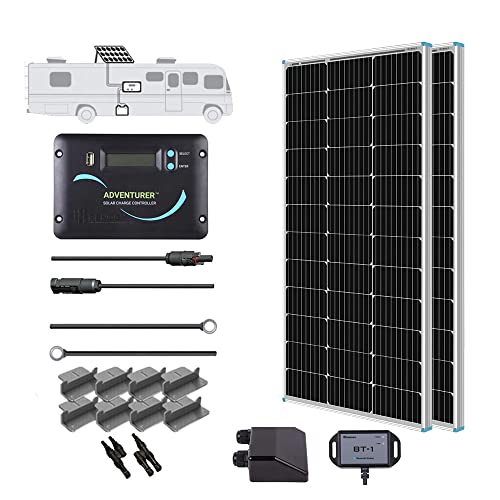
Renogy 200W 12V N-Type RV Solar Panel Kit

ECO-WORTHY 200 Watt 12V Complete Solar Panel Starter Kit

Go Power GP-PSK-130 130W Portable RV Solar Panel Kit

ECO-WORTHY 400 Watt 12 Volt Premium Solar Panel Kit

Go Power Overlander Charging Kit 200W

ECO-Worthy 7.168KWH 800W Solar Panel Kit

ExpertPower 2.5KWH 12V Solar Power Kit
More Details On Our Top Picks
Renogy keeps this kit focused on the essentials: two 100W panels, a 30A Adventurer controller, and mounting brackets for a fixed install. That mix suits an RV owner who wants a cleaner roof-mounted system rather than loose gear taking up cargo space, especially on repeat weekend trips.
The LCD on the PWM controller, pulse-width modulation, gives you a straightforward read on charge status without turning the setup into a project. The trade-off is simple, PWM is usually a more basic control approach than MPPT, so this set makes more sense for straightforward 12V needs than for a highly tuned power build.
What We Like
- Panel-and-controller pairing makes the install path easier to understand.
- Mounting brackets support a more permanent roof setup, which helps when storage space matters.
- The 30A controller gives a practical ceiling for small to mid-size 12V RV use.
- LCD readout helps you check charging status without extra gear.
Points To Note
- Fixed-mount gear asks for a more committed installation than a portable kit.
- PWM control is less flexible than MPPT in some larger or more complex systems.
- Roof placement can bring dirt and leaf cleanup into the routine.
Feature Snapshot
Who It Suits Best
You get the most from this kit when you want a roof-mounted starter setup for a small RV, camper, trailer, or boat with uncomplicated power needs.
Where A Sibling Pick Shines
Go Power Overlander Charging Kit 200W suits travelers who want a similar wattage but prefer an expandable path for future panel growth.
This ECO-WORTHY kit reads like a bundle for someone who wants more than panels alone. You get solar panels, a 30A charge controller, a 50Ah lithium battery, and a 600W inverter, so the parts line up for a more complete starter system right out of the box.
That broader package helps when you want to power basic devices without sourcing every component separately. The trade-off is physical complexity, because a battery and inverter add wiring, placement, and upkeep considerations that simpler panel-only kits like the Renogy package do not ask for.
Highlights
- The included battery and inverter reduce the number of separate parts you need to source.
- 50Ah lithium storage is useful for short off-grid stays and evening loads.
- The 600W inverter adds AC output for small household-style devices.
- Good fit for RV owners setting up a more complete starter stack.
Minor Gripes
- More components mean more space planning inside a compact rig.
- Lithium battery placement and wiring usually deserve a neat, protected install.
- The bundle approach can feel bulky compared with a portable panel set.
Technical Sheet
Who Should Grab It
You’re a strong fit for this bundle when you want a self-contained RV starter system and don’t mind handling a more involved install.
Swap It Out When
Go Power GP-PSK-130 works better for travelers who want a lighter portable setup instead of a fixed bundle with battery storage.
Go Power takes a different route from the roof-mounted kits above, because this one folds and moves with you. Adjustable legs help you angle the panels, which matters in campsites where sun exposure changes through the day or parking placement isn’t ideal.
The 10A controller, battery clamps, and nylon case make it a practical grab-and-go option for dry camping, boat use, or a backup setup. The honest read is that portability is the advantage and output ceiling is the compromise, so this suits lighter power routines more than a heavy load profile.
Positives
- Folding format stores neatly in a cabinet or gear bay.
- Adjustable legs help you set a better sun angle at camp.
- The included case makes transport cleaner and less awkward.
- Battery clamps simplify temporary hookups for shorter stays.
Softer Spots
- Portable panels need to be set out and packed away each time.
- 10A capacity suits lighter charging routines more than demanding rigs.
- The carry case adds convenience, but also another item to store.
Core Details
Made For
You get the best fit from this kit when your RV routine includes moving camp often, doing dry camping, or wanting a backup panel you can position by hand.
Another Choice May Suit
Renogy 200W 12V N-Type RV Solar Panel Kit suits owners who want a fixed roof setup instead of a fold-out portable panel.
This ECO-WORTHY kit sits at a different tier than the 200W options, because you’re moving into four 100W panels, a 40A MPPT controller, Bluetooth control, and mounting Z brackets. MPPT means maximum power point tracking, a controller style that adjusts charging more intelligently than a simple PWM unit, and that matters once your system needs more careful energy handling.
Bluetooth adds convenient monitoring from a phone, which is handy in a larger RV where checking the controller by hand gets old fast. The trade-off is installation scale, since a 400W layout brings more roof space, more planning, and more time spent on cable routing and mounting.
Best Bits
- 400W output gives you far more headroom for active travel days.
- MPPT control helps make better use of changing sun conditions.
- Bluetooth monitoring is useful for keeping tabs without opening panels or cabinets.
- Z brackets support a firmer roof installation for long-term use.
- Good match for larger battery banks and more frequent off-grid stays.
Room For Improvement
- More panels mean more roof space and a more involved setup.
- It’s better suited to committed installs than quick weekend use.
- Cable management matters more as the array size grows.
Details At A Glance
The Right Fit
You’re in the sweet spot for this kit when your RV spends real time away from hookups and you want enough array size to support a more active electrical routine.
Look Elsewhere When
Go Power GP-PSK-130 is the better match for travelers who want a portable panel set they can move between campsites.
Go Power gives this 200W kit a clear advantage for future growth, because it’s expandable to 600W and includes a 30A Bluetooth PWM controller plus two 25-foot solar output cables. That cable length helps in RV layouts where the controller and panel locations are not sitting right next to each other.
Compared with the Renogy 200W kit, this one feels more ready for gradual expansion rather than a simple fixed install. The trade-off is that expansion-minded gear usually asks you to think ahead about roof space, cable routing, and how much extra panel load your rig can actually support.
Reasons To Buy
- Expandable design gives you room to grow beyond the base array.
- Bluetooth controller monitoring is handy for quick status checks.
- Two 25-foot output cables help with flexible placement.
- 200W base output works for moderate RV charging needs.
Small Caveats
- The upgrade path only helps if your roof and battery setup can support it.
- PWM control is practical, though less advanced than MPPT.
- Long cables simplify layout, but they also add more routing to manage.
Feature Card
Best Suited To
This fits RV owners who want to start at 200W now and leave room to build a larger roof array later.
Where A Sibling Pick Shines
Renogy 200W 12V N-Type RV Solar Panel Kit suits you better when you want a simpler fixed kit with less emphasis on future expansion.
This is the large-system option in the group, and the parts list makes that obvious: 4 panels at 195W each, a 3,000W UPS inverter charger, two 12.8V 280Ah lithium batteries, and a 60A MPPT controller with Bluetooth. In plain terms, it’s built for an RV that treats solar as the main power backbone rather than a small assist.
The upside is obvious for long stays or power-hungry setups, though the scale means this is not a casual add-on. A system like this needs space, planning, and a rig that can take advantage of the battery bank, otherwise you’re carrying a lot more hardware than your trips require.
Plus Points
- Large battery capacity supports extended off-grid use.
- 800W array size gives you substantial charging headroom.
- 3,000W inverter charger covers a serious load profile.
- 60A MPPT controller suits a more advanced build.
- Bluetooth monitoring helps you track a bigger system more easily.
Areas To Watch
- The system size is far beyond what a small camper usually needs.
- Installation and storage planning matter more at this scale.
- More components mean more maintenance attention over time.
Core Details
Whose Shelf It Belongs On
You’re the right fit here when your RV life leans into extended dry camping, larger appliances, or a full off-grid layout.
Where Another Pick Fits Better
ECO-WORTHY 400 Watt 12 Volt Premium Solar Panel Kit suits travelers who want a smaller and easier roof setup with less hardware.
ExpertPower lands in the middle ground between the 200W kits and the 800W system, and that balance is the point. You get 400W of mono solar panels, a 30A MPPT controller, a 3KW pure sine wave inverter charger, and a 12V 100Ah LiFePO4 battery, so the package is built for a broader RV electrical routine.
Pure sine wave means the inverter outputs a smoother AC waveform, which is a good match for electronics that prefer cleaner power. The trade-off is that this is a more serious system than a weekend carry kit, so it suits owners who want solid capacity without jumping all the way to the largest setup in the list.
Standout Traits
- The LiFePO4 battery format is a strong fit for regular RV use.
- 400W solar output gives you room for more active power habits.
- 3KW pure sine inverter charger supports a wider range of devices.
- MPPT charging helps the system make better use of available sunlight.
- Good balance of capacity, control, and storage for many rigs.
Honest Caveats
- More capability means more install planning than a basic panel kit.
- The included battery and inverter make the system heavier to place.
- It’s a stronger fit for serious electrical needs than casual camping.
Key Specs
Perfect Match For
This fits RV owners who want a serious all-in-one power package without moving into the largest, most hardware-heavy system here.
Reach For A Different Pick When
Go Power GP-PSK-130 suits you better when portability matters more than a full fixed power build.
How To Choose The Right Solar Powers For Rv
Start With Your Travel Pattern
Daily movers usually benefit from portable panels or compact kits that stow cleanly, like the Go Power GP-PSK-130. Long-stay travelers get more from roof-mounted systems because setup happens once and the array works while you focus on camp life.
Panel location matters as much as wattage. A shaded site can make a portable, angle-adjustable kit useful, while a clear roof gives fixed panels a steadier chance to work without constant repositioning.
Match Controller Type To The Build
PWM controllers are straightforward and often sensible for smaller 12V systems. MPPT controllers track the panel’s optimal power point more intelligently, which helps larger arrays like the ECO-WORTHY 400W kit or the ExpertPower system.
That extra control usually costs more because it supports broader charging scenarios. For a modest starter RV, PWM is enough, but larger battery banks and heavier loads make MPPT the cleaner fit.
Think About Storage, Not Just Output
Solar panels alone do not tell the full story. A bundle with a lithium battery and inverter, such as the ECO-WORTHY 200W complete starter kit, gives you stored energy and AC output, which matters for evening use and small appliances.
By contrast, a panel-only kit keeps the install lighter and simpler. That can be the smarter move for compact rigs, especially when cabinet space and wall routing are already tight.
Size The System To The Way You Use Power
Small coffee makers, phone charging, and modest lighting fit within lower-output kits. Air conditioning, cooking appliances, and long off-grid stays push you toward larger arrays, bigger batteries, and stronger inverter capacity.
That’s where the 400W and 800W options start to make sense. You’re paying for more headroom, more monitoring, and more flexibility, not just for a higher number on the box.
What To Weigh Before You Move Up
Mistakes Worth Dodging
One common mistake is chasing wattage without checking roof room, battery size, or controller capacity. A 400W or 800W array only earns its place when the rest of the system can support it.
Another slip is buying a portable kit for a rig that rarely moves. You end up with good hardware that spends too much time packed away instead of working.
The Upgrade Payoff
Higher-tier systems cost more because they usually add battery storage, MPPT control, stronger inverters, and better monitoring. Those parts matter most when you want to stay off hookups for longer stretches or run more demanding gear.
That upgrade makes the most sense for larger trailers, full-time RV setups, and camps where the electrical load doesn’t stay small. For lighter weekend travel, a simpler 200W kit often keeps life easier.
Frequently Asked Questions
What Size Solar Setup Works For A Small RV?
A 200W kit often covers light charging and basic battery upkeep. A portable layout helps more when your parking spot changes often.
Why Do Some Kits Include A Battery And Inverter?
A battery stores energy for use after the sun drops. An inverter changes stored DC power into AC power for devices that need it.
Is MPPT Better Than PWM For RV Use?
MPPT usually suits larger or more complex systems because it handles charging more efficiently. PWM still makes sense for smaller, simpler setups.
Do Portable Panels Make Sense For Long Trips?
They do when you want flexible placement and don’t mind setting them out each day. Roof-mounted systems make more sense when you want less daily handling.
How Much Power Does A Larger RV System Need?
That depends on your appliance load, battery bank, and how long you stay off hookups. Heavy use tends to point toward 400W and above.
Closing Thoughts
The right solar setup for your RV comes down to how you travel, how much storage you want, and how much wiring you’re willing to handle. A simple 200W kit keeps things clean and manageable, while larger bundles earn their space when your trips stretch longer and your electrical demands rise. The list above gives you a sensible spread, from portable convenience to serious off-grid capacity. Pick the system that fits your rig first, then let the power level follow.
