

Solar setups for homes are a different purchase from a camping panel or a phone charger. You’re balancing roof space, battery capacity, controller type, and how much daily load you actually want to cover. The right kit keeps lights, routers, fans, and small appliances running without turning the install into a maze of mismatched parts.
This roundup focuses on complete kits and high-utility systems with clear use-case fit. You’ll see compact starter options, portable panels for expansion, and larger all-in-one packages for backup-minded homes, RVs, and off-grid spaces.
Quick Shortlist For Faster Comparison

Renogy 400W 12V Premium Solar Power System

EBL 200W Portable Solar Panel

Jackery HomePower 3600 Plus with 2x 200W Panels

ECO-Worthy 1.6KWH Complete Solar Panel Kit 400W 12V

ECO-WORTHY 1200W 24V 5.52KWH Lithium Battery Solar System

ECO-Worthy 7.168KWH 800W Solar Panel Kit for RV Off Grid
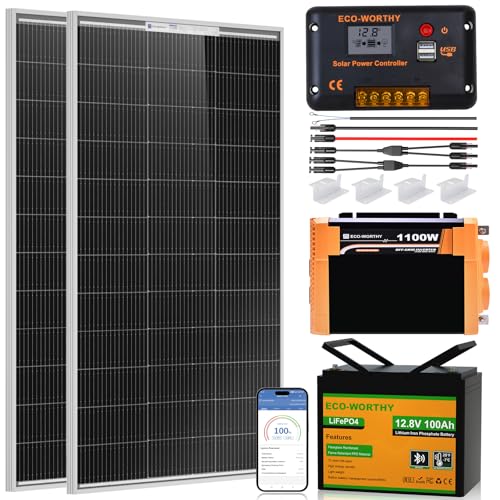
ECO-WORTHY 200W 12V Complete Solar Panel Starter Kit
More Details On Our Top Picks
Renogy keeps this kit grounded in the parts that matter most: four 100W panels, a 40A MPPT controller, and the mounting and cable hardware needed to tie it together. MPPT means maximum power point tracking, which helps the controller pull usable output more efficiently as sunlight changes through the day.
For a garage, shed, or modest backup setup, that combination makes planning easier because you’re not piecing together a system from scratch. The trade-off is scale, since 400W suits light home loads and weekend use better than whole-house coverage.
What We Like
- Matched components reduce the guesswork that often slows down first installs.
- The 12V layout fits many small backup and cabin-style builds.
- Bluetooth module support helps you keep an eye on controller activity without digging into the hardware.
- Z brackets, fuse, adaptor kit, and tray cables make the kit feel more complete than a bare panel bundle.
Points To Note
- 400W is better suited to lighter electrical demand than to broad household coverage.
- Panel mounting still takes planning, especially on tight roof or wall spaces.
- Owners usually need to think through battery pairing separately, since the kit centers on generation and control.
Feature Snapshot
Who It Suits Best
Homeowners building a small backup setup for essentials, or anyone adding solar to a shed or cabin, will get the most from this layout.
A Better Fit Elsewhere
Jackery HomePower 3600 Plus with 2x 200W Panels suits you better for larger household backup, since it brings a far bigger storage and output profile.
EBL’s foldable panel reads like a utility piece, not a fixed rooftop part, which matters for anyone who moves gear between a house, an RV, and a campsite. The panel format also keeps storage simple, since you can tuck it away without dedicating permanent wall or roof space.
Compared with the Renogy kit, this one is less about building a permanent electrical base and more about feeding a power station. That makes it a smarter match for commuters, travelers, and emergency kits that need flexibility over hard installation.
Highlights
- Foldable construction makes transport and storage far easier than rigid-panel kits.
- 200W output can meaningfully extend a compatible power station’s runtime for small devices.
- The portable format fits temporary setups on patios, in trucks, or beside an RV.
- Simple deployment suits beginners who want solar without roof mounting.
Room For Improvement
- You still need a compatible power station or battery system for practical use.
- Portable panels need more handling, so the fabric and hinge areas deserve careful storage.
- It’s less suitable for a fixed home array than the hard-mounted Renogy or ECO-Worthy kits.
Quick Facts
Who Will Love This
Travel-heavy households and anyone pairing panels with a portable power station will appreciate the lighter, movable format.
Where A Sibling Pick Shines
Renogy 400W 12V Premium Solar Power System suits you better for a fixed installation that aims at home backup rather than portable charging.
This package shifts from panels-as-components to a full backup center, with a 3600W AC output and 3584Wh LFP storage built in. LFP means lithium iron phosphate, a battery chemistry known for stable daily-cycle use, and the expandable design gives the system room to grow over time.
That scale puts it in a different lane from the Renogy and EBL picks, since it aims at serious home outage support rather than just charging small devices. In a busy kitchen or for work-from-home gear, the higher output ceiling makes the setup feel far less cramped.
Strong Points
- 3600W AC output supports a much wider spread of household essentials.
- 3584Wh storage gives you meaningful reserve capacity for outages.
- Expandable up to 21kWh offers a path for future growth.
- Two 200W panels are included, which helps simplify the first step into a larger system.
- LFP battery chemistry suits repeated charging cycles well in a home-backup role.
Softer Spots
- The larger footprint makes it less casual than the portable EBL panel.
- High-capacity systems usually demand more space and more planning for placement.
- You may find the scale unnecessary for light weekend backup needs.
Technical Sheet
Best Suited To
Households that want a more serious backup hub for outages, remote work, or RV use will get the most out of this package.
Look Elsewhere When
EBL 200W Portable Solar Panel suits you better for travel-first use, because it’s easier to pack and move than a high-capacity power station.
This ECO-Worthy kit stands out because it bundles generation, storage, conversion, and control in one package. You get four 100W panels, a 40A MPPT controller, two 12V 100Ah lithium batteries, a 2000W inverter, and Bluetooth support, which makes it much more complete than the Renogy system.
For an off-grid cabin, RV base, or backup shed, that arrangement cuts down on compatibility guesswork. The honest read is that the included batteries and inverter make it feel more turnkey, but they also add weight and installation planning.
Upsides
- Battery storage is included, so you’re closer to a functioning system out of the box.
- The 2000W inverter broadens the range of devices you can run through the setup.
- Bluetooth support helps with day-to-day monitoring from a nearby device.
- Four 100W panels provide a familiar 400W solar base for modest loads.
Things To Consider
- The extra components increase installation complexity compared with panel-only kits.
- Battery and inverter placement need dry, organized storage space.
- It makes more sense for dedicated backup use than for simple portable charging.
Core Details
Whose Shelf It Belongs On
Homeowners setting up a compact off-grid system with batteries already in the plan will get the most value from this kit.
Another Choice May Suit
Jackery HomePower 3600 Plus with 2x 200W Panels is the better fit for you when higher household output matters more than a smaller all-in-one package.
This is the step-up kit for people who want more panel area and more battery reserve than the 400W systems above. Six 195W panels, two 12.8V 280Ah lithium batteries, a 60A MPPT controller, and a 3000W pure sine wave inverter give it a much more serious profile.
Pure sine wave power matters because it delivers cleaner AC output for sensitive electronics and many household appliances. For a small home, cabin, or workshop, the larger capacity makes the setup feel less like an emergency patch and more like a planned energy base.
Reasons To Buy
- 1200W of solar input gives you more collection area than the smaller 400W kits.
- Two 280Ah batteries add substantial stored energy for evening and outage use.
- The 3000W pure sine inverter is a stronger fit for varied AC loads.
- 24V architecture can suit larger builds better than a compact 12V starter layout.
Small Caveats
- The larger component count means more installation work and more space to manage.
- For a tiny shed or light-duty backup plan, the system may be more capacity than you need.
- Battery storage takes careful placement, especially in cramped utility rooms.
Details At A Glance
The Right Fit
Homes, cabins, and workshop spaces that want a larger off-grid backbone will make the most of this kit.
Where A Sibling Pick Shines
ECO-Worthy 200W 12V Complete Solar Panel Starter Kit suits a smaller starter build, especially where space and budget planning stay modest.
This system leans into backup continuity, not just raw panel count. Four 195W panels, two 12.8V 280Ah batteries, a 3000W UPS inverter charger, and a 60A MPPT controller with Bluetooth create a package that feels aimed at long-running support.
The UPS role is the key difference from the smaller ECO-Worthy kit above, since it can help keep power transitions smoother for gear that does not appreciate interruptions. For RV owners or homes with frequent outage concern, that extra infrastructure is worth a close look.
Best Bits
- UPS inverter charging adds a more continuous backup posture.
- 7.168kWh storage is substantial for a kit in this category.
- Bluetooth support makes monitoring easier from nearby devices.
- The 3000W inverter gives the system room for a broader set of loads.
- Battery and inverter pairing is already part of the package.
Areas To Watch
- This is a large system, so placement and cable routing take real planning.
- The battery bank will need protected indoor or sheltered storage.
- It makes the most sense for users who can take advantage of the UPS feature.
Core Details
Who Should Grab It
RV owners and households that want longer-duration backup with UPS-style continuity will benefit most from this package.
Not Your Match When
EBL 200W Portable Solar Panel is the better route for you when portability matters more than a hard-installed, high-capacity system.
This starter kit keeps the scope modest, which is often the right move for first-time off-grid projects. With two 100W panels, a 30A charge controller, a 100Ah lithium battery, and an 1100W solar inverter, it gives you a workable entry point without the bulk of the larger ECO-Worthy systems.
That smaller scale makes it easier to place in a shed, RV, or compact backup corner. The trade-off is obvious, though, because it’s built for light-duty energy use rather than broader household loads.
Plus Points
- Starter-friendly part count keeps the system easier to understand.
- The included battery and inverter reduce the need to source major pieces separately.
- 100Ah lithium storage is useful for basic backup or mobile use.
- Its 12V layout fits simple off-grid projects well.
Minor Gripes
- The 200W panel total is modest for anyone trying to support larger home loads.
- Light-duty sizing means you’ll want realistic expectations about runtime.
- Storage and cable organization still matter, even in a compact kit.
Feature Rundown
Built With In Mind
First-time off-grid users and small-RV setups are the strongest match for this starter kit.
Swap It Out When
ECO-Worthy 1.6KWH Complete Solar Panel Kit 400W 12V is the better fit when you want more panel input and a fuller backup posture.
How To Choose The Right Solar Power Kits For Homes
Match The Kit To Your Load
Start with the devices you actually want to support, not the biggest number in the listing. A 200W portable panel can extend a power station nicely, while a 400W home kit makes more sense for smaller backup loads, and the 3,584Wh or 7.168kWh systems are aimed at deeper reserve use. The inverter matters too, because a pure sine wave inverter produces a smoother AC output that suits more household electronics.
Decide Between Portable And Fixed
Portable panels help when you need flexibility, storage ease, or RV use. Fixed kits suit rooftops, sheds, cabins, and backup spaces where the hardware stays in place and the wiring can be organized once. The trade-off is convenience versus permanence, and that choice shapes almost everything else.
Check Battery, Controller, And Voltage Together
MPPT controllers are the smarter fit for many home kits because they track usable power more efficiently as conditions shift. Battery chemistry and system voltage matter just as much, since 12V kits stay approachable for small builds while 24V systems tend to fit larger setups better. Pair those pieces poorly and you end up with extra cost, not extra usefulness.
Think About Install Space And Maintenance
Panels need room, batteries need protected placement, and cable routing needs to be clean enough for routine checking. Smaller kits are easier to store and move, but they ask less of a structure for a reason. Larger systems can carry more of your daily load, yet they also ask for more planning before anything gets mounted.
Things Worth Knowing First
Where Shoppers Go Wrong
A common mistake is buying panel wattage without thinking about storage or inversion. Another is choosing a fixed kit for a temporary need, or a portable panel for a setup that really belongs on a wall or roof. A solar package should match your space, your routine, and your backup goal.
The Upgrade Payoff
Higher-tier kits cost more because you’re paying for more panels, larger battery banks, stronger inverters, and better charge control. In this category, that extra spending makes sense when you want longer runtime, smoother backup behavior, or fewer add-ons to source later. It doesn’t make sense for light use around a shed or a weekend RV, where a simpler system stays easier to live with.
Frequently Asked Questions
What size solar kit works for a small home backup setup?
A 400W class kit is a practical starting point for modest essentials. Larger battery-backed systems make sense when you want longer runtime or more appliance coverage.
Is a portable solar panel enough for home use?
A portable panel works well as an add-on to a power station or as a flexible emergency piece. It does not replace a full fixed system for broader household needs.
What does MPPT mean?
MPPT stands for maximum power point tracking. It helps the controller pull more usable energy from the panels as sunlight conditions change.
Why does battery chemistry matter?
Battery chemistry affects how the storage side fits daily cycling and long-term backup use. LFP is common in larger home systems because it suits repeated charge and discharge patterns well.
Should you choose 12V or 24V?
A 12V kit usually fits smaller, simpler installs. A 24V setup is often a better fit for larger systems that need more room to grow.
Final Thoughts
For home backup, the right solar kit is the one that matches your space, your load, and how hands-on you want the install to be. The Renogy kit keeps things tidy for smaller setups, while the Jackery and ECO-Worthy systems move into much larger backup territory. Portable choices like the EBL panel make sense for mobility, not permanence. Pick the scale you can actually support, and the system is far easier to live with day after day.
