

Camping power gets a lot easier once you match the station to your trip style. A compact 146Wh unit suits phone charging and short weekends, while larger LiFePO4 packs can keep lights, a cooler, or a CPAP-adjacent setup running longer at camp. The right choice depends on carry weight, AC output, solar input, and how much space you have in the vehicle. This roundup keeps the focus on practical fit, not flashy extras.
Quick Look At Our Top Picks

Jackery Explorer 2000 v2 Portable Power Station 2042Wh 2200W AC Output

Portable Power Station with 40W Solar Panel 100W Solar Powered Generator

Anker SOLIX C300 Portable Power Station with 60W Solar Panel 288Wh 300W

Anker SOLIX C200 DC Power Bank Station and 60W Solar Panel 192Wh Portable Power Station
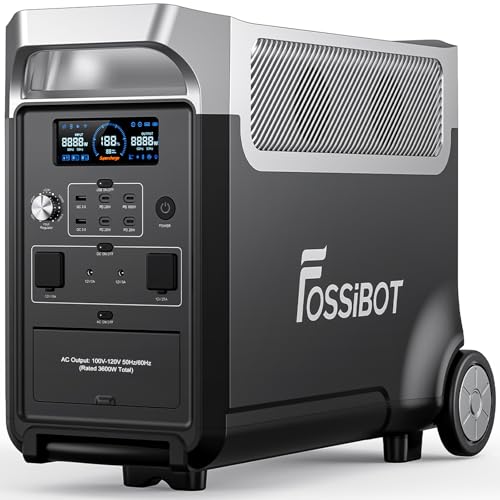
FOSSiBOT F3600 Portable Power Station 5x120V AC Output 3600W 3840Wh LiFePO4 Battery

EBL 500W Portable Power Station with 100W Portable Solar Panel 20V Outdoor

Portable Solar Generator 300W Portable Power Station with 60W Solar Panel 110V Pure Sine Wave 280Wh Battery

Solar Powered Generator 100W Portable Power Station with Solar Panels 40W 146Wh
More Details On Our Top Picks
For longer camping stays, this Jackery lands in the category of “set it down and stop worrying about the numbers for a while.” The 2042Wh battery is the kind of capacity that suits multi-device use, and the 2200W AC output gives you room for more demanding gear than the smaller units below it.
The LiFePO4 battery chemistry, a lithium iron phosphate pack, matters because it usually handles repeated charging cycles better than basic lithium-ion designs. The trade-off is size, and you feel that in the footprint and carry burden, so this fits vehicle-based camping far better than backpacking. It’s a strong match for your base camp, especially when solar charging is part of the plan and you want less fuss around power management.
Strong Points
- Large 2042Wh capacity supports longer stretches away from grid power.
- 2200W AC output opens the door to more demanding camp appliances.
- USB-C PD 100W helps you top off modern laptops and phones quickly.
- LiFePO4 battery chemistry is a reassuring fit for repeat camping use.
- Works well as a vehicle-camp hub, especially for families.
Points To Note
- The larger body takes more room in the car or storage bin.
- It makes more sense for base camp than for carry-everywhere travel.
- Solar panel support is optional, so panel planning stays on you.
Feature Snapshot
Who It Suits Best
Vehicle campers, long-stay base camps, and families who want fewer charging compromises will get the most from this unit.
A Better Fit Elsewhere
The Anker SOLIX F3600 suits RV owners and off-grid setups better because its much larger power reserve and expansion path make sense for heavier household-style loads.
After the Jackery’s bigger, heavier profile, this ZeroKor kit feels much more stripped back and easier to live with for short trips. The included 40W solar panel gives you a simple entry point, and the 146Wh battery keeps the setup compact for phones, lights, and small electronics.
You’ll notice the difference most on weekend camping or a power outage in a small space, where carrying less matters more than chasing long runtime. The trade-off is plain, though, because 146Wh suits light duty rather than whole-camp coverage. For a first solar power setup, that restraint can actually make life easier.
Highlights
- 146Wh capacity keeps the unit easy to pack and store.
- 40W solar panel gives you a ready-to-use starter kit.
- Portable AC outlet support broadens device compatibility.
- Fits short outings, dorm use, and basic emergency charging.
Small Caveats
- Lower capacity limits how many items you can run at once.
- The compact setup suits light loads more than appliance duty.
- Solar recharge speed depends on conditions and panel placement.
Core Details
Who Should Grab It
Weekend campers, beginners, and anyone who wants a small backup unit for phones and lights should feel comfortable here.
Where A Sibling Pick Shines
The Anker SOLIX C300 is a better fit for you if you want more capacity and faster charging without jumping all the way to a large station.
The C300 sits in a useful middle ground, which is exactly why so many camp setups gravitate toward this class. Its 288Wh battery gives you a lot more breathing room than the ZeroKor starter kit, while the 300W output keeps it in the lane of practical portable power rather than full appliance work.
Two-way fast charging is the real convenience piece here, because it helps the station refill and also charge connected devices efficiently. The LiFePO4 battery adds the same durability-minded chemistry you saw in the Jackery, but in a much more manageable size for tent camps, van days, and emergency shelves.
Upsides
- 288Wh capacity is a comfortable step up from entry-level units.
- 300W output suits phones, tablets, lights, and small electronics.
- Peak 600W headroom gives you a bit more flexibility.
- 140W two-way fast charging helps reduce downtime.
- Solar panel-ready design makes the kit easier to build around.
Areas To Watch
- It still sits below the larger stations for high-draw gear.
- Panel readiness means your charging setup can still grow in pieces.
- Anyone wanting whole-camp backup will outgrow it quickly.
Technical Sheet
Built With In Mind
You’ll get the most out of this station in a weekend camp, a van, or an emergency kit where portability still matters.
Look Elsewhere When
The Jackery Explorer 2000 v2 fits you better once your camp setup includes higher-draw gear or you want far more stored power.
The C200 leans into portability in a way the C300 does not, and that’s useful for camp days where you move gear often. Its 192Wh capacity sits above the smallest starter units, while the 200W output is a better fit for travel electronics than for anything heavy.
Because this is a DC power bank station, the setup makes more sense for direct-current gear such as phones, cameras, and small accessories. That narrower focus keeps it tidy and light, though the trade-off is obvious: you give up the broader AC flexibility that comes with larger stations. For short travel days, that’s a fair exchange.
Bright Spots
- 192Wh capacity gives you more room than tiny travel banks.
- DC-focused design suits direct-charge gear on the move.
- 60W solar panel helps keep the kit self-contained.
- LiFePO4 battery chemistry supports frequent, practical use.
Worth Noting
- 200W output limits the station to lighter gear.
- DC-first design narrows the range of devices it serves well.
- You may find the feature set too slim for group camps.
Details At A Glance
The Right Fit
You’ll appreciate this most on travel-heavy trips, short camps, or in a pack where every inch matters.
Swap It Out When
The Anker SOLIX C300 makes more sense for you if you want a more versatile station with a broader power ceiling.
The FOSSiBOT F3600 sits in a much larger power tier than the other entries, and that changes how you think about camp electricity. With 3840Wh on board and five 120V AC outlets, you’re looking at a station built for heavier loads, longer backup, and RV-style planning rather than casual weekends.
The expandable design matters because it lets the system grow toward 11520Wh, which is a serious step up for off-grid setups. The trade-off is clear: this is big, heavy, and more specialized, so it rewards space and planning more than spontaneity. For garage storage, motorhome use, or a semi-permanent camp base, it makes strong sense.
Reasons To Buy
- 3840Wh capacity gives you a very large energy reserve.
- 3600W output supports demanding equipment more comfortably.
- Five AC outlets help with multi-device setups.
- Expandable capacity adds room for future system growth.
- LiFePO4 battery chemistry suits repeated, high-use cycles.
Trade Offs
- Size and weight make it a storage-first rather than carry-first unit.
- It’s more station than travel gear, so portability takes a back seat.
- Most campers will only need this much power for bigger rigs.
Spec Overview
Who It Belongs On
You’ll like this most for RV life, off-grid cabins, or a large camp setup that stays in one place.
Reach For A Different Pick When
The Jackery Explorer 2000 v2 is easier to live with for vehicle campers who want serious capacity without moving into this size class.
This EBL kit lines up neatly with campers who want more breathing room than the smallest stations without jumping to a heavy rig. The 519.48Wh battery and 500W output put it in that useful middle band where phones, lights, fans, and small appliances can share space without forcing every decision.
The included 100W solar panel adds real utility for outdoor use, and the 20V solar input language suggests a setup meant to live with the bundle as a package. The catch is the usual one for midrange units, namely that you still need to stay realistic about load size. For van trips, fishing weekends, or a home backup shelf, that balance feels sensible.
Best Bits
- 519.48Wh capacity gives you a comfortable middle-ground reserve.
- 500W output handles more than basic phone-and-light duty.
- 100W solar panel keeps the kit closer to a complete setup.
- Works well for road trips and mixed indoor-outdoor use.
Honest Caveats
- It still sits below large-station territory for bigger appliances.
- The bundle needs sensible load planning for longer camp stays.
- Storage takes a bit more room than the tiny travel models.
Core Details
Made For
You’ll get the most from this on road trips, van weekends, and mixed-use backup where moderate capacity is enough.
Another Choice May Suit
The Anker SOLIX C300 suits you better if faster charging and a lighter body matter more than this kit’s extra battery reserve.
The orange ZeroKor setup is aimed at campers who want something easy to spot, easy to carry, and straightforward to understand. Its 280Wh battery sits close to the Anker SOLIX C300’s size class, while the 300W output and 110V pure sine wave AC give you a familiar portable power layout.
Pure sine wave output means the AC signal is smoother and closer to household power, which matters for sensitive electronics and some small appliances. That makes this station useful for van trips and tent camping where you want a simple AC outlet without lugging a much larger box. The trade-off is that this is still a modest-capacity unit, so it belongs in a lighter-duty role.
Positives
- 280Wh battery fits a practical travel-power middle ground.
- 300W output works for common camp electronics.
- 110V pure sine wave AC is a useful technical touch.
- 60W solar panel keeps the bundle camping-friendly.
Areas To Watch
- It is still a compact unit, not a heavy-load station.
- The orange finish may show dirt sooner on dusty trips.
- Longer outings call for careful power budgeting.
Feature Card
Perfect Match For
This suits van travelers, short camp weekends, and anyone who wants a compact AC-capable pack with a solar companion.
Where Another Pick Suits Better
The EBL 500W unit is the better fit for you if you want a larger reserve and a little more margin for mixed devices.
Apowking’s small solar generator keeps things simple, and that’s its main appeal. The 146Wh battery and 100W ceiling place it in the same compact class as the ZeroKor starter kit, but the port mix adds a little flexibility for basic home and campsite use.
You’re looking at a kit that makes the most sense for charging phones, tablets, small accessories, and a few essentials during a short trip or outage. The 40W solar panel rounds out the package without turning it into a heavy system. For solo campers or anyone building a backup drawer, that kind of restraint is often enough.
What We Like
- 146Wh capacity is easy to store and carry.
- 40W solar panel gives the bundle a basic charging path.
- AC, USB A, USB C, and DC outputs widen device support.
- Works well for light home backup and short outdoor use.
Minor Gripes
- It belongs to the light-duty end of the category.
- Small capacity means careful device planning matters.
- The compact build is a little less suitable for group camps.
Feature Rundown
Who Will Love This
You’ll appreciate this most for solo trips, small-space storage, or a compact emergency shelf.
A Better Fit Elsewhere
The Anker SOLIX C200 DC power station suits you better if you want a more refined travel-first setup with a bit more battery room.
How To Choose The Right Solar Powers For Camping
Match Capacity To The Way You Camp
Battery capacity, measured in watt-hours, tells you how much stored power the station carries. Smaller units in the 140Wh to 300Wh range suit phones, lights, cameras, and short weekend use, while larger packs around 2000Wh or more make sense for longer stays or family setups.
The honest read is simple: carrying extra capacity feels great until you have to move it from the trunk to the site. For tent camping and quick overnights, a lighter unit usually wins on convenience, while car camping gives you room to think bigger.
Check Output Before You Check Features
AC output, usually listed in watts, tells you what the inverter can deliver through the wall-style outlet. A pure sine wave inverter creates smoother AC power, which helps some sensitive electronics behave more predictably.
For most campers, output matters more than a long list of ports. A 300W unit is enough for small electronics and light gear, while 2000W-plus stations belong to camp kitchens, RV rigs, and more demanding setups.
Think About Charging Speed And Solar Input
Solar panel wattage shapes how fast the station can recover under good sun, and the panel is only part of the picture. Two-way fast charging helps too, because it can reduce downtime between uses.
Solar power works best as a routine, not a rescue plan. You’ll get more value from a system you can place well and recharge often than from a bigger station that sits half-charged in the gear pile.
Choose A Size That Fits Storage And Handling
Physical size matters as much as electrical capacity in a camping setup. A compact station slides into a daypack or side bin, while larger LiFePO4 units usually stay in the vehicle or at base camp.
That trade-off shows up fast on real trips, especially when your camp is a few walks away from the car. Pick the box you’ll actually move and use, not the one that only looks impressive on paper.
Things Worth Knowing First
Hidden Buying Traps
Many campers focus on battery size and forget to match the output to the devices they actually carry. That leads to a station that sounds powerful but still feels mismatched at camp.
Another common misstep is ignoring the solar panel and cable setup. A bundle with a modest panel can still be useful, but only when you’re comfortable with slower recovery and modest loads.
The Case For Spending Up
Higher-tier models cost more because they usually bring larger batteries, stronger AC output, LiFePO4 chemistry, and more outlets. Some also add expansion capacity, which matters once your camp gear starts acting more like household gear.
Paying up makes sense when you camp for multiple days, travel in an RV, or want one station to cover many devices without constant rationing. For short weekend trips, a simpler unit often gives you a cleaner fit.
Frequently Asked Questions
What size solar power station works for weekend camping?
A compact unit around 146Wh to 300Wh usually fits weekend camping well. That range handles phones, lights, and small electronics without taking over your cargo space.
Do LiFePO4 batteries matter for camping power stations?
LiFePO4 means lithium iron phosphate, a battery style known for favoring repeat use. That matters for camping because you’re more likely to charge and discharge the station often.
Is a solar panel necessary with a camping power station?
No, but it helps extend use on longer trips. A panel becomes much more useful once you stay off-grid long enough to recharge between devices.
What does pure sine wave AC mean?
Pure sine wave AC means the inverter produces a smoother output that resembles household power. That matters most for sensitive electronics and gear that prefers steadier input.
Should you choose a large station for every camping trip?
Not usually, because larger units bring more weight and bulk. A small or mid-size station often feels better for short trips, while large packs suit RV use or long base camps.
Closing Thoughts
The best solar power setup for camping depends on how you travel, not on how much capacity looks impressive on a page. A small 146Wh kit makes sense for short trips and light charging, while a larger LiFePO4 station suits longer stays, RV life, or family use. The sweet spot for many campers sits in the middle, where portability and runtime stay in balance. Choose the station that fits your gear, your storage space, and the way you actually spend nights outside.
