

RV travel gets easier once your power setup matches your routine, whether you’re parked for a weekend, boondocking for a stretch, or keeping a battery healthy in storage. The right kit can trim generator noise, support lights and small appliances, and take some pressure off campground hookups. This roundup focuses on full kits, portable foldable options, and one battery maintainer, so you can match the setup to your rig instead of overbuying. You’ll also see where each kit fits best, because a compact maintainer and a 400-watt roof bundle serve very different trips.
Quick Look At Our Top Picks

Renogy 400 Watt 12 Volt Premium 4 Pcs 100W Panel Kit
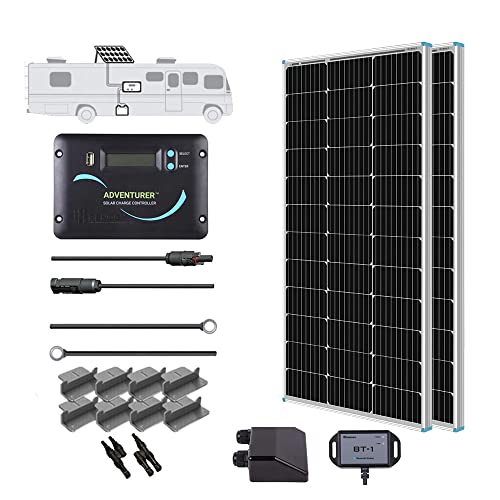
Renogy 200W 12V N-Type RV Solar Panel Kit with Adventurer 30A Controller

DOKIO 200W Solar Panel Kit, 2-Pack of 100W, Brackets and 5 m Cable

Go Power GP-PSK-130 130W Portable RV Solar Panel Kit

ECO-WORTHY 10W 12V Solar Battery Charger Maintainer OBDII for Car

ECO-WORTHY 400 Watt 12 Volt Premium Solar Panel Kit

ECO-Worthy 7.168KWH 800W Solar Panel Kit for RV Off Grid Complete System

Renogy 400W 12V RV Solar Panel Kit

Renogy 200W 12V N-Type RV Solar Panel Kit with Adventurer 30A Controller
More Details On Our Top Picks
This is the kind of bundle that suits a roof-mounted RV setup with real travel habits behind it. Four 100W panels, a 40A MPPT charge controller, Bluetooth module, fuse, Z brackets, adaptor kit, and tray cables give you a complete starting point without piecing together every part yourself. The trade-off is straightforward, it asks more from your roof space and installation planning than a smaller kit.
For long weekends or full-time rigs with higher daytime demand, that added scope makes sense. The Bluetooth module is handy for checking status without hovering over the controller, which matters in a cramped storage bay or rainy setup day. Compared with the 200W options here, this one better suits you when fridge loads, lights, and device charging all happen at once.
Strong Points
- All-in-one bundle cuts down on separate parts shopping.
- 400W output gives more breathing room for daily use.
- MPPT control helps squeeze more from changing sun conditions.
- Bluetooth module makes status checks easier from inside the rig.
- Included brackets and cables help streamline roof installation.
Points To Note
- Roof space fills up faster than with 200W kits.
- Installation takes more planning because the system is more complete.
- Storage and handling are less casual than a folding portable setup.
Feature Rundown
Who It Suits Best
You’re the right fit here if your RV stays parked long enough to justify a roof-mounted 400W system and you want fewer loose ends in the box.
Where A Sibling Pick Shines
Renogy 200W 12V N-Type RV Solar Panel Kit with Adventurer 30A Controller works better for lighter weekend rigs that don’t need this much roof coverage.
This one lands in the sweet spot for smaller RVs, boats, trailers, and camper setups that need useful solar input without a roof-filling footprint. The 30A Adventurer controller is an LCD PWM unit, meaning pulse width modulation, a simpler charge-control style that keeps the system straightforward. That simplicity helps with everyday use, though you give up some of the harvesting efficiency you get from MPPT setups like Renogy’s 400W bundle above.
For weekend travel, the 200W size often feels easier to live with. You get enough capacity for lighter charging needs, but the install burden stays modest, which matters in older rigs or tight roof layouts. It’s a calm, sensible choice for people who want solar without turning the whole roof into a project.
Highlights
- 200W size suits compact RV roof layouts.
- LCD controller keeps daily monitoring easy to read.
- Works across RV, boat, trailer, camper, and marine use.
- Mounting brackets help simplify the installation path.
Small Caveats
- 200W is better for light to moderate power needs.
- PWM control is simpler, though less efficient than MPPT.
- Owners with larger battery banks may want more headroom.
Feature Snapshot
Made For
You’ll get the most from this kit in a small or mid-size rig where roof room is limited and your power needs stay modest.
Another Choice May Suit
Renogy 400 Watt 12 Volt Premium 4 Pcs 100W Panel Kit makes more sense for RV owners who need stronger daily output and a more complete power buffer.
The DOKIO kit takes a leaner approach than the Renogy bundles, which can be helpful when you already have a controller in your RV power setup. You get two 100W panels, brackets, battery clips, and a 5 m cable, while the charge controller is sold separately. That makes it more modular, but it also means your planning matters more before installation day.
For a budget-conscious camper or tinkerer, that split can be a plus. The 5 m cable gives some practical reach, and the included battery clips help with straightforward connection work. The honest read is that this fits you best when you want the panels first and don’t mind filling in the rest yourself.
Reasons To Buy
- Two-panel layout gives you flexible placement options.
- Brackets and battery clips are already included.
- Five-meter cable helps with wider spacing between parts.
- Good fit for shoppers who already have a controller.
Areas To Watch
- Charge controller is sold separately, so planning takes extra care.
- DIY assembly can feel less convenient than a fuller kit.
- Owners who want a plug-and-play path may prefer a more complete bundle.
Core Details
Best Suited To
You’re a good fit for this kit if you already own a controller and want an affordable way to add 200W of panel capacity.
Skip It When
Go Power GP-PSK-130 130W Portable RV Solar Panel Kit suits you better when portability and a self-contained setup matter more than sourcing extra parts.
Portable solar makes sense for people who park in different places and don’t want roof hardware doing all the work. Go Power’s folding layout, 10A controller, adjustable legs, battery clamps, and nylon case point to a kit that packs away neatly between trips. Compared with the fixed-panel Renogy and ECO-WORTHY options, this one is easier to move around but carries less total output.
That lighter footprint suits camping, boat use, or a supplemental charging setup beside a larger system. The adjustable legs help you angle the panels toward the sun, which can matter during shoulder-season travel or a shaded campsite. It’s practical, not flashy, and that’s often exactly the right tone for portable gear.
Best Bits
- Folding design stores neatly in the included case.
- Adjustable legs help improve panel positioning.
- Battery clamps support quick setup at camp.
- Portable format works well for mixed travel routines.
Worth Noting
- 130W suits supplemental charging better than whole-rig demand.
- Portable gear needs more handling and setup each time.
- Storage space matters because the panels travel with you.
Details At A Glance
Whose Shelf It Belongs On
You’ll like this most if you camp in changing spots and want solar you can set up and pack away without roof mounting.
Look Elsewhere When
Renogy 400W 12 Volt Premium 4 Pcs 100W Panel Kit is the better match for full-time RV use that calls for larger roof output.
Not every solar setup needs to power a campsite. This ECO-WORTHY maintainer is aimed at keeping a 12V battery topped during storage, and the OBDII connection makes it relevant for cars, trucks, boats, RVs, ATVs, and marine use. Compared with the larger panel kits here, it’s about quiet upkeep rather than running appliances.
That smaller scope is exactly the point for seasonal owners. The waterproof design and portable shape suit parking lots, driveways, and storage spaces where you just want a battery care routine that stays out of the way. You’ll likely appreciate it most for infrequent use, though it won’t replace a true RV power array.
Positives
- Small size is easy to store between trips.
- OBDII connection broadens use across several vehicle types.
- Waterproof construction helps it fit outdoor storage scenarios.
- Good match for seasonal battery upkeep rather than full power generation.
Softer Spots
- 10W output is for maintenance, not heavy charging.
- It won’t stand in for a roof solar array.
- Owners need to check fitment for their specific battery connection setup.
Technical Sheet
The Right Fit
You’re looking at the right tool if your RV, car, or boat sits for stretches and you want a small solar maintainer rather than a full power system.
Reach For A Different Pick When
Go Power GP-PSK-130 130W Portable RV Solar Panel Kit suits travel days and campsite charging far better than this maintainer.
This ECO-WORTHY bundle mirrors the 400W format of the Renogy kits, but its focus on the 40A MPPT controller and Bluetooth support makes it feel aimed at people who want a more polished control layer. Four 100W panels give you the same roof-scale power class, so the real difference is in the system details and how you like to monitor them. That matters most in a busy RV where checking charge behavior from your phone is simply easier.
Compared with the 200W options, this one is built for more demanding power habits. The included mounting Z brackets make the install path clearer, and the complete kit structure cuts down on piecing things together later. The trade-off is familiar, though, a 400W roof system asks for planning, space, and a little patience during installation.
Bright Spots
- 400W output gives you a strong roof-based foundation.
- MPPT controller is suited to more efficient power capture.
- Bluetooth support makes monitoring easier from a distance.
- Mounting Z brackets help simplify the setup.
- Good fit for RVs that spend serious time off hookups.
Room For Improvement
- Roof space becomes a major consideration at this size.
- Installation is more involved than a compact portable kit.
- It makes less sense for light-duty travel routines.
Feature Card
Who Should Grab It
This suits you best if you want 400W of roof solar and prefer an ECO-WORTHY control setup with Bluetooth monitoring built in.
Swap It Out When
Renogy 400W 12V RV Solar Panel Kit is a stronger match for shoppers who prefer that brand’s broader accessory bundle and controller layout.
This is the big system in the group, and the included mix tells you why: four 195W panels, a 3000W UPS inverter charger, two 12.8V 280Ah lithium batteries, and a 60A MPPT controller with Bluetooth. UPS here means uninterruptible power supply, which helps keep the whole setup focused on continuity rather than just panel charging. For long-term boondocking or a large rig with serious electrical appetite, that stack can make a real difference.
It also asks for the most commitment. Battery storage, inverter integration, and higher total system complexity mean this is not a casual weekend add-on, and you’ll want enough space and a clear plan before starting. Compared with every other kit here, it’s the one that most clearly steps into complete off-grid territory.
Standout Traits
- Includes panels, batteries, controller, and inverter charger.
- 800W solar input supports a more capable off-grid setup.
- Bluetooth monitoring adds easier status checks.
- Large battery capacity suits extended time away from hookups.
Honest Caveats
- The system is much more involved than simpler RV kits.
- Installation and layout planning matter a lot here.
- Storage and weight become more demanding than with roof-only kits.
Core Details
Built With In Mind
You’re the right match here if your RV setup is closer to a home system than a weekend camper and you want a full power stack.
Consider Something Else When
Go Power GP-PSK-130 130W Portable RV Solar Panel Kit makes far more sense for light, portable travel where simplicity wins.
Renogy’s 400W roof kit keeps the formula familiar, but the accessory mix makes it especially easy to place alongside a standard RV install plan. Four 100W monocrystalline panels, an Adventurer 30A LCD PWM controller, a BT1 Bluetooth module, mounting brackets, Y-connectors, cables, a fuse, Z-brackets, and an adaptor kit add up to a tidy system for off-grid work. Compared with the ECO-WORTHY 400W bundle, this one reads as especially install-friendly.
Monocrystalline panels, meaning panels built with single-crystal silicon, are a sensible match for roof setups where space matters and you want dependable panel efficiency. The downside is still the same as most 400W kits, it takes planning and roof room, so this is better for committed RV users than casual travelers. The overall shape feels steady and practical.
Upsides
- 400W output supports more demanding RV use.
- Accessory bundle is broad and install-friendly.
- Bluetooth module helps with remote monitoring.
- Monocrystalline panel design fits roof-space-conscious builds.
- Includes multiple connection and mounting parts in one package.
Trade Offs
- Roof installation is still a planning-heavy project.
- PWM control is simpler than MPPT control.
- It fits committed RV use more than occasional outings.
Feature Rundown
Perfect Match For
You’re a strong match if you want a roof-mounted 400W Renogy system and like a kit that arrives with a deep hardware list.
Another Choice May Suit
ECO-WORTHY 400 Watt 12 Volt Premium Solar Panel Kit may suit you better if Bluetooth control paired with an MPPT controller matters more than the Renogy accessory spread.
This Renogy 200W option mirrors the earlier 200W model, but it still earns a place because the N-Type panel designation gives the kit a more modern panel identity. N-Type refers to a solar cell architecture that’s designed differently from older cell styles, and that distinction matters to shoppers who want a more current build without jumping to 400W. The 30A LCD PWM controller keeps the setup approachable for smaller RV systems.
It makes the most sense for you when roof space is tight and your power needs stay disciplined. Compared with the big 400W sets above, this one is lighter on commitment and easier to fit into a simpler travel routine. That makes it a sensible middle ground for compact rigs, trailers, and boat owners who want roof-mounted solar without a sprawling install.
Reasons To Buy
- 200W size works well for modest power demand.
- N-Type panel build gives the kit a current-generation feel.
- LCD controller makes status checks simple.
- Roof footprint stays manageable for smaller rigs.
Minor Gripes
- It still suits lighter power loads more than heavy use.
- PWM is simpler than MPPT for power management.
- Shoppers with growing battery needs may outgrow it sooner.
Feature Snapshot
Who Will Love This
You’ll appreciate this most if you want a tidy 200W roof kit for a smaller RV, trailer, camper, or boat.
Where Another Pick Suits Better
Renogy 400W 12 Volt Premium 4 Pcs 100W Panel Kit is the smarter move for bigger rigs that need more charging headroom.
How To Choose The Right Solar Panel Kits For Rv
Start With Your Real Power Habit
Your daily load matters more than the headline wattage. A small trailer that only runs lights, phone charging, and a fan can live comfortably with 130W to 200W, while a rig with a fridge, laptops, and longer off-grid stays has a better case for 400W or more.
Roof size matters just as much. Four 100W panels can be a smooth fit on a larger roof, while a compact camper often needs a tighter layout or a portable kit that can move when parking space gets awkward.
Choose The Controller With Care
PWM controllers are simpler and usually easier to understand, which suits smaller setups and casual use. MPPT controllers are the smarter choice for bigger arrays, because they generally make better use of changing sunlight and more complex charging needs.
Bluetooth monitoring also helps more than many people expect. A phone check beats climbing into a storage bay every time you want to see what the system is doing.
Match The Kit To Your Parking Style
Roof-mounted kits reward people who stay parked for longer stretches and want a cleaner, more permanent setup. Folding portable kits suit campers who move often, share parking space, or want solar they can angle toward the sun.
Battery maintainers sit in a different lane altogether. They’re for storage periods and infrequent use, not for running an RV like a tiny house on wheels.
Don’t Ignore Installation And Storage
A complete bundle can save time, but it also asks for more roof work and a clearer install plan. Smaller kits are easier to handle, yet they may leave you sourcing a controller or extra hardware on your own.
Storage matters too. A nylon case, brackets, cable length, and overall panel count all change how easy the kit is to live with once travel day arrives.
Things Worth Knowing First
Wrong Turns To Avoid
Many shoppers start with wattage alone and miss the rest of the system. A 400W kit sounds generous, but it only helps your routine if your roof has room and your battery bank can make use of the energy.
Another common slip is pairing a portable panel with the wrong kind of travel habit. Portable gear works well for moving campsites, yet it can feel like extra chores during a long stay.
The Case For Spending Up
Higher-tier kits usually spend the extra money on controller quality, Bluetooth monitoring, larger panel counts, and broader hardware bundles. In this category, those upgrades reduce guesswork and make the whole setup feel more complete.
That extra spend is easier to justify for full-time RV life, extended dry camping, or larger electrical loads. For occasional weekend use, a simpler 200W bundle often keeps the balance in the right place.
Frequently Asked Questions
How much solar do you need for an RV?
Light use can work with 130W to 200W, especially for charging and basic loads. Larger rigs or longer off-grid stays usually make more sense with 400W or a larger complete system.
What is the difference between MPPT and PWM?
MPPT, or maximum power point tracking, is generally better at making use of changing sunlight. PWM is simpler and can still work well in smaller or more basic RV setups.
Are portable solar kits better than roof-mounted kits?
Portable kits suit campers who move around a lot and want panels they can reposition. Roof-mounted kits fit longer stays and give you a cleaner, more permanent layout.
Do you need a charge controller with solar panels?
Yes, most RV solar setups need a controller to manage charging properly. Some kits include one, while others, like the DOKIO set here, leave it to you.
What size kit works best for a weekend RV?
A 200W kit often fits weekend use well, especially in a smaller rig. A battery maintainer is better for storage periods than for actual campsite power.
Closing Thoughts
Solar for an RV works best when it matches the way you travel, not just the way the numbers look on a listing. Smaller kits make sense for light use and tighter roofs, while 400W bundles and complete off-grid systems earn their keep for longer stays and heavier loads. Portable panels still matter when flexibility is the real priority, and battery maintainers solve a different problem entirely. Choose the setup that fits your trips, and the rest gets easier.
