

Solar charging gear matters most when wall outlets are awkward, crowded, or far away. You’re probably here because you want a backup for camping, road trips, outages, or long workdays away from a desk. The right pick depends on whether you need pocketable backup power, a rugged shell, or a larger kit that can stay mounted on a vehicle.
Some options here focus on convenience, others on capacity, and one shifts into vehicle charging instead of phone-first portability. That mix gives you room to choose for daily carry, family travel, or emergency storage without paying for features you won’t use.
The Shortlist At A Glance

ToughTested 24000mAh Solar Power Bank, LED Flashlight, USB-C Fast Charging

Miady 2-Pack Portable Charger, Slim 10000mAh Power Bank Travel Battery Pack

BLAVOR Solar Power Bank 10,000mAh, Portable Wireless Charger, 20W Fast Charging

SOARAISE Solar Power Bank 48000mAh Wireless Portable Charger with 4 Cables

YELOMIN 38800mAh Solar Power Bank, Portable Charger USB-C Fast Charging

BLAVOR Solar Power Bank 20000mAh Built-in Cables, Wireless Charger for Phones & Apple Watch
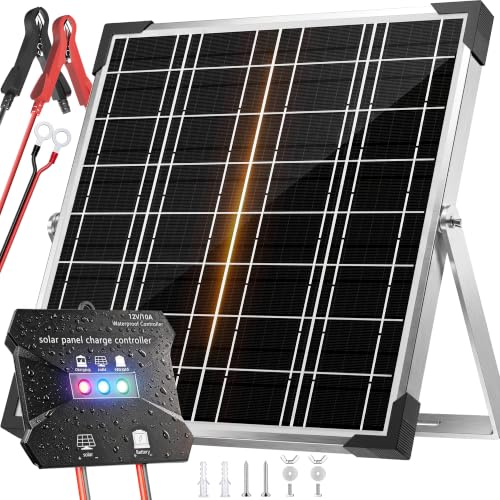
Voltset Solar Panel Kit 20W 12V, Waterproof Solar Battery Charger for Car
More Details On Our Top Picks
This pick leans into rough-use travel, with a 24,000mAh battery, an LED flashlight, and an IP66-style rugged build that suits campsites and packed tool bags. The honest read is that the size makes more sense for a backpack, glove box, or emergency bin than for a pocket.
Compared with the slimmer Miady pair, you’re trading portability for a larger reserve and tougher casing. That balance fits commuters who want one unit that can sit charged in the car, then step in during a power cut or a long weekend away.
Strong Points
- Large capacity supports more than one phone top-up.
- USB-C fast charging helps reduce waiting at the outlet.
- The flashlight adds real utility during outages and tent use.
- Rugged sealing suits rougher handling in bags and vehicles.
Things To Consider
- Bulk is the trade-off, so daily pocket carry feels unlikely.
- Solar charging works best as a backup plan, not a shortcut.
- The sturdy shell can take up more storage space.
Feature Rundown
Who It Suits Best
Campers, road-trippers, and anyone who wants a tougher backup charger for a glove compartment or emergency kit will get the most from it.
Where A Sibling Pick Shines
Miady 2-Pack Portable Charger, Slim 10000mAh Power Bank Travel Battery Pack suits lighter packers who value two compact units instead of one heavy-duty block.
Two slim 10,000mAh banks make this set feel built for shared trips, carry-on bags, and backup drawers at home. Since each unit stays compact, you can split them between a work bag and a weekend bag without hauling one oversized charger around.
Compared with the ToughTested unit, this is less about ruggedness and more about sensible everyday carry. That makes it a neat fit for students, commuters, or travel companions who want backup power without much weight.
Positives
- Two-pack format lets you keep one charger in more than one place.
- Slim bodies slide easily into small bags and jacket pockets.
- 10,000mAh per unit gives a practical reserve for phones and earbuds.
- The black-and-white pairing helps you tell the units apart fast.
Small Caveats
- You trade away the heavier-duty shell found on ToughTested.
- Single-pack users may not need the second unit.
- Travel charging still depends on your own cable setup.
Core Details
Built With In Mind
Travelers, students, and anyone who wants a slimmer backup for daily carry will find this set easier to live with than a larger single bank.
Swap It Out When
BLAVOR Solar Power Bank 20000mAh Built-in Cables, Wireless Charger for Phones & Apple Watch fits better for someone who wants one device with more onboard convenience.
This BLAVOR model stands out for mixing wireless charging with USB-C and 20W fast charging in a compact 10,000mAh package. In a busy kitchen counter, airport lounge, or campsite table, that combination keeps charging choices flexible without turning your bag into a brick.
Compared with the Miady pair, you lose the two-unit convenience but gain a more feature-dense single charger. The dual flashlight setup also helps it feel more prepared for night use, especially for hikers or anyone packing a small emergency kit.
Highlights
- Wireless charging cuts cable clutter for compatible phones.
- 20W output suits faster top-ups than basic low-watt banks.
- USB-C adds a modern connection point for newer devices.
- Two flashlights bring useful backup light after dark.
- 10,000mAh keeps the footprint manageable for daily carry.
Worth Noting
- Wireless charging usually uses more battery than a cable.
- Smaller capacity means less reserve than the larger SOARAISE and YELOMIN picks.
- The feature mix can feel busy to minimal packers.
At A Glance
Right Fit For
Commuters and campers who want a compact charger with wireless convenience and a few extra tricks will appreciate the setup most.
A Better Fit Elsewhere
SOARAISE Solar Power Bank 48000mAh Wireless Portable Charger with 4 Cables suits long-haul trips better, thanks to its much larger reserve and broader cable loading.
This is the big-reserve choice in the group, with 48,000mAh, four cables, wireless charging, and four solar panels. For a family road trip or a cabin stay where multiple devices need attention, that layout feels much easier than juggling a smaller bank and extra cords.
Compared with BLAVOR’s 10,000mAh model, it’s far less pocketable but far more suited to long stretches away from outlets. The four-panel solar setup also makes it the most ambitious outdoor charger here, though size and weight are the obvious trade-offs.
What We Like
- 48,000mAh reserve supports heavy family use.
- Four included cables reduce the need to pack extras.
- Wireless charging adds a cable-light option for compatible phones.
- Four solar panels improve outdoor charging potential compared with single-panel styles.
- Flashlights give it practical use during storms and camping nights.
Areas To Watch
- The large body makes everyday pocket carry unrealistic.
- More parts usually mean more storage planning in a bag or drawer.
- Solar input still depends on sun conditions, so wall charging remains the faster route.
Technical Sheet
Whose Shelf It Belongs On
Families, campers, and anyone building a serious emergency kit will get the most from this larger, more multi-device setup.
Skip It When
ToughTested 24000mAh Solar Power Bank, LED Flashlight, USB-C Fast Charging is the better call for anyone who wants a smaller rugged unit instead of a high-capacity bulkier build.
YELOMIN sits between the smaller travel banks and the oversized SOARAISE unit, which makes it a practical middle-ground for hikers, campers, and emergency prep. Its 38,800mAh reserve gives you more breathing room than a basic day-trip charger without pushing fully into the heavy-duty end of the shelf.
Compared with the BLAVOR 10,000mAh model, you get a much deeper battery reserve and a more serious backup feel. The dual LED flashlights round it out nicely for campsite use, though the larger body means you’ll still want to think about bag space.
Upsides
- 38,800mAh capacity offers a strong buffer for multi-day use.
- USB-C fast charging suits modern cable setups.
- Three output ports help handle more than one device.
- Dual LED flashlights add practical value outdoors.
Room For Improvement
- Large capacity usually means a larger body to store.
- It’s more purpose-built for travel and backup than for desk use.
- Solar charging should still be treated as supplementary power.
Details At A Glance
The Right Fit
You’ll get the most from this one in a hiking pack, emergency drawer, or travel kit where capacity matters more than tiny size.
Look Elsewhere When
Miady 2-Pack Portable Charger, Slim 10000mAh Power Bank Travel Battery Pack fits better for minimalist carry, especially when two slim units are easier to divide between bags.
This BLAVOR version feels more polished for daily carry because it folds in built-in cables, wireless charging, a flashlight, and 20W fast charging. For someone who hates digging for a cord in a tote or backpack, that built-in layout can save a lot of small annoyances.
Compared with the earlier BLAVOR 10,000mAh pick, this one gives you more capacity and more onboard convenience in a single unit. The trade-off is that added convenience usually comes with a little extra size, so it makes more sense for bags than for a jacket pocket.
Best Bits
- Built-in cables reduce cable clutter in travel bags.
- Wireless charging adds a simple top-up option for compatible devices.
- 20W output supports faster charging on supported phones.
- 20,000mAh capacity hits a useful middle ground for routine carry.
- Flashlight function helps during outages and late-night packing.
Points To Note
- Built-in cables are handy, though they also set the cable format for you.
- Wireless charging still asks for a device that supports it.
- It’s less compact than the 10,000mAh BLAVOR option.
Feature Snapshot
Perfect Match For
Busy commuters, frequent packers, and anyone who wants fewer loose accessories in a bag will appreciate this model’s organized layout.
Another Choice May Suit
ToughTested 24000mAh Solar Power Bank, LED Flashlight, USB-C Fast Charging fits better for rougher use, especially where the casing matters more than built-in convenience.
Voltset shifts the category from portable power banks into a 20W, 12V solar panel kit for vehicle and marine charging. That makes it far more relevant for a truck, trailer, RV, motorcycle, or boat than for charging a phone at a café.
Compared with the pocketable picks above, this is the more fixed-install style option, so it asks for a different mindset and more planning. The smart charge controller and waterproof build are the kind of details that matter in parked-vehicle setups, where steady maintenance matters more than handheld convenience.
Reasons To Buy
- 20W panel output suits small vehicle and battery maintenance tasks.
- 12V setup matches common automotive and recreational systems.
- Waterproof construction suits outdoor mounting better than standard chargers.
- Smart charge controller helps make the setup easier to manage.
Honest Caveats
- This is a vehicle kit, not a pocket charger.
- Installation takes more planning than a plug-in power bank.
- The use case is narrower than the phone-first picks.
Core Details
Made For
Owners of cars, RVs, trailers, motorcycles, or boats who want a solar maintenance kit instead of a portable phone bank will get the most out of it.
Reach For A Different Pick When
BLAVOR Solar Power Bank 20000mAh Built-in Cables, Wireless Charger for Phones & Apple Watch suits everyday carry much better, especially for someone focused on phones rather than vehicles.
How To Choose The Right Solar Chargers
Match Capacity To Your Routine
Capacity, measured in mAh, tells you how much stored power the charger carries. A 10,000mAh bank suits a phone and a few top-ups, while 20,000mAh to 48,000mAh makes more sense for family travel, outages, or multi-day off-grid use.
That bigger number usually means a larger body and longer recharge time, so the trade-off is simple. For daily carry, a slim bank is easier to live with, while bigger units belong in backpacks, glove boxes, or camp bins.
Choose Features That Remove Friction
Built-in cables, wireless charging, flashlights, and USB-C all solve different annoyances. Built-in leads help when you’re tired of packing cords, wireless charging keeps the top surface cleaner, and a flashlight turns the bank into a useful night tool.
Those extras do add complexity, though, and they can make the charger less compact. You’ll usually get the best result by picking only the features you’ll use in real travel or emergency scenarios.
Think About Where It Will Live
A rugged shell suits a backpack, campsite, or car emergency kit, while a slim two-pack fits everyday bags and shared travel. A vehicle solar panel kit belongs in a very different lane, because it serves batteries and mounting setups rather than pocket charging.
Storage matters as much as output. Chargers that sit in a hot car, a wet boat compartment, or a crowded gear box need a design that can handle the environment without constant fuss.
Solar Is Backup, Not Magic
Solar input helps most when you’re away from an outlet, but it rarely replaces wall charging for speed. Sun angle, weather, and panel size all influence the result, so the panel works best as an assist rather than the only plan.
That’s why many shoppers do well with a battery-first design plus solar as a secondary source. It keeps your setup honest and prevents disappointment on cloudy weekends.
Things Worth Knowing First
Common Shopping Slip Ups
Many people focus on capacity alone and ignore size, cable layout, or whether the charger matches their use case. A huge bank can still be awkward if it lives in a commuter bag or takes too long to refill.
Another frequent miss is treating solar as the main power source. In practice, it works better as backup support, especially for trips where you still have access to outlets at some point.
The Upgrade Payoff
Higher-tier models usually cost more because they add capacity, better build materials, more ports, or features like wireless charging and built-in cables. A four-panel design or a rugged housing also takes more engineering and more material.
That upgrade makes sense when you travel often, carry multiple devices, or want a charger that can stay useful in harsh conditions. For light home use, a smaller bank is often enough and easier to store.
Frequently Asked Questions
Are Solar Chargers fast enough for daily use?
Yes, many work well for daily top-ups through USB-C or a standard cable. Solar input is usually the slower part, so you’ll want wall charging for the main refill.
Do larger mAh numbers always mean a better pick?
No, larger capacity often means more weight and a bigger footprint. The better choice is the one that matches your carry style and device load.
What kind of user fits a rugged power bank?
Campers, road-trippers, and emergency kit planners usually get the most out of rugged models. The tougher shell helps more when the charger lives in bags, cars, or outdoor gear.
Is wireless charging worth paying extra for?
It’s useful when you want a cleaner setup and less cable handling. Cable charging still tends to be simpler and more efficient for everyday refills.
Should a vehicle solar panel kit replace a portable power bank?
No, it serves a different job and suits batteries in cars, RVs, or marine setups. Portable banks are better for phones and tablets on the move.
Final Thoughts
Your best fit depends on how you carry power, not just how much power the label suggests. A slim two-pack suits lighter travel, a rugged unit helps in rough conditions, and a larger battery makes sense for longer trips or family use. Vehicle owners should look at the Voltset kit separately, because it solves a different problem from the phone-first banks. Choose the shape that fits your routine, and the charger will feel useful instead of clumsy.
