

Long travel days, camping weekends, and power-hungry phones all expose the same problem, a dead battery arrives faster than you expect. Solar charge power banks help you keep a phone, tablet, or small gadget going without hunting for a wall socket. The useful part is less about dramatic solar charging claims and more about having the right mix of capacity, cables, ports, and size for your routine. You’ll see that balance shift a lot from one model to the next.
Quick Look at the Shortlist

MINRISE Solar Power Bank 40000mAh, Portable Charger PD 20W Fast Charging
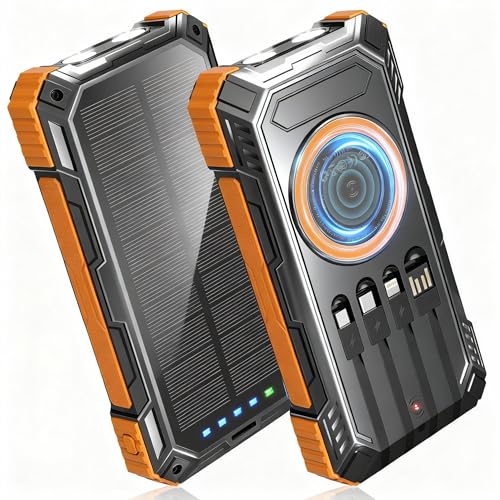
Solar Power Bank 49800mAh Wireless Portable Phone Charger

BLAVOR Solar Power Bank with Hand Crank and 4 Cables 20000mAh

ERRBBIC Solar Charger Power Bank 49800mAh, Wireless Portable Phone Charger

Anker SOLIX C200 DC Power Bank Station and 60W Solar Panel 192Wh

Solar Charger Power Bank 49800mAh Wireless Portable Phone Charger
Solar Power Bank 49800mAh Portable Charger Wireless Charging USB-C
More Details On Our Top Picks
MINRISE leans into convenience first, with built-in cables and USB-C in and out, so your bag stays less tangled on travel days. The 40,000mAh capacity gives you a lot more breathing room than a small pocket charger, though the trade-off is a bulkier shape you’ll notice in a slim daypack.
In a busy kitchen, at a campsite, or during a long train ride, that mix of capacity and cable storage feels practical rather than flashy. The 20W PD fast charging support suits phones well, and the flashlight feature adds a useful backup touch without turning this into a complicated gadget.
Strong Points
- Built-in cables cut down on cord clutter in your bag.
- USB-C in and out adds flexible charging paths.
- Large capacity suits long weekends away from outlets.
- 20W PD support helps phones top up faster.
Things To Consider
- The larger capacity usually brings extra bulk, so pocket carry is not the goal.
- Built-in cable setups can be handy, though they also mean less freedom to swap every lead.
- The flashlight is useful as a backup, not a primary lantern.
Feature Snapshot
Who It Suits Best
It fits travelers and campers who want one charger with less cable fuss and enough reserve for a phone plus a tablet.
A Better Fit Elsewhere
BLAVOR Solar Power Bank with Hand Crank and 4 Cables 20000mAh suits emergency kits better, especially for anyone who values a hand-crank backup and a lighter carry.
BLASOUL pushes hard on convenience and flexibility, with wireless charging, four built-in cables, and a 49,800mAh capacity that suits heavy phone use. That combination makes sense for family trips or a week where several devices seem to need topping up at once, though it’s a lot of hardware for a minimalist pocket setup.
Compared with MINRISE, this one leans more toward feature density than simple portability. The 22.5W fast charging support and USB-C in and out make it a sensible grab for people who want a single pack to cover more charging styles without juggling accessories.
What We Like
- Wireless charging keeps cable use optional for supported phones.
- Four built-in cables are useful in shared travel settings.
- Large capacity gives your devices more runway between wall stops.
- USB-C in and out broadens how you recharge the pack.
- 22.5W output is a practical match for modern phones.
Worth Noting
- The extra features add size, so it suits bags better than pockets.
- Wireless charging can be less tidy on a moving train or plane seat.
- More built-in parts mean a little more care during storage and packing.
Core Details
Made For
It suits people who keep several phones or accessories in rotation and want fewer loose cables in the bag.
Another Choice May Suit
MINRISE Solar Power Bank 40000mAh, Portable Charger PD 20W Fast Charging fits better for travelers who want a simpler, less feature-heavy pack.
BLAVOR takes a more emergency-minded route than the first two picks, with a hand crank, four cables, wireless charging, and a camping light. The 20,000mAh capacity is smaller than the big 49,800mAh models, but that smaller size can be easier to live with in a glove box, daypack, or emergency drawer.
That hand-crank feature gives this model a distinct identity, since you’re not relying only on stored charge. It’s the sort of setup that makes sense for storm kits, long road trips, or a cabin shelf, and the camping light adds one more practical layer without much fuss.
Highlights
- Hand-crank support gives you a backup charging method.
- Camping light helps in low-light setups around camp or home.
- Wireless charging reduces cable handling for supported phones.
- Smaller capacity is easier to stash than the largest packs here.
Points To Note
- Hand-crank charging is best treated as a backup, not a routine charging plan.
- The lower capacity suits shorter stretches better than long multi-device trips.
- Extra features can mean more parts to keep track of in storage.
Technical Sheet
Right Fit For
It suits anyone building an emergency kit or packing for a cabin where backup charging matters more than maximum capacity.
Where A Sibling Pick Shines
ERRBBIC Solar Charger Power Bank 49800mAh, Wireless Portable Phone Charger fits better for long travel days that favor capacity over hand-crank backup.
ERRBBIC sits in the same high-capacity lane as BLASOUL, but it keeps the setup more focused around wired charging and 22.5W output. That makes it feel straightforward for phone-heavy days, especially when you want a pack that can stay in your bag and handle repeat top-ups without much thought.
It also lines up nicely with the larger travel-friendly chargers in this list, though this one skips the hand-crank angle from BLAVOR. For many commuters and campers, that trade feels reasonable, because the main appeal here is steady, high-capacity charging in a simpler layout.
Upsides
- 49,800mAh capacity gives you a large reserve for repeated use.
- 22.5W charging is a solid fit for phones and small devices.
- Built-in cables reduce the need to pack separate cords.
- Wireless support adds convenience for compatible devices.
Areas To Watch
- The larger battery size naturally adds weight and bulk.
- Wireless charging can be less efficient than a wired connection.
- The more you depend on built-ins, the more careful packing matters.
Details At A Glance
Whose Shelf It Belongs On
It fits phone-first travelers who want a large, no-drama charger for bags, glove boxes, and campsite storage.
Swap It Out When
BLAVOR Solar Power Bank with Hand Crank and 4 Cables 20000mAh makes more sense for emergency-focused setups that value a crank backup and light source.
Anker changes the category a bit, because this is more of a portable power station setup than a simple pocket bank. The 192Wh battery, LiFePO4 cell chemistry, and included 60W solar panel point toward a more serious outdoor power plan, which suits campsites, travel vans, and outage backup better than a quick pocket charge.
Compared with the smaller phone-first options, this one asks for more space and commitment, but it gives you a broader power base in return. The 200W solar generator label also signals a larger-duty design, so your choice here depends on whether you want a compact charger or a more capable off-grid setup.
Best Bits
- Portable station format suits larger outdoor power needs.
- 192Wh capacity gives you a much wider reserve than phone banks.
- Included 60W solar panel adds a real utility angle.
- LiFePO4 battery chemistry is a strong draw for durability-minded users.
- Useful for camping, travel, and backup power setups.
Minor Gripes
- The station-style format takes up more room than the other picks here.
- It makes less sense for a tiny sling bag or pocket carry.
- Higher capability usually means more planning around storage and transport.
Core Details
Best Suited To
It suits campers, van travelers, and households that want a more serious backup power setup than a standard charging brick can provide.
Look Elsewhere When
MINRISE Solar Power Bank 40000mAh, Portable Charger PD 20W fits better for anyone who mainly wants a lighter phone charger for daily carry.
YOLOSKS covers a lot of common charging situations with one pack, thanks to 49,800mAh capacity, wireless charging, four built-in cables, USB-C, six outputs, and two input options. That mix is handy for family travel or shared gear because it reduces the chance that the wrong cable is missing at the wrong time.
Compared with ERRBBIC, this one stands out more for connection variety than for a single headline feature. The QC3.0 fast charging label matters too, since it gives the pack a familiar quick-charge path for compatible phones without making the design feel fussy.
Reasons To Buy
- Six outputs help serve several devices in one sitting.
- Two input options make recharging more flexible.
- Wireless charging adds a tidy option for compatible phones.
- Built-in cables keep travel bags less cluttered.
- QC3.0 support suits many common phone charging needs.
Softer Spots
- All those charging paths make the pack feel more complex than basic models.
- Large capacity is useful, though it also usually means more weight.
- Built-in accessories need a bit of care during packing and storage.
Feature Rundown
Who Should Grab It
It suits families, shared travel kits, and anyone who regularly charges more than one device at a time.
Where Shoppers Go Wrong
BLAVOR Solar Power Bank with Hand Crank and 4 Cables 20000mAh fits better for emergency-minded users who care more about the crank backup than about port variety.
TRASHBINEAN takes a balanced route with 49,800mAh capacity, wireless charging, USB-C, four built-in cables, a 15W fast-charging rating, and an LED flashlight. That mix makes sense for travel kits and commute bags where convenience matters, but where you still want enough reserve for a couple of phones or a tablet top-up.
Compared with the more feature-packed YOLOSKS model, this one feels a bit simpler and easier to follow. The lower 15W figure also sets expectations clearly, so it’s a steadier fit for routine charging than for chasing the fastest refill available.
Plus Points
- Wireless charging keeps the routine convenient for compatible phones.
- Four built-in cables cut down on bag clutter.
- USB-C support matches common modern charging needs.
- LED flashlight adds a handy backup touch for travel or outages.
- Large capacity works well for trips and long commute days.
Small Caveats
- 15W charging is solid, though it sits below the higher-output picks here.
- The large battery size still brings extra weight.
- Built-in accessories are convenient, yet they deserve careful packing.
At A Glance
Built With In Mind
It suits travelers and commuters who want a simple, high-capacity pack with wireless convenience and a flashlight.
Reach For A Different Pick When
YOLOSKS Solar Charger Power Bank 49800mAh Wireless Portable Phone Charger fits better for shared charging setups that need more outputs and input options.
How To Choose The Right Solar Charge Power Banks
Capacity, Size, And Daily Carry
Capacity, usually shown in milliamp-hours or mAh, tells you how much energy the bank stores. Higher numbers often mean more phone top-ups, but they also usually mean more weight and a larger shell in your backpack.
Travelers who spend long days away from outlets tend to value the bigger 40,000mAh to 49,800mAh options. For a lighter commute kit, a smaller pack can feel easier to live with, especially in a slim sling or work bag.
Ports, Cables, And Charging Paths
Built-in cables help you stay organized, while USB-C in and out gives the bank a modern, flexible connection. Wireless charging adds convenience for compatible phones, though a wired charge still tends to feel simpler and more efficient in practice.
You’ll want to match the port mix to your habits. A family or shared travel setup benefits from multiple outputs, while a solo commuter may care more about one reliable USB-C path and less about extra hardware.
Fast Charging And Real-World Pace
Fast charging labels such as 20W, 22.5W, or 15W describe how quickly the bank can push power under the right conditions. They matter most for phones that can accept quicker input, and they matter less for smaller accessories that charge slowly anyway.
That’s why a higher wattage can be a real advantage for a busy day, but it’s not magic. Cable quality, device compatibility, and battery level still shape the result, so the best match is the one that fits your devices rather than the biggest number on the page.
Durability, Backup Features, And Usage Fit
Solar charging is helpful as a backup feature, yet it’s wise to treat it as part of a larger power plan rather than the only source. Flashlights, hand cranks, and extra outputs matter more in emergency kits or camping setups than they do in a work tote.
Think about where the bank will live most of the time. A glove box, cabin shelf, or campsite bin has different needs than a daily commuter bag, and the right model is the one that feels easy to pack, charge, and carry without friction.
Things Worth Knowing First
Common Shopping Slip Ups
Many people focus only on capacity and ignore the rest of the package. A huge battery helps less than you’d expect when the bank has awkward dimensions, missing cable support, or too few outputs for your routine.
Another common mistake is assuming solar input alone will keep everything topped up. Solar works best as a backup helper, so your main charging plan should still rely on a wall plug or another dependable source.
What The Higher Tier Buys
Higher-tier models usually cost more because they pack in more hardware, such as wireless charging, extra ports, built-in cables, larger batteries, or more serious outdoor power support. Those parts take up space, add materials, and create a more flexible user experience.
The upgrade makes sense when you travel often, share power with family, or spend nights away from outlets. For a simple daily phone boost, a leaner model can be the smarter match and easier to carry.
Frequently Asked Questions
Are Solar Charge Power Banks Good For Daily Use?
They can be, especially when you want backup power in a commute bag or car kit. The best daily-use picks keep the design simple enough to carry often.
How Important Is Battery Capacity?
Capacity matters because it shapes how many device top-ups you can expect before recharging the bank. Bigger numbers help on trips, though they usually bring extra size too.
Does Wireless Charging Change The Experience Much?
Wireless charging adds convenience for supported phones and cuts cable clutter. It’s handy, but a wired connection still tends to be easier for fast, efficient charging.
Should You Care About Built-In Cables?
Built-in cables help a lot when you want fewer loose cords in your bag. They are especially useful for travel, but they also reduce your freedom to swap every lead.
Are Solar Panels Enough On Their Own?
Solar input is best treated as backup support, not the only charging plan. A wall charge before the trip still gives you the most dependable starting point.
Closing Thoughts
You get the best fit when the bank matches how you actually move through the day, not just how large the battery number looks on the page. Travelers who want fewer loose accessories should look closely at built-in cables, while campers and outage planners may value a flashlight, hand crank, or a station-style setup more. The right choice feels easy to pack, easy to understand, and easy to trust in a real bag. That kind of practicality usually matters more than flashy labels.
