

You need portable power that fits real life, not just a spec sheet. Some picks suit a backpack and a phone cable, while others are closer to compact home backup gear for outages, RV trips, or long weekends off-grid.
This roundup focuses on how each option handles charging convenience, output range, and carry weight in everyday use. You’ll see clear differences between slim pocketable banks, solar-ready travel units, and heavier stations built for more demanding setups.
The Shortlist At A Glance
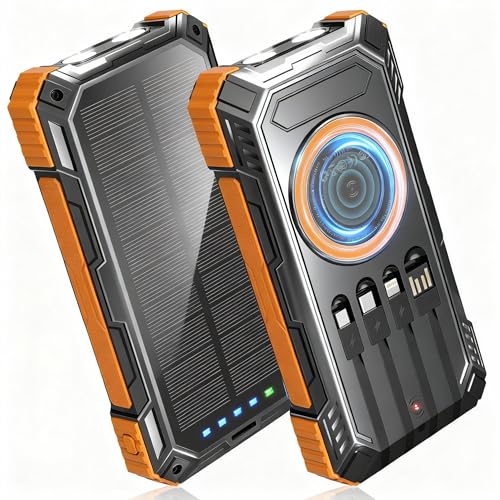
BLASOUL Solar Power Bank 49800mAh Wireless Charger

Anker SOLIX C200 DC Power Bank Station 192Wh

Jackery HomePower 3600 Plus Portable Power Station

Jackery Solar Generator 300 and 40W Solar Panel 292Wh

Miady 2-Pack Portable Charger Slim 10000mAh

Dexnor 27,000mAh Solar Power Bank Portable Charger

More Details On Our Top Picks
For commuting days, camping bags, and travel kits, this BLASOUL unit stands out for pure convenience. Four built-in cables reduce the odds of digging through a pocket for the right lead, and the 22.5W fast-charging output gives you a practical speed boost without turning the pack into a brick.
The wireless charging pad adds another layer of flexibility for phones that support it, while the large 49,800mAh capacity points to long stretches between top-ups. It’s bulkier than the 10,000mAh options later in the list, so the trade-off is obvious: more coverage, less pocket friendliness.
Strong Points
- Built-in cables cut cable clutter in a busy bag.
- Wireless charging gives you one less cord to carry.
- 22.5W output helps phones recover faster on the go.
- Large capacity suits multi-day travel or shared use.
- USB-C in and out adds useful flexibility for recharging.
Things To Consider
- The higher-capacity design will feel less pocketable than slimmer banks.
- Wireless charging usually asks for steadier phone placement.
- Built-in cables are convenient, though they limit how you replace them.
Core Details
Whose Shelf It Belongs On
It suits travelers, campers, and commuters who want one bank to cover several devices without carrying a separate cord pouch.
Swap It Out When
Miady 2-Pack Portable Charger Slim 10000mAh fits better for light pack carry and lower-capacity everyday phone charging.
This Anker setup feels aimed at people who want a solar-ready station without jumping straight into a heavy home-backup unit. The included 60W panel makes the pairing more complete out of the box, and the 192Wh LiFePO4 battery gives you a sturdier, more power-station-like setup than the phone-first banks above.
That said, it’s still closer to portable weekend support than whole-house backup. For camping, travel, and emergency kits, it makes sense; for larger appliances or longer outage planning, the bigger Jackery HomePower option later in the list sits in a different league.
What We Like
- Solar panel pairing lowers the friction of starting a solar setup.
- LiFePO4 chemistry usually appeals to people who want a more durable battery format.
- 192Wh capacity covers more than a phone-only bank can handle.
- Compact station format works well in car trunks and gear bins.
Worth Noting
- It’s more involved than a pocket charger, so setup takes more space.
- DC-focused output suits certain gear better than full home-appliance use.
- The panel adds value, though it also adds another item to store and carry.
Feature Card
Who Should Grab It
You’ll appreciate this most in camping setups, travel trunks, and emergency kits where solar charging matters more than raw size.
Look Elsewhere When
Jackery HomePower 3600 Plus Portable Power Station is the better fit for whole-home backup planning and heavier appliance needs.
Among these picks, this is the one that moves closest to serious home backup territory. A 3,600W AC output and 3,584Wh capacity mean you’re looking at a much larger reserve than the travel-focused banks, and expandability up to 21kWh puts it in a different planning category altogether.
That scale is useful for outages, RV life, or homes that need to keep a lot more than phones alive. The honest read is simple: it’s a strong fit for people who want capacity first, but it’s far too large for casual carry or quick outings.
Highlights
- High AC output gives you room for demanding gear.
- 3,584Wh capacity supports far more use than compact banks.
- Expandable design helps the system grow with your needs.
- LFP battery format suits long-term backup planning.
- Strong match for outage prep and RV setups.
Areas To Watch
- The large footprint makes casual storage more demanding.
- It is not the right fit for simple pocket charging.
- Solar panel support is optional, so the full setup can take more planning.
Details At A Glance
Built With In Mind
You’ll get the most from this in a home backup plan, RV setup, or a workspace that needs dependable stored power.
Another Choice May Suit
Anker SOLIX C200 DC Power Bank Station 192Wh fits better for lighter emergency kits and more portable solar use.
This Jackery setup lands in a sweet spot for campers and road-trippers who want a lighter station with AC power on tap. At 7.5 pounds, it’s easier to move than the larger home-backup class, and the integrated handle helps when you’re packing for a weekend away.
The mix of two AC outlets, USB-C PD, USB-A, and a car port gives you broad device coverage without feeling overbuilt. Pure sine wave AC, meaning smoother alternating current for sensitive electronics, matters here because laptops and cameras tend to appreciate cleaner power delivery.
Upsides
- 7.5-pound carry weight keeps the load manageable.
- Integrated handle makes transport feel straightforward.
- Pure sine wave AC suits more sensitive electronics.
- Multiple output types cover a lot of travel gear.
- Works well for day trips, tailgates, and camping setups.
Small Caveats
- Battery size is modest beside the larger Jackery HomePower unit.
- Solar panel power is light compared with bigger station kits.
- You may outgrow it faster in outage-heavy homes.
Quick Facts
Best Suited To
It suits campers, weekend travelers, and people who want a lighter AC-capable station without moving into bulky backup hardware.
Skip It When
Jackery HomePower 3600 Plus Portable Power Station makes more sense for home outage coverage and heavier loads.
For everyday carry, this two-pack has a simple appeal: one bank in use, one in reserve. The slim shape makes it easier to slip into a backpack pocket or small travel pouch, and the dual-USB layout gives you a straightforward way to share power between two devices.
That smaller 10,000mAh size is the point, not a drawback. You give up the extra runway of the larger solar banks above, but you gain a lighter package that works well for commuting, school bags, or a couple traveling with matching gear.
Bright Spots
- Two-pack format suits couples, families, or backup storage.
- Slim shape is easy to tuck into bags.
- Dual USB output keeps charging simple.
- 10,000mAh capacity fits routine phone top-ups.
Minor Gripes
- It is built for phones and lighter devices, not large power loads.
- Two separate units mean you’ll want a tidy storage spot.
- The smaller size offers less runtime than the high-capacity picks above.
At A Glance
Made For
It suits commuters, light pack travelers, and anyone who wants a pair of simple backup chargers rather than one large unit.
Where Shoppers Go Wrong
Dexnor 27,000mAh Solar Power Bank Portable Charger makes more sense for people who need higher capacity, wireless charging, and a flashlight in one body.
This Dexnor model tries to cover a lot of ground in one body, and that approach works well for travel or emergency bags. The 27,000mAh capacity gives you a bigger reserve than the smaller BLAVOR option at the end of the list, while wireless charging and three ports keep it flexible for mixed-device use.
The LED flashlight is a practical addition for camping or outage situations, especially in a glove box or go-bag. The trade-off is simple enough: more features usually mean a larger footprint, so it feels more like carried equipment than a pocket accessory.
Reasons To Buy
- 27,000mAh capacity gives you generous travel coverage.
- Wireless charging adds convenience for compatible phones.
- Three ports help you manage several devices.
- LED flashlight is handy in dark campsites or outages.
Points To Note
- The feature set makes it less minimal than a basic charger.
- Wireless charging works best with careful phone placement.
- You may prefer a smaller bank for a coat pocket.
Feature Rundown
Right Fit For
You’ll get the most from this in camping bags, travel kits, or emergency storage where one unit has to handle several jobs.
Where A Sibling Pick Shines
BLAVOR Solar Power Bank 10000mAh suits lighter everyday carry and smaller phone-only charging needs.
This BLAVOR pick keeps things small and practical, which is exactly why it belongs on this list. A 10,000mAh body, wireless charging, USB-C support, and 20W fast charging make it a neat fit for phone-first carry, while the dual flashlight adds a little utility for camping or late-night bag searches.
Compared with the heavier Dexnor unit, this one is easier to live with day to day. The honest trade-off is capacity, because you’re choosing portability over long runtime, but many commuters and casual travelers will prefer that balance.
Best Bits
- Compact size fits easily in smaller bags.
- Wireless charging reduces cable dependence.
- USB-C support matches common modern charging setups.
- 20W output is a sensible speed step for everyday use.
- Dual flashlight adds practical campsite value.
Room For Improvement
- 10,000mAh is modest beside the larger units in this roundup.
- Solar charging works more as a backup feature than a primary plan.
- Lighting features help in a pinch, though they also draw from the same stored power.
Technical Sheet
Who Will Love This
It suits commuters, casual campers, and anyone who wants a compact bank that stays easy to pack.
Another Choice May Suit
Dexnor 27,000mAh Solar Power Bank Portable Charger is a stronger fit for people who want more reserve and more features in one unit.
How To Choose The Right Solar Battery Banks
Capacity Should Match Your Routine
Capacity tells you how much stored energy the bank carries, and it affects how often you need to recharge the unit itself. A 10,000mAh bank suits phone top-ups and light carry, while 27,000mAh and above starts feeling better for trips, camps, and shared use.
The bigger the number, the more weight and bulk usually come with it. That trade-off matters more than many people expect, especially in a daypack or carry-on.
Output Style Changes Everyday Convenience
Some solar battery banks lean on USB-A and USB-C, while others add wireless charging or AC outlets. USB-C is useful because it handles modern charging on many phones and accessories, and AC output matters when you need wall-style power for smaller devices.
Wireless charging sounds simple, but it asks for steadier phone placement and usually works best as a convenience feature, not your only plan. A bank with several output types gives you more flexibility, which helps in cars, campsites, and outage kits.
Solar Support Is Helpful, Not Magical
Solar panels and solar panels built into a bank are handy for topping off in a pinch, yet they rarely replace wall charging for speed. That makes them a backup path, not the main event.
For a weekend camper or emergency kit, that extra path can still matter a lot. For daily life, fast wall charging and a usable capacity rating usually matter more.
Size, Weight, and Storage Matter More Than You Think
Small banks disappear into a bag. Larger stations ask for more shelf space, more trunk room, and a little more care when you store cables, panels, and adapters together.
That’s why travel-heavy use favors the lighter picks here, while outage planning leans toward the bigger power stations. Your real-world setup should decide the form factor, not the other way around.
Things Worth Knowing First
Common Shopping Slip Ups
Many people focus on capacity alone and ignore carry weight, port layout, or whether the bank supports the devices they actually use. That leads to a unit that looks impressive but feels awkward in daily carry.
Solar charging also gets overestimated. It’s a helpful backup path, yet a wall outlet still does the heavy lifting for most owners.
What The Higher Tier Buys
Higher-tier models usually pay for bigger batteries, stronger output, more output types, and sturdier battery chemistry. In plain terms, you’re paying for longer runtime and better device coverage, not just a shinier case.
The upgrade makes sense for RV setups, outage planning, or anyone who wants one power source to do several jobs. For simple phone charging, the extra spend can be overkill.
Frequently Asked Questions
What capacity works best for everyday carry?
For daily phone charging, 10,000mAh is a practical starting point. Bigger banks help when you carry multiple devices or spend nights away from a wall outlet.
Are solar battery banks fast to recharge from the sun?
Solar helps, but it usually works best as a backup source rather than a quick refill. Wall charging still feels faster and more predictable for most use.
What’s the difference between a power bank and a power station?
A power bank is usually smaller and built for phones and portable electronics. A power station is larger, often with AC output and more capacity for broader use.
Do wireless charging models make sense?
They do, especially for people who want less cable clutter. The trade-off is that the phone needs good placement, so it works best as a convenience feature.
Which option fits camping best?
Light travel and short trips suit compact banks like BLAVOR or Miady. Longer stays or more gear point you toward Anker, Jackery, or Dexnor.
Closing Thoughts
For Solar Battery Banks, the right choice comes down to how much power you carry, how often you move it, and what you expect to charge. The small banks are easy to live with, the mid-size solar-ready picks give you more breathing room, and the larger stations handle more serious backup needs. Match the form factor to your routine, not your wish list, and you’ll end up with something that actually earns its space in your bag or storage shelf.
