

Portable charging gets a lot easier once your pack can handle a long day, a campsite, or a power cut without turning into dead weight. These Portable Solar Power Bank Chargers lean on big capacities, built-in cables, and emergency lighting, so you can keep phones, tablets, and small gear topped up without carrying a tangle of extras.
The catch is that not every model serves the same kind of trip. Some are built around capacity and fast wired output, while others add hand cranks, wireless charging, or a slimmer travel shape, so the right choice depends on how you actually move through the day.
Quick Look At Our Top Picks

MINRISE Solar Power Bank 40000mAh, Built in 4 Cables
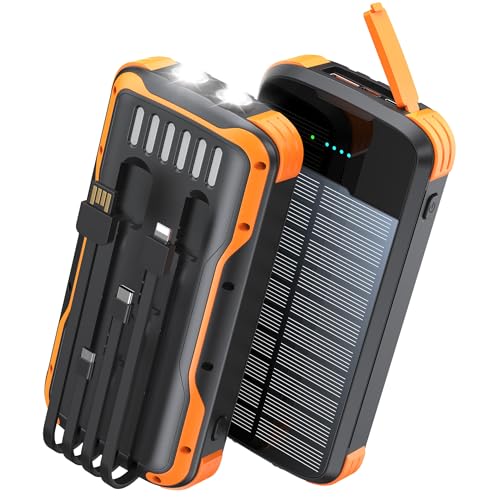
Solar Power Bank 40000mAh PD20W, Built-in 4 Cables

BLAVOR Solar Power Bank with Hand Crank, 20000mAh

Solar Power Bank 20000mAh, Orange Portable Charger

Solar Charger Power Bank 38800mAh, 22.5W USB-C
Solar Power Bank, 49800mAh Portable Charger Wireless Charging
YELOMIN Solar Power Bank Portable Charger 20000mAh

Miady 2-Pack Portable Charger, Slim 10000mAh Power Bank
More Details On Our Top Picks
Built-in cables change the way this pack works in a backpack or glove box, because you’re not digging for a separate cord every time the battery dips. The 40,000mAh class capacity gives you room for long weekends or backup use during outages, and the 20W PD output means faster wired top-ups for many phones than a basic USB-only pack.
Compared with the slimmer Miady 2-Pack and the smaller 20,000mAh YELOMIN, this one is better suited to people who want one larger reserve instead of multiple smaller units. The honest trade-off is size, so it makes more sense for camping kits and car storage than for a jacket pocket.
Strong Points
- Built-in cables cut clutter in day bags.
- 40,000mAh capacity suits extended power needs.
- USB-C in and out adds flexibility for newer devices.
- Flashlights help during outages or campsite tasks.
- Good fit for charging phones and tablets on the move.
Things To Consider
- Larger capacity usually means a bulkier carry.
- The bright feature set adds little value for minimalists.
- Solar backup works best as a fallback, not the main plan.
Key Specs
Who It Suits Best
You benefit most from this one when you want a carry-friendly emergency bank for camping, car travel, or a busy household that keeps losing charging cords.
A Better Fit Elsewhere
YELOMIN Solar Power Bank Portable Charger 20000mAh suits lighter packers who want less bulk and do not need the same reserve size.
This SOXONO pick looks built for people who live outdoors more than they sit still. The 40,000mAh size, 20W output, four built-in cables, and three ports mean you can spread power across several devices without carrying a nest of accessories.
Compared with MINRISE, it trades the same big-battery idea for a similar grab-and-go layout, so the real difference comes down to color preference and the feel of the body in hand. The orange finish should be easier to spot in a tent or packed day bag, though the larger shell still asks for real pocket space.
What We Like
- Three ports make multi-device charging more manageable.
- Built-in cables reduce what you need to pack.
- Bright color stands out in camp gear.
- 40,000mAh capacity supports longer trips away from outlets.
- Fast-charge support suits phones that accept PD input.
Worth Noting
- The larger form factor suits packs better than pockets.
- Built-in cables simplify carry, but they also define the layout.
- Solar charging is best treated as emergency support.
Feature Snapshot
Who Will Love This
Campers, hikers, and outdoor workers who want one large portable bank with fewer loose accessories will get the most from it.
Look Elsewhere When
BLAVOR Solar Power Bank with Hand Crank works better for preparedness-minded travelers who value the extra hand-crank backup and wireless charging.
Hand-crank power is the unusual card here, and that matters most in a storm kit or long-range trip where you want another way to keep the bank relevant. Add wireless charging, four cables, and a camping light, and you get a pack that feels aimed at people who prefer redundancy over a stripped-down carry.
Compared with the larger MINRISE and SOXONO units, this BLAVOR model gives up capacity but adds more ways to stay connected. The trade-off is easy to spot, since 20,000mAh sits in a more portable range yet asks you to think harder about how many devices you’ll keep alive at once.
Upsides
- Hand crank adds a backup charging method.
- Wireless charging reduces cable dependence for compatible phones.
- Camping light supports late-night use around tents or outages.
- Four cables make the pack easier to share.
- 20W fast charging helps wired top-ups move faster.
Room For Improvement
- 20,000mAh is smaller than the biggest entries here.
- Extra features add complexity for casual use.
- Redundant parts need a little more care in storage.
Core Details
The Right Fit
You’ll get the most from this model in an emergency kit, a roadside bag, or any trip where having more than one charging path feels worth the extra bulk.
Swap It Out When
Solar Power Bank 20000mAh, Orange Portable Charger is the simpler choice for casual campers who want a leaner layout and can live without the hand-crank feature.
Luvknit keeps this one refreshingly straightforward, which helps in a camping tote or glove box where you want backup power without extra setup. The USB-C and USB-A outputs cover newer and older cords, and the LED flashlight gives you a little practical utility without crowding the design.
Unlike the larger-capacity packs above it, this one is built more like a dependable spare than a long-haul hub. The source notes solar use as emergency-only, so the honest read is that you should treat sunlight as a fallback and the battery itself as the real reason to carry it.
Bright Spots
- USB-C and USB-A outputs cover common charging cables.
- Orange shell is easy to spot in mixed gear.
- LED flashlight adds utility for campsites or outages.
- 20000mAh suits backup charging without too much bulk.
Softer Spots
- Solar charging is positioned as emergency support only.
- Smaller reserve than the 40,000mAh options.
- Fewer extra features keep it simple, but less versatile.
Details At A Glance
Perfect Match For
You should look here when you want a no-fuss backup pack for occasional camping, road trips, or a drawer kit at home.
Reach For A Different Pick When
MINRISE Solar Power Bank 40000mAh fits better for travelers who want more reserve and built-in cords for less cable hunting.
YELOMIN leans into sheer utility, and the 38,800mAh battery gives it enough headroom for longer weekends, group trips, or repeated phone top-ups. The 22.5W USB-C output is the feature that pushes it beyond a basic emergency pack, especially for commuters or campers who want wired charging that feels less sluggish.
Compared with the MINRISE and SOXONO picks, this one sits in a similar high-capacity lane but trims the concept to a slightly smaller battery number with a stronger wired rating. The trade-off is that its weight and bulk still belong in a backpack, not a slim carry pouch, so it suits practical packing more than minimal packing.
Reasons To Buy
- 38,800mAh capacity supports repeated device charges.
- 22.5W USB-C output suits faster wired top-ups.
- Four built-in cables reduce accessory clutter.
- Dual LED flashlights help around campsites or outages.
- Strong fit for trips with several phones in play.
Small Caveats
- High-capacity packs usually take up more bag space.
- Extra output speed helps most with compatible devices.
- Keeping integrated cables tidy takes a little care.
Feature Rundown
Whose Shelf It Belongs On
You’ll appreciate this one most in a camping kit, gear bin, or road-trip bag where capacity and wired speed matter more than tiny size.
Another Choice May Suit
Miady 2-Pack Portable Charger makes more sense for travel bags that need two lighter units instead of one heavier high-capacity pack.
TRASHBINEAN piles on capacity and charging options in a way that makes sense for people who carry more than one device. The 49,800mAh size is the headline, but wireless charging and 15W USB-C support give it a broader reach than a simple battery brick.
Compared with the 38,800mAh YELOMIN, this one asks you to carry even more mass in exchange for a larger reserve and wireless convenience. That balance feels right for longer trips, shared family use, or gear bags where extra grams matter less than fewer charging stops.
Positives
- Very large capacity helps stretch time between plug-ins.
- Wireless charging is handy for compatible phones.
- 15W USB-C adds a useful wired option.
- Four built-in cables reduce packing clutter.
- LED flashlight adds basic utility for dark spaces.
- Good match for heavier-use travel setups.
Areas To Watch
- Large capacity usually means a heavier pack.
- Wireless charging tends to suit quick convenience more than speed.
- Built-in cables are useful, though they also limit layout flexibility.
Quick Facts
Built With In Mind
You should look at this one for long-haul trips, family outings, or any kit where capacity comes before portability.
Where A Sibling Pick Shines
BLAVOR Solar Power Bank with Hand Crank fits better for emergency kits that value a manual backup and a slightly smaller carry.
This YELOMIN model sits in a very usable middle ground, with 20,000mAh capacity and 22.5W fast charging giving it enough strength for daily carry, travel days, and weekend use. The three built-in cables and dual LED flashlight also make it feel more organized than a bare battery pack, especially in a backpack or glove compartment.
Compared with the larger YELOMIN 38,800mAh option, this one is easier to carry and less committed to all-day off-grid use. The trade-off is obvious, though, because the lighter build asks you to think more like a commuter than a base-camp camper.
Best Bits
- 20,000mAh suits everyday backup use.
- 22.5W fast charging helps with quicker wired top-ups.
- Three built-in cables reduce the need for extras.
- Dual LED flashlight adds simple utility.
- Good size for travel bags and work totes.
Points To Note
- Smaller reserve than the larger-capacity models in this roundup.
- Built-in cables simplify carry, but they also set the layout.
- Better as a daily companion than a long-duration power source.
Technical Sheet
Who Should Grab It
You’ll likely appreciate this model most for commuting, weekend trips, and everyday backup charging without much baggage.
Skip It When
Solar Power Bank, 49800mAh Portable Charger Wireless Charging makes more sense for longer off-grid trips where capacity matters more than carry weight.
The Miady pair takes a different route from the solar-leaning packs above, because you’re getting two slim 10,000mAh banks instead of one larger unit. That makes it handy for travel, shared household use, or splitting one pack into a bag and another into a desk drawer.
Compared with the single higher-capacity models, this setup is easier to divide between places, but each bank naturally offers less reserve on its own. The flight-safe 37Wh note and the slim shape make the set feel especially suited to frequent movement rather than campsite reliance.
Highlights
- Two-pack format gives you flexibility across bags or rooms.
- Slim build makes each unit easy to stash.
- Dual USB and multiple inputs expand charging options.
- Good match for travel, backpacking, and daily carry.
Honest Caveats
- Each bank is smaller than the large-capacity options here.
- Two-pack convenience does not replace a huge reserve.
- The slim design is practical, though it leaves less room for high-output extras.
Feature Card
Whose Shelf It Belongs On
You’re the right match for this set if you want a pair of slim backups for travel, school bags, or keeping one charged pack ready at home.
Another Choice May Suit
MINRISE Solar Power Bank 40000mAh suits campers and road trippers who want one larger unit with built-in cables instead of two smaller banks.
How To Choose The Right Portable Solar Power Bank Chargers
Capacity, Output, And Real-World Use
Capacity tells you how much stored power the bank can hold, and higher numbers usually matter most for road trips, camps, or outage backup. Output speed matters just as much, because a 20W or 22.5W USB-C port moves a compatible phone faster than a plain low-watt port.
You get the most out of these picks when the battery size matches your routine, not just your wish list. A 20,000mAh model suits a commuter or weekend bag, while a 40,000mAh or 49,800mAh unit makes more sense for shared use, multi-device charging, or longer stretches away from outlets.
Cables, Ports, And Extra Tools
Built-in cables are a real convenience feature, because they reduce the chance of forgetting a cord or packing the wrong one. That matters in tents, cars, and busy kitchens where a charging spot already feels crowded.
Extra ports, wireless charging, flashlights, and even a hand crank add flexibility, but each one changes the shape and weight of the pack. The right call is simple: more features help when you travel with several devices, while a cleaner layout works better for anyone who wants a lighter carry.
Solar Support Versus Daily Charging
Solar panels on this category are best treated as backup support, not the main way to refill the bank. Sunlight helps most during long outdoor stays or emergency situations, while wall charging still does the heavy lifting for regular ownership.
That’s why the source notes on some models matter so much, especially the one that positions solar charging for emergency use only. You’ll be happier with a model that matches your actual routine, whether that means daily commuting, camping weekends, or a drawer-ready emergency pack.
Before You Click Amazon
Hidden Buying Traps
One common misstep is choosing capacity alone and ignoring size, because a very large bank can feel awkward in a small backpack. Another is treating solar input like a replacement for wall charging, which usually leaves you waiting longer than expected.
Built-in cables also deserve a close look. They help a lot, but they can limit flexibility if you use uncommon connectors or prefer one favorite cord for everything.
What The Higher Tier Buys
Higher-tier models usually bring larger batteries, faster wired output, more built-in cables, and extras like wireless charging or a hand crank. That mix costs more because it takes more internal space, more components, and a more complex layout.
You’ll feel the upgrade most on family trips, work travel, or long camping stays where repeated top-ups matter. For simple backup charging at home, a slimmer 10,000mAh or 20,000mAh option is often enough.
Frequently Asked Questions
Can solar power banks replace wall charging?
No, wall charging still does the main work for most models. Solar input is better viewed as backup support for outdoor use or emergency conditions.
How much capacity do you need?
For daily carry, 10,000mAh to 20,000mAh is a practical range. For camping, family use, or several days away from outlets, larger banks make more sense.
Do built-in cables matter?
They matter a lot for convenience, since you carry less clutter and fewer loose cords. They matter less for people who only use one favorite charging cable.
Is wireless charging useful on these packs?
Wireless charging helps when you want a cable-free top-up for a compatible phone. It is usually about convenience, not speed.
Which style fits travel best?
Slim two-pack options suit lighter packing and split-use storage. Larger single packs suit longer trips, camps, and shared charging needs.
Final Thoughts
The right Portable Solar Power Bank Chargers come down to how you carry power, not just how much power sounds impressive on paper. A 40,000mAh pack with built-in cables feels right for camping and outages, while a slimmer 20,000mAh or two-pack setup works better for commuting and travel. Think about cable clutter, pocket space, and whether solar is only a backup in your routine. Choose the shape that matches your day, and the whole category gets much easier to live with.
