

Portable backup matters most on days that don’t go to plan, a long drive runs late, a campsite has patchy power, or the home network needs a little extra breathing room. You’ll see a wide spread here, from pocketable charging banks with cables built in to full-scale stations that can carry appliances through an outage. The right choice depends on how much power you need, how often you travel, and whether you want something that lives in a backpack or stays near the breaker panel.
Quick Look At The Shortlist

Jackery Explorer 2000 v2 Portable Power Station 2042Wh 2200W AC Output

BLAVOR Solar Power Bank with Hand Crank and 4 Cables 20000mAh

Jackery HomePower 3000 and 2x200W Solar Panels 3072Wh 3600W AC Output

Solar Charger Power Bank 49800mAh Portable Solar Phone Charger

Solar Charger Power Bank 49800mAh Wireless Portable Phone Charger

Dexnor 27,000mAh Solar Power Bank Portable Charger
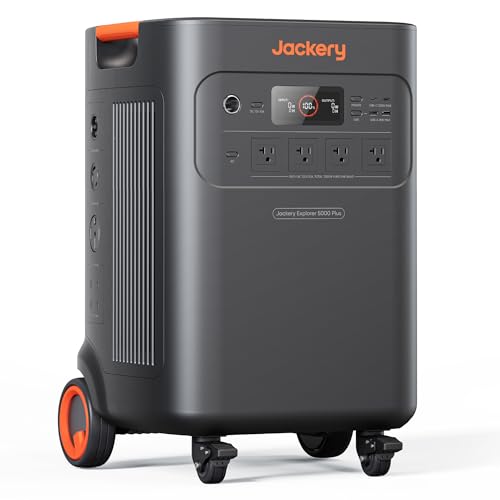
Jackery Solar Generator 5000 Plus Portable Power Station 5040Wh 7200W AC Output
More Details On Our Top Picks
That 2042Wh capacity puts this in a very different lane from the handheld banks below. It suits households that want a real backup block for routers, lights, small appliances, or a short outage window, and the 2200W AC output gives you far more breathing room than a phone-only charger. The LiFePO4 battery, a lithium iron phosphate cell type known for long cycle life, is the kind of detail that matters more over years than on day one.
The trade-off is plain: this is larger, heavier, and more of a stay-at-home or car-camping choice than a grab-and-go pack. You may find the USB-C PD 100W port handy for modern laptops, and that helps it bridge home and travel use better than Item 4 or Item 6. For most backup-minded households, that flexibility is the point.
Strong Points
- Large energy reserve suits extended outages or heavier weekend use.
- 2200W AC output widens the range of gear you can run.
- USB-C PD 100W is useful for fast laptop charging.
- LiFePO4 chemistry usually appeals to long-term ownership plans.
Small Caveats
- The size makes it less convenient for casual day trips.
- Solar panel support is optional, so you’ll want to plan the full setup.
- It asks for a clear storage spot, not a crowded shelf.
Feature Snapshot
Who It Suits Best
Households that want a serious backup source for outages, RV stops, or base-camp style camping will get the most from it.
Where A Sibling Pick Shines
Dexnor 27,000mAh Solar Power Bank Portable Charger suits commuters and day-trippers who need something far smaller and easier to carry.
BLAVOR leans hard into convenience, which makes sense for travel bags, glove compartments, and emergency kits. The 20,000mAh battery capacity is enough to cover several phone top-ups in normal day-to-day use, and the four included cables reduce the usual rummaging for the right lead. A camping light and hand crank add a backup angle that the larger Jackery units don’t even try to cover.
The honest read is that it’s more about flexibility than raw output. Wireless charging helps for casual desk use, though wired charging is still the steadier route for most phones and tablets, and the hand crank is best treated as a last-resort backup rather than your main plan. That makes it a practical, not flashy, choice for people who want layers of options in a small bag.
What We Like
- Four cables built in can cut down on accessory clutter.
- Wireless charging adds convenience for short stops and desk use.
- The hand crank gives you another fallback in a pinch.
- The camping light helps during outages or roadside stops.
Worth Noting
- Wireless charging usually runs best for quick, casual top-ups.
- The hand crank is a backup feature, not a daily charging plan.
- Keeping the cable set tidy takes a little care in a small bag.
Quick Facts
Made For
Travelers, campers, and anyone building a compact emergency kit will appreciate the layered feature set.
Another Choice May Suit
Solar Charger Power Bank 49800mAh Wireless Portable Phone Charger fits families who want more total output and more charging ports in one carry-friendly unit.
This one moves firmly into home-backup territory, and the included 2x200W solar panels make that intent obvious. With 3072Wh of storage, a 3600W AC output, and a 7200W surge rating, it gives you the kind of headroom that matters during longer outages or around heavier household loads. The LFP battery, another lithium iron phosphate setup, is a sensible match for a system you may keep around for years.
Compared with Item 1, you get even more capacity and a stronger emphasis on full backup planning, not just portable convenience. That comes with a bigger footprint and a much more committed setup, so it suits a garage, utility room, or RV base rather than a kitchen counter. For households that want a solar-ready system from the start, it’s an easy one to take seriously.
Highlights
- 3072Wh storage gives you substantial backup reserve.
- 3600W AC output handles a wider spread of appliances.
- Two included solar panels simplify the starter setup.
- 7200W surge support adds extra room for startup loads.
- LFP battery chemistry suits long-haul ownership goals.
Areas To Watch
- The system is clearly built for dedicated storage space.
- It makes more sense for planned backup than casual carry.
- Panel placement and cable routing deserve a little thought.
Core Details
The Right Fit
Homeowners and RV users who want a serious solar-backed backup system will get the most value from it.
Swap It Out When
Jackery Explorer 2000 v2 Portable Power Station 2042Wh 2200W AC Output suits you better for lighter storage needs and easier movement.
The big draw here is straightforward: a 49,800mAh battery in a body that still looks reasonable for travel bags and emergency kits. Two USB-A ports and one USB-C port give you simple, familiar plug-in options, and the 15W fast-charging spec is enough for basic top-ups without making the unit feel overcomplicated. At 0.9 lb, it stays closer to the portable side of the category than the Jackery stations above.
The included flashlight pair also makes sense for campsite tables, roadside checks, or a dark hallway after a power cut. The trade-off is that this is still a phone-first bank, so it belongs in the same conversation as Item 2 and Item 6 more than the home backup units. You’ll likely appreciate it most as a carry-in-the-bag charger that keeps the essentials going.
Upsides
- Large capacity helps stretch between wall charges.
- USB-C plus USB-A ports cover a wide range of cables.
- The weight stays manageable for travel and day trips.
- Dual flashlights add a useful emergency layer.
Points To Note
- Solar charging works best as a backup source, not the main plan.
- The feature set is simpler than the higher-output models.
- Keeping the casing clean matters because it travels often.
Details At A Glance
Whose Shelf It Belongs On
Travelers and weekend campers who want a simple, large-capacity phone charger will find the fit easy to understand.
Look Elsewhere When
BLAVOR Solar Power Bank with Hand Crank and 4 Cables 20000mAh makes more sense for anyone who wants wireless charging and a hand-crank backup in one package.
YOLOSKS packs a lot into a format that still belongs in a backpack, car kit, or family travel bag. The 49,800mAh capacity is paired with wireless charging, four built-in cables, six outputs, and two inputs, so the day-to-day benefit is fewer missing accessories and less device juggling. The 22.5W QC3.0 fast-charging spec, a Quick Charge standard, helps explain why this one feels busier than Item 4 without moving into station territory.
That extra flexibility does come with a little more complexity, especially in storage and cable management. For group trips or households with mixed phones, tablets, and small accessories, though, the variety is the point. It’s the kind of bank that rewards people who want more than a single USB port and a hope.
Best Bits
- Four built-in cables reduce the need to pack extras.
- Wireless charging adds a handy touchpoint for daily use.
- Six outputs support several devices across one charging session.
- Two inputs give you more than one recharging path.
- 49,800mAh capacity suits families and extended trips.
Room For Improvement
- The higher feature count can make storage a little busier.
- Built-in cables are convenient, though they still need careful handling.
- The more ports you carry, the more you’ll want to keep track of cable layout.
Feature Rundown
Best Suited To
Families, shared road trips, and anyone carrying more than one phone at a time will benefit most from the port layout.
Reach For A Different Pick When
Solar Charger Power Bank 49800mAh Portable Solar Phone Charger fits you better if you want a simpler control layout with fewer built-in charging extras.
Dexnor sits in the middle ground nicely, which is why it feels easy to recommend for everyday carry with a little extra backup headroom. The 27,000mAh capacity is larger than most pocket banks, yet the unit still aims at travel, camping, and emergency use rather than house-wide power. Wireless charging, three ports, and an LED flashlight round out a set that feels practical instead of crowded.
Compared with Item 2, this one leans a bit more toward straightforward capacity and less toward novelty features. That makes it a better fit for commuters, students, and travelers who want a bank that behaves predictably in a backpack or carry-on. The modest complication is that a multi-feature unit like this still deserves a tidy storage spot, especially if you’re carrying it daily.
Positives
- 27,000mAh gives you a healthy middle ground for portable backup.
- Wireless charging keeps short top-ups simple.
- Three ports help you manage more than one device.
- The LED flashlight is useful in tents, cars, and dark hallways.
Honest Caveats
- The feature mix is useful, though not as broad as the larger banks.
- Daily carry still benefits from a careful packing routine.
- Wireless charging works best as a convenience layer, not the main event.
At A Glance
Built With In Mind
Commuters, students, and light travelers who want one portable charger for daily use and backup moments will like the balance here.
Where Shoppers Go Wrong
BLAVOR Solar Power Bank with Hand Crank and 4 Cables 20000mAh suits you better if you need extra cable variety and a hand-crank fallback for emergency kits.
This is the unit you look at when ordinary backup stops being enough. A 5040Wh LiFePO4 battery, 7200W AC output, and support for both 120V and 240V service put it in a different conversation from the smaller banks and even from Item 1. Expandability to 60kWh is the real headline here, because it gives larger households or serious preparedness plans room to grow.
The flip side is obvious: this is for dedicated backup planning, not casual portable charging. It belongs in a permanent setup where storage, wiring, and system sizing all matter, and that makes it a better fit for homes than for tents. For anyone who wants one large platform instead of several smaller pieces, it’s the most ambitious option in the group.
Reasons To Buy
- 5040Wh capacity gives you serious stored energy.
- 7200W AC output supports a wider household load range.
- 120V and 240V support adds flexibility for home use.
- Expandable capacity lets the system grow with your needs.
- LiFePO4 battery chemistry suits long-term ownership planning.
Softer Spots
- This is a home backup platform more than a portable charger.
- It asks for planning around space and system layout.
- Most travel situations call for something much smaller.
Core Details
The Right Fit
Homeowners planning for long outages and larger backup needs will appreciate the scale and expandability here.
A Better Fit Elsewhere
Jackery Explorer 2000 v2 Portable Power Station 2042Wh 2200W AC Output suits you better for a smaller footprint and easier day-to-day handling.
How To Choose The Right Portable Solar Power Banks
Match Capacity To The Real Job
Capacity tells you how much energy the unit can store, and that matters more than flashy extras once the lights go out or the phone battery drops fast. A 20,000mAh bank works well for phones, earbuds, and occasional tablet use, while 49,800mAh options stretch further for family trips or repeated top-ups. Station-style picks like the Jackery units shift the discussion from charging phones to supporting appliances, routers, and longer outages.
Look Past The Port Count
More ports help, but only when they match the devices you carry. USB-C matters for newer phones and laptops, USB-A still covers plenty of older cords, and wireless charging can reduce friction for quick desk or travel stops. Built-in cables are useful, though they also add a little storage discipline to the mix.
Decide How Portable You Really Need It
There’s a real difference between a backpack-friendly power bank and a home backup system that lives near a wall outlet or in a utility room. The portable units are better for commuting, camping, and day trips, while the large Jackery stations belong in planned setups where size is less of a concern. Weight, carry handles, and where you’ll store it matter just as much as raw output.
Think About Solar As A Support Tool
Solar input helps most when it acts as a supplemental recharge method, not as the only way to refill the battery. That’s why a panel-ready unit can be useful on long outdoor stays or during outages, but a wall-charged bank still makes sense for everyday convenience. In real use, solar is the slow-and-steady helper, not the main fuel line.
Before You Pick One
Wrong Turns To Avoid
Plenty of shoppers focus on battery size and skip the output details, then end up with a bank that charges slowly or can’t keep up with a laptop. Another common miss is buying a bulky station for short trips, which turns a useful tool into dead weight in a backpack. Port types, cord storage, and carrying needs deserve a look before the battery number does.
The Upgrade Payoff
Higher-tier models cost more because they usually bring larger batteries, stronger AC output, more charging paths, and better battery chemistry. In this category, that also means fewer compromises during outages and less juggling when several devices need power at once. Paying more makes sense when the unit will sit at the center of your emergency plan or support a larger household load.
Frequently Asked Questions
Are solar power banks enough for everyday phone charging?
Yes, a smaller unit with USB-C or USB-A can handle normal phone top-ups well. Solar input works best as an extra recharge path rather than the main one.
What does mAh tell you?
mAh means milliamp hours, a basic measure of stored battery capacity. Higher numbers usually mean more charging reserve, but output and port type still matter a lot.
Do built-in cables make a real difference?
They do, especially in cars, travel bags, and emergency kits where loose cords get lost easily. The trade-off is that you need to keep the integrated leads neatly stowed.
Is wireless charging useful on a portable bank?
It’s handy for quick, casual use and reduces cable handling. Wired charging still tends to be the steadier choice for most devices.
Should you choose a power bank or a power station?
Choose a power bank for phones, tablets, and travel use. Choose a power station when your goal is backup power for home equipment or longer outages.
Closing Thoughts
The right Portable Solar Power Banks fit starts with your real routine, not the biggest number on the box. A commuter, camper, or weekend traveler usually gets more value from a compact 20,000mAh to 49,800mAh bank, while a household preparing for outages needs the bigger Jackery stations. The lineup here gives you both ends of that range, plus a few flexible middle-ground options. Match the size to the job, and the choice gets a lot easier.
