

Choosing battery backup for home solar use can feel oddly technical until a storm, outage, or camping trip puts it into plain language. You want enough stored energy for your actual routine, solid charging options, and a shape that fits your space without turning installation into a weekend project.
This roundup keeps the focus on practical fit. You’ll see compact portable units for short backup needs, larger power stations for fridges and small appliances, and fixed battery systems for serious home storage.
The Shortlist At A Glance

Daran Portable Power Station 89.6Wh LiFePO4 Battery

Jackery Explorer 2000 v2 Portable Power Station

12V 600Ah LiFePO4 Lithium Battery Built-in 200A BMS
ECO-WORTHY Cubix100 48V 100Ah LiFePO4 Lithium Battery w/Bluetooth

Anker SOLIX S2000 Portable Power Station
BROWEY 1600W (3200W Peak) Portable Power Station

ECO-WORTHY Powermega 48V 314Ah (2 Pack) LiFePO4 Battery Energy Storage
MARBERO Portable Power Station 88Wh, 120W Surge, Solar Generator 24,000mAh
More Details On Our Top Picks
For desk charging, short trips, and light backup, this Daran unit keeps the footprint small without feeling stripped down. The LiFePO4 battery chemistry matters here, since lithium iron phosphate is valued for steadier long-term storage behavior than older battery styles, and that fits a car trunk or shelf much better than a bulky generator.
The AC outlet and PD fast charging give you useful flexibility for a laptop, phone, or camera gear during a commute stop or a weekend tent setup. The trade-off is plain, though, the 89.6Wh capacity is aimed at small loads, so this sits closer to a grab-and-go helper than a full home backup block.
Strong Points
- Small enough for a shelf, glove box, or carry-on style storage.
- LiFePO4 chemistry suits regular top-ups and repeat use.
- AC outlets expand its usefulness beyond USB-only charging.
- PD fast charging helps trim downtime for phones and laptops.
Things To Consider
- Its storage capacity fits small electronics, not power-hungry appliances.
- The solar panel is optional, so solar charging needs another purchase.
- You’ll want to keep cords and adapters organized, because small units get cluttered fast.
Feature Snapshot
Whose Shelf It Belongs On
It suits commuters, students, and campers who mainly need dependable power for small devices and occasional backup.
Where A Sibling Pick Shines
MARBERO Portable Power Station 88Wh, 120W Surge, Solar Generator 24,000mAh fits slightly lighter needs better, especially when you want a simpler small-device companion with broad portability.
That jump from pocket-sized backup to a 2,042Wh unit changes the conversation completely. This Jackery makes sense for households that want to keep a fridge, essentials, and charging gear running during outages, and the 2,200W AC output gives it far more headroom than the smaller Daran and MARBERO picks.
USB-C PD 100W is handy for modern laptops, so your work setup can stay calmer during a power cut. The honest trade-off is size, because this is the kind of station that earns its keep at home or in a vehicle, not on a casual carry into the woods.
What We Like
- Large 2,042Wh capacity suits household backup planning.
- 2,200W AC output opens the door to more demanding appliances.
- USB-C PD 100W is useful for charging capable laptops.
- The LiFePO4 battery format fits frequent use better than older chemistries.
- Strong reserve for emergency setups, especially during longer outages.
Softer Spots
- It takes up much more space than a small portable station.
- Most households will keep it parked indoors or in a garage.
- It can feel like more machine than you need for light camping.
Details At A Glance
Made For
It suits families, homeowners, and remote workers who want a serious backup reserve with laptop-friendly charging.
A Better Fit Elsewhere
Anker SOLIX S2000 Portable Power Station is the steadier choice for shoppers who want a similarly serious battery station with a slightly more balanced everyday profile.
Where the first two picks are portable stations, this one moves into fixed battery storage territory. A 12V 600Ah pack with a built-in 200A BMS, or battery management system, gives you the kind of reserve that suits RV systems, solar banks, and off-grid home storage more than casual backup use.
The 7,200Wh figure points to a serious energy reservoir, so you’re looking at a setup that can support much larger loads and longer runtime than the smaller units above. The trade-off is obvious too, since a battery this large asks for proper planning, matching hardware, and enough room to install it cleanly.
Upsides
- Large 7,200Wh capacity supports substantial storage needs.
- Built-in 200A BMS adds control for a high-draw system.
- LiFePO4 chemistry fits repeated cycling in solar and RV use.
- Well suited to fixed installations rather than loose portability.
- Pairs naturally with off-grid and home energy storage projects.
Points To Note
- This is not a grab-and-go option, so placement matters.
- Large battery builds need matching cables, charge hardware, and space.
- Routine system checks matter more here than they do with small stations.
- The scale may be more than a simple emergency kit needs.
Core Details
Right Fit For
It suits RV owners, off-grid homes, and solar installers who need a large fixed storage block.
Swap It Out When
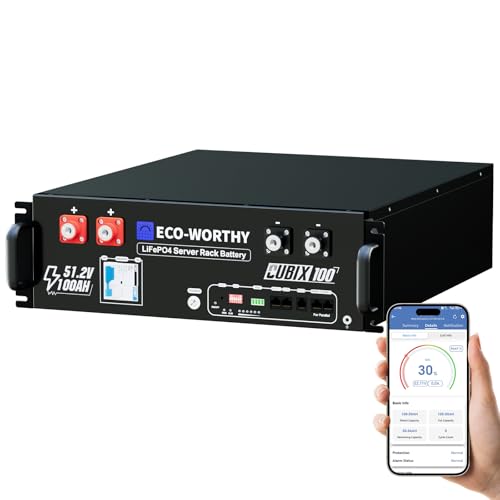
ECO-WORTHY Cubix100 48V 100Ah LiFePO4 Lithium Battery w/Bluetooth fits better for shoppers who want rack-style home storage with built-in connectivity.
Compared with the massive 12V unit above, this ECO-WORTHY model leans toward organized rack storage for a home solar room or backup cabinet. The 48V, 100Ah layout works well in systems that benefit from cleaner power architecture, and Bluetooth adds a practical monitoring layer for keeping an eye on battery status without opening everything up.
Its 5,120Wh capacity sits in a useful middle ground for home backup, because it’s substantial without feeling as physically sprawling as the 600Ah pick. The catch is straightforward, you’ll appreciate it most in a planned installation where room, wiring, and integration are already sorted.
Highlights
- 48V format fits serious home energy storage layouts.
- Bluetooth support makes status checks more convenient.
- 5,120Wh capacity suits backup and off-grid use.
- Rack-style shape helps keep a system tidy.
- Strong fit for solar spaces that value orderly placement.
Room For Improvement
- Rack batteries need a more deliberate install than portable stations.
- It’s less friendly for move-it-around use than the smaller picks.
- System planning matters, especially for homeowners new to 48V setups.
Feature Card
Best Suited To
It suits homeowners and solar hobbyists who want a clean rack battery for a planned backup system.
Look Elsewhere When
ECO-WORTHY Powermega 48V 314Ah (2 Pack) LiFePO4 Battery Energy Storage suits larger off-grid projects that need more total battery mass and deeper integration.
The Anker SOLIX S2000 sits in a very useful middle lane, where capacity, output, and portability still feel reasonably balanced. At 2,010Wh and 1,500W, it’s easier to live with than the Jackery Explorer 2000 v2 in some homes, yet it still has enough reserve to matter during an outage or as a UPS, meaning an uninterruptible power supply for keeping connected gear running through short interruptions.
The 35-hour fridge backup claim is the sort of spec that helps you picture the real use case, especially in a kitchen that needs to ride out a temporary power cut. The trade-off is that it’s still a large station, so storage space and charging setup deserve the same attention you’d give any substantial backup battery.
Bright Spots
- 2,010Wh capacity gives you a strong backup buffer.
- 1,500W output handles a useful spread of everyday loads.
- UPS support fits home office or network backup use.
- Fridge backup potential makes it practical for outage planning.
- LiFePO4 battery chemistry suits repeat charging over time.
Areas To Watch
- It’s still bulky enough to deserve a fixed storage spot.
- High-capacity stations can take a while to recharge fully.
- People wanting lightweight camping gear may find it oversized.
Key Specs
The Right Fit
It suits households and remote workers who want a dependable backup station with enough reserve for fridge duty.
Another Choice May Suit
Jackery Explorer 2000 v2 Portable Power Station fits better for households that want a slightly larger output ceiling and a more aggressive backup profile.
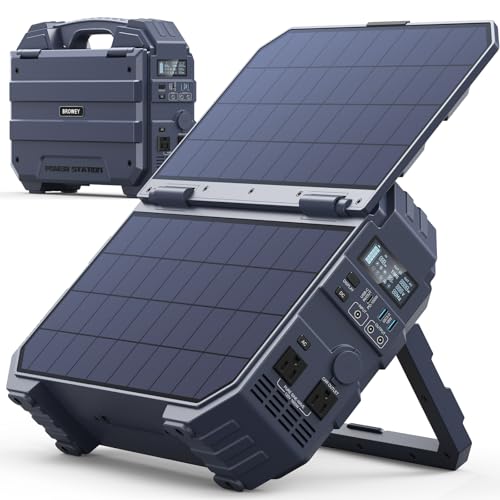
BROWEY takes a different path by building a solar panel into the station itself, which is appealing for camping, RV stays, and backup situations where you want fewer separate pieces to manage. At 1,024Wh with a 1,600W rating and 3,200W peak, it lands between the compact travel picks and the larger home-focused stations.
The 100W USB-C PD port adds modern charging convenience, especially for laptops and smaller work gear. The trade-off is that integrated solar hardware can add complexity or bulk, so this makes the most sense for you when simplified solar charging matters more than the smallest possible shape.
Best Bits
- Built-in solar panel reduces the number of separate parts.
- 1,024Wh capacity works for mid-sized backup needs.
- 1,600W output covers a practical range of appliances and tools.
- USB-C PD 100W suits newer laptops and accessories.
- Good fit for trips where solar charging is part of the plan.
Minor Gripes
- Built-in solar can make the unit less flexible than external-panel setups.
- It sits above the smallest travel stations in size and weight.
- Storage and transport take a little more planning.
Quick Facts
Who Should Grab It
It suits campers, RV owners, and homeowners who want solar charging built into the package.
Reach For A Different Pick When
Anker SOLIX S2000 Portable Power Station suits you better if you want a more straightforward home-backup station without the built-in solar trade-off.
This ECO-WORTHY package is for serious system planning, not casual backup. A 48V 314Ah two-pack with active balancing, a 200A BMS, and communication options such as RS485, CAN, and RS232 belongs in a larger off-grid or home storage design where monitoring and pack coordination matter.
The LCD, Bluetooth, and WiFi support make it easier to keep track of what’s happening without treating the battery bank like a black box. The bigger commitment comes from the install itself, since two-pack energy storage asks for room, wiring discipline, and a setup that’s already mapped out.
Reasons To Buy
- Two-pack format suits larger storage plans.
- Active balancing helps the battery bank stay more even.
- 200A BMS fits demanding system use.
- Bluetooth and WiFi improve status visibility.
- Multiple communication ports help with system integration.
Small Caveats
- This is a planning-heavy purchase, not a casual add-on.
- Installation space and wiring skill matter quite a bit.
- It makes the most sense in larger off-grid builds.
Technical Sheet
Built With In Mind
It suits off-grid homeowners, solar installers, and advanced hobbyists building a large battery bank.
Where A Sibling Pick Shines
ECO-WORTHY Cubix100 48V 100Ah LiFePO4 Lithium Battery w/Bluetooth is the easier fit for smaller home backup setups that still want a rack-style format.
MARBERO is the easygoing small-device choice in this lineup. The 88Wh battery, 120W surge rating, and 8 output ports make it useful for lights, phones, cameras, and similar gear, especially when you want something that fits neatly into a camp tote or emergency drawer.
It feels closer in spirit to the Daran unit than to the larger home backup stations, which helps narrow the decision. The trade-off is that this is not the pick for serious appliance support, but for fishing weekends, hunting trips, or short home outages, the size and layout make a lot of sense.
Positives
- Very easy to carry and stash.
- Eight output ports help serve several small devices at once.
- The AC outlet adds flexibility beyond USB-only charging.
- Compact energy capacity suits quick backup tasks.
Worth Noting
- Its small capacity limits how long it can run larger gear.
- It works best as a supplemental power source.
- Heavy appliance users should look to a larger station.
Core Details
Perfect Match For
It suits campers, weekend travelers, and households that want a compact emergency charger for small electronics.
Consider Something Else When
Daran Portable Power Station 89.6Wh LiFePO4 Battery is the better fit for anyone who wants a similar compact format with LiFePO4 chemistry and PD fast charging.
How To Choose The Right Battery For Home Solar Power
Capacity Should Match Your Real Routine
Start with the loads you actually want to run, not the biggest number that looks impressive. A small portable station like the Daran or MARBERO models works for phones, lights, and laptops, while the Jackery Explorer 2000 v2 or Anker SOLIX S2000 fits fridge support and longer backup needs.
Capacity is measured in watt-hours, which tells you how much energy the battery can store. More watt-hours usually mean more runtime, but also more weight, more space, and a higher commitment to charging and storage.
Voltage And Battery Chemistry Matter More Than They Seem
LiFePO4, short for lithium iron phosphate, shows up across this list because it suits regular cycling and home backup use. That makes it a smart fit for shoppers who expect repeated charging, not just an emergency drawer battery.
Voltage helps define the scale of the system. Twelve-volt batteries like the dumfume option are common in RV and off-grid builds, while 48V systems like ECO-WORTHY Cubix100 and Powermega fit larger solar setups with a more planned installation path.
Portability Versus Fixed Installation
Portable power stations are easier to move, store, and use during travel or a quick outage. Fixed rack batteries usually demand more installation effort, but they reward you with cleaner system design and deeper storage potential.
The right fit depends on your space and how often you move the battery. A garage shelf, RV compartment, or solar closet points you toward different shapes, and a big rack battery is rarely the answer for someone who mainly needs campsite convenience.
Output, Ports, And Charging Style Shape Daily Use
AC output matters when you want wall-style power for appliances or tools, while USB-C PD helps with modern laptops and tablets. The BROWEY and Jackery units show how output and charging options can shift the usefulness of a battery far beyond simple phone charging.
Look at how many devices you plan to plug in at the same time, then check whether the layout makes sense for your routine. A battery that fits your charging habits tends to feel easier to own, and that matters more than a flashy spec sheet.
Things Worth Knowing First
Common Shopping Slip Ups
One frequent mistake is choosing capacity without checking output. A battery can store plenty of energy and still fall short on appliance startup loads, so the rating matters just as much as the reserve.
Another slip-up is forgetting about space and installation. A rack battery or large home storage pack needs more planning than a portable station, and that difference becomes obvious the day you need to move or mount it.
What The Higher Tier Buys
Higher-priced batteries usually buy you more capacity, stronger output, monitoring tools, and better fit for repeated use. That’s why the Anker SOLIX S2000, Jackery Explorer 2000 v2, and ECO-WORTHY rack systems sit above the smaller portable options.
The upgrade pays off most when you want fewer compromises during outages or a more serious solar setup. For light travel use, spending up can feel unnecessary, but for home backup, the extra reserve often earns its place.
Frequently Asked Questions
What size battery suits a small home backup setup?
Small backup needs usually fit compact stations like the Daran or MARBERO. Those units suit phones, lights, and laptops far better than large appliances.
Why do LiFePO4 batteries show up so often?
LiFePO4 battery chemistry is common because it fits repeated charge cycles well. That makes it practical for solar storage and ongoing home backup use.
Do portable power stations replace fixed solar batteries?
Portable stations are easier to move and use right away, but they do not replace a serious rack system for whole-home storage. Fixed batteries fit planned solar setups better.
What does a BMS do?
A BMS, or battery management system, helps manage how the battery operates. In larger batteries like the dumfume and ECO-WORTHY models, it supports more controlled use.
How do you match a battery to solar use?
Start with your load size, then check capacity, voltage, and output together. That combination matters more than any single number on the listing.
Final Thoughts
The best battery for home solar power depends on whether you want a pocketable backup, a strong household station, or a fixed storage block. Daran and MARBERO keep things simple, Jackery, Anker, and BROWEY cover bigger daily needs, and the ECO-WORTHY and dumfume batteries push into more serious solar territory. Match the battery to your space, your loads, and how often you plan to use it. That’s the path that keeps the setup useful instead of oversized.
