

You want camping power that fits into real life, not a fantasy setup that takes over the trunk. The right solar generator keeps phones, lights, cameras, and small appliances running without the noise or fuel smell of a traditional generator, and the differences between models show up fast once you start packing for a weekend, a long road trip, or a stormy backup plan.
This roundup focuses on capacity, output, portability, and panel pairing, so you can match the unit to your style of travel. Some of these are small enough for a carry-and-go setup, while others are closer to home backup systems that still make sense for RV use and extended campsite stays.
The Shortlist At A Glance

Jackery Explorer 2000 v2 Portable Power Station 2042Wh 2200W AC Output

Anker SOLIX C300 Portable Power Station with 60W Solar Panel 288Wh 300W

Jackery HomePower 3000 and 2x200W Solar Panels 3072Wh 3600W AC Output

Jackery Explorer 2000 v2 and 2x200W Solar Panels 2042Wh 2200W AC Output

Jackery Solar Generator 300 and 40W Solar Panel 292Wh 300W AC

Jackery HomePower 3600 Plus Portable Power Station with 2X 200W Solar Panels 3600W AC Output
BLAVOR Portable Power Station 1600W Peak 3200W Built-in Solar Panel 1024Wh LiFePO4 Battery
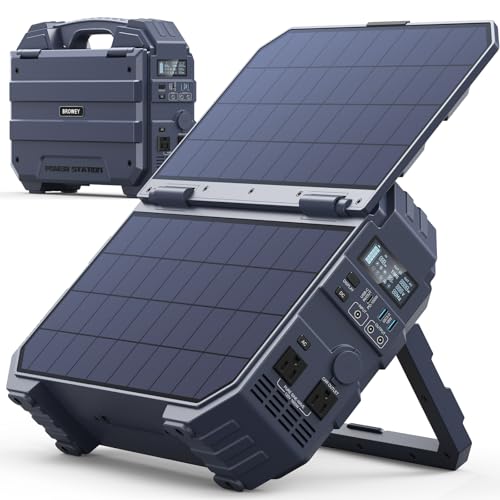
BROWEY 1600W 3200W Peak Portable Power Station 1024Wh LiFePO4 Battery
More Details On Our Top Picks
More capacity changes the whole camping rhythm, and this Jackery fits that role without turning into a wall-mounted object on wheels. The 2042Wh battery, 2200W AC output, LiFePO4 chemistry, and 100W USB-C PD port point to a unit that can handle a busy campsite, a long weekend in an RV, or backup duties at home.
Compared with the smaller Anker SOLIX C300, this one is built for longer runs and heavier loads rather than easy day packing. The trade-off is obvious, size and weight will matter more, so it suits car campers and emergency planners better than hikers or minimalist travelers.
Strong Points
- The 2042Wh battery gives you much more breathing room for lights, charging, and small appliances across a weekend.
- 2200W AC output opens the door to more demanding gear than compact packs can usually handle.
- LiFePO4 battery chemistry generally appeals to shoppers who want a longer-use design for repeated trips and standby duty.
- USB-C PD at 100W is handy for modern laptops and fast-charging phones without carrying extra bricks.
Things To Consider
- The larger footprint makes it less suited to backpack-style travel.
- You will want a clear storage spot in the vehicle or garage, since this class of unit is not something you tuck away casually.
- The Solar Panel Optional note means panel selection stays in your hands, which is useful but adds another purchase decision.
Core Details
Whose Shelf It Belongs On
You benefit most from this Jackery if your camping style leans car-based, your gear list is growing, or you want a serious backup unit that still travels. It is a strong fit for families, RV owners, and anyone who prefers longer runtime over easy-carry convenience.
Swap It Out When
Jackery Explorer 2000 v2 and 2x200W Solar Panels makes more sense for you if you want the same general platform with panels bundled in for faster solar pairing decisions. That version suits campers who want a more complete kit right out of the box.
The C300 is the sort of unit that makes sense for short outings, festival-style camping, or a light vehicle setup where space is tight. Its 288Wh battery and 300W output keep it in the portable end of the field, and the included 60W solar panel gives you a simple starting point for topping up in daylight.
Compared with the Jackery Explorer 2000 v2, this Anker is far easier to carry and store, but it clearly gives up runtime and output headroom. That trade-off works in your favor when you mostly need phones, tablets, cameras, and small electronics rather than appliance-level loads.
What We Like
- The smaller battery size keeps the whole setup easier to move and stash in a packed vehicle.
- 140W two-way fast charging helps shorten the wait between uses and makes the unit feel less tied to a wall outlet.
- The included 60W solar panel is practical for campers who want a straightforward starter bundle.
- LiFePO4 battery construction usually appeals to shoppers who plan to recharge often.
Room For Improvement
- The 300W output limits what you can realistically run at once.
- Panel-assisted charging is useful, though solar performance still depends on sunlight and panel placement.
- This is better as a mobile electronics hub than a whole-campsite power source.
Feature Snapshot
Made For
You will appreciate this Anker most if you camp light, pack efficiently, and care more about convenience than long runtime. It also suits weekend travelers who only need backup for personal electronics and a few small accessories.
Another Choice May Suit
Jackery Solar Generator 300 and 40W Solar Panel is a better fit for backpackers and very light packers who want an even smaller travel-friendly setup. It trims the footprint further, which helps when every pound in your gear pile matters.
This Jackery leans hard toward backup-minded camping, RV living, and home outage coverage rather than minimalist travel. The 3072Wh battery, 3600W AC output, and 7200W surge figure signal a unit that can support more demanding household-style loads than the smaller Explorer 2000 v2.
That extra muscle comes with a clear trade-off, it makes more sense in a vehicle, garage, or RV bay than in a tent-first packing system. For families who split time between travel and backup power, it reads like a smarter all-around anchor than the compact options above.
Highlights
- The large battery size gives you much more runtime for longer outages or campsite stays.
- 3600W AC output helps support heavier household-style devices and more ambitious RV use.
- The included 2x200W solar panels reduce the guesswork around building a solar setup.
- LFP battery wording points toward a chemistry many shoppers associate with repeat-use reliability.
- It works well as a central power hub for family gear, not just one or two devices.
Points To Note
- This is not a light carry for casual walk-in campsites.
- Solar panel setup takes more planning than a tiny plug-and-play pack.
- The size makes storage and vehicle placement matter more than with the smaller Jackery units.
Technical Sheet
Best Suited To
You fit this model best if your camping trips overlap with RV stays, family backup planning, or serious emergency prep. It has the scale to keep more than just the basics alive.
Look Elsewhere When
Jackery Explorer 2000 v2 is the better call for campers who want a simpler, smaller unit with less bulk to manage. It keeps the same brand feel but in a more travel-friendly form.
Where the plain Explorer 2000 v2 leans on portability, this bundle adds solar panels and a 20ms UPS feature for a more complete power setup. UPS, or uninterruptible power supply, matters because it helps keep connected gear from dropping out during a switchover, which is useful for home office gear or campsite electronics that stay plugged in.
For camping, that makes this feel less like a standalone battery and more like a ready-made system. The catch is that the panel bundle pushes it further into organized setup territory, so it suits users who want a structured kit rather than a grab-and-go cube.
What We Like
- The 2042Wh battery gives you the same substantial capacity as the base Explorer 2000 v2.
- 2200W AC output keeps the unit useful for a wide range of travel and backup needs.
- The 20ms UPS feature is useful for gear that should keep running through a quick power handoff.
- Bundled 200W panels simplify the move into solar charging.
Worth Noting
- The panel pair adds setup space, which matters in crowded campsites.
- It is better suited to a planned power layout than a very casual one-night outing.
- You may find the extra gear more than you need for phone-only trips.
Details At A Glance
Who Should Grab It
You fit this bundle best if you want a camping power station that also acts like a backup station for work gear or home essentials. It works especially well for organized setups where the panels will stay part of the routine.
Where A Sibling Pick Shines
Anker SOLIX C300 is easier to live with for casual travelers who care more about a smaller carry than a panel-heavy system. It is the simpler option for lighter packing days.
Small trips need a different kind of power plan, and this Jackery 300 is built for that lighter role. At 7.5 pounds with a 292Wh battery and 300W AC output, it is the easiest model in this group to toss into a pack, keep in the car, or bring along for a quick overnight stop.
The pure sine wave AC outlet matters because it gives sensitive electronics a cleaner-feeling power source than a rougher inverter setup. Compared with the larger Jackery and BLAVOR units, the trade-off is runtime, so this one is best for charging and modest gear rather than a whole weekend of heavy use.
Upsides
- The low weight makes campsite carry-in and car storage simple.
- Two AC outlets, a 100W USB-C PD port, two USB-A ports, and a 120W car port cover a useful range of small devices.
- The included 40W solar panel gives you a starter path for daylight charging.
- Pure sine wave output is a practical detail for electronics that prefer steadier power.
Small Caveats
- The compact battery means shorter runtime than the larger picks in this roundup.
- It is not the right match for appliance-heavy campsites.
- Multi-device charging still needs some planning because total output stays modest.
Quick Facts
Who Will Love This
You will like this model most if you pack light, move often, and only need a small reserve of power at camp. It suits solo travelers, quick weekenders, and anyone who wants a simple portable backup for devices.
Reach For A Different Pick When
Anker SOLIX C300 gives you more battery and a bigger charging ceiling while still staying compact. It is a better fit for campers who want a little more headroom without moving into the heavy-duty class.
This is the most expansion-minded Jackery in the lineup, and that changes the conversation from camping accessory to serious power base. The 3584Wh battery, 3600W AC output, and expandable capacity up to 21kWh make it a strong fit for people who want one system to cover home backup, RV use, and longer off-grid stays.
Compared with the Explorer 2000 v2 bundle, this one is built for a bigger power envelope and a more future-proof setup. The honest read is that it makes the most sense for shoppers who know they will keep growing into the platform, because that scale is more than many casual camping weekends require.
Reasons To Buy
- The 3584Wh capacity gives you serious runtime for extended use.
- 3600W AC output broadens the range of gear it can support.
- Expandable capacity up to 21kWh gives you room to scale later.
- The included 2x200W solar panels help form a more complete setup from the start.
- It suits home backup and RV duty as naturally as campsite use.
Areas To Watch
- This is more system than casual campers need for a single short trip.
- Expanded capacity planning takes more attention than a smaller all-in-one unit.
- Storage and transport matter a lot here, so you need space ready for it.
Feature Card
The Right Fit
You fit this unit best if your camping setup doubles as a home backup plan or RV power center. It is a serious pick for people who want growth room, not just a quick camping charge.
Where The Extra Money Goes
Jackery Explorer 2000 v2 is the better move for campers who want strong power without stepping into this larger-scale setup. It keeps the feature set simpler and easier to manage on ordinary weekend trips.
BLAVOR takes a different path from the Jackery units because the built-in solar panel keeps the setup more self-contained. With 1024Wh of LiFePO4 storage, 1600W output, 3200W peak output, and 100W USB-C fast charging, it sits in the middle ground between compact travel gear and larger backup power.
That built-in panel is useful for campers who dislike juggling extra accessories, though it also means you are buying into a more fixed design. You may find it especially appealing for mixed use around home, RV, and campsite life, where convenience matters as much as capacity.
Best Bits
- The built-in solar panel reduces the number of separate pieces you need to carry.
- 1024Wh capacity gives you a meaningful middle ground for weekend use.
- 1600W output is strong enough for a broad range of camping and backup tasks.
- 100W USB-C fast charging is a practical feature for modern laptops and phones.
Softer Spots
- Built-in solar keeps things simple, but it also limits how freely you can position or upgrade the panel side.
- The unit still needs enough storage room for a mid-size power station.
- For very long trips, a more expandable solar setup may suit you better.
Core Details
Built With In Mind
You should look at this BLAVOR if you want one self-contained power station for camping, RV backup, and home use without piecing together a separate panel plan. It suits campers who like a cleaner gear list.
Where Shoppers Go Wrong
BROWEY 1600W is the better fit for campers who want a similar built-in solar setup in a different package shape and colorway. It is worth comparing side by side before you settle on one.
BROWEY lands in the same general space as BLAVOR, with built-in solar and a 1024Wh LiFePO4 battery, but it gives you a distinct style and finish in dark blue. The 1600W AC output, 3200W peak output, and 100W USB-C PD support make it feel ready for a balanced mix of campsite electronics and backup needs.
For most camping setups, that middle-ground profile is useful because it stays more manageable than the huge home-backup units without shrinking down to travel-only size. The trade-off is that it still asks for sensible storage and setup space, so it works best when you can dedicate a spot in the car or RV.
Plus Points
- The 1024Wh battery gives you a solid buffer for ordinary camping and emergency use.
- Built-in solar keeps the setup more self-contained.
- 1600W AC output suits a wider mix of devices than tiny portable packs.
- 100W USB-C PD is handy for charging laptops and modern phones.
Honest Caveats
- This class still takes planning for transport and storage.
- Built-in solar is convenient, though separate panel positioning flexibility is more limited.
- The battery size is practical, but not in the same league as the largest Jackery options here.
Feature Rundown
Right Fit For
You fit this BROWEY well if you want a self-contained camping power station with a mid-size battery and no fuss around separate panel pieces. It is a sensible match for RV trips, home backup, and occasional off-grid use.
Another Choice May Suit
BLAVOR Portable Power Station 1600W is the better pick for shoppers who want a similar built-in solar concept but are comparing brands and styling details. That side-by-side look can help you decide which layout feels easier to live with.
How To Choose The Right Solar Generators For Camping
Start With The Way You Camp
Your camping style should lead the decision, not the biggest watt number on the page. Car campers and RV travelers can carry the larger Jackery models with 2000Wh-plus batteries, while day-trippers and light packers usually do better with the Anker SOLIX C300 or Jackery Solar Generator 300.
Runtime matters more than headline output for a lot of trips. A compact unit may charge phones and run lights all weekend, while a larger station becomes useful once you start adding cameras, cooking gear, or an electric cooler.
Match Output To Your Gear List
AC output is the amount of alternating-current power the unit can provide at once, and it shapes what you can run. A 300W unit suits small electronics, 1600W to 2200W opens the door to a broader camping setup, and 3600W territory starts feeling closer to a backup system.
Also pay attention to surge output, which is the brief extra push some gear needs at startup. That matters for appliances with a kick at turn-on, while pure charging duty is more forgiving.
Consider Battery Chemistry And Charge Path
LiFePO4, short for lithium iron phosphate, is a battery chemistry many shoppers favor for repeat charging and longer service life expectations. You see it across most of this list, and that consistency is useful because it keeps the category focused on durable, travel-friendly power stations rather than one-off designs.
Solar panel readiness also matters. Some units include panels, some are panel optional, and some build the panel into the unit, so your choice depends on whether you want the cleanest kit, the most flexible layout, or the simplest bundle.
Think About Storage, Carrying, And Setup Time
The honest read is that size changes how often you will actually use the thing. A 7.5-pound unit slips into a day bag or back seat without much thought, while a 3000Wh-class station needs dedicated vehicle space and a more deliberate setup.
That difference becomes obvious at the campsite, especially when you are unloading gear after a long drive. The easiest unit to store is not always the most useful one, so the right answer usually sits where capacity and convenience meet.
A Quick Reality Check
Common Shopping Slip Ups
Many campers focus on battery size and forget the output limit. A large battery still disappoints if the AC rating is too low for the gear you want to run.
Another common miss is ignoring the solar setup. An included panel can simplify life, while a panel-optional unit leaves you to sort out compatibility and placement on your own.
What The Higher Tier Buys
Higher-tier models cost more because they usually bring larger batteries, stronger AC output, and more involved solar packages. They also tend to add features like UPS support or expandable capacity, which matter once your setup starts covering more than a phone and a lantern.
That upgrade makes sense for families, RV users, and anyone building a home-backup plan alongside camping power. For a solo weekend or a quick drive-in site, the extra hardware may be more than you need.
Frequently Asked Questions
How much battery capacity do you need for camping?
Small trips often do well with compact packs in the 200Wh to 300Wh range. Multi-day stays or gear-heavy camps usually feel better with 1000Wh or more.
Do solar panels make a camping power station better?
Solar panels help extend runtime and reduce reliance on wall charging. The value is highest on longer trips and in sunny campsites.
Is LiFePO4 worth choosing over other battery types?
LiFePO4 is common in this roundup because many shoppers like its repeat-use reputation. It also shows up in both compact and larger stations, which keeps your options broad.
What does pure sine wave mean?
Pure sine wave describes a cleaner AC output shape that suits many electronics more comfortably. It matters most for sensitive gear like laptops and certain small appliances.
Can you use a solar generator for home backup too?
Yes, several picks here work well for both camping and backup duty. The larger Jackery HomePower models are especially useful when you want one station for both roles.
Closing Thoughts
The best solar generator for your camping setup is the one that matches how you actually travel. Light packers should stay near the compact Anker or Jackery 300, while RV users and backup-minded families will get more from the larger Jackery and BLAVOR options. Focus on battery size, AC output, and panel setup, then let the rest of the features fall into place. Once those three pieces line up, your campsite power plan starts feeling a lot less improvised.
