

Cooling a space takes more power than most portable gear can comfortably give, so the right setup matters. You need enough output for startup surge, enough battery capacity for runtime, and the right balance of portability versus whole-home reach. This roundup keeps the focus on real use, from RV cabins and campsites to backup power for a room during an outage.
You’ll also see a few air-conditioner picks in the mix, because the category often pairs a solar generator with the cooling unit itself. That makes the trade-offs easier to compare: size, noise, wiring, charging speed, and how much effort your setup asks from you.
Quick Look At The Shortlist

EF ECOFLOW Portable Power Station DELTA Pro 3600Wh

EF ECOFLOW Solar Generator Delta 3 Classic 220W Solar Panel

RecPro 13.5K Non-Ducted RV Air Conditioner White

Jackery Solar Generator 300 and 40W Solar Panel 292Wh
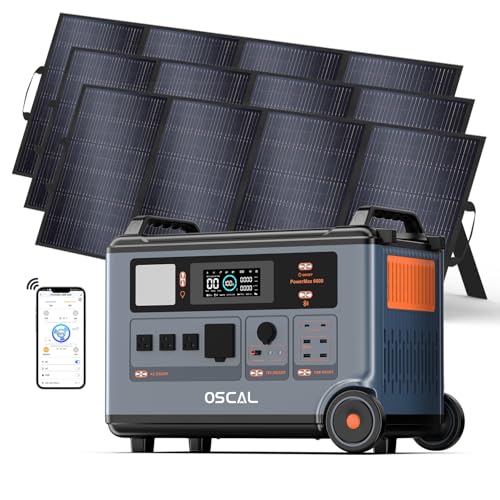
OSCAL PowerMax 6000 Solar Generator 3×400W Solar Panel
Ivation 6,500 BTU Camper Air Conditioner Portable Over-the-Window Sill

VEVOR RV Air Conditioner 13500 BTU Rooftop Unit
More Details On Our Top Picks
For whole-room backup, this is the sort of unit you notice before you ever unpack it, because the 3600Wh capacity and 3600W AC output point toward serious run-time and higher-load appliances. The expandable design matters for homes that need room to scale over time, and the 120V output keeps it aligned with common household gear.
The trade-off is plain, size and weight usually follow capacity, so this sits closer to an emergency anchor than a grab-and-go camp battery. For a house that wants to keep a room cool during outages, it makes a lot more sense than the smaller Jackery option, while campers may find the footprint more than they need.
Strong Points
- Large 3600Wh battery gives you more breathing room for longer outages.
- 3600W AC output supports heavier household loads than compact units.
- Expandable architecture helps you build capacity around changing needs.
- 120V output fits common indoor appliances without special planning.
Things To Consider
- Its scale makes it less suited to quick carry-and-go use.
- Serious backup setups usually need space for storage and charging.
- The larger format can feel excessive for short camping weekends.
Feature Snapshot
Who It Suits Best
Households that want a substantial backup unit for outages, larger living spaces, or an equipment-heavy setup will get the most from this pick.
A Better Fit Elsewhere
Jackery Solar Generator 300 and 40W Solar Panel 292Wh suits campers or travelers who want far less bulk and an easier carry.
This one feels more balanced for air-conditioner-adjacent use, because the 1024Wh battery, 1800W AC output, and 3600W surge rating give you a much clearer middle ground than the larger DELTA Pro. The included 220W solar panel also makes the system easier to picture for campsite charging or a weekend backup plan.
The 10ms UPS feature, a fast automatic switchover measured in milliseconds, matters most for gear that dislikes interruptions, especially in a home office or a small indoor setup. You may still want the bigger DELTA Pro for long outages, but this model looks easier to live with day to day, and the LiFePO4 battery chemistry is a sensible durability cue.
What We Like
- 1024Wh capacity keeps the system in a manageable range for travel and backup.
- 1800W AC output covers many common appliances and room-cooling accessories.
- 3600W surge headroom gives startup demands more flexibility.
- 220W solar panel adds a ready-made charging path.
- 100W USB-C output helps modern devices charge without extra clutter.
Room For Improvement
- It still takes planning, especially around panel placement and charging time.
- The included panel helps, though larger needs will ask for more capacity.
- It sits below the DELTA Pro for sheer backup endurance.
Details At A Glance
Right Fit For
You benefit most here if you want a solar generator that feels easier to manage than a giant backup unit but still has enough muscle for practical indoor use.
Where A Sibling Pick Shines
EF ECOFLOW Portable Power Station DELTA Pro 3600Wh suits larger homes that need longer runtime and more room to scale.
Compared with the portable power stations above, this RecPro unit is about direct cooling, not battery strategy. The 13,500 BTU rating tells you it’s built for RV cabins that need real air movement, and the non-ducted format keeps the setup aimed at compatible roof installs rather than loose placement on a shelf.
The built-in heat pump makes it a more flexible climate-control choice than a cooling-only box, though that does add another layer of system complexity. In a travel trailer or motorhome, the wireless remote and whisper-quiet behavior are the sort of details that make daily use feel less fussy, assuming your rig matches the format.
Highlights
- 13,500 BTU output gives strong cooling for many RV layouts.
- Non-ducted design fits compatible roof-mounted installs.
- Built-in heat pump broadens seasonal usefulness.
- Wireless remote adds comfort from the dinette or bed.
Areas To Watch
- Installation fit matters, so roof compatibility needs a careful check.
- The system is purpose-built, not a portable plug-and-move solution.
- Cleaning and maintenance are easier with a regular RV routine.
Core Details
Whose Shelf It Belongs On
RV owners with a compatible rooftop opening who want a fixed cooling solution will get the most out of this one.
Swap It Out When
VEVOR RV Air Conditioner 13500 BTU Rooftop Unit makes more sense for campers who want the included installation hardware and a different rooftop package.
The Jackery 300 shifts the conversation back to portability, and that matters a lot for anyone hauling gear to a campsite, tailgate, or short RV trip. At 7.5 pounds, it’s light enough that the integrated handle feels like a real advantage, not a marketing line, and the pure sine wave AC outlet is friendlier to electronics than a rougher output shape.
Its 300W rated output, with 600W peak surge, keeps it in the small-appliance lane rather than the full-room cooling lane. That’s the catch, honestly, because it sits far below the DELTA Pro and even the Delta 3 Classic, but for cameras, laptops, drones, and light charging needs, the compact format makes a lot of sense.
Bright Spots
- 7.5-pound build keeps carry effort low.
- Integrated handle helps with packing and movement.
- Pure sine wave AC output suits sensitive electronics.
- Multiple output types support a small travel kit.
- 40W solar panel adds a starter solar pairing.
Points To Note
- 300W output is modest for air-conditioner-related loads.
- Best used for short trips or lighter backup tasks.
- The smaller battery means less room for long runtime.
Quick Facts
Best Suited To
You’ll appreciate this most for travel, small camping setups, and electronics that need portable power without extra bulk.
Not Your Match When
EF ECOFLOW Solar Generator Delta 3 Classic 220W Solar Panel works better for you if you need more battery depth and a stronger AC output ceiling.
This is the heavy-duty option in the group, and the 120V/240V split-phase output is the detail that tells you it’s built for larger electrical jobs, not casual camping carry. With 6000W AC output and 9000W peak capacity, it sits in a different lane from the Jackery 300 and the Delta 3 Classic, especially for home backup or demanding loads.
The 3×400W solar panel bundle and 2200W AC charging, plus 2400W solar charging, create a system that’s meant to refill aggressively. The honest read is that this is not the simplest setup on the list, but for a house preparing for outages or a site with bigger power appetite, the added capability can make the complexity feel worth it.
Reasons To Buy
- 6000W AC output supports far more demanding equipment.
- 120V/240V split-phase support suits broader backup use.
- 9000W peak rating gives startup loads extra room.
- High solar charging capacity helps reduce downtime.
- Three-panel bundle simplifies a larger energy setup.
Softer Spots
- The system asks for more space and planning than smaller picks.
- Its power level makes it less casual for quick weekend outings.
- Larger charging hardware usually means more installation attention.
Technical Sheet
Who Should Grab It
You’re the right fit for this pick if your backup plan needs serious output and you have room to manage the added scale.
Look Elsewhere When
EF ECOFLOW Portable Power Station DELTA Pro 3600Wh suits you better for a high-capacity setup that stays a bit easier to live with.
This Ivation unit serves a narrower role than the rooftop RecPro and VEVOR picks, because it’s built as a portable over-the-window-sill air conditioner with fan and dehumidifier functions. That matters for smaller RVs, caravans, or motorhomes where a lighter install path feels easier to live with than a permanent roof swap.
The digital display, temperature control, timer, and sleep mode make it more comfort-focused than bare-bones travel cooling. You may find that mix especially useful on warm nights in a compact cabin, although the portable layout still asks you to think carefully about window fit and storage between trips.
Best Bits
- Portable form keeps it more flexible than a rooftop unit.
- Fan and dehumidifier functions add everyday comfort.
- Digital controls make settings easier to manage.
- Timer and sleep mode support more relaxed overnight use.
Minor Gripes
- Window-sill fit needs attention before you commit to placement.
- Portable cooling still asks for storage room when not in use.
- It won’t replace a larger rooftop system for bigger rigs.
Feature Rundown
The Right Fit
This suits you best if you want a compact cooling unit for a small RV or travel cabin and don’t want a rooftop installation.
A Better Fit Elsewhere
RecPro 13.5K Non-Ducted RV Air Conditioner White is the stronger match for larger RV cooling needs and a permanent roof setup.
The VEVOR rooftop unit lands close to the RecPro in purpose, but the included air distribution box, operation panel, and installation hardware make the package feel more complete out of the box. For campers, vans, and trailers, that matters because a cleaner install path often saves time and confusion later.
The 65 dB quiet design is a practical detail, not a luxury note, since rooftop AC noise can dominate a small cabin fast. One thing worth considering is that this is still a fixed system, so it belongs with owners who are comfortable planning the install and maintaining a roof-mounted setup.
Positives
- 13500 BTU cooling suits many RV interiors.
- Included air distribution box helps complete the install package.
- Operation panel and hardware reduce extra part hunting.
- 65 dB design keeps the sound profile more manageable.
Small Caveats
- Roof installation takes planning and the right fit.
- Fixed mounting is less flexible than portable cooling.
- Regular rooftop upkeep matters for long-term use.
Core Details
Built With In Mind
You’ll get the most from this if you want a rooftop RV AC package for a camper, van, or trailer and prefer a bundled install kit.
Reach For A Different Pick
Ivation 6,500 BTU Camper Air Conditioner suits smaller rigs better when a portable over-the-window-sill design feels simpler.
How To Choose The Right Solar Generators For Air Conditioner
Start With Load, Not Labels
Air conditioning draws hard at startup, so output matters as much as battery size. A 300W portable unit can suit charging and light electronics, while a 1800W or 3600W class power station gives you a better shot at practical cooling support.
Surge rating deserves attention too, because compressor startup can ask for more power than steady running. That’s why the Delta 3 Classic looks far more realistic for modest backup use than the Jackery 300, even though both sit in the solar generator space.
Match Capacity To Runtime
Capacity, usually shown in watt-hours, tells you how much energy sits in the battery before recharge. Bigger numbers usually mean longer support for fans, controls, and short cooling stretches, but they also bring more bulk and slower portability.
For most homes, the practical question is how long you need the system to keep a room comfortable during an outage. For most campers, the better question is whether you want a compact carry piece or a heavier anchor that stays put near the rig.
Think About The Cooling Hardware Too
The solar generator is only half the story, because roof AC units and portable camper AC units change the entire fit. A rooftop model like the RecPro or VEVOR belongs with a vehicle that already supports that style of installation.
Portable cooling units and solar generators work better when your setup needs flexibility, easier storage, or a smaller cabin footprint. That pairing is often the friendliest route for weekend travel, while fixed rooftop systems suit people who live with their rig more often.
Plan For Charging And Noise
Fast charging helps, but only when your power source and wiring can support it. Solar input matters too, since a large battery without meaningful recharge options can feel like a deep well with a slow bucket.
Noise is worth a look on both sides of the setup. Quiet rooftop AC specs, like the VEVOR’s 65 dB design, matter in tight cabins, and quieter power stations make a long outage feel less tiring in a living room or RV berth.
Things Worth Knowing First
Wrong Turns To Avoid
One common mistake is sizing for the gadget instead of the appliance. A small power station can charge phones all day, yet still fall short for air-conditioner-related use because startup demand is much higher.
Another misstep is forgetting install fit. Rooftop AC units need the right opening, the right hardware, and enough confidence to maintain the setup afterward.
Where The Extra Money Goes
Higher-tier models usually cost more because they offer stronger output, larger batteries, faster charging, or more complete cooling packages. Split-phase support, higher solar input, and included installation parts all add complexity and material cost.
The upgrade makes sense for you when the gear is part of daily comfort, not just backup anxiety. For lighter travel or occasional use, a simpler unit often feels easier to own.
Frequently Asked Questions
Can a solar generator run an air conditioner?
Some can, but the generator has to match both the running load and the startup surge. Smaller models are better for light devices, while larger units are the realistic fit for cooling support.
How much battery capacity do you need?
That depends on how long you want the system to stay useful during an outage or off-grid stay. Bigger watt-hour ratings usually give you more runtime, but they also bring more weight and cost.
Is a rooftop RV air conditioner better than a portable one?
A rooftop unit usually cools more decisively and looks cleaner once installed. A portable unit is easier to move, store, and reposition inside a smaller rig.
What does surge output mean?
Surge output is the brief burst of power a unit can deliver for startup demand. It matters because compressors and some appliances need more power for a moment than they do during steady operation.
Do solar panels matter if the unit already has a battery?
Yes, because panels help refill the battery without relying only on wall charging. They matter most on long trips, backup scenarios, or any setup where staying off the grid is the point.
Final Thoughts
For Solar Generators For Air Conditioner use, the smartest choice is the one that matches your actual load, not the biggest number in the listing. The DELTA Pro fits serious backup needs, the Delta 3 Classic feels more balanced, and the Jackery 300 stays light for travel. For fixed RV cooling, RecPro and VEVOR make more sense than a portable battery alone. Pick the setup that matches your space, your rig, and how much hassle you’re willing to manage.
