

30 amp RV travel asks for steady power, not guesswork. You need a setup that can handle shore-style plugs, fridge loads, lights, and the small comforts that make a campsite feel settled, whether you’re parked for a weekend or stretching a road trip into a full season.
This roundup keeps the focus on real-world fit: inverter generators for fuel-based flexibility, power stations for cleaner indoor-friendly use, and larger solar-capable systems for longer stays. You’ll see where each pick makes sense, and where a smaller or larger unit may suit you better.
Quick Look At The Shortlist

Westinghouse 2550 Peak Watt Portable Inverter Generator

EF ECOFLOW DELTA Pro Portable Power Station 3600Wh

WEN Quiet and Lightweight 3600-Watt Dual Fuel RV-Ready Generator (DF360iX)

BLUETTI AC200L Portable Power Station 2048Wh

Jackery HomePower 3000 with 2x200W Solar Panels

Jackery Solar Generator 300 with 40W Solar Panel

Jackery HomePower 3600 Plus with 2x200W Solar Panels
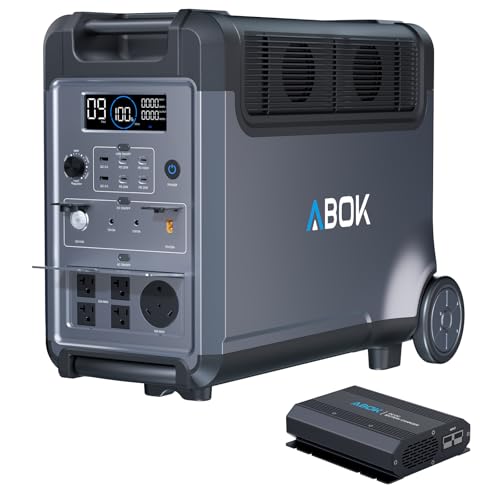
ABOK Ark3600 Portable Power Station 3600W, 3840Wh
More Details On Our Top Picks
This Westinghouse leans practical, especially for RV travelers who want fuel flexibility without dragging around a bulky frame. Gas and propane support makes it easier to work around campsite routines, and the 30A RV outlet keeps it aligned with the way many trailers actually connect.
The CO sensor adds a safety-minded layer, while the parallel-ready design matters for households that may want to link units later for more headroom. It’s a sensible fit for weekend use and lighter power needs, though larger rigs with heavy air conditioning loads will likely want more capacity.
Strong Points
- Dual-fuel setup gives you flexibility around fuel availability.
- 30A RV outlet matches many trailer hookups cleanly.
- Parallel capability leaves room to scale later.
- CO sensor adds an extra check for enclosed or crowded spaces.
Small Caveats
- Power output suits lighter RV needs more than demanding whole-camper loads.
- Fuel-powered operation means routine storage and maintenance remain part of ownership.
- Parallel use requires another compatible unit, so expansion adds cost and clutter.
Feature Snapshot
Who It Suits Best
You’ll get the most from this pick if you camp on weekends, value fuel flexibility, and want a straightforward RV-ready generator for modest power demands.
A Better Fit Elsewhere
Jackery HomePower 3600 Plus with 2x200W Solar Panels suits travelers who want a quieter battery-based setup with more household-style convenience.
For long-stay RV setups, this ECOFLOW unit reads like a serious power hub rather than a small campsite battery. The 3600Wh capacity and 3600W AC output matter because they give you more room for appliances, charging, and the everyday mess of travel life.
The fast-charge claim is the headline feature, and the expandable design is the part that stretches its usefulness over time. The trade-off is size and cost class, so this feels better for travelers who park often and want a system that can grow with the rig.
What We Like
- Large 3600Wh battery supports longer stretches between charges.
- 3600W AC output gives you room for tougher household-style loads.
- Fast charging helps reduce downtime between uses.
- Expandable design suits owners planning for future capacity needs.
- Battery-based operation keeps the experience cleaner than fuel units.
Worth Noting
- Its scale makes it less portable than smaller campsite kits.
- Expansion can be useful, but it also raises the overall footprint.
- This is more system than grab-and-go gear.
Core Details
Who It Suits Best
You’ll appreciate this most when your RV stops are long, your loads are heavier, and you want battery power that behaves more like a home backup system.
Where A Sibling Pick Shines
Westinghouse 2550 Peak Watt Portable Inverter Generator fits travelers who want a lighter fuel-based option for simpler weekend use.
Right after the Westinghouse, this WEN feels like another sensible fuel-based route, only with a bit more output headroom. Dual-fuel support is the practical hook, since propane and gas access can vary from trip to trip.
The fuel shut-off feature is the detail that matters for storage-minded owners, because it helps the generator sit cleaner between outings. The CO Watchdog adds a protective layer too, so this works well for RV use where people want simple operation without a lot of fuss.
Highlights
- Dual-fuel setup gives you a useful backup plan around fuel access.
- RV-ready design aligns with trailer power setups.
- Fuel shut-off helps simplify storage after travel.
- CO Watchdog adds a useful layer for campsite use.
- Lightweight framing makes it easier to move than bulkier units.
Trade Offs
- Fuel-powered ownership still means you handle storage and upkeep.
- Like the Westinghouse, it suits moderate loads more than very heavy rigs.
- Portability improves convenience, but it does not make it tiny.
Details At A Glance
Made For
This suits RV owners who want a flexible dual-fuel setup and prefer a more manageable generator for camping and short stays.
Another Choice May Suit
EF ECOFLOW DELTA Pro Portable Power Station 3600Wh fits you better when you want battery power instead of fuel and care more about charging speed.
The BLUETTI AC200L sits in a sweet spot for RV owners who want battery power with more expansion room than a basic campsite box. Its 2048Wh starting capacity is substantial, and the 30A RV output matters for direct trailer use without awkward workarounds.
The 3600W power lifting spec is the detail that helps with short bursts of higher demand, while the LiFePO4 battery chemistry points toward long-cycle durability in day-to-day ownership. You may find the size more suited to a fixed RV setup or garage storage than frequent one-hand carry use, and that’s the honest trade-off.
Upsides
- 2048Wh capacity gives you a strong base for RV power use.
- 30A RV output fits trailer hookups directly.
- Expandable design supports a larger system later.
- LiFePO4 battery chemistry is a useful match for repeated travel cycles.
- Power lifting helps cover short peaks beyond the steady output rating.
Areas To Watch
- It sits in a larger, less casual portability class.
- Expansion is useful, but it can turn the setup into a bigger system fast.
- Owners who want a simple grab-and-go unit may prefer something smaller.
Core Details
Built With In Mind
You’ll suit this best if your RV setup stays in one place for stretches and you want battery power that can scale without feeling flimsy.
A Better Fit Elsewhere
Jackery Solar Generator 300 with 40W Solar Panel makes more sense for lighter travel kits and smaller electronics on short trips.
This Jackery package pushes into true backup territory, which is handy for RV owners who also want a home-ready unit on standby. The 3072Wh capacity and 3600W AC output give it more authority than the lighter travel-focused picks above.
The included 2x200W solar panels are a major part of the value story, because they save you from piecing together a starter kit later. The 7200W surge rating helps with startup demands, though the whole setup makes the most sense for people who have room to store and move a larger system.
Reasons To Buy
- 3072Wh capacity supports longer backup windows.
- 3600W AC output handles more demanding household-style equipment.
- Two included 200W panels make the solar side more complete.
- 7200W surge rating helps cover startup spikes.
- LFP battery chemistry fits frequent use patterns well.
Room For Improvement
- The kit size makes it less casual than compact travel units.
- Storage and transport take more planning than with smaller power stations.
- This package leans more toward backup coverage than minimalist RV packing.
Feature Card
Who Should Grab It
This suits you best if you want one larger system for both RV backup needs and home emergency use, with solar panels already bundled in.
Look Elsewhere When
WEN Quiet and Lightweight 3600-Watt Dual Fuel RV-Ready Generator (DF360iX) works better for travelers who still want a fuel-powered setup with easier field refueling.
This is the smallest, easiest carry in the group, and that matters for tent campers, day trips, and RV setups that only need light support. At 7.5 pounds, it’s easier to move than the larger stations above, almost like packing a lunchbox instead of a full cooler.
The 300W rated output and pure sine wave AC outlets keep it friendly for small electronics, while the included 40W panel gives the kit a tidy solar starting point. The trade-off is obvious, though: this is a light-duty choice, so it fits phones, laptops, cameras, and similar gear better than full RV loads.
Best Bits
- 7.5-pound build keeps transport simple.
- Pure sine wave AC outlets suit sensitive electronics.
- Multiple charging ports help cover several small devices.
- Included solar panel gives you a compact starter kit.
- Integrated handle makes carrying less awkward on trail or campsite moves.
Points To Note
- 300W output suits light loads, not large RV appliances.
- The compact size is great for mobility but limited for whole-camper needs.
- It works best as a small-device companion rather than a main RV power source.
Quick Facts
Whose Shelf It Belongs On
This suits you best if you travel light, pack cameras or laptops, and want solar support for small essentials rather than a full RV power system.
Swap It Out When
BLUETTI AC200L Portable Power Station 2048Wh is the better fit for RV owners who need a larger battery and a 30A outlet for direct trailer use.
This Jackery package feels like the most rounded option in the group for RV owners who also care about home backup coverage. The 3600W AC output and 3584Wh battery give it real staying power, while the included solar panels make the system feel more complete from the start.
The expandable design is a strong point for people who may later want more than a single station, and the LFP battery chemistry fits long-term use patterns well. The only real catch is scale, because this is more of a serious power center than a compact travel companion.
Positives
- Large battery and strong AC output suit bigger home-and-RV needs.
- Two 200W panels help build out the solar setup immediately.
- Expandable design gives you room to grow later.
- LFP battery chemistry is a sensible match for repeated use.
- Works well for travel stays and standby backup alike.
Honest Caveats
- The system size asks for more storage space than smaller kits.
- It makes more sense as a serious backup hub than a light weekend carry.
- Owners who only need a few device charges may find it larger than necessary.
Feature Rundown
The Right Fit
You’ll like this most if you want one larger solar power setup that can do RV backup work now and still scale for home needs later.
Reach For A Different Pick When
Jackery Solar Generator 300 with 40W Solar Panel is the easier carry for travel days where only small electronics need support.
The ABOK Ark3600 stands out for sheer feature density, which matters in RV setups where you want a lot of outlets and a serious battery reserve in one box. The 3840Wh battery, 3600W output, and 15 outlets give it a broad usable range for camping, backup, and trailer power.
The 3-hour fast-charge claim and UPS function, with a 10ms switch time, make it especially appealing for home backup use that also overlaps with travel. The trade-off is that more features usually mean a more involved setup, so this suits organized users better than casual pack-and-go owners.
Bright Spots
- 3840Wh capacity gives you a large energy reserve.
- 15 outlets make it easier to power several devices at once.
- UPS function with 10ms switch time supports fast transfer use cases.
- Expandable design reaches very high system capacity.
- Fast charging helps shorten downtime after heavy use.
Minor Gripes
- The many features can make the setup feel more involved.
- Large capacity means storage and placement matter more.
- This is better suited to planned use than minimalist packing.
At A Glance
Who Will Love This
You’ll get the most value from this model if you want a high-capacity RV station that also doubles as a serious home backup unit.
Where Shoppers Go Wrong
Jackery Solar Generator 300 with 40W Solar Panel is the better match for lighter travel, since it keeps size and output much simpler.
How To Choose The Right Solar Generators For 30 Amp Rv
Start With Your Real Power Load
The 30 amp label tells you the RV connection style, not the whole story. Your refrigerator, roof fan, lights, chargers, coffee maker, and water pump all pull differently, so the useful number is the combination of wattage, surge headroom, and how long you plan to run things.
Battery-based units such as the ECOFLOW DELTA Pro and Jackery HomePower 3600 Plus suit travelers who want quiet operation and indoor-friendly use. Fuel-based picks like the Westinghouse and WEN make more sense when you want refill flexibility and don’t mind routine maintenance.
Match The Power Source To Your Travel Pattern
Weekend campers often do fine with smaller systems, especially when they only need phone charging, a laptop, and a few lights. Full-timers and long-stay travelers usually benefit from larger storage, a 30A RV outlet, and expansion options that can grow with the rig.
Solar panels matter too, but only as part of a full setup. A panel can help refill a station, yet the battery size still decides how long your RV can stay comfortable before you need another charging session.
Look Past Capacity And Check Usability
Capacity is important, though it’s easy to overfocus on it and miss the details that shape daily use. Portability, outlet layout, charging speed, and the battery chemistry all affect how friendly a unit feels once it’s sitting in your storage bay or trunk.
LiFePO4 batteries, found in several picks here, are a sensible choice for repeated charging cycles. The trade-off is usually weight and cost class, so a larger station pays off most when you expect regular use rather than occasional backup only.
Things Worth Knowing First
Common Shopping Slip Ups
One common miss is treating every solar generator like a full RV solution. Smaller units, such as the Jackery Solar Generator 300, are excellent for light gear but not for running a trailer like it’s shore power.
Another slip is ignoring the difference between output and storage. A high output rating helps with appliance startup, while battery capacity decides how long that power lasts.
What The Higher Tier Buys
More expensive systems usually buy you larger batteries, faster charging, more outlets, and better expansion paths. In this category, that can mean less generator fuss, fewer adapter chains, and a setup that feels closer to a true mobile power center.
You also pay for battery chemistry, stronger surge handling, and more complete solar bundles. That matters most for travelers who spend long stretches away from hookups or want one unit to serve both the RV and the house.
Frequently Asked Questions
Can A 30 Amp RV Run On A Solar Generator?
Yes, as long as the unit has the right outlet or adapter path and enough output for your load. The key is matching the generator’s continuous watts and storage to your actual appliances.
Is A Battery Power Station Better Than A Fuel Generator For RV Use?
Battery stations are quieter and more convenient for many campgrounds. Fuel generators still make sense when you want easy refueling and more immediate runtime flexibility.
How Much Capacity Should You Look For?
For simple weekend use, a smaller battery can work well. Long stays, heavier loads, and home backup overlap usually call for a much larger Wh rating.
Do Solar Panels Alone Power An RV?
No, the panels feed a battery system rather than replacing it. The battery is what stores energy for nighttime use and cloudy spells.
What Matters More, Output Or Battery Size?
Both matter, but they solve different problems. Output handles what you can run at once, while battery size determines how long you can keep it going.
Final Thoughts
For a 30 amp RV, the right solar generator is the one that fits your travel rhythm, not the one with the flashiest numbers. Smaller kits work well for light-duty trips, while larger battery stations and dual-fuel generators make more sense for longer stays, heavier appliances, and backup-minded owners. The smartest choice is the one that fits your camping style, your storage space, and how often you want to think about power. Choose the setup that keeps your rig comfortable without making the rest of the trip more complicated.
