

Long drives, camping setups, and mobile workdays all get easier with the right inverter. You need clean outlet access, enough headroom for your devices, and a layout that doesn’t turn the cabin into cable clutter. The picks below focus on real-world fit, from compact phone charging to heavier-duty power for RVs and trucks.
Quick Look at Our Top Picks

BESTEK 1000W Power Inverter 2 AC Outlets
YSOLX 1000W Power Inverter 3 AC Outlets
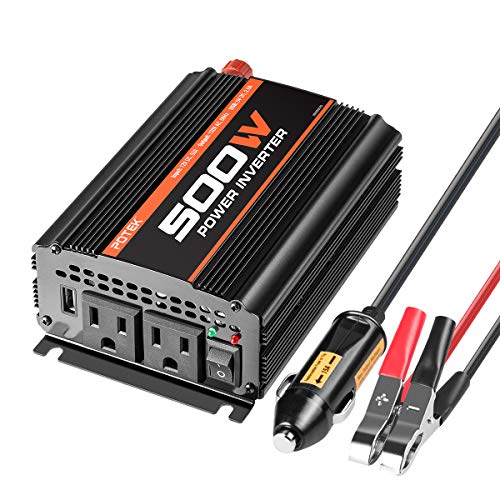
POTEK 500W Power Inverter Dual AC Ports
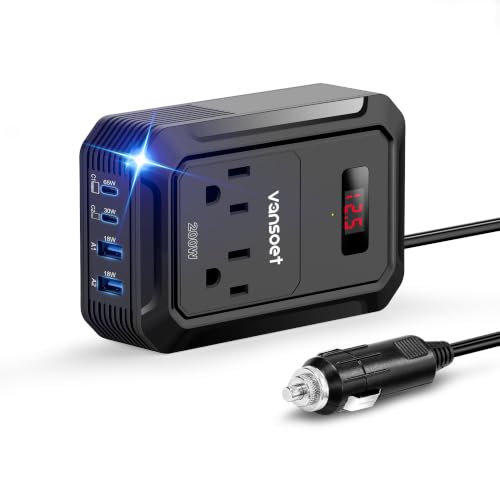
vansoet 200W Car Power Inverter 2 AC Outlets

LncBoc Power Inverter 12V to 110V 1000W

Cantonape 1500W Power Inverter LCD Display
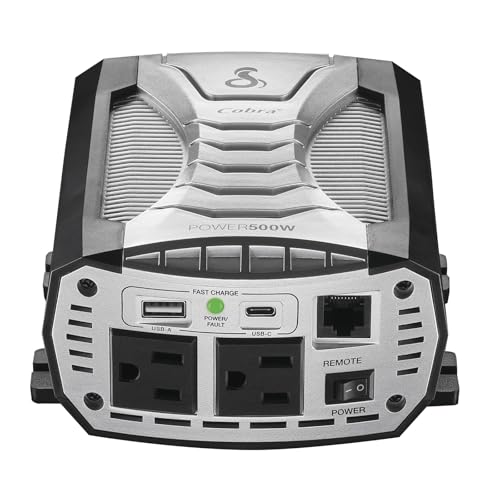
Cobra POWER 500W Power Inverter Remote Controller

ROARBATT 3000W Power Inverter LCD Display
More Details On Our Top Picks
The mix of two AC outlets, one 30W USB-C port, and one 18W USB-A port makes this BESTEK unit feel ready for a moving car or a packed family trip. You get 1000W of continuous output, plus 2000W of surge capacity for startup loads, which matters more than many people expect once a device draws extra power for a moment.
That combination fits commuters with laptops, camping setups, and road trips where several devices need charging without juggling adapters. The honest trade-off is that this style of inverter still asks for sensible load planning, so it suits everyday electronics better than the heaviest household gear.
Strong Points
- Two AC outlets give you room for a charger and a small appliance at the same time.
- USB-C at 30W handles newer phones and compact devices with less adapter clutter.
- USB-A quick charging keeps older cables useful in the same setup.
- 1000W continuous output gives you a broader comfort zone for travel electronics.
- 2000W surge capacity helps with brief startup spikes, which is handy for some gear in real use.
Things To Consider
- Larger loads still need careful planning, especially in smaller vehicle electrical setups.
- Multiple ports can invite cable clutter in tight cabins.
- It makes more sense for portable electronics than for power-hungry home-style equipment.
Feature Rundown
Who It Suits Best
Commuters, RV travelers, and families who want one inverter to cover several small devices at once.
A Better Fit Elsewhere
YSOLX 1000W Power Inverter 3 AC Outlets suits you better when you want more wall-style plugs and dual cigarette lighter ports in one travel setup.
Three AC outlets and dual cigarette lighter ports give this YSOLX model a very practical layout for a packed vehicle or a camping table full of gadgets. The 30W PD port and 24W USB-A port cover newer and older charging gear, so you can keep a phone, tablet, and small accessories running without a pile of splitters.
Compared with the BESTEK unit above, this one leans harder into port count than the cleaner two-outlet setup. That makes it a smart fit for family travel, though the extra connections can make cable management a little busier than you may want in a small cabin.
What We Like
- Three AC outlets help you plug in several items without constant swapping.
- Dual cigarette lighter ports add flexibility for vehicle accessories.
- 30W PD charging suits newer phones and compact tablets.
- 24W USB-A keeps older cables useful.
- Good for travel setups where several people need power at once.
Points To Note
- The port-rich layout can crowd a small dashboard area.
- It works best with common travel electronics, not oversized power draws.
- More connected devices usually means more cable sorting for you later.
Feature Card
Made For
Family road trips, RV weekends, and campers who need several plug types in one place.
Another Choice May Suit
POTEK 500W Power Inverter Dual AC Ports makes more sense for simpler charging needs and a lighter everyday setup.
POTEK keeps things simple, and that simplicity is the appeal. Two AC outlets and 2A USB ports cover the kind of light travel power most people actually need for laptops, phones, and small accessories.
Compared with the higher-output 1000W options, this one asks for more discipline about what you plug in, but it also avoids the bulk of the bigger units. For everyday commuting or a short trip, that cleaner setup can feel easier to live with than a feature-heavy box.
Highlights
- Two AC outlets give you enough room for basic multi-device charging.
- 2A USB ports keep phones and smaller accessories covered.
- 500W output fits lighter loads without pushing you toward a larger inverter than you need.
- Compact power planning makes sense for daily driving and short trips.
Softer Spots
- 500W leaves less room for power-hungry appliances.
- USB speed is straightforward rather than especially fast by newer standards.
- It suits light duty better than an RV setup loaded with gear.
Details At A Glance
The Right Fit
Daily drivers and light travelers who want a plain, dependable inverter for basic electronics.
Skip It When
BESTEK 1000W Power Inverter 2 AC Outlets suits you better once your travel gear starts pulling more power or needs faster USB-C charging.
This vansoet unit leans into portability more than raw output, which is exactly the point for short trips and everyday charging. Two AC outlets, one 65W USB-C port, one 30W USB-C port, and two 18W QC USB ports give you a tidy spread for phones, tablets, and a slim laptop.
Compared with the 500W and 1000W models, this one feels easier to tuck into a glove box or travel bag. The trade-off is plain: it’s better for light electronics than for anything that truly needs a bigger power reserve.
Bright Spots
- Small footprint makes storage easier between trips.
- Two AC outlets add flexibility beyond basic USB charging.
- 65W USB-C gives you more room for laptop-style charging needs.
- Two QC USB ports help cover multiple handheld devices at once.
Room For Improvement
- 200W output keeps the focus on light-duty electronics.
- The compact shell suits storage, but it does not suit big loads.
- Heavy users may outgrow it quickly once the gear list grows.
Core Details
Whose Shelf It Belongs On
Commuters and road-trippers who want a small inverter for phones, tablets, and a slim laptop.
Look Elsewhere When
POTEK 500W Power Inverter Dual AC Ports works better once you want a little more breathing room for mixed household-style devices.
LncBoc takes the higher-power lane seriously, and that’s useful in a truck, van, or travel setup that needs more headroom than a compact inverter can offer. The 1000W rating gives you room for a wider set of plug-in devices, while the cigarette lighter style connection keeps it familiar for mobile use.
Compared with the vansoet 200W model, this one is meant for much bigger power demands, so it belongs in a more deliberate setup. The honest downside is that larger inverters always ask for better planning, both for space and for how much you expect the vehicle system to handle.
Upsides
- 1000W capacity gives you a wider margin for heavier travel gear.
- Works well for cars, trucks, RVs, boats, and home-style backup setups.
- Cigarette lighter connection keeps the format familiar for mobile use.
- Better suited to a more demanding device mix than compact models.
Honest Caveats
- Larger power output means you need to think more carefully about installation and storage.
- It can be more inverter than you need for simple phone charging.
- Bulkier equipment usually takes more room in the cabin or cargo area.
At A Glance
Built With In Mind
Drivers who need more output than a small travel inverter can comfortably provide.
A Better Fit Elsewhere
YSOLX 1000W Power Inverter 3 AC Outlets suits you better when port count matters as much as output.
The Cantonape model pushes into higher output and adds an LCD display, which is useful when you want a clearer read on what the inverter is doing. Dual USB ports and two AC outlets make it feel practical for RV travel, truck use, solar setups, or off-grid living spaces where a quick status check helps.
Compared with the LncBoc 1000W unit, this one adds both more output and more visible feedback, so it appeals to people who like a more controlled setup. One thing worth considering is that bigger power capability often makes the whole package feel less casual, especially in smaller vehicles.
Reasons To Buy
- 1500W output gives you more room for demanding mobile power needs.
- LCD display helps you keep an eye on status at a glance.
- Dual USB ports and two AC outlets cover mixed-device use.
- Fits RV, truck, solar, and off-grid setups with similar needs.
Small Caveats
- More output usually means more space and planning around installation.
- The display adds convenience, but it can also make the unit feel busier.
- It suits larger setups better than a minimalist travel bag.
Quick Facts
Best Suited To
RV owners, off-grid setups, and truck users who want more output plus a display.
Where A Sibling Pick Shines
BESTEK 1000W Power Inverter 2 AC Outlets suits you better when you want a slightly simpler setup for everyday travel power.
The remote controller is the reason this Cobra stands out, especially for vehicles where the inverter sits out of easy reach. Two grounded AC outlets and two fast-charge USB ports make the power layout practical, while the 500W rating keeps it in a familiar mid-duty range.
Compared with the POTEK 500W unit, this one offers a more travel-friendly control angle thanks to the remote. You may find that extra convenience useful in larger cabins, though the modest power level still points you toward phones, laptops, and similar everyday gear rather than bigger appliances.
Best Bits
- Remote control helps when the inverter is mounted out of easy reach.
- Two grounded AC outlets support standard plug-in devices.
- Two fast-charge USB ports add useful handheld charging coverage.
- 500W keeps the unit in a manageable travel-power range.
Areas To Watch
- The remote feature is most useful in vehicles with a less convenient layout.
- 500W still keeps you in lighter-duty territory.
- Smaller trips may not need the extra control feature at all.
Spec Overview
Who Should Grab It
Travelers who want the convenience of remote control in a mid-power inverter.
Swap It Out When
vansoet 200W Car Power Inverter 2 AC Outlets is a better fit for a smaller, easier-to-pack travel setup.
ROARBATT sits at the heavy end of this roundup, with 3000W of power and 6000W peak output for startup loads. Two AC outlets, a 2.4A USB port, and an LCD display round out a setup that makes more sense for RVs, trucks, camping rigs, and emergency backup use than for casual phone charging.
Compared with the Cantonape 1500W inverter, this model is built for a bigger power appetite and a more demanding role. The trade-off is obvious enough: larger output brings a larger footprint, so it suits serious mobile power needs more than a small car that only needs a charging assist.
Standout Traits
- 3000W output supports much heavier mobile power needs.
- 6000W peak headroom helps with startup surges.
- LCD display gives you quick status visibility.
- Two AC outlets keep standard plug-in gear usable on the road.
- Works well for RV, truck, camping, and emergency backup scenarios.
Room For Improvement
- The size and output level fit larger setups better than compact vehicles.
- It makes more sense for planned installation than casual carry-around use.
- One USB port is enough for basic charging, but not especially expansive.
Key Specs
Who Will Love This
Drivers and campers who need high-output backup power in a vehicle-based setup.
Reach For A Different Pick When
Cantonape 1500W Power Inverter LCD Display suits you better if you want a smaller step up that still includes a display.
How To Choose The Right Auto Power Inverters
Match Output To Your Real Load
Start with the devices you actually carry, not the biggest number in the listing. Phones, tablets, and laptops usually sit comfortably in the 200W to 500W range, while an RV, truck, or work rig often needs the breathing room of 1000W or more.
Continuous wattage tells you what the inverter can support steadily, while surge wattage covers the brief startup spike some devices draw. That split matters because a unit can look generous on paper and still feel cramped once a device wakes up with a short burst of demand.
Think In Ports, Not Just Watts
Outlet count changes daily convenience in a way that people notice quickly. Two AC outlets work for a simple travel setup, three AC outlets plus USB ports work better for family trips, and USB-C can cut down on adapter clutter for newer phones and compact laptops.
USB-C Power Delivery, often written as PD, means the port can negotiate higher charging levels with compatible gear. That matters most in a cabin full of mixed devices, because the right port layout saves you from juggling multiple chargers every time someone asks for power.
Fit The Inverter To The Vehicle
Vehicle size shapes what feels comfortable. A small car usually benefits from a compact 200W or 500W unit, while an RV, van, or truck can justify a larger 1000W, 1500W, or 3000W setup with more outlets and a clearer display.
Space, cable reach, and storage matter almost as much as output. A tidy inverter is easier to live with than a bigger box that crowds the dash, rattles around in the cargo area, or stays too awkward to access when you need it.
Look For Monitoring And Control Features
LCD displays and remote controllers are not just nice extras, they change how easy the unit is to live with. A display helps you check status at a glance, while a remote controller makes sense when the inverter sits farther from the driver or passenger seat.
Those upgrades are worth more in a long-haul road rig than in a quick errands setup. The honest read is that simple vehicles often do fine without them, but larger travel rigs feel better organized with that extra visibility.
Things Worth Knowing First
Wrong Turns To Avoid
Many people overshoot on power, then end up with a unit that is larger than the job calls for. Others focus only on USB ports and forget the AC outlets they still need for chargers, fans, or laptop bricks.
Another common miss is forgetting physical fit. A compact car can feel cluttered fast, so the right inverter is the one that matches both your electrical needs and the space you have to store it.
The Upgrade Payoff
Higher-tier models usually cost more because they add output headroom, more outlets, better port mixes, and status features like LCD displays. Those extras help in RVs, work trucks, and off-grid setups where several devices may run at once.
Spending up makes sense once a basic model starts forcing compromises, such as too few outlets or not enough reserve for startup loads. For a simple commute, the upgrade may be unnecessary, but for travel-heavy use it tends to feel more justified.
Frequently Asked Questions
What size inverter works for a car trip?
A 200W to 500W inverter usually fits phones, tablets, and laptops in a normal car trip. Larger rigs with more devices often benefit from 1000W or more.
Why do some inverters list surge wattage?
Surge wattage covers the brief power jump that happens when some devices start up. That number helps you understand how the inverter handles short spikes beyond steady use.
Is USB-C better than USB-A here?
USB-C helps with newer devices that accept PD charging and often reduces adapter clutter. USB-A still matters because many cables and accessories still use it.
Do more AC outlets always matter?
More AC outlets help in family travel or mixed-device setups. For a single laptop and phone, fewer outlets can be enough.
What matters more, size or output?
Both matter, but your actual device load should lead the decision. A compact inverter is easier to store, while a larger one gives you more room to grow.
Final Thoughts
The right inverter makes a car feel more like a workable mobile space and less like a place where everyone argues over a charger. For simple errands, the compact 200W and 500W picks keep things tidy. For RVs, trucks, and longer trips, the 1000W, 1500W, and 3000W models bring the extra headroom that keeps travel calmer. Match the outlet mix, the output level, and the footprint to how you actually move, and the right choice becomes pretty clear.
