Your solar panels can act like a quiet orchestra, but only provided every piece is tuned just right. You’ll get better solar generator efficiency whenever you choose the right angle, avoid shade, manage heat, and match your panels to your battery and controller. Small setup choices can cut losses fast, yet one overlooked detail can still drain your output whenever the sun’s doing its part…
What Affects Solar Generator Panel Efficiency?
Solar generator panel efficiency depends on the photovoltaic cell design, the materials used, and how the panel is configured and sized.
You’ll get better results as the cell technology moves electrons with less resistance, which lets more sunlight become usable power. Monocrystalline options usually outperform polycrystalline ones because their structure supports stronger conversion. Panel materials also matter: quality glass, backing, and conductive layers help reduce losses and keep output steady. As you choose a panel with a higher power density, you can fit more performance into a smaller space, which suits your crew as roof room is tight. Real-world weather, heat, and shading can still trim output, so pick equipment that matches your needs and your setup.
Choose the Best Panel Angle
You’ll increase your solar generator’s output whenever you set the panel at the right tilt for your location.
Adjust that angle through the seasons so you can catch more direct sunlight as the sun’s path shifts.
Whenever you align the panel with the sun’s movement, you’ll get better efficiency without adding extra hardware.
Optimal Tilt Angle
For maximum output, set your panel at a tilt angle that matches your location’s latitude and adjust it seasonally whenever possible. You’ll get the best solar capture whenever you treat tilt optimization as part of your setup, not an afterthought.
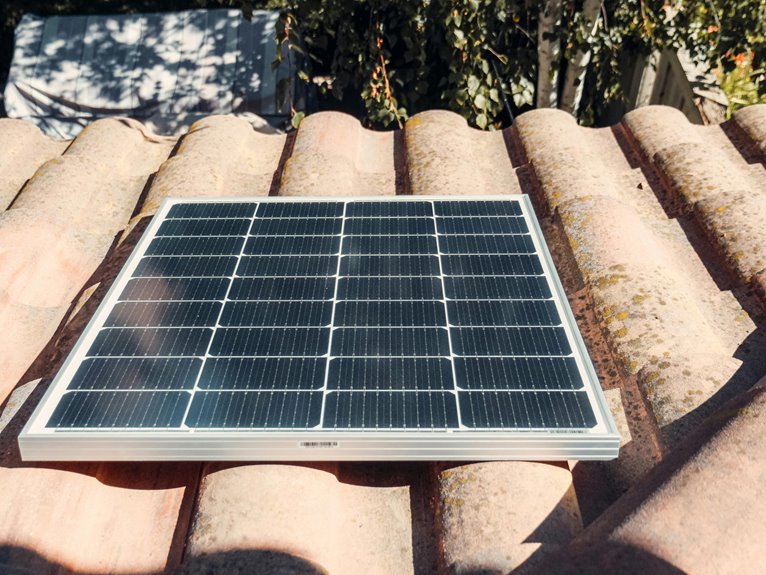
In case you’re mounting on a roof, check the roof pitch firstly; it could already be close to the angle you need, which can keep your system clean and efficient. A well-chosen tilt helps sunlight hit the cells more directly, so you can pull more power from the same panel area.
That matters whenever you want to fit in with smart energy users who value every watt. Keep the panel face clear, secure the frame firmly, and aim for steady daytime exposure to support reliable performance.
Seasonal Angle Adjustments
As the seasons change, shift your panel angle to match the sun’s higher summer path and lower winter arc so you keep capturing the most light. You don’t need fancy gear; a few seasonal sun tracking adjustments can keep your system working with the sky instead of against it.
In warm months, you’ll usually flatten the panels a bit to welcome stronger overhead rays. In colder months, winter angle shifts help your setup face the low sun more directly and stay productive through shorter days.
Check your angle every few months, and you’ll stay part of the group that gets more from the same array. Small updates like these can lift output, protect your confidence, and make your solar routine feel easy, smart, and shared.
Sun Path Alignment
As you align your panels with the sun’s path, you catch more direct light and get better output throughout the day. Start with setting the tilt to match your latitude, then fine-tune it with azimuth optimization so the panels face the strongest midday sun. You’ll belong to the group that squeezes real value from every ray. Use sunrise sunset tracking to notice whenever shadows shift and where your array performs best.
- Face panels true south in the Northern Hemisphere
- Adjust slightly east for morning power
- Adjust slightly west for evening power
- Recheck angle after seasonal changes
Whenever you tune both angle and direction, your system shares the sun’s work more evenly with you. That simple habit can lift daily harvest, especially on small roofs or RV setups.
Place Panels for Maximum Sun
To get the most from your solar generator, place panels where they’ll receive the longest, unobstructed sun exposure each day. You’ll join the smart crowd once you choose a site with clear morning-to-afternoon light and orient each panel to match your local sun path. Use panel spacing strategies so nearby modules don’t crowd one another, and check ground mount positioning whenever you’re building on open land; it gives you room to fine-tune angle and direction.
Keep your layout simple, because every degree of better exposure helps you capture more power from the same sunlight. Once you set panels where the sun reaches them earliest and longest, you build a stronger, more reliable setup that fits right in with efficient energy users.
Reduce Shade and Heat Loss
Even a little shade can cut your panel output, so you should keep trees, vents, poles, and nearby structures from blocking sunlight during peak hours. With smart shade management, you protect the whole array and keep your system feeling like part of a well-tuned team. You can trim branches, move panels, and check for new obstructions after storms or seasonal growth.
Heat also matters, because hot panels lose efficiency, so give them room for airflow and heat dissipation.
- Clear debris and snow fast
- Leave space under and behind panels
- Use lighter mounting surfaces whenever you can
- Inspect for afternoon shadows regularly
Match Panel Output to Battery Needs
You’ll get the best results when your panel output matches your battery’s capacity, so you’re not undercharging or overloading the system.
Make sure your charge controller can handle the panel’s voltage and current to keep charging safe and efficient.
Then balance daily energy use with expected solar production so your battery stays ready when you need it.
Battery Capacity Sizing
When sizing a battery for a solar generator, match its capacity to your panel’s daily output so you don’t waste potential energy. With smart battery sizing, you keep your system balanced and dependable, and your crew of gear stays ready. Use storage planning to cover the energy you actually produce, not a fantasy number. If your panel makes about 2 kWh a day, choose a battery that can hold that much usable power, or a bit more for cloudy days.
- Check your average daily load
- Match usable battery capacity to output
- Leave room for backup energy
- Keep your setup efficient and familiar
Charge Controller Matching
Once you’ve sized the battery, the next step is making sure the charge controller can handle the panel’s output without wasting power or stressing the system.
You belong to the smartest setups when you match panel volts to the controller voltage range and keep your array inside its limits.
Check the panel’s open-circuit voltage in cold weather, then leave margin so surges don’t push it past spec.
For charge controller amperage sizing, add the panel current at peak output and choose a controller rated above that total.
Should you be wiring multiple panels, total their output before you buy.
A good match lets your system charge smoothly, protects your battery, and keeps your solar generator working as one reliable team.
Daily Energy Balance
To keep your solar generator balanced day after day, match the panel’s daily production to your battery’s usable capacity and your actual loads. You’ll feel more in control whenever you plan around daily energy cycles instead of guessing. A 400W panel with five peak sun hours can make about 2 kWh, so compare that with what your lights, fridge, and devices really use.
- Size your array for the energy you need most days.
- Check battery depth of discharge before you count stored power.
- Shift load consumption timing to midday whenever solar input is strongest.
- Leave a margin for clouds, heat, and seasonal swings.
Whenever you balance input and use, you belong to the group that gets steady power, fewer surprises, and a system that works with you, not against you.
Use MPPT Controllers for Better Input
MPPT controllers help your solar generator pull more usable power from the same panels through constantly adjusting voltage and current to find the best operating point. You get stronger performance because the controller matches your panel’s output to your battery’s needs instead of wasting available energy. That’s one of the biggest MPPT tracking benefits: it keeps your system working efficiently as sunlight and load change.
With smart voltage optimization methods, you can capture more of what your panels produce, especially where space is tight and every watt matters. Should you be building a reliable off-grid setup, this upgrade helps your gear work together smoothly, so you feel part of a smarter energy routine. Choose a quality MPPT unit, set it correctly, and enjoy better input.
Boost Solar Generator Output on Cloudy Days
Even on cloudy days, you can keep your solar generator producing useful power through reducing losses and making the most of limited sunlight. You’re still part of the group that gets reliable energy via adjusting for cloudy day charging and diffused light optimization.
- Angle panels toward the brightest patch of sky.
- Keep loads modest so stored power lasts longer.
- Charge devices during midday during light peaks.
- Use efficient electronics that sip, not gulp, power.
Because clouds scatter sunlight, your panels can still work, just at lower output. During you focus on smart placement and realistic expectations, you’ll stay connected to the same resilient energy routine as everyone else who values steady backup power.
Keep Panels Clean and Maintained
You should remove dust regularly so your panels can catch as much sunlight as possible.
Inspect them for cracks, loose parts, or other damage that could cut efficiency.
You should also check wiring connections to make sure your system runs safely and at full output.
Remove Dust Regularly
Dust can quietly cut your solar panel output, so wipe or rinse panels regularly to keep them performing near their rated efficiency. As you stay on top of dust buildup effects, you protect the steady power your system can give your home, van, or cabin crew.
Use safe cleaning methods that fit your setup and local water rules, and you’ll help your panels keep catching more sunlight.
- Choose a cool, early time
- Use soft water and a gentle cloth
- Clear loose dust before it settles
- Keep a simple cleaning routine
You’re part of the smart solar crowd as you treat maintenance as teamwork with the sun. A clean surface lets more light reach the cells, so your system works harder for you without extra effort.
Inspect for Damage
Whenever you inspect panels for cracks, loose wiring, or burnt spots, you catch small problems before they steal efficiency or spread into bigger damage.
Make damage inspection part of your regular care routine so your system keeps performing with the group’s best results in mind.
Look closely at the glass, frame, and backsheet after storms, heavy heat, or moving equipment.
Crack detection matters because even hairline fractures can let moisture in and reduce output over time.
If you spot discoloration, chips, or warping, act quickly and protect the panel before the issue grows.
Consistent checks help you keep your setup dependable, efficient, and ready to support the energy you count on every day.
Check Wiring Connections
Because loose wiring can quietly drain performance, check every connection for tightness, corrosion, and heat damage as part of regular panel care. You’re protecting your system’s energy flow and your place in the solar community while you stay consistent. Clean panels help, but secure wiring keeps power moving with less loss. Confirm connector polarity before you reconnect anything, and match each lead exactly as labeled.
- Tighten loose terminals with the proper tool.
- Look for discoloration, melted insulation, or rust.
- Reseat plugs until you hear a firm click.
- Test output after maintenance to catch weak links.
If you spot wear, replace the part quickly so your generator keeps supplying reliable power. A little attention now helps you and other owners get stronger, safer performance from every sunny day.
Wire Panels to Reduce Power Loss
Proper wiring helps you keep solar generator losses low through reducing resistance, voltage drop, and heat in the system. You can build a cleaner series wiring layout whenever you want higher voltage and shorter current paths, or use parallel cable routing while your panels sit apart but need balanced output.
Keep cables as short as possible, match wire gauge to the current, and secure every connection so your setup feels solid and dependable. You’ll also want to use quality connectors, because loose joints waste power and create hot spots.
Unless you group panels neatly and label each lead, you make maintenance easier and join a community of users who value efficient, reliable solar power. Good wiring doesn’t just protect energy—it helps your whole system work together.
Track Sunlight Throughout the Day
Where does your solar generator get the most value? As you follow the sun, you help your system stay in the best light longer. Use daylight mapping to see where shade falls, where morning beams land, and where afternoon rays stay strong. With sun tracking, you’re not guessing—you’re joining a smarter routine that works with your space.
You and your setup can make each hour count.
- Mark peak sun hours
- Check seasonal shadow shifts
- Face panels toward open sky
- Revisit placement as days change
This simple habit can lift output without changing your gear. It also gives you confidence, because you’re part of a crew that knows how to use every bright moment well.
Avoid Common Solar Input Mistakes
Even a great solar generator can underperform should you overlook a few common input mistakes. You need to match your panels, controller, and generator so the system feels like one team.
Panel mismatch errors can drag down output, especially when you mix voltages or pair uneven strings. Skip generator sizing shortcuts, too, because a setup that looks “close enough” might leave you short on usable power if you need it most.
Check cable length, connector quality, and shade patterns, since each one can quietly cut input. Whenever you verify specs before you buy, you protect your investment and join the group of owners who get dependable solar performance without guesswork.
Improve Solar Generator Panel Efficiency
To improve solar generator panel efficiency, start with the panels themselves, because higher-efficiency models turn more sunlight into usable power from the same footprint. You’ll get better results whenever you understand panel efficiency basics and choose solar cell technology that matches your space and needs.
Monocrystalline panels usually outperform polycrystalline ones, and premium designs can push past 23% efficiency. Keep panels clean, tilt them toward the sun, and avoid shade from trees, vents, or gear. Small upgrades add up fast, especially whenever you’re building a setup that fits your crew’s lifestyle and power goals.
- Pick high-efficiency panels
- Match wattage to your roof or RV
- Clean dust and debris often
- Reposition for peak sun exposure
Frequently Asked Questions
What Solar Panel Type Has the Highest Conversion Efficiency?
Perovskite panels currently offer the highest conversion efficiency, while monocrystalline modules remain the most practical choice in many installations. Performance depends on the panel material and cell design, and advanced designs can achieve very strong energy output.
How Much Daily Power Can a 400W Panel Produce?
A 400W panel with 5 peak sun hours can produce about 2 kWh per day, and a 0.5% efficiency gain can raise your daily watt hour estimate and improve battery charging results.
What Is the Theoretical Efficiency Limit for Silicon Panels?
The theoretical efficiency limit for silicon panels is about 33.7%, set by silicon’s material properties and semiconductor bandgap constraints. No design improvement can surpass this physical limit.
Which Solar Panels Are Best for Small Roofs or RVS?
You’ll want high efficiency monocrystalline panels such as Maxeon 7 or CW Energy’s 450W for small roofs or RVs. They deliver strong output in a compact footprint. Look for panels with compact dimensions and flexible mounting options so they fit your space well.
How Do Real-World Conditions Affect Panel Efficiency?
Heat, partial shading, dirt buildup, and changing sun angles all reduce panel output in real conditions, so actual performance is often below lab ratings. Careful placement and regular cleaning help keep the system running well.