

Window-mounted inverter ACs make sense for apartments, bedrooms, and family rooms where you want steadier cooling without a bulky floor unit taking over the room. They also matter in places where a window still needs to open or where smart controls help you keep up with a busy routine. The picks below lean on real feature differences, not marketing gloss, so you can match capacity, layout, and control style to your space.
Quick Shortlist For Faster Comparison

Midea 8,000 BTU U Shaped Smart Inverter Window Air Conditioner

Midea 8,000 BTU Smart Inverter Air Conditioner Window Unit with Heat and Dehumidifier
GE Profile ClearView Inverter Window Air Conditioner Unit, 12,200 BTU

Hykolity 8,000 BTU Smart Inverter Window Air Conditioner WiFi Enabled
GE Profile ClearView Inverter Window Air Conditioner 10,300 BTU
LG 14,000 BTU DUAL Inverter Smart Window Air Conditioner
Midea 12,000 BTU U Shaped Window Air Conditioner

LG 10,000 BTU Smart Window Air Conditioner
More Details On Our Top Picks
The U-shaped layout is the hook here, because it keeps the window opening usable in a way many boxy units don’t. For apartments, bedrooms, and home offices, that can make the room feel less sealed off, which is a small but real comfort perk.
You also get smart-home compatibility plus remote control, so day-to-day adjustments stay easy from the couch or bed. The trade-off is simple, the design is more specialized than a basic slide-in unit, so you’ll want to match your window shape and installation comfort carefully.
Strong Points
- U-shaped construction preserves more of the window opening than a standard block-style unit.
- Cooling coverage up to 350 square feet suits a bedroom or compact living area.
- Smart control support fits routines where you want temperature changes without getting up.
- Quiet operation is a real plus for sleeping spaces and remote-work setups.
- The remote gives you a simple fallback when voice control is not the right fit.
Things To Consider
- The special window shape can narrow your installation options.
- It is better suited to smaller rooms than open-plan spaces.
- Owners in older buildings may need to check sash clearance and mounting space first.
Feature Snapshot
Who It Suits Best
You get the most from this pick in a bedroom, studio, or compact apartment where quieter operation and a less closed-in window setup matter.
A Better Fit Elsewhere
LG 10,000 BTU Smart Window Air Conditioner fits better for you in a medium room that needs more conventional installation and a bit more cooling headroom.
This Midea model stands out because it does more than cool, thanks to the included heat function and dehumidifier. In a room that swings from damp summer weather to shoulder-season chill, that extra range can matter more than a fancy control panel.
Compared with the first Midea pick, this one leans harder into all-season usefulness instead of the open-window layout. The honest read is that it fits people who want fewer appliances in the room, though the more complex feature set also means you should pay attention to installation and mode setup.
What We Like
- Cooling, heating, and moisture control in one window unit reduce clutter.
- Coverage up to 350 square feet suits bedrooms and similar spaces.
- Quiet operation works well for sleep or evening downtime.
- Electronic controls and remote access make routine changes easy.
Points To Note
- It asks more of you during setup than a simpler cool-only unit.
- The extra functions help most in places with real seasonal swings.
- Regular filter care still matters, especially in dusty rooms.
Core Details
Who Will Love This
You get the most value in a bedroom, small apartment, or office where a single window unit needs to handle more than summer cooling.
Where A Sibling Pick Shines
Midea 8,000 BTU U Shaped Smart Inverter Window Air Conditioner is the better fit for you if open-window use matters more than heating or dehumidifying.
This ClearView model targets bigger rooms first, with 12,200 BTU and coverage for spaces up to 550 square feet. That makes it the kind of pick you look at for a larger living room or a wide bedroom where a smaller 8,000 BTU unit would feel underpowered.
Compared with the earlier Midea options, it leans more toward raw room coverage than open-window convenience or multi-mode flexibility. The trade-off is that larger output can come with a more committed footprint, so it suits homes that need stronger cooling more than a lighter install story.
Highlights
- 12,200 BTU capacity gives it the reach for bigger rooms.
- Coverage up to 550 square feet fits larger living spaces.
- Ultra-quiet operation keeps it from feeling intrusive in daily use.
- Smart-home readiness adds control flexibility without changing the hardware on the window.
- The included remote helps in rooms where the unit sits out of easy reach.
Small Caveats
- The stronger output is not the right match for small bedrooms.
- Its size and capacity can feel like more machine than some apartments need.
- Window placement matters, especially in narrower frames.
Technical Sheet
Best Suited To
You benefit most in a large bedroom, living room, or apartment main area that needs stronger output without jumping to a portable setup.
Swap It Out When
GE Profile ClearView Inverter Window Air Conditioner 10,300 BTU fits you better when the room is a bit smaller and you care more about keeping a fuller window view.
Hykolity goes after convenience in a straightforward way, with WiFi, multiple operating modes, and a 24-hour timer. For a home office or bedroom where routines shift through the day, that mix gives you more control than a basic remote-only unit.
Compared with the Midea 8,000 BTU open-window model, this one feels more like a daily utility pick than a special-layout solution. The practical upside is flexibility, though you should expect a slightly busier control experience than someone who just wants a cool-and-forget setup.
Bright Spots
- WiFi adds remote control convenience for daily temperature changes.
- Cool, fan, dry, auto, and sleep modes give you more tuning options.
- The 24-hour timer suits sleep schedules and workday routines.
- Coverage up to 350 square feet keeps it in a useful small-room range.
- Quiet operation makes it easier to live with overnight.
Areas To Watch
- More modes mean more settings to learn at first.
- It still fits best in smaller rooms rather than broad open spaces.
- WiFi convenience depends on how you like to manage connected gear.
Feature Rundown
Whose Shelf It Belongs On
You get the best fit here in a bedroom, den, or small office where you want connected control and several comfort modes.
Look Elsewhere When
Midea 8,000 BTU U Shaped Smart Inverter Window Air Conditioner is the better match for you if keeping more of the window open matters more than WiFi and mode variety.
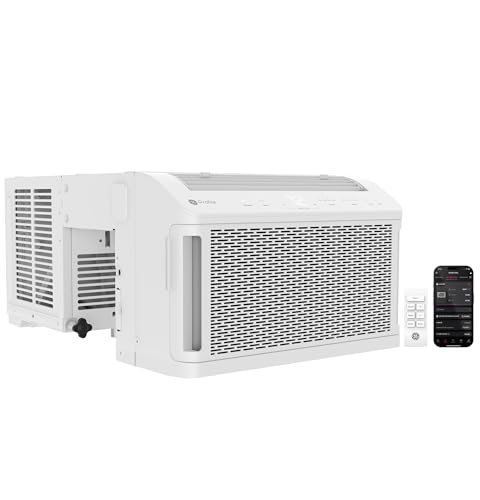
The ClearView name matters here because the design aims to preserve more of the window view than a traditional bulky frame. In a living room or den with a prized window, that can make the unit feel less visually heavy, which is a nice quality-of-life detail.
Relative to the higher-capacity GE Profile pick, this one gives you a more moderate 10,300 BTU output while still covering up to 450 square feet. That makes it a sensible middle ground for rooms that need real cooling but not the larger machine footprint of the 12,200 BTU version.
Reasons To Buy
- The full-window-view approach leaves the room feeling less boxed in.
- Coverage up to 450 square feet works for many medium living spaces.
- Quiet operation suits conversation areas and evening use.
- Smart control support adds convenience without complicating the front panel.
Room For Improvement
- The see-through styling matters most in rooms with a good window to preserve.
- It is still a fixed window unit, so placement needs a proper frame.
- People who need maximum output may prefer the larger GE Profile model above.
Details At A Glance
Made For
You get the most from this pick in a den, living room, or apartment space where window aesthetics matter alongside cooling output.
Another Choice May Suit
GE Profile ClearView Inverter Window Air Conditioner Unit, 12,200 BTU is the better fit for you when room size is the bigger concern than preserving a lighter visual feel.
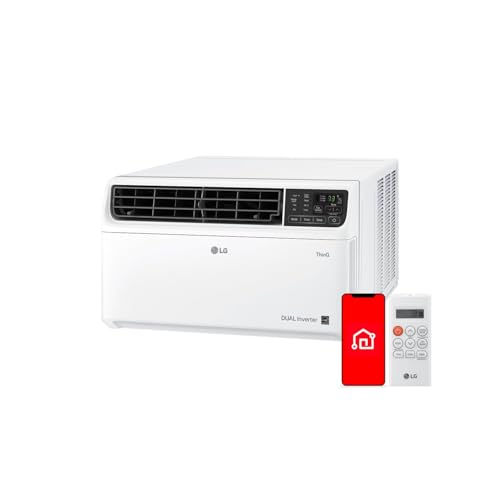
This LG unit steps into much larger territory, with 14,000 BTU and coverage listed for up to 800 square feet. That puts it in reach for bigger bedrooms, apartment living areas, and open-plan spaces where smaller window units can feel like they are always working too hard.
Compared with the GE Profile models, the big advantage here is room reach rather than visual minimalism. The honest trade-off is that a larger-capacity unit makes more sense for homes with the space to justify it, especially since the feature set is aimed at strong everyday control rather than a showpiece design.
Best Bits
- The 14,000 BTU output is suited to larger room loads.
- Coverage up to 800 square feet gives it serious reach for a window model.
- Quiet operation helps it stay usable in bedrooms and shared spaces.
- LG ThinQ support adds app-based control along with voice-assistant compatibility.
- 115V power keeps it aligned with common household setups.
Softer Spots
- The larger output is overkill for compact rooms.
- Smart features matter most if you already like connected appliances.
- Installation weight and window support deserve a careful look before setup.
Core Details
Built With In Mind
You benefit most in a large apartment, living room, or bedroom suite where a window unit needs to handle broad square footage.
Where A Sibling Pick Shines
LG 10,000 BTU Smart Window Air Conditioner is a better fit for you if your room is closer to the medium-range coverage it lists.
Among the U-shaped options, this Midea steps up to 12,000 BTU and coverage up to 550 square feet, so it lands in a stronger middle ground than the 8,000 BTU version. That makes it a solid match for a larger bedroom, a den, or a mid-sized living area where you want the quieter U-shaped style without under-sizing the unit.
Compared with the GE Profile ClearView picks, the appeal here is less about preserving the whole window view and more about the specialized open-window layout. The catch is that the setup style still asks you to think carefully about your window fit, but once the dimensions line up, it makes a tidy case for itself.
Plus Points
- U-shaped construction helps keep the window more usable.
- 12,000 BTU output is a stronger match for mid-sized rooms.
- Coverage up to 550 square feet gives you more breathing room than the smaller Midea unit.
- Quiet operation helps in bedrooms and study spaces.
- Smart-home support adds modern control flexibility.
Worth Noting
- The special design means you need to check your window dimensions carefully.
- It is more specialized than a plain rectangular window unit.
- Open-window flexibility matters most to households that actually want that feature.
Feature Card
The Right Fit
You get the strongest match here in a mid-sized room where open-window convenience and quieter operation matter together.
Reach For A Different Pick When
GE Profile ClearView Inverter Window Air Conditioner Unit, 12,200 BTU suits you better when you want a more conventional full-room cooling focus.
This LG lands in a very usable middle zone, with 10,000 BTU for rooms up to 450 square feet and dual inverter cooling. That mix makes it appealing for a bedroom, apartment living area, or home office where you want more than a small-room unit but do not need the heavier LG model above.
Compared with the 14,000 BTU LG, it should feel easier to justify in a standard room setup, while still giving you smart-home compatibility and a quiet-operating profile. The trade-off is that it is not the strongest choice for very large open spaces, but for many households that is exactly the point.
Standout Traits
- 10,000 BTU output fits a broad medium-room use case.
- Coverage up to 450 square feet hits a practical sweet spot.
- Dual inverter cooling helps it appeal to comfort-focused setups.
- LG ThinQ plus voice-assistant compatibility gives you modern control options.
- Quiet operation helps it stay comfortable in bedrooms and work spaces.
Honest Caveats
- It is not the pick for very large open-plan spaces.
- Smart features help more when you plan to use them often.
- Window support still matters, especially in older frames.
At A Glance
Who Should Grab It
You get the best fit in a bedroom, apartment, or office where medium-room cooling and connected control are both useful.
Where Another Pick Fits Better
LG 14,000 BTU DUAL Inverter Smart Window Air Conditioner is the stronger match for you if your room is much larger and needs more output.
How To Choose The Right Window Type Inverter Air Conditioners
Room Size Drives Everything
Start with square footage, not style. An 8,000 BTU window unit fits compact bedrooms and offices, while the 10,000 to 12,200 BTU range gives you more breathing room for medium spaces, and the 14,000 BTU LG sits in a larger category entirely.
That matters because an undersized unit works harder than it should, while an oversized one can feel like too much machine for a small room. A good match keeps comfort steadier and usually feels easier to live with.
Window Shape Changes The Shortlist
Standard rectangular units are easier to place, while U-shaped models change how the window opens and how much of the outside view stays usable. That design is especially helpful in bedrooms and apartments where fresh-air access still matters during part of the year.
The trade-off is simple, special shapes can limit where the unit fits. Measure the sash opening, depth, and side clearance before you settle on a design that looks good on paper but fights your frame in real life.
Controls Should Match Your Routine
Remote control is useful, smart-home compatibility is more convenient, and WiFi can be worth it in a bedroom or home office where you change settings often. Hykolity and the LG models are stronger on connected convenience, while the simpler Midea options keep the focus on layout or all-season function.
Think about daily habits more than feature count. A connected unit makes sense for households that adjust temperature from bed, while a basic remote can be enough for someone who just wants a quick change in the evening.
Noise, Modes, And Maintenance Matter Too
Quiet operation is more than a comfort buzzword, especially for sleep spaces and shared rooms. Modes such as fan, dry, auto, and sleep can also make a unit feel more flexible, but they only help when you actually plan to use them.
Maintenance stays fairly routine: filter cleaning, keeping the window area clear, and checking that the unit sits securely. That little bit of upkeep pays off in steadier airflow and less day-to-day annoyance.
Things Worth Knowing First
Common Shopping Slip Ups
Many people focus on BTU alone and miss the room shape, window style, or control setup. That can lead to a unit that looks strong on paper but feels awkward once it is in the window.
Another common miss is buying a high-output model for a small bedroom. The fix is easy, match the unit to the room you actually use, not the room you hope to cool someday.
What The Higher Tier Buys
Higher-tier models usually cost more because they bring larger coverage, quieter operation, smarter controls, or more specialized window layouts. The GE Profile and LG units show that pattern clearly, while the Midea U-shaped models spend more on design convenience.
That extra spend makes sense for rooms you use all day, for spaces where noise bugs you, or for homes where you want one unit to do more than basic cooling. For a simple guest room, plain utility usually matters more than extra features.
Frequently Asked Questions
What size window unit fits a bedroom best?
An 8,000 BTU model usually suits smaller bedrooms very well. Larger primary bedrooms may feel better with 10,000 BTU or more.
Are U-shaped models harder to install?
They can be more particular about fit than a standard box-style unit. The payoff is a more open window feel in the right setup.
Do smart controls really matter?
They matter most when you change settings often or like remote access from your phone. A basic remote is enough for many rooms.
How do you keep a window unit working well?
Clean the filter regularly and keep the window area clear around the chassis. That routine helps airflow stay consistent.
Which type suits a large living room?
The 14,000 BTU LG and the 12,200 BTU GE Profile are the strongest fits from this list. They give you more coverage for broader spaces than the compact models.
Closing Thoughts
You get the best results from a window inverter AC when the unit matches the room, the window, and the way you live. A bedroom needs a different shape of solution than a large family room, and the picks above reflect that difference instead of pretending one model suits every house. The Midea U-shaped units shine for layout flexibility, the GE Profile choices lean into design and coverage, and the LG models make sense when you want more room reach. Pick the one that fits your space cleanly, and the rest tends to fall into place.
