

Bringing household-style power into a vehicle is handy in more places than you’d think, from road trips and mobile workdays to long commutes with a laptop in tow. The right inverter keeps cords manageable, charging ports handy, and power delivery suited to the gear you actually carry. You’ll see a mix of compact 400 to 500-watt units, a true 750-watt option, and a couple of higher-output picks for heavier setups.
This roundup focuses on practical fit, not brochure fluff. Some choices lean small and simple, while others add LCD screens, remote control, or extra USB-C power for modern devices. The best match comes down to what you plug in, how often you travel, and how much room you have near the vehicle outlet or battery connection.
Quick Look At The Shortlist
LVYUAN 500W Power Inverter with PD 20W
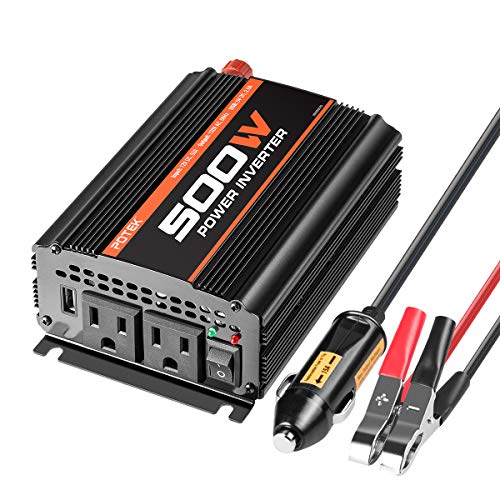
POTEK 500W Power Inverter with Dual AC Ports

POTEK 750W Car Power Inverter with Dual AC Ports
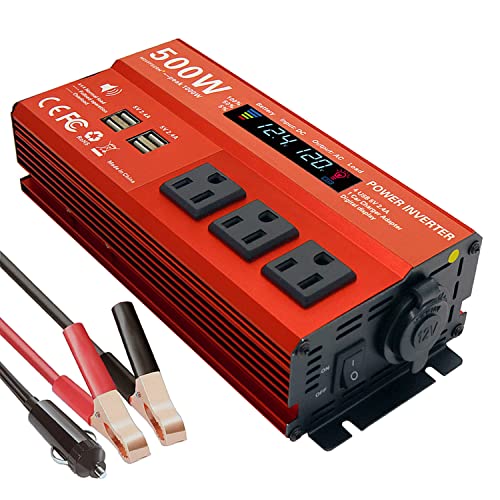
500W Peak 1000W Power Inverter with 4 USB Ports
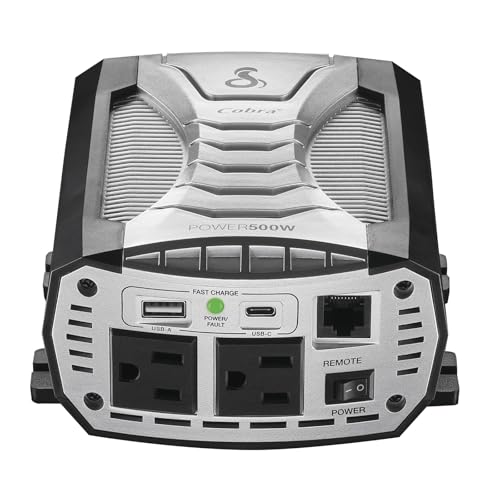
Cobra POWER 500W Power Inverter with Remote Controller

Pro Chaser 400W Power Inverter with PD 65W USB-C

1000 Watt Power Inverter with LCD Screen Display

800W Peak 1600W Power Inverter with LCD Digital Display
More Details On Our Top Picks
LVYUAN keeps the layout straightforward, which helps in a car where space around the outlet disappears fast. Two AC outlets, two USB-A ports, and a PD 20W port give you a useful spread for mixed gear, from a laptop charger to a phone and a tablet. The built-in cooling fan adds practical reassurance during longer drives.
Compared with the simpler POTEK 500W model below, this one gives you more charging variety in one body. The trade-off is that the extra ports can tempt you to load it up, so you still want to match your devices to the inverter’s output rather than the number of sockets. For daily driving, it feels like a sensible middle lane rather than a flashy showpiece.
Strong Points
- Two AC outlets help you run more than one plug-in charger at a time.
- PD 20W charging is useful for newer phones that benefit from faster wired top-ups.
- Two USB-A ports cover older cables without forcing you into adapters.
- The cooling fan is a practical touch for longer road use.
Things To Consider
- The 500W class suits modest electronics more than heavier tools.
- Fan noise can matter in a quiet cabin, especially on long trips.
- More ports mean more cable clutter unless you plan your setup well.
Feature Snapshot
Who It Suits Best
You’re in the right lane here if you want a compact inverter for commuting, road trips, or light mobile work with a phone and laptop charger.
Where A Sibling Pick Shines
POTEK 750W Car Power Inverter suits you better when your setup needs more headroom and you want the step up that comes with a stronger wattage ceiling.
This POTEK keeps things simple, and that works well for driver setups that only need a couple of outlets and a USB port for phones or smaller gear. You get dual AC charging ports plus a 2A USB port, so the load stays easy to understand. In a glove-box-to-console routine, that’s often enough.
Compared with LVYUAN’s port mix, this one is less flexible but also less busy. The honest read is that it suits people who want a no-drama inverter for routine charging rather than a port-packed hub. For a basic travel kit, that restraint can be a plus.
What We Like
- Dual AC outlets give you room for two plug-in devices.
- The 2A USB port handles straightforward phone charging.
- Its compact approach makes it easy to keep in a vehicle kit.
- Clear, uncomplicated design suits casual use.
Room For Improvement
- The USB side is basic compared with newer USB-C-equipped picks.
- Users with several devices may outgrow the layout quickly.
- It leans toward everyday charging, not broader power flexibility.
Core Details
Made For
You fit this pick best when your vehicle power needs stay modest and you want a straightforward inverter for everyday travel.
Swap It Out When
LVYUAN 500W Power Inverter with PD 20W suits you better when you want more charging variety and a USB-C path in the same unit.
The 750-watt step changes the feel here, especially for people who keep a laptop, phone charger, and a couple of accessories in the same travel bag. Dual AC outlets and a 2A USB port make it a straightforward fit for road work, camping, or back-seat charging during longer drives. It gives you more breathing room than the 500-watt POTEK above.
That extra headroom matters most when your setup is closer to a small mobile desk than a quick errand charger. One thing worth noting, though, is that bigger capacity does not replace common sense about what your vehicle and connected gear can handle. For frequent travelers, it feels like the more future-proof of the two POTEK options.
Best Bits
- 750-watt output gives you more margin than the smaller 500-watt options.
- Two AC outlets help when you carry multiple plug-in accessories.
- The 2A USB port supports direct phone charging without extra gear.
- Works well for travel kits that need a little room to grow.
Areas To Watch
- It still lives in the lighter inverter class, so heavy tools remain a poor match.
- Dual AC outlets can encourage overpacking the setup.
- Long cable runs and clutter can become annoying in compact cabins.
Details At A Glance
Who Will Love This
You’re a strong match for this model when your vehicle setup includes a laptop and a couple of smaller accessories, not just a phone.
Another Choice May Suit
Pro Chaser 400W Power Inverters for Vehicles with PD 65W USB-C fits you better when modern USB-C charging matters more than raw wattage.
This MOVFFGGRM unit leans into device-heavy trips, thanks to four USB ports at 2.4A each and a cigarette-lighter-style port alongside the AC outlets. That mix works well in a family car or work van where several phones and accessories need charging at once. The peak rating is a reminder that burst capacity and continuous output are not the same thing.
Compared with the simpler POTEK models, this one is more about charging variety than a clean minimalist setup. The trade-off shows up in cable management, because more ports usually mean more cords hanging around the console. Still, for multi-device travel, the layout is genuinely useful.
Positives
- Four USB ports make it easy to charge several small devices together.
- The extra cigarette-lighter port adds another power path for compatible gear.
- Dual AC outlets give the setup more flexibility than a USB-only hub.
- The 2.4A USB rating suits phones and tablets better than basic low-output ports.
- Useful in vehicles where several passengers need charging access.
Softer Spots
- The port count can turn the cabin into a tangle of cords.
- Peak wattage can sound bigger than the everyday load it can sustain.
- The size and complexity fit some vehicles better than others.
Spec Overview
Best Suited To
You match this pick best when your vehicle carries multiple people or multiple devices on a regular basis.
A Better Fit Elsewhere
Cobra POWER 500W Power Inverter with Remote Controller suits you better when cleaner control and a more polished accessory layout matter more.
The remote controller is the feature that gives this Cobra its edge, especially in tighter vehicle installs where reaching the unit itself is awkward. Two grounded AC outlets and two fast-charge USB ports round out a setup that feels organized rather than crowded. For a van, RV cabinet, or trunk-mounted arrangement, that matters more than it first sounds.
Unlike the more port-heavy MOVFFGGRM option, this one feels cleaner and a little more deliberate. One thing worth considering is that remote convenience helps most once you’ve thought through cable routing and mount position. The result is less about raw quantity and more about easy day-to-day access.
Highlights
- Remote control makes it easier to manage power from a distance.
- Grounded AC outlets suit standard household-style plugs.
- Two fast-charge USB ports cover the basics for phones and accessories.
- The layout works well in installed or semi-permanent vehicle setups.
Worth Noting
- Remote convenience adds value mainly when your install is a little more fixed.
- It still sits in the 500-watt class, so heavy loads are outside its lane.
- Grounded outlets are useful, though they do not change the power ceiling.
Technical Sheet
Right Fit For
You’ll appreciate this one most in a vehicle build where the inverter stays mounted and you want cleaner control from the cabin.
Look Elsewhere When
LVYUAN 500W Power Inverter with PD 20W suits you better when you want a more modern port mix without adding a remote into the setup.
Pro Chaser leans into modern charging better than any of the 500-watt units above it, which matters on work trips where your laptop and phone both need regular top-ups. The USB-C PD 65W port is the headline, and it gives you a stronger match for newer devices than a basic USB outlet. Dual AC sockets still leave room for traditional chargers.
In most cars, this is the tidy option for travelers who carry newer tech rather than multiple older accessories. The trade-off is simple: less total inverter output than the 500-watt and 750-watt picks, but a more useful charging mix for USB-C first setups. That balance makes sense for digital nomads and students with streamlined kits.
Bright Spots
- USB-C PD 65W supports stronger charging for compatible modern devices.
- USB-A QC 18W gives you another fast-charge lane.
- Dual AC outlets still let you plug in two standard chargers.
- 400 watts is enough for many travel and desk-on-wheels setups.
Minor Gripes
- Lower wattage than the 500-watt and 750-watt units reduces overhead for some gear.
- USB-C emphasis helps certain setups more than others.
- It is less appealing for people who want a larger AC-focused inverter.
Feature Rundown
Who Should Grab It
You fit this pick best when your vehicle time revolves around a laptop, phone, and a couple of portable devices that already use USB-C.
Reach For A Different Pick When
POTEK 750W Car Power Inverter with Dual AC Ports makes more sense for you when AC output and wattage matter more than USB-C speed.
OLTEANP steps well above the 750-watt category, and that extra output is useful in trucks, RVs, or home setups where the inverter does more than casual charging. The LCD screen gives you a quick read on status, which helps when the unit sits in a harder-to-reach spot. Two AC outlets, a 36W Type-C port, and a 5V/3A USB port round out the package.
Compared with Pro Chaser’s USB-C-first design, this one puts more weight on total inverter capacity and a display you can glance at fast. The catch is that bigger output usually belongs in a more deliberate setup, not a loose grab-and-go bag. For heavier vehicle use, that makes sense.
Reasons To Buy
- 1000 watts gives you more room than the 750-watt and 500-watt picks.
- The LCD display makes status checking easier in a mounted setup.
- Two AC outlets keep traditional chargers in play.
- 36W Type-C charging is useful for newer devices that rely on USB-C.
- The 5V/3A USB port still handles simpler charging needs.
Points To Note
- It makes more sense for larger vehicles or planned installs than for casual carry.
- Higher output can increase the need for thoughtful cable management.
- The display helps, though it does not replace good load planning.
Feature Card
Built With In Mind
You’re looking at the right match for a truck, RV, or semi-permanent vehicle setup that needs more than light charging.
Another Choice May Suit
POTEK 750W Car Power Inverter with Dual AC Ports suits you better if you want the middle ground between portability and extra output.
This MOVFFGGRM model sits at the heavy end of the group, with 800 watts of continuous output and 1600 watts of peak capacity. That kind of headroom matters for larger vehicle setups where you want more cushion for startup demand and a broader spread of accessories. Four 2.4A USB ports, a cigarette-lighter port, and an LCD digital display round out the package.
Compared with the OLTEANP 1000W pick, this one emphasizes surge headroom and extra USB charging rather than the higher continuous output number. The honest read is that it suits work gear, family travel, and longer trips where several small devices need charging at once. It is a more serious option than the smaller units, and it asks for a more careful setup too.
Standout Traits
- 800 watts of continuous output gives you more room than the 750-watt class.
- 1600 watts of peak capacity adds cushion for start-up demands.
- Four USB ports help keep several phones or accessories charged together.
- The LCD digital display makes it easier to monitor use in a vehicle.
- The cigarette-lighter port expands compatibility with certain accessories.
Small Caveats
- The larger setup deserves a more organized installation than the compact picks.
- More output and more ports can mean more planning for cable routing.
- It fits heavier travel use better than simple errand charging.
Core Details
Whose Shelf It Belongs On
You’re the right fit for this inverter when you travel with multiple devices and want more power cushion than the midrange picks provide.
Where A Sibling Pick Shines
Pro Chaser 400W Power Inverters for Vehicles with PD 65W USB-C suits you better if your setup is centered on newer laptops and simpler charging gear.
How To Choose The Right 750 Watt Inverters
Match Output To The Gear You Carry
Wattage tells you how much power the inverter can support, and that matters more than port count alone. A 750-watt unit gives more breathing room than a 500-watt model, which helps when you’re running a laptop charger and a second accessory at the same time.
For phones and tablets, the smaller options in this roundup can be enough. For a work bag with a laptop, hotspot, and charger bundle, the 750-watt class feels like a safer middle ground.
Look Closely At The Outlet Mix
AC outlets power standard plug-in chargers, while USB ports handle cord-based charging directly. USB-C matters now because many newer devices charge faster and cleaner through that format than through older USB-A ports.
You’ll want a unit that matches your daily kit, not just the number of sockets on the page. A port-rich inverter is useful, but only when those ports match the gear you already own.
Think About Vehicle Layout And Cable Management
Some inverters sit in a cupholder, others live in a trunk, and some work better as part of a mounted install. That difference changes how easy it is to reach the controls, where the fan exhaust goes, and how messy the cords feel.
Remote control, LCD screens, and extra outlets can all help, but they also make the setup more involved. In a compact cabin, cleaner layouts usually win.
Choose The Right Balance Of Portability And Headroom
Higher-output models cost more because they usually bring stronger components, more ports, better display features, or a more flexible design. You are paying for margin as much as power.
That extra headroom is worth it for road work, camping, or family travel with several devices. For occasional charging, a simpler inverter is often the better fit because it keeps the setup lighter and easier to live with.
Things Worth Knowing First
Common Shopping Slip Ups
Many people focus on peak wattage and miss the continuous rating, which is the number that matters for steady use. A second common miss is overlooking the port mix, then realizing the inverter does not match the chargers already in the bag.
Another trap is assuming a larger number always means a better fit. In a compact car, a simpler unit can be easier to place and easier to keep tidy.
The Upgrade Payoff
More expensive units usually buy you better power headroom, clearer displays, extra charging types, or a more polished control setup. That matters most when the inverter stays in the vehicle for regular use rather than occasional backups.
Spending more also makes sense when you travel with multiple devices or need USB-C power for newer gear. For basic phone charging, that upgrade can be more than you need.
Frequently Asked Questions
What does a 750-watt inverter handle best?
It usually suits laptops, phone chargers, small electronics, and similar travel gear. It is a practical middle step between compact 500-watt units and larger 1000-watt models.
Is USB-C worth having in a vehicle inverter?
USB-C helps with newer phones, tablets, and many laptops. It can simplify your charging setup because you carry fewer separate adapters.
Do more outlets mean better performance?
Not by themselves. More outlets just give you more ways to connect gear, while the wattage still sets the real ceiling.
What matters more, peak power or continuous power?
Continuous power matters most for normal use because it reflects steady output. Peak power only covers brief startup bursts.
Which size works best for daily driving?
For everyday commutes, a 400 to 500-watt inverter often feels easiest to live with. The 750-watt class makes more sense once your device list grows.
Closing Thoughts
The right inverter for you depends on how much gear rides with you and how often you need it all powered at once. A 500-watt unit keeps things compact, a 750-watt model gives you more room to grow, and the larger picks make sense for heavier travel setups. The key is matching the ports, output, and layout to the way you already use your vehicle. That’s the easiest way to avoid overbuying and still get the power you need.
