

Household backup power feels a lot less abstract once the lights flicker and the fridge starts humming on borrowed time. This roundup focuses on portable generators that sit near the 5,000-watt mark, with enough output for practical home backup, RV use, or jobsite support. You’ll see trade-offs around fuel type, noise, starting style, and how easy each unit is to move or connect. The right pick depends less on raw wattage and more on how you plan to live with it.
Quick Look At The Shortlist

Oxseryn Power Equipment 4400 Watts Inverter Generator

A-iPower 5000-Watt Portable Generator GXS5000
WEN 5600-Watt Portable Generator GN5600

DuroStar DS13000MX Dual Fuel Portable Generator

PowerSmart 4800W Portable Inverter Generator
Westinghouse 5000 Peak Watt Super Quiet Dual Fuel Portable Inverter Generator

Oxseryn 5000-Watts Portable Inverter Generator
More Details On Our Top Picks
For a smaller house backup setup, this Oxseryn leans into portability more than brute force. The open-frame design keeps it straightforward, and ECO Mode usually matters most during lighter loads, where you want the engine to work less aggressively. That makes it a sensible fit for apartments with outdoor storage, modest homes, or owners who need a backup unit that does not feel oversized.
Compared with the larger units in this roundup, it asks less from your storage space and less from your budget planning. The trade-off is clear, though, because 4,400 watts sits below the higher-output picks here, so it suits selective appliance coverage better than a whole-house wish list. The honest read is that it works best as a practical emergency helper, not a heavy load specialist.
Strong Points
- Open-frame layout keeps the unit straightforward to stage and store.
- ECO Mode helps the engine ease up during lighter household loads.
- Portable size suits garages, patios, and tight storage corners.
- A useful fit for keeping selected essentials running during outages.
Minor Gripes
- It sits below the higher-output models in this list, so room for expansion is limited.
- Open-frame styling tends to feel less enclosed than inverter units built around quieter home use.
- Gas upkeep still means normal storage and maintenance routines.
Feature Snapshot
Who It Suits Best
Households that want a compact backup unit for essentials, not a full-panel solution, fit this one well.
A Better Fit Elsewhere
A-iPower 5000-Watt Portable Generator GXS5000 suits a home that needs a little more output and a built-in CO shutdown feature.
This A-iPower lands in a useful middle ground for home backup and jobsite duty. The 223cc OHV engine matters because OHV means overhead valve, a layout that often supports smoother engine breathing and practical durability expectations. The CO sensor shutdown is the feature most households will notice first, especially in attached garages or busy work areas where air management matters.
Compared with the Oxseryn 4400-watt unit, you get a bit more power headroom and a more heavy-duty posture. The honest trade-off is that it still stays in portable-generator territory, so it is built for essential circuits and flexible use rather than a seamless whole-home experience. That balance makes it a smart fit for people who want a straightforward gas generator with one important safety-minded control built in.
What We Like
- 5000-watt class output gives you more room than smaller backup units.
- CO sensor shutdown adds a practical layer for common home and garage scenarios.
- 223cc OHV engine points to a work-ready, familiar engine format.
- Useful for homes, jobsites, and RV stops without feeling overcomplicated.
Points To Note
- Gas maintenance and storage still belong in the long-term ownership plan.
- It is more about portability than refined inverter-style quiet operation.
- Whole-house expectations can run ahead of what a portable unit of this class is built to do.
Details At A Glance
Who Should Grab It
Homeowners who want a portable gas generator with a clearer safety feature fit this one best.
Swap It Out When
Westinghouse 5000 Peak Watt Super Quiet Dual Fuel Portable Inverter Generator suits you better when quieter running and fuel flexibility matter more than raw simplicity.
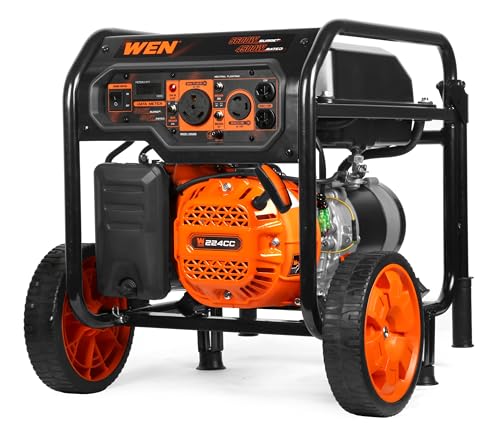
Transfer-switch readiness gives this WEN a more house-friendly angle than the earlier portable picks. A transfer switch is the hardware that lets a generator feed selected home circuits through a proper connection point, so the setup feels cleaner than dragging extension cords everywhere. With 5,600 watts on tap and a 224cc engine, it suits a homeowner who wants a practical bridge between backup power and more organized distribution.
That extra wattage can matter during outages that reach beyond a few lamps and a refrigerator. The trade-off is still portability, so this is not a substitute for a permanent standby system, and it still asks for the usual generator storage habits. For many households, though, it lands in a very workable middle lane.
Highlights
- Transfer-switch readiness helps with a more structured home hookup.
- 5600-watt output gives more breathing room than 5000-watt class units.
- RV-ready design keeps it useful for travel as well as home backup.
- 224cc engine size fits the practical, do-it-all portable segment.
Areas To Watch
- Transfer-switch use still depends on the rest of your home setup.
- Gas-powered ownership means regular fuel and storage attention.
- It remains a portable solution, not a whole-house standby system.
Core Details
Best Suited To
Households with a transfer switch already planned or in place will get the most from this layout.
Reach For A Different Pick When
DuroStar DS13000MX Dual Fuel Portable Generator makes more sense for larger homes that want much higher output and dual-fuel flexibility.
This DuroStar sits in a different class from the rest of the lineup, because 13,000 watts changes the conversation fast. Dual fuel means it can run on gas or propane, and that gives you flexibility during storage planning or fuel shortages. Remote electric start also helps in the sort of storm cleanup or late-evening outage where convenience suddenly matters a lot.
The upside is obvious for larger homes that want broader circuit coverage and transfer-switch readiness. The catch is size, fuel management, and the expectation that a machine this capable deserves room and a more deliberate setup. That’s the trade-off worth accepting for households that need serious output instead of a compact backup companion.
Upsides
- Very high output gives you room for larger household demand.
- Gas and propane support offers helpful fuel flexibility.
- Remote electric start makes setup easier during rough weather.
- Transfer-switch readiness fits a more organized home connection plan.
- RV and emergency usefulness extends the value beyond one scenario.
Small Caveats
- Its size makes storage and movement a real part of ownership.
- Higher output usually means a heavier footprint to plan around.
- Propane and gasoline both still require normal fuel handling habits.
Quick Facts
Whose Shelf It Belongs On
This belongs with homeowners who need large backup coverage and have the space to store it properly.
Where A Sibling Pick Shines
WEN 5600-Watt Portable Generator GN5600 suits smaller homes that want a simpler transfer-switch path without jumping to this much output.
For everyday home backup, this PowerSmart leans into convenience in a way some of the more basic gas units do not. Electric start reduces the usual pull-cord routine, and parallel readiness means you can pair compatible units for more output later, which is handy for a household that may grow into bigger needs. The 30A outlet also gives it a more connected feel for RV use or cleaner home hookups.
Compared with the simpler A-iPower and Oxseryn models, it offers a more polished feature mix without jumping into the oversized territory of the DuroStar. The trade-off is that feature-rich designs can ask for a bit more attention during setup, especially around compatibility and accessory planning. For many households, that’s a fair exchange for more flexibility.
Positives
- Electric start makes startup feel less like a chore.
- Parallel readiness gives you room to scale later.
- 30A outlet adds better fit for RV or home connection planning.
- Inverter design tends to suit more sensitive household electronics.
Points To Note
- Parallel use depends on matching equipment and planning.
- More features can mean more to think through during setup.
- Gas upkeep still belongs in the long-term routine.
Spec Overview
Built With In Mind
Households that want an easier-starting inverter with room to expand should feel right at home here.
Another Choice May Suit
Oxseryn 5000-Watts Portable Inverter Generator fits better for shoppers who want a lighter, simpler portable option with ECO Mode and home backup focus.
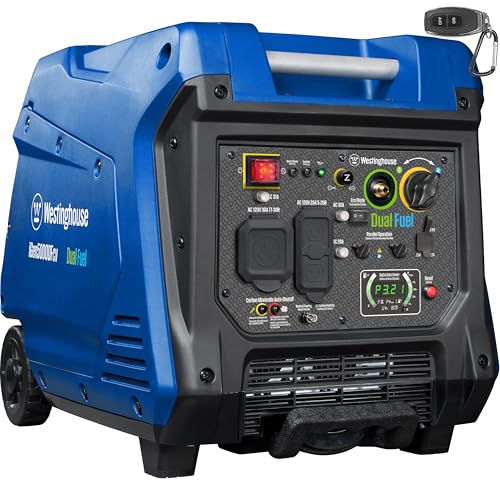
This Westinghouse leans toward the household that values easier movement and quieter running more than raw size. Dual fuel gives you gas or propane flexibility, and the wheel and handle kit matters more than it first looks, because a generator that moves well is one you’re likelier to position correctly and store without a struggle. For suburban backup use, that balance is very practical.
Compared with the DuroStar, it is far easier to picture in a garage or side yard. The trade-off is obvious, since peak wattage is lower and the machine is aimed at a different scale of need, but many homes do not need a giant unit to stay comfortable during outages. The honest read is that this one suits smoother day-to-day ownership.
Bright Spots
- Dual fuel support gives you more flexibility with storage and sourcing.
- Wheel and handle kit helps with moving and repositioning the unit.
- Super quiet positioning makes it appealing for nearby neighbors and family spaces.
- Parallel capable design leaves room for future expansion.
Softer Spots
- Peak wattage is lower than the largest backup-focused options here.
- Dual-fuel convenience still comes with normal fuel-handling responsibilities.
- Quiet operation expectations depend on load and placement.
Feature Card
Perfect Match For
Households that want quieter dual-fuel portability with easier movement will appreciate this one most.
Look Elsewhere When
DuroStar DS13000MX Dual Fuel Portable Generator suits you better when large-home output matters more than quieter, easier handling.
At 60 pounds, this Oxseryn is easier to picture moving around the property than some of the heavier home backup options. The 30A outlet and RV-ready setup make it versatile, while ECO Mode helps it feel more restrained during lighter household demand. That combination works well for people who want a portable generator that can move between backup duty, travel use, and occasional outdoor tasks.
Compared with the Oxseryn open-frame unit earlier in the list, this one feels more focused on inverter-style ownership and cleaner utility. The trade-off is that you still need to manage gas storage and routine generator care, but the lighter footprint helps make that feel less cumbersome. For many homes, it lands in a sweet spot between portability and usefulness.
Best Bits
- 60-pound weight keeps it easier to move than larger home backup units.
- 30A outlet adds useful connection flexibility.
- RV-ready design broadens its role beyond outage coverage.
- ECO Mode can help the engine stay calmer under lighter demand.
Honest Caveats
- Gas-powered upkeep still matters for storage and long-term reliability.
- Weight is manageable, but not exactly light in everyday carry terms.
- It is still a portable inverter, so massive home loads stay out of reach.
Core Details
Right Fit For
Shoppers who want a manageable inverter generator for home backup and travel use will get a lot of mileage from this model.
Where Shoppers Go Wrong
WEN 5600-Watt Portable Generator GN5600 suits households that want a transfer-switch ready path and a little more output than this lighter Oxseryn.
How To Choose The Right 5000 Watt Generators For House
Power Shape Matters More Than Raw Wattage
Five thousand watts sounds tidy on paper, but the real question is what you want to run. A refrigerator, lights, modem, and a few small appliances ask a very different question than a well pump or central air.
Portable generators in this range usually make the most sense for selected circuits, not every load in the house at once. That’s why transfer-switch readiness on the WEN can matter as much as the watt number itself.
Fuel Type Changes Ownership Rhythm
Gas-only units are simpler to understand, while dual-fuel models add propane flexibility for storage and outage planning. Propane can feel cleaner to store for some homes, though the setup usually gets a little more involved.
For everyday backup, the right answer depends on how often you expect to use the machine and how you plan to keep fuel on hand. The Westinghouse and DuroStar choices show how dual-fuel convenience can shift the whole ownership experience.
Starting Style And Noise Shape Daily Use
Electric start is a nice comfort feature, especially in rough weather or evening outages. ECO Mode, found on the Oxseryn models and the PowerSmart, helps the engine settle down under lighter demand, which can matter in a neighborhood setting.
Quiet inverter construction usually feels better for homes close to neighbors or for side-yard placement. Open-frame designs can still be useful, but they lean more functional than discreet.
Connection, Mobility, And Storage Should All Be Planned Together
A generator that is easy to move is more likely to be used correctly and stored where it belongs. Wheel kits, handle kits, and lighter builds change the day-to-day experience as much as the engine size.
Think about where the unit will live between outages, how you’ll connect it, and whether you want a transfer switch, a 30A outlet, or RV readiness. Those details decide whether a generator feels convenient or clumsy.
What To Weigh Before You Decide
Wrong Turns To Avoid
One common mistake is chasing wattage without checking the connection plan. Another is ignoring fuel handling, because a gas generator needs routine attention even when it sits idle for long stretches.
Storage space matters too. A large dual-fuel unit can be the right answer for a big house, but it turns into a nuisance fast in a crowded garage.
The Case For Spending Up
Higher-tier models usually bring better starting convenience, more flexible fuel options, or a cleaner way to tie into household circuits. Those details cost money because they make the machine easier to live with, not just stronger on paper.
That extra spend starts to make sense for larger homes, frequent outage planning, or anyone who wants a more polished backup setup. For lighter use, a simpler portable unit often gives you enough without overcommitting space and storage effort.
Frequently Asked Questions
Can A 5000 Watt Generator Run A Whole House?
Most houses need more than a single 5000-watt portable unit for full coverage. A generator in this range usually handles selected essentials more realistically.
What Appliances Fit In This Power Range?
Common loads include a refrigerator, lights, a modem, and a few smaller electronics. Larger items such as central cooling usually push beyond what this class is meant to cover.
Is Dual Fuel Worth It For Home Backup?
Dual fuel helps when you want propane flexibility alongside gasoline. That choice often feels valuable for storage planning and outage prep.
Why Does Inverter Style Matter?
Inverter generators are generally better suited to electronics and calmer neighborhood use. They also tend to feel more refined for day-to-day home backup.
Do I Need A Transfer Switch?
A transfer switch makes generator hookup more organized and more convenient for selected home circuits. It is especially useful when you want backup power to feel less improvised.
Closing Thoughts
Your best choice comes down to how your house actually uses power, not just the watt number in the listing. A smaller portable unit can make a lot of sense for essentials, while a larger dual-fuel model fits a home that needs broader coverage and easier starts. The right match is the one that fits your storage space, your connection plan, and your comfort level with fuel upkeep. Pick the option that feels easiest to live with before the storm ever shows up.
